

E-Financial
Buhari Angry with CBN over ‘Ruthless’ Naira Devaluation

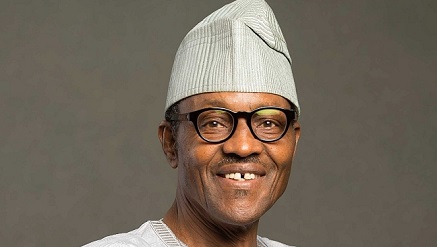
President Muhammadu Buhari is certainly not happy with the Central Bank of Nigeria (CBN), over what he called” the ruthless devaluation of the Naira.”
President Buhari expressed his indignation at the current rate of the naira to the dollar while speaking at the Ramadan breaking of fast with members of the business community led by Mr Kola Jamodu, on Monday.
The president condemned “the ruthless devaluation of naira,’’ saying that he was yet to be convinced about the economic benefits of the exercise.
“How much benefits have we derived from naira devaluation in the past?
“I don’t like the returns I get from the CBN because that coupled with the demand that let us devalue the naira. In August 1985, the naira was N1.3k to a dollar, now you need N300 or N350 to a dollar.
“What do we derive from that, how much benefit can we derive from this ruthless devaluation of the naira?
“I’m not an economist neither a businessman, I fail to appreciate the economic explanation.
“What has happened to us now is that we have maneuvered ourselves into a mono-economy which led to the collapse we are seeing now.
“A lot of responsibilities now fall on your shoulders. You have a lot of investments, a lot of people you employ,’’ he told the businessmen.
He also assured them that his administration would make Nigeria self-sufficient in rice production within 18 months, adding that 13 states of the federation had been identified for the production of the crop.
He said that Chief Audu Ogbeh, minister of Agriculture, had already been briefed on how best to achieve the target.
Buhari decried the way and manner the nation’s scarce resources were wasted on the importation of food items by the previous regimes.
He said the nation had no option than to concentrate more on agriculture and solid mineral activities.
In his remarks on behalf of the business community, Mr Kola Jamodu, expressed the readiness of the private sector to partner the administration in addressing the economic challenges facing the country.
He thanked the president for inviting them for the breaking of fast dinner.


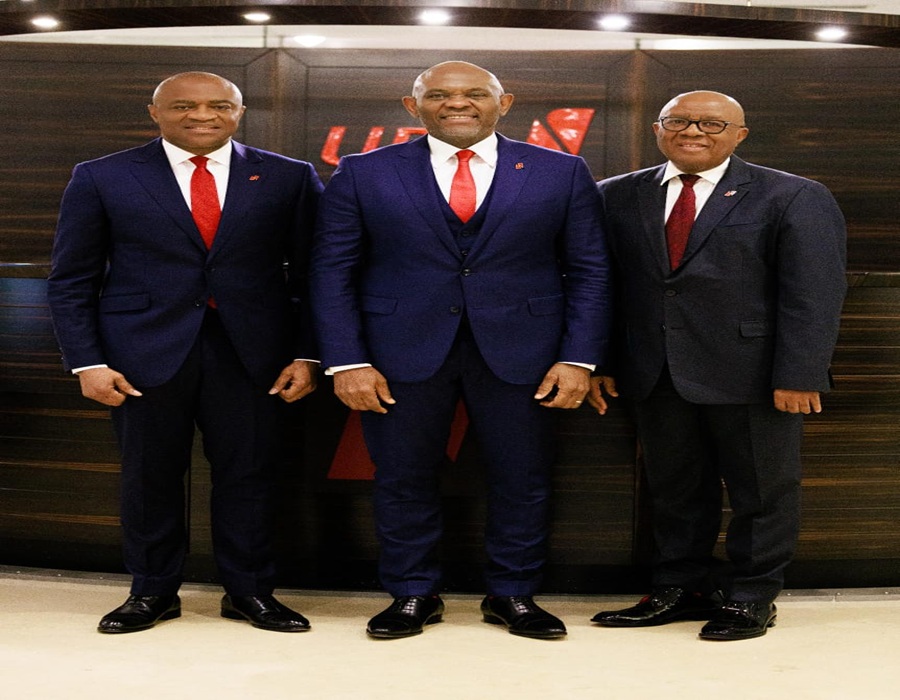
United Bank for Africa (UBA) Plc has announced that its Group Chairman, Mr Tony O. Elumelu, will retire from the Board of Directors on Aug. 21, 2026, upon completing the 12-year tenure limit for non-executive directors prescribed by the Central Bank of Nigeria (CBN).

The bank disclosed this in a statement issued following a meeting of its Board of Directors held on July 6.
According to the statement, the board accepted Elumelu’s retirement and elected Mr Emmanuel N. Nnorom, a Non-Executive Director of the bank, as his successor with effect from Aug. 21, 2026.
The board expressed appreciation to Elumelu for what it described as his visionary leadership and immense contributions to the growth and institutional development of the UBA Group.
It noted that under his leadership, UBA expanded into a leading pan-African financial institution with operations in 20 African countries and four global financial centres, serving more than 50 million customers.
The board described Elumelu’s tenure as a defining period in the bank’s history.
Nnorom, who will assume office as chairman upon Elumelu’s retirement, is a chartered accountant with more than 40 years of experience in banking, finance and auditing.
The statement said he brings extensive leadership experience and deep institutional knowledge of the bank to his new role.
Speaking on his retirement, Elumelu described serving UBA as one of the greatest privileges of his professional career.
“Serving United Bank for Africa has been one of the great privileges of my career.
“UBA has established a unique competitive position across Africa and globally, and I leave the Board with great confidence in UBA’s future.
“Emmanuel Nnorom is a leader of integrity, experience and sound judgement, and I am confident that the bank will continue to thrive under his leadership,” he said.
Responding to his appointment, Nnorom expressed gratitude to the board for the confidence reposed in him.
“I am honoured by the trust the Board has placed in me and deeply conscious of the legacy I inherit.
“I look forward to working with my colleagues on the Board, Management and our staff across all our markets to sustain UBA’s momentum and continue delivering long-term value to our shareholders, customers and stakeholders,” he said.
UBA operates in 20 African countries as well as the United Kingdom, the United States, France and the United Arab Emirates.
The bank provides retail, commercial and institutional banking services and serves more than 50 million customers globally, with a workforce of about 25,000 employees across its operations.
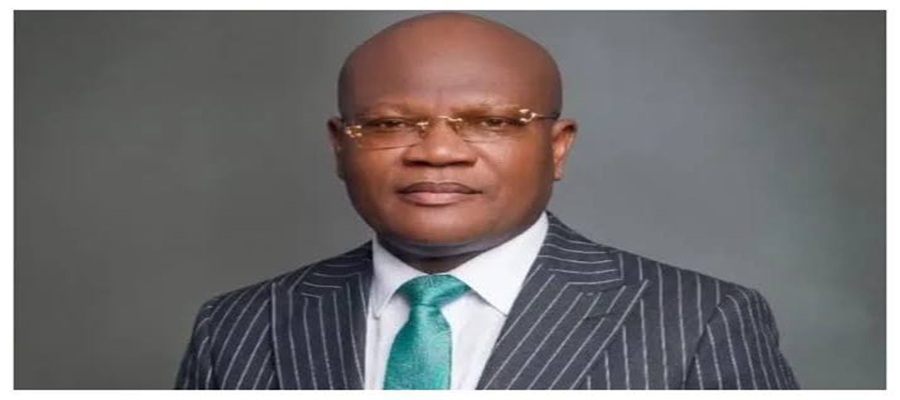
Zedvance Finance Limited has appointed Professor Pius ‘Deji’ Olanrewaju as Chairman of its Board of Directors, effective July 1, subject to the approval of the Central Bank of Nigeria (CBN).

Professor Pius ‘Deji’ Olanrewaju
The company disclosed this in a statement, describing the appointment as a significant step in strengthening its corporate governance structure and positioning the organisation for its next phase of growth.
According to Zedvance, the appointment reflects its commitment to building a robust governance framework capable of driving innovation, sustainable growth and long-term value creation for stakeholders.
The company said Olanrewaju brings extensive boardroom experience, leadership credentials and expertise in governance, strategy and organisational transformation to the role.
It noted that the strengthened board structure would enhance oversight and support the company’s strategic growth ambitions.
Speaking on his appointment, Olanrewaju expressed appreciation for the confidence reposed in him.
“I am honoured to assume the role of Chairman of the Board of Zedvance Finance.
“The company has established a strong reputation as a trusted financial partner, leveraging innovation and technology to create meaningful impact.
“I look forward to working with the board and management to support the company’s strategic aspirations and deliver sustainable value for our stakeholders,” he said.
Olanrewaju is a legal scholar, banking expert and corporate leader with more than four decades of experience spanning banking, finance, academia and institutional governance.
He holds degrees in Law, Arts and Social Sciences, including a Bachelor of Laws (LL.B), Bachelor of Laws (B.L.), Bachelor of Arts (B.A.), Master of Science (M.Sc.), Master of Laws (LL.M.) and a Doctor of Philosophy (Ph.D.).
He is a Fellow of the Chartered Institute of Bankers of Nigeria (FCIB), Fellow of the Institute of Capital Market Registrars (FIMA), Fellow of the Institute of Management and Administrative Technology (FCMR), and Fellow of the Enterprise Risk Management Professionals (FERP).
Olanrewaju is also a member of several professional bodies and served as the immediate past President and Chairman of the Council of the Chartered Institute of Bankers of Nigeria (CIBN).
During his more than 35 years of service to the institute, he held several strategic positions, including Chairman of its Capacity Building and Certification Committee.
He is currently a Professor of Banking Law at Babcock University, where he previously served as Provost and Dean of the School of Law and Security Studies.
He has authored and co-authored several academic publications and serves on the boards of a number of organisations, including Babcock University Microfinance Bank.
The company expressed confidence that his experience in strategic leadership, corporate governance and financial services oversight would support its long-term growth and institutional development.


Taiwo Oyedele, minister of Finance and Coordinating minister of the Economy, has said there are no secret expenditures or shadow budgets as insinuated.

Taiwo Oyedele, minister of Finance and Coordinating minister of the Economy
This followed comments by the International Monetary Fund (IMF) that discrepancies amounting to about two per cent of Nigeria’s Gross Domestic Product (GDP) exist between reported and actual budget deficits.
In a statement on Sunday, Oyedele said claims that the Federal Government spent over N8 trillion outside the approved budget misrepresented both the IMF’s position and Nigeria’s fiscal framework.
The minister stressed that the federal government does not operate a “shadow budget” or spend public funds outside constitutional and statutory provisions.
“The Federal Government has noted recent public commentary alleging that approximately two per cent of GDP amounting to over N8 trillion was spent outside the approved budget based on references to the IMF Representative in Nigeria and the Fund’s 2026 Article IV Consultation Report. These claims are incorrect and risk misleading the public regarding the government’s financial management,” he said.
According to him, “For the avoidance of doubt, the Federal Government does not operate a ‘shadow budget’ or expend public funds outside the constitutional and statutory framework established for public finance.”
Oyedele explained that under Sections 80 to 83 and 162 of the 1999 Constitution (as amended), public funds can only be withdrawn and spent in accordance with the Constitution and laws enacted by the National Assembly.
He noted that government spending is undertaken through duly enacted Appropriation Acts, Supplementary Appropriation Acts and other statutory authorities approved by the National Assembly, while multi-year capital projects are implemented under existing laws that permit capital rollovers.
“It is inaccurate to suggest that trillions of naira have been secretly spent outside legislative approval. Such allegations should have identified the specific projects purportedly executed without appropriation or legal authority and present credible evidence in support of the claim,” the minister stated.
Oyedele further clarified that several categories of government expenditure, including statutory transfers, first-line charges, debt service obligations, interventions for national security and infrastructure, and allocations to agencies established by law, are authorised under various Acts of the National Assembly.
“These expenditures are neither secret nor illegal. They are established by law, disclosed in various fiscal reports, and subject to applicable oversight, audit and accountability mechanisms,” he said.
The minister added that differences between Nigeria’s budget presentation and international fiscal reporting standards should not be interpreted as evidence of unlawful spending.
He also rejected suggestions that the reported amount translated into a higher fiscal deficit. “It is equally incorrect to suggest that the reported amount represents an increase in budget deficit.
A fiscal deficit is determined by the relationship between total government revenues and total government expenditures.
“Whether a capital project is financed through annual appropriations, supplementary appropriations, statutory transfers, approved intervention mechanisms, or other lawful financing arrangements does not, by itself, increase the fiscal deficit,” he explained.
According to Oyedele, the IMF’s observations relate mainly to “the comprehensiveness, timing and presentation of fiscal reporting rather than the legality of expenditure.”
He noted that the Tinubu administration was already taking steps to harmonise Nigeria’s budgeting process, recalling that President Bola Tinubu had requested the National Assembly during the presentation of the 2026 Appropriation Bill to end the practice of multiple and overlapping budgets in favour of a single, unified budget framework.
The minister maintained that the administration remained committed to prudent fiscal management, transparency and accountability, adding that reforms in revenue administration, treasury management, budget credibility and digitalisation of government financial processes had received recognition from the IMF, other multilateral institutions, international credit rating agencies and investors.
“Public debate is both welcome and essential in a democratic society. However, it should be based on facts and an accurate understanding of Nigeria’s constitutional and fiscal framework. Mischaracterising technical observations as evidence of unlawful expenditure neither advances informed public discourse nor strengthens democratic accountability,” Oyedele added.a
He reaffirmed the Federal Government’s commitment to transparency in the management of public resources and pledged continued collaboration with the National Assembly, oversight institutions, development partners and Nigerians to strengthen fiscal governance in line with international best practices.

After 12 Years at the Helm, Tony Elumelu Bows Out of UBA

Zedvance appoints Prof. Olanrewaju as board chairman

SERAP Asks Akpabio, Abbas for Explain N1.3Bn Budgeted for ‘Fictitious’ Presidential Council

No Plans for Fresh Tariff Hike – MTN

FG Denies N8 Trillion ‘Shadow Budget’, Says IMF Quoted out of Context

Mobile Internet Gender Gap Widest in Africa – GSMA

Nigeria Launches FreeTV Nationwide

NASENI Moves to Digitize CCB’s 5m Assets Declaration and Operations

CANAL+ Partners Samsung to Pre-Load DStv Stream on New Samsung TVs In Nigeria, Other African Countries

UK, Nigeria Launch £15m Growth Programme to Accelerate Economic Transformation




 News3 days ago
FG Clears N39Bn Pension Arrears for NITEL, PHCN, Other Retirees

 Broadcasting3 days ago
Why We’re Partnering With NIHOTOUR To Bring Nigerians In South Africa Home – Steve Babaeko

 News3 days ago
How Fraudsters Emptied a Judge’s Account of N7.2 Million in Midnight Attack

 Telecom3 days ago
MTN Nigeria Celebrates Volunteers at Y’ello Care Impact Showcase

 E-Financial3 days ago
SEC Grants Approval to Luno, Other Crypto Firms under Regulatory Sandbox

 Telecom3 days ago
Xenophobia: MTN Nigeria Belongs to Nigerians, Not Only South Africans — Toriola

 Telecom3 days ago
Google Play launches $1m fund to support African game developers

 Telecom3 days ago
MTN Takes ‘The Gathering on 100’ Youth Empowerment Initiative to Kano