

News
FG Bans Use of Yahoomail, hotmail for Official Business

After what appears a long wavering, the federal government has dusted its project to migrate all its ministries, departments and agencies as well as civil servants to the .ng domain based websites and emails addresses, in a bid to protect state mechanism from deliberate and unintended abuse, Nigeria CommunicationsWeek can now report.
The aim is to set up and operate a unified ICT infrastructure platform that permeates through all tiers of government and its agencies.
It would be recalled that since 2009, the federal government through Galaxy Backbone Plc, a public enterprise of the government had begun moves to replace so-called free email accounts like Yahoomail, hotmail used by government officials for communication with accounts ending in .ng.
.ng is Nigeria’s Code Top Level domain name, an Internet top-level domain generally used or reserved for Nigeria only.
Galaxy Backbone had in 2009 told Nigeria CommunicationsWeek that it was creating over 10,000 new .ng domain based email accounts for the public service organizations in place of the free email accounts.
Investigations however revealed that government’s bureaucracy coupled by the sore-footed and refractory approach of civil servants have combined to hobble the implementation of the idea touted as an elixir to the flagrant abuse and leakage of important government information through free email accounts.
In apparent bid to instill new security ethos and give credibility to official communications, Mrs. Omobola Johnson, minister of Communications Technology said recently that her ministry is re-jigging the project to create a single platform on .ng to help share facilities and information.
The creation of the .ng domain based websites and email addresses followed discovery that some civil servants have inadvertently transmitted sensitive government data and information through their own free email addresses which pose national security challenges.
It is also a measure to tackle the menace of cyber criminals who set up fraudulent websites and have reduced Nigeria’s image among the comity of Nations.
Nigeria CommunicationsWeek investigations however revealed that more than 15 months later, government officials including ministers, permanent secretaries, university lecturers and even ICT directors of government agencies still use free email accounts.
But Mrs. Johnson said her ministry will stem the tide adding that “we are putting in place a message and collaborative system to facilitate a connected government. All MDAs will be on .gov.ng. From next year when you get an email from a government official, it will be a .com.ng address. I have already started using mine.”
This follows the realization that email correspondence is becoming pervasive these days with the penetration of the internet and the ease email communication offers to users.
By implication when the ministry of Communications Technology is able to achieve complete migration of all government ministries, departments and agencies as well as civil servants to .ng domain based websites and emails, emails sent or received on free email account, no matter their content, are not public records because they are not owned or used by a government agency.
Nigeria CommunicationsWeek gathered that under the project, electronic communications will be owned, used, or retained by government only if they reside on a government server set up by Galaxy Backbone.
Under the programme, each ministry will now have customized email accounts that allow its civil servants to use the ministry’s name as their e-mail domain and in turn allow people to immediately recognize incoming e-mail messages´ origin. For example: [email protected].
The key feature of the Galaxy Backbone email service is the fact that it can be accessed from anywhere in the world and on mobile devices.
Though Hotmail, Rediff, Sify, Gmail, Yahoomail and similar types of widely-used email accounts are popular and easy to set up, they do not confer identity on user.
And despite their popularity, such e-mail accounts present their users with a number of inconveniences; inconveniences that can be avoided with ng. domain touted to posses robust, versatile and richly featured personalized details.
Nigeria CommunicationsWeek gathered that beyond creating identities for the various ministries, government wants to avoid the dangers of using free email accounts.
For instance, because users of hotmail and yahoomail accounts share their Internet domains with millions of other users across the Web, they run the risk of having people eavesdropping on them.
A permanent secretary for instance sending sensitive documents like military proposals and vouchers through free email accounts runs the risk of exposing intra and inter-ministerial transactions, which may be a clear breach of national security.
Critics of the project are quick to dismiss the latest initiative and said it is a device by the government to avoid openness in the running of the state affairs.


The Chartered Institute of Bankers (CIBN) and the Association of Corporate Communication and Marketing Professionals in Banks (ACAMB) have enjoined banks to further deepen and prioritize financial inclusion, women’s empowerment and sustained growth through strategic mandates and frameworks, aimed at closing the financial gap and empowering more small, and medium enterprise (MSME) owners.

Both organisations made this call during a courtesy visit to the newly invested 24th President and Chairman of Council of the Chartered Institute of Bankers of Nigeria (CIBN), Dr. Dele Alabi, Ph.D, FCIB, as part of plans to congratulate him on his investiture as well as seek a stronger alliance between both bodies.
The visit followed Alabi’s investiture where he unveiled his “IMPACT” Vision, themed “Consolidating Our Local Impact, Enhancing Our Global Relevance.”
The vision rests on six pillars: Inclusion across geographic, gender, and generational lines; Membership growth and quality; Professionalism and ethics; Accountability; Competencies and skills development; Technology, automation, and innovation. Other areas of shared interest, include women empowerment, financial inclusion and literacy, as well as MSME clinics, all of which are top on his agenda.
Alabi explained that under him, the institute will be prioritising financial inclusion and women empowerment, because of its realisation that women are often the primary financial managers and caregivers in families. Access to savings, micro-credit, and insurance acts as a safety net during crisis and allows them to significantly improve living conditions.

He added that CIBN would be happy to drive joint knowledge sharing and exchange sessions with CBN and ACAMB across various platforms. “Educating the public through public awareness programmes, with ACAMB as the rallying point, is central to what we do,” he noted.
ACAMB President, Jide Sipe, who led the delegation, spoke in unison with the CIBN president, as he noted that, closing the inbalances in financial access help economies grow faster, reduces inequality, and encourages greater civic participation by all.

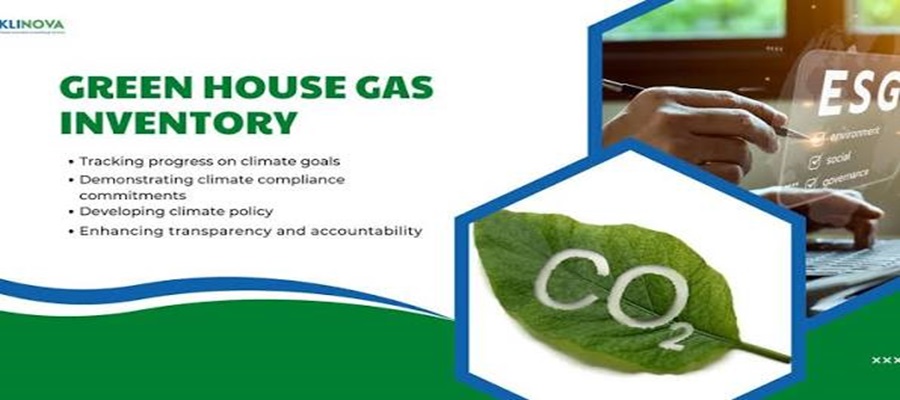
Lagos State has become the first sub-national government in Nigeria to establish a comprehensive Greenhouse Gas Registry, a move aimed at strengthening climate governance, improving emissions accountability and accelerating the state’s transition to a low-carbon economy.

The Lagos State Greenhouse Gas Registry (LGHGR) was unveiled at the Central Business District, Alausa, Ikeja, at a ceremony attended by Prof. Akin Abayomi, commissioner for Health, members of the State Executive Council, representatives of the Federal Ministry of Environment, development partners, TPHG Technologies, the diplomatic and business communities, academics, civil society organisations and the media.
Describing the initiative as a landmark achievement in the state’s environmental sustainability drive, Dr. Babatunde Ajayi, general manager of the Lagos State Environmental Protection Agency (LASEPA), said the Registry marks a defining moment in Lagos’ climate action journey and reflects Governor Babajide Sanwo-Olu’s commitment to building a resilient, climate-smart and environmentally sustainable economy.
According to Ajayi, the digital platform will enable the state to accurately measure, monitor, report and verify greenhouse gas emissions across key sectors, providing credible data to guide environmental policies and climate interventions.
He said the Registry would strengthen evidence-based decision-making, improve transparency and accountability, support national and international climate reporting obligations, unlock carbon market opportunities and boost investor confidence in Lagos’ environmental initiatives.
Ajayi also commended TPHG Technologies for providing the technical expertise that made the pioneering project possible.
Delivering the keynote address, Prof. Abayomi described the Registry as a major milestone that positions Lagos at the forefront of climate governance and emissions accountability in both Nigeria and Africa.
He noted that climate change has evolved into a significant public health and governance challenge, stressing that access to reliable emissions data would enable the state to formulate evidence-based policies, attract climate financing, strengthen resilience and accelerate its transition to a low-carbon economy.
Providing insights into the technical framework of the project, Dr. Mofoluso Fagbeja, lead consultant and chief executive officer, TPHG Technologies, explained that the Registry was developed from the greenhouse gas inventory jointly undertaken by LASEPA and TPHG Technologies in 2022, using 2019 as the baseline year for emissions assessment.
He said the platform is designed to close critical emissions data gaps, particularly within the industrial sector, while supporting effective climate policy implementation, emissions management and sustainable development.
Fagbeja also disclosed that the greenhouse gas inventory estimated that poor air quality contributes to about 35,000 premature deaths annually in Lagos, underscoring the urgent need for stronger emissions control measures and cleaner environmental practices.
In a goodwill message, Balarabe Abbas Lawal, minister of Environment, represented by Mrs. Adenaike Olunimpe Oludunni, federal controller of Environment in Lagos, commended Lagos State for pioneering the initiative, describing it as a significant contribution to Nigeria’s climate commitments.
He said the Registry aligns with the country’s Nationally Determined Contributions (NDCs) under the Paris Agreement and supports the Federal Government’s Energy Transition Plan, while reaffirming the ministry’s commitment to deeper collaboration with Lagos State on climate governance and environmental sustainability.

A recently released Henley Passport Index 2026, showed that Nigerian citizens can travel to at least 20 destinations outside the African continent where entry is allowed either visa-free, with a visa on arrival (VOA) at no extra cost, or via an e-visa.

This expanded access opens doors for Nigerian travellers to experience countries in the Caribbean, Asia, and beyond with greater ease.
Below is a comprehensive guide to countries outside Africa which Nigerian passport holders can visit without a traditional visa.
Visa-Free Countries outside Africa for Nigerian Passport Holders:
Barbados
Cambodia – Visa on arrival
Comoros Islands – Visa on arrival
Cook Islands
Dominica
Fiji
Haiti
Iran – Visa on arrival
Kiribati
Lebanon
Maldives – Visa on arrival
Micronesia
Montserrat
Niue – Visa on arrival
Palau Islands – Visa on arrival
Samoa – Visa on arrival
St. Kitts and Nevis
Timor-Leste – Visa on arrival
Tuvalu
Vanuatuul

S&P Global Acquires Agusto & Co. to Strengthen Credit Ratings Across Africa

CIBN, ACAMB Push for Financial Inclusion, Women Empowerment

CMS T&M Launches TMO Rides for Faster, Cashless Transport on CMS–Ajah Corridor

Treepz Partners CMS T&M to Digitise Public Transport on Lagos CMS–Ajah Route

History as Lagos Becomes First Nigerian State to Launch Greenhouse Gas Registry

NRC, Ponzi Scheme Collapses Resulting Loss of Billions of Naira

EFCC Busts NIS Visa Overstay Racket, Uncovers N700m in an Account

Tokenization, Blockchain Technology will Transform Financial Institutions – IMF

From Scarcity to Scale: What Africa Can Learn from India’s Agricultural Transformation

BON Establishes Six Ad Hoc Committees to Modernize Broadcasting




 News2 days ago
See Verified 20 Countries Nigerian Passport Holders Can Travel Visa-Free

 E-Business2 days ago
Report Says Cybercriminals Deploy Malware to Hijack Crypto Wallets, Monitor Browsers Telegram

 Telecom2 days ago
Subscribers, Telcos Warn FCCPC over Airtime Lending Enforcement

 Telecom2 days ago
NCC, REA Partner to Cut Telecom Costs with Renewable Energy

 E-Business2 days ago
NPC Opens 131 Births, Deaths Registration Centres in Anambra

 General News2 days ago
AfDB, Nigeria Urge African Control of Mineral Resources

 General News2 days ago
Lagos Chamber Opposes 21 Percent Pension Contribution, Warns of Job Losses

 Telecom2 days ago
Nigeria Pushes for United African Front Ahead of Global Telecoms Elections