

Broadcasting
The Voice Nigeria Springs Up Eviction Surprises


Another Sunday, another round of exciting performances as The Voice Nigeria live shows throw up more surprises! The contestants are now down to 16, with four coming from each team.
This round of live shows involves the four members left from each team performing, with the coach choosing to save one contestant and the three remaining contestants put up for public voting.
This time Nigeria gets to save the two lucky contestants who amass the most votes.
#TeamTubaba kicked off the show with David Operah revealed as the contestant with the most public votes.
Brenda, the tomboy with a strong voice, sang Beyonce’s if I were a boy whilst the shy Jennifer rocked the stage with some diversity by performing Evanescence’s Bring me to life.
The saved David Operah serenaded with R Kelly’s classic I believe I can fly and Viveeyen sang When love takes over by David Guetta and Kelly Rowland.
David Operah was two times lucky as he is saved by Tubaba.
Meanwhile, the last week from #TeamWaje had Arese, Chiche and Dawn up for voting and Nigeria chose to save Arese.
The performances began with Promise singing Miguel’s Adorn whilst Patrick the hustler was next with Reekado Banks’ Katapot. Michael, affectionately known as Waje’s “jollof rice”, sang John Legend’s Everybody Knows and the recently saved Arese sang Inogen Heap’s Hide and Seek. Waje saved Michael.
#TeamTimiDakolo was next as Nigeria had to pick from Armstrong Martins, Kofo or Tobore. Armstrong came through with the most votes and was saved.
The music teacher and fan favourite Cornel waxed nostalgic as he performed Bryan Adams’ Have You Ever Loved a Woman whilst Dewe gave an amazing performance singing Fire by Bez.
The recently saved Armstrong Martins sang Let it Go by James Bay andVicky sang Adele’s Make You Feel My Love. Vicky, one of the few ladies left, is saved by Timi.
From #TeamPatoranking, the last show had Uche Michael, Benjamin and DNA all up for eviction and Sunday’s show revealed that Nigeria had chosen to save DNA.
Linda Inneka kicked off her team’s performances with Man Down by Rihanna, followed by the ladies’ man Chike who sang The Weeknd’s Earned it.
The twin duo DNA sang Justin Bieber’s Love Yourself, and Nonso gave a brave performance singing D’banj’s Emergency. Patoranking saved the energetic Nonso.
Public voting opened immediately after Sunday’s show and closes on Wednesday, the 6th of July, 2016.
You can also vote via WeChat. Simply download the WeChat app on your smartphones or tablets, add the AfricaMagicTV ID, select the vote option and register for voting using your One Time Pin.
Make sure you tune in to Africa Magic Showcase (DStv 151) on Sunday to catch The Voice Nigeria, and also catch all the highlights from the show on Wednesday at 8.30pm and 7pm on Galaxy TV and ONtv respectively.
You can also watch repeat episodes on Africa Magic family (DStv 151 and GOtv channel 2) every Tuesday at 5pm Nigerian time.


Broadcasting
Why We’re Partnering With NIHOTOUR To Bring Nigerians In South Africa Home – Steve Babaeko

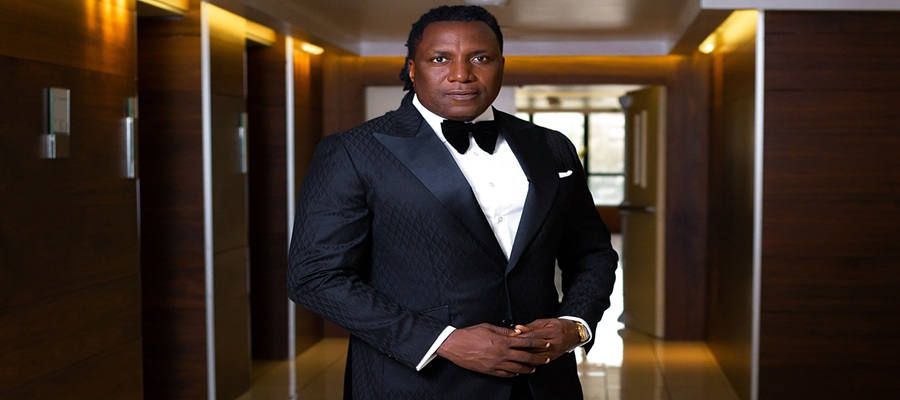
When Nigerians began arriving back home on emergency flights following an ultimatum from anti-migrant groups in South Africa, Steve Babaeko, alongside The Nigerian Institute of Hospitality and Tourism (NIHOTOUR), saw an opportunity to step up for his fellow citizens.

Steve Babaeko
The CEO of X3M Ideas explains that he saw a deep obligation, one that had nothing to do with advertising and everything to do with hospitality. For Babaeko, it was a reminder that an agency owes a duty of care to the community it exists within.
That conviction shaped the creative agency’s partnership with the Nigerian Institute of Hospitality and Tourism (NIHOTOUR) for the newly launched ‘Welcome Home’ pilot programme at Murtala Muhammed International Airport (MMIA) in Lagos. Rather than simply crafting a messaging campaign around the crisis, X3M Ideas helped design a tangible, physical system.
“This wasn’t built as a campaign about a crisis,” Babaeko said. “It was a hospitality agency deciding what it owes its own citizens the moment they land.”
For Babaeko, what X3M has built is infrastructure, something returnees can physically walk through, use, and benefit from the instant they clear the arrival gate.
With the MMIA pilot now officially running, NIHOTOUR directs returnees to immediate support services and issues them a Returnee Card. This card grants individuals a free first night at partner hotels, immediate transport assistance from the airport, and fast-tracked business registration support.
Furthermore, the initiative features a dedicated Restart Desk to assist returnee entrepreneurs and tradespeople with job placement referrals and business registration. This operates alongside a public Homecoming counter that tracks the cumulative number of returnees welcomed, businesses restarted, and jobs facilitated.
Spotify has announced a partnership with Afro Nation Portugal as the festival’s official sponsor and exclusive streaming partner for the 2026 edition, in a move aimed at bringing African music and festival experiences to a wider global audience.

The collaboration will provide fans with a dedicated Afro Nation destination on Spotify, featuring official festival playlists, participating artists and selected performance videos after the event.
The 2026 edition of Afro Nation Portugal is scheduled to hold from July 3 to July 5 in Portimão, Portugal.
Spotify said the partnership would enable fans to engage with the festival before, during and after the live event, regardless of their location.
The streaming platform noted that the initiative aligns with its continued investment in promoting African music and supporting its growing international audience.
Speaking on the partnership, Spotify’s Content Marketing Manager for Sub-Saharan Africa, Mr Rifumo Mdaka, described Afro Nation as a global showcase for African music and culture.
“Afro Nation is more than a festival; it is a global expression of African music, fan culture and creative influence.
“Our partnership is about helping that moment travel further through our first collaboration with Afro Nation of this nature.
“By bringing the festival to Spotify, we are giving fans a place to connect with the artists, performances and stories that define the festival long after the final set,” he said.
According to Spotify, the collaboration will also include exclusive festival content, artist discovery features, curated playlists and fan-focused storytelling.
The company said it would document the journey of a selected fan travelling to the festival as part of efforts to showcase the growing global appeal of African music.
Also speaking, Director of Global Partnerships at The Malachite Group and Afro Nation, Ms Clémence Blum, said the partnership represented a major step in expanding the festival’s global reach.
“Afro Nation has always been more than a festival. It is a platform built to celebrate African music, support artist breakthroughs and connect a global community through culture.
“Our partnership with Spotify reflects the shared role we both play in helping artists reach new audiences and giving fans deeper ways to engage with the music they love,” she said.
Spotify said selected live performances from the festival would be made available on the platform after the event, allowing fans around the world to relive the performances on demand.
The company added that the partnership reinforces its commitment to promoting African music, supporting artists and strengthening connections between creators and audiences across the globe.

Lebara Nigeria has announced the launch of Lebara Play, described as Africa’s first telecoms-owned micro-drama platform aimed at expanding opportunities for African storytellers and distributing local content to global audiences.

The company said the platform is designed to support creators by providing a new distribution channel for African narratives while making content accessible to both subscribers and non-subscribers worldwide.
Lebara Nigeria added that the platform will debut with an original production titled Imported Bahu, produced by Forever 7 and starring Osas Ighodaro.
The project is directed by Hamisha Daryani Ahuja, known for her work on Namaste Wahala, and is positioned as the first in a series of original content offerings.
According to the company, Lebara Play is built to serve both creators and audiences, with a focus on showcasing African stories to a global market and strengthening the continent’s growing digital entertainment ecosystem.
Speaking on the company’s vision at the launch, Teniola Stuffman, chief executive officer, Lebara Nigeria, said the organisation was focused on building a telecommunications ecosystem that combined innovation, connectivity, and customer-centric digital experiences.
Stuffman said, “This platform represents an important step in our vision of building a telecommunications brand that delivers more than connectivity. We are creating an ecosystem where technology, innovation, and entertainment come together to provide meaningful experiences for customers while unlocking new opportunities for creative talent and content development across Africa.”
Beyond entertainment, she said, industry stakeholders believed the initiative demonstrated how global telecommunications expertise could be adapted to local market realities.
“Drawing from decades of experience across multiple international markets, Lebara is expected to introduce additional innovative services aimed at enhancing convenience, engagement, and value for Nigerian consumers,” she said.
Stuffman added that the company’s strategy reflected growing recognition that today’s telecom customers demanded more than network access, pointing out that consumers increasingly seek brands that offer seamless digital experiences, personalised services, and access to content that enriches everyday life.
Stuffman stated that LebaraPlay also aligned with the company’s commitment to supporting Africa’s creative economy by creating new distribution channels for content creators, producers, and digital storytellers.
“Through a combination of original productions and strategic partnerships, the platform seeks to create opportunities for talent while delivering quality entertainment to audiences,” she said.
Hamisha Daryani, founder of Forever7 Entertainment, expressed excitement over the partnership with Lebara Nigeria and the premiere of her latest micro-drama series on the LebaraPlay platform.
She stated that Lebara’s customer-centric vision aligns closely with the values of Forever7 Entertainment, making the collaboration a natural fit for both organisations.
Daryani revealed that the new microdrama featured a star-studded cast drawn from both Bollywood and Nollywood, in a compelling romantic story designed specifically for mobile audiences.
According to her, the production is developed with mobile-first consumers in mind, delivering premium entertainment in short, engaging formats at an affordable cost.
“Microdrama, which typically consists of short episodes of about three minutes, is redefining how audiences consume entertainment. It offers a convenient, immersive, and affordable viewing experience for people who increasingly access content through their mobile devices,” she said.
She added that the platform was created to support seamless creative expression while providing new opportunities for content creators across the continent.
Daryani further explained that the microdrama format has already achieved significant success in Asia and the Americas and is now gaining traction across Africa.
She said the initiative would create opportunities for emerging creatives through knowledge sharing, skills development, content curation, and industry collaboration, with the Nigerian rollout of the featured series expected to commence in July.

World Bank Okays New $1.25Bn Loan for Nigeria

Xenophobia: MTN Nigeria Belongs to Nigerians, Not Only South Africans — Toriola

SEC Grants Approval to Luno, Other Crypto Firms under Regulatory Sandbox

MTN Nigeria Celebrates Volunteers at Y’ello Care Impact Showcase

Listicle: 10 Essential Meta Safety Tools Every Parent and Teen Should Know

Mobile Internet Gender Gap Widest in Africa – GSMA

London Strengthens Global Investment Ties with Africa @ First Ever London-Africa Business Summit

FG Targets Alleged N3tn Capital Flight, Opens Airtime Credit Market to Nigerian Fintechs

Nigeria Launches FreeTV Nationwide

NASENI Trains 50 Women in Kano on Renewable Energy Technologies Under She-Powers Initiative



 Telecom2 days ago
MTN Foundation, Microsoft Empower Nigerian Educators with AI Integration Skills

 Telecom2 days ago
NCC Raises Alarm as Nigeria Lags in Fibre Internet, Pushes for Urgent Expansion

 E-Financial3 days ago
UBA Surprises Thousands of Customers with Over ₦400 Million Cash Bonus

 Broadcasting2 days ago
Spotify partners Afro Nation Portugal to expand African music experience

 Telecom2 days ago
Airtel Nigeria CEO Urges Adoption of Intelligent Technology Platforms to Accelerate National Growth

 E-Financial2 days ago
CBN Cracks Down, Revokes Licences of 46 Microfinance Banks

 E-Business2 days ago
Report Reveals More than Half of Users Encountered Fraud or Scams Online

 Telecom2 days ago
Google Rolls Out Fresh AI Projects Across Africa, Opens New Innovation Hub