

E-Business
After Data WAR, What Next for Telcos’ Customers


In a ‘Signature Research’ series, an industry leading perspectives on telecoms technology, competition, and market evolution released by Ovum in November 2011, the analysts without much equivocation pointed at ‘customers’ and ‘cost reductions’ as the prime focus areas for telecoms service providers today.
They opined that, if tackled correctly, these objectives are not mutually exclusive: they are complementary. The Signature Research reflected the breadth and depth of Ovum’s coverage, including informed opinion, advice on how to capitalize on industry developments, and intelligence in the form of forecasts and market insight.
In a nutshell, analysts at Ovum identified thus, “telco customer service directors have identified that ‘addressing the customer service model’ is a top priority while CIOs have acknowledged that ‘improving the customer experience’ is a primary area for investment.
This demonstrates that telcos have recognized that their future lies with their existing customers.
However, customers’ service expectations have been raised by their experiences in other verticals, meaning that telcos will need to work very hard to engage, retain, and satisfy their existing customers.
It seems the telcos in Nigeria are borrowing a leaf from the Ovum’s perspective, as they have recently been entangled in a ‘data price war’; a sort of cold war with Airtel first to adjust its data plans, starting with the Android market.
Airtel today offers over 2GB data for less than N2000 and 4.5GB for N3000 on BlackBerry phones it could be applied on Android too; a feat that seemed impossible few years ago.
Glo followed with an even more enticing data plans, to the extent 12GB of internet data for sells for N5000.
Prompted by the enticing packages of the two operators mentioned above, MTN and Etisalat threw their hats in the ring. Are you kidding me? 3.5GB data on MTN line for N2000 and Etisalat offering with 1.5GB for N1000 and 3.5GB for N2000 club.
Well, this piece is not meant to dwell entirely on the so called ‘new data price regime’, but to remind the telcos that there are other nagging issues they must swiftly address – customer care.
Take the issue of electricity for instance. Mr. Babataunde Fashola, Minister of Power, Works and Housing, and the National Electricity Regulatory Commission (NERC) have been labouring towards convincing Nigerians on how to pay more for power, so that the GENCOS and DISCOS of this world will perform better. The argument has always been: provide power and we shall willingly pay.
In the case of telcos and the customers, the case is a little bit different in the sense, telcos seems to be covering their tracks by stuffing the mouth of the customers with price reductions. How do I mean? Remember, some time in 2015, the telcos, knowing that revenue from voice services has been on downward trend, they introduced ‘buy-now-pay-later’ campaign, where customers are to live as real kings; no more running out of credit. Though that is still on play, but the stem is no more there. That is not to say Nigerians have totally ditched that scheme. No.
Customer Service Is Lacking
Customer service is key! I think most customers would prefer an uninterrupted quality of service. Of what essence is giving one 2.5GB of data at the lowest price, but he ends up utilising only 1GB. That is obtaining by tricks; in other climes it would be called a deception and scam.
I believe such customer would prefer a moderate price regime with adequate service provisioning. There is no sacred cow here, but all telcos default at one point or the other. Yes, I admit that telcos are at the forefront of deepening the ecosystem, but there are plenty rooms for improvement.
From the same study quoted above, Ovum emphasized thus, “Customer service does not describe a point-to-point relationship between a telco and its customers, nor is it a relationship that exists purely to resolve problems. The relationship between a telco and its customers extends all the way from pre-sales research to in-life usage as customers look to purchase new services, upgrade existing ones, and add new features throughout their lifecycle. To secure the customer relationship in the face of disruptive competitors, telcos must stay with the customer through every step of their lifecycle”.
Please, pay attention to this, “Telcos need to be accessible, responsive, consistent, and effective. Web-based customer service delivers on accessibility and consistency and has the added benefit of diverting costs from more expensive alternatives such as contact centres, and has the ability to scale without adding exponentially to costs”. What can I say, as a result of Ovum’s breath-taking postulation, telcos in Nigeria should not cease from increasingly investing in web-based platforms, software, and business processes to improve their online customer service channels.
When the initial results are encouraging, with customer service-related capex, call volumes, and repeat calls to contact centers will start to decline.
“However, online customer service tends to lack the personal touch that other channels provide, and telcos need to ensure Online customer that they retain the hearts and minds of their customers”.
At this junction, it is pertinent to acknowledge the Nigerian Communications Commission (NCC) for using its policy thrust in such a positive manner that now innovation dictates the pace of competition aimed at customers’ satisfaction.
ICT Investment
Fortunately, Barrister Adebayo Shittu, Minister of Communications, speaking at the first industry stakeholders forum convoked by the Ministry on his assumption of office, he acknowledged the need for improved infrastructure, as “Inadequate ICT infrastructure is the bane of ICT development in the country and a leading cause of quality of service deficiencies. From broadband penetration to last mile fibre optic connectivity, this infrastructure deficit is preventing all Nigerians from gaining affordable and reliable access.
Lack of affordability, due in part, to the proliferation of taxes, fees, levies and associated costs further inhibits investment in infrastructure required to support and grow our boisterous ICT market”, he said.
Nigeria’s ICT sector is growing and in view of the prevailing potentials, the Federal Government is targeting additional Foreign Direct Investment in the sector in excess of N4trillion ($15billion).
To this end, the government needs to stimulate the industry for further investments and deal with the issue of multiple taxation particularly the notorious right-of-way, while the telcos become more customer-centric to ensure that subscriber get value for their money.


Easy interaction with exclusive Kaspersky reports, geo-filtering and actionable intelligence in a single click: expert insights on Advanced Persistent Threats (APT), Crimeware and Industrial Control Systems (ICS) threats are now available directly in Kaspersky Threat Intelligence Portal — with charts and visuals rendered inline.

In an era of increasingly sophisticated and frequent attacks, threat intelligence inevitably evolves into a business enabler that equips security teams with strategic advantage in their mission to back their company’s stability and growth.
Kaspersky, a recognised leader in threat intelligence, facilitates informed decision-making and proactive risk mitigation by introducing simplified access to actionable and relevant threat insights.
Kaspersky Threat Intelligence Reporting is a subscription-based service delivering over 200 in-depth analysis reports annually. These insights are compiled by Kaspersky’s Global Research and Analysis Team, Industrial Control Systems Cyber Emergency Response Team and Threat Research experts through the continuous tracking of more than 900 threat actors and campaigns.
Following the update, all reports previously representing a library of static PDF files (that is more than 2000 exclusive Kaspersky reports published to date) are now structured and can be examined directly in the Kaspersky Threat Intelligence Portal. For offline use, the standard PDF download format remains available as well.
The update also introduces deeper integration within each report, featuring direct links to indicators of compromise (IoCs), detection rules (including YARA), and MITRE ATT&CK® techniques. Users can now perform a single-click drill-down into specific threat actors, malware families and Common Vulnerabilities and Exposures (CVEs) across diverse geographies and industries.
Smart geo-filtering streamlines investigations by prioritising content explicitly mentioning a selected country, followed by broader regional intelligence, giving analysts a complete geographic view in a single query.
Enhanced Kaspersky Threat Intelligence Reporting supports the following use cases:
- Customised content discovery: apply geo, industry and software filters to instantly retrieve a list of relevant reports.
- Exclusive intelligence: access the most recent incident investigation reports, including those without public disclosure, to understand the nature of an attack and identify the actions required for mitigation.
- Actionable intelligence extraction: extract and apply threat data from the reports and apply it across specific infrastructure to detect traces of compromise.
- In-depth Threat Lookup and contextual analysis: investigate suspicious indicators identified within the network and quickly determine if a specific IoC is linked to a related threat report.
“Empowering cybersecurity teams in their mission-critical daily work to ensure business resilience in a complex threat landscape. This is the main driver behind our ongoing visual and functional improvement initiative.
While updating Kaspersky Threat Intelligence Portal, we focused on refining the customer experience by optimising processes of active investigation, proactive incident monitoring and detailed mitigation techniques,” comments Alexander Mazikin, Head of Threat Intelligence Product Line at Kaspersky.


Weebly, US-based free, beginner-friendly, drag-and-drop website builder and eCommerce service, will no longer be available for customers in 67 countries, including Nigeria, after September 2026, according to an email seen by Nigeria CommunicationsWeek.

Weebly said it is “winding down” services in different nations “due to changes in regulation and to simplify our global operations”.
The firm released a timeline of gradual changes, to help existing users access their data before the site shuts down.
Starting June 29, customers of 67 countries were no longer able to publish any new pages.
September 27, 2026: Weebly websites will be unpublished.
Before this date, users should download site content and data. Follow these steps:
Go to Account Settings, click on My Data, and select Download My Data.
This will help you migrate your content to another website provider, or retain it.
Concerned about privacy? Ask Weebly to delete your data, through the Erase Data and Forget Me option under the My Data tab on your account page.
December 26, 2026: Last date of accessing Weebly account.
Until this date, you will have access to the account, although sites will be unpublished.
This period helps users move their site, domains, and data to another service.
Domain names can be moved to another registrar only after 60 days from the registration date.
According to the Weebly website, users must make sure that they do not make changes to your registrant contact information (email, phone number, first/last name), as this will lead to a 60-day registrar lock and prevent you from transferring your domain name.
Note that domain name transfers work differently for country-specific domains; users must contact Weebly’s support team for assistance.
How to unlock, transfer domain name
From your Weebly Dashboard, go to websites, and click on Domains, then select Manage Domain.
Disable registrar lock, get EPP authorisation code, and copy the full code.
Disabling registrar lock will also disable privacy protection. It is important to set privacy protection once again with the new registrar.
Follow the instructions for the newly chosen registrar as the rest of the transfer process will be managed by them
Why is Weebly winding down?
While the firm attributed it to “a change in regulation,” online users have argued that Square, which acquired Weebly in 2018, is pushing its platform ‘Square Online’.
Square is originally a US-based payment processor, and the firm says it has since evolved into the “largest business tech platform”.
It calls Square Online a “free online store” but clarifies that those who do not sell online can also use it to build their websites.
In an earlier support update for the Weebly Website Builder, Square Online was consistently referred to as a better alternative, although at the time, it was said that Square “has no plans to discontinue the Weebly website builder”.
Which countries will Weebly no longer be available in? Albania, Algeria, Andorra, Armenia, Aruba, Azerbaijan, Bahamas, Bahrain, Bangladesh, Barbadoa, Belarus, Benin and Bosnia and Herzegovina.
Others are: Cambodia, Cameroon, Chile, Colombia, Congo, Costa Rica, and Côte d’Ivoire.
Also affected are: Ecuador, Egypt, Ethiopia, French Polynesia, Gabon, Georgia, Ghana, Guinea, Iceland, Jordan, Kazakhstan, Kenya, Laos, Malaysia, Mauritius, Moldova, Montenegro, Morocco, Nepal and New Caledonia.
The rest are: Nigeria, Oman, Pakistan, Palau, Paraguay, Peru, Russia, Saudi Arabia, Senegal, Serbia, Sierra Leone, Singapore, South Korea, Suriname, Taiwan, Tajikistan, Tanzania, Thailand, Turkey, Uganda, Ukraine, United Arab Emirates, Uruguay, Uzbekistan, Vietnam, Zambia and Zimbabwe.
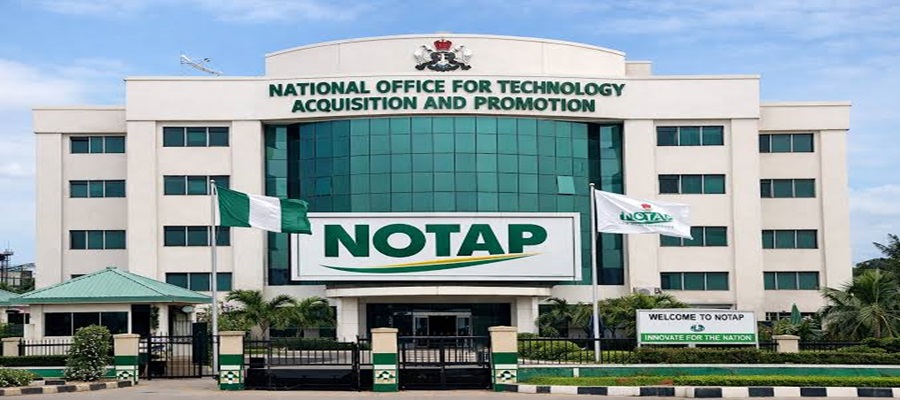
National Office for Technology Acquisition and Transfer (NOTAP), has commenced the process of patenting and commercialisation of research works by universities and other research institutions in the country.

Dr. Obiageli Amadiobi, director general of NOTAP
Dr. Obiageli Amadiobi, director general of NOTAP, stated this in Abuja, during an interaction with journalists on her achievements since assuming office.
Speaking on the theme, “Strengthening Indigenous Capacity: NOTAP’s Drive for Technology Transfer, Local Content Development, and Innovative activities,” Amadiobi said the agency had involved both the academia and industry so that researchers can work on topics brought forward for commercialisation purpose.
“My minister is very intentional about this– very intentional about commercialisation of research results, which we have already submitted to him. They are meaningful researches, which we need to commercialise.
“We have established 69 intellectual property technology transfer offices in 69 universities that we are still counting. We have informed the vice chancellors of Nigerian universities to set up such offices and we will come and educate them on intellectual property and technology transfers.
“As we are doing this, we are also taking record of all the researchers of these universities and research centres and documenting them in a compendium.
“So, we have compendiums from the universities to us and we put them in a database. If you will recall, recently, the ministry, our supervising ministry, which is the Federal Ministry of Innovation, Science, and Technology, launched a programme titled Energise Commercialisation. This entirely was for commercialisation of all R&Ds,” she said.
On research Institutions carrying out research on areas of industry needs, she said, “NOTAP is bridging the gap between research and development with industry needs, “it is on our programme called the NITDF, NOTAP Industry Technology Transfer Fellowship. By this programme, we engage the universities and the industries, in what we call the triple helix. We liaise with the universities and the industries to sponsor, the industries will sponsor a Ph.D candidate in a Nigerian university to conduct relevant researches.
“They will provide the topics that they want researches for and such students will research on that with the assistance of the industries, because they wear the shoes, so they know where it pinches them. But usually, there are Ph.D candidates already established. This year alone, we certified about 15 of them to enter into this programme and they have gone into the various universities.
“And we are still looking for people to update some of the projects; the research topics we already have. But we are not getting enough persons to do the researches. So, we are going to do further advertisement to see if other candidates will come up.

DSS Spyware Acquisition Enables Illegal Wiretaps, Detentions – The ICIR

Microsoft to Lay Off 4,800 Workers

Access Bank, Fifth Chukker and UNICEF Renew Commitment to Expanding Educational Opportunities for Nigeria’s Most Vulnerable Children

IHS Nigeria, FCT-HSES Concludes Clean Cooking Energy Campaign “Project Breathe Clean Air” in Abuja

Kaspersky Transforms Threat Intelligence Reporting into an Interactive Content Hub

Mobile Internet Gender Gap Widest in Africa – GSMA

Nigeria Launches FreeTV Nationwide

NASENI Moves to Digitize CCB’s 5m Assets Declaration and Operations

CANAL+ Partners Samsung to Pre-Load DStv Stream on New Samsung TVs In Nigeria, Other African Countries

UK, Nigeria Launch £15m Growth Programme to Accelerate Economic Transformation




 General News1 day ago
NIS Deploys Advanced Surveillance Masts, other Critical Infrastructure to Boost Border Security

 E-Financial1 day ago
Tokenization, Blockchain Technology will Transform Financial Institutions – IMF

 Broadcasting1 day ago
Obi, NDC Presidential Candidate Faces N50Bn Defamation Claim over Alleged Podcast Remark

 E-Business1 day ago
Weebly Websites to Shut Down for Nigeria, 66 Other Countries from September

 Telecom1 day ago
No Plans for Fresh Tariff Hike – MTN

 E-Financial1 day ago
FG Denies N8 Trillion ‘Shadow Budget’, Says IMF Quoted out of Context

 General News1 day ago
PufferPay CEO to Keynote Business Journal Fintech & Financial Inclusion Roundtable 2026

 Telecom1 day ago
Airtel Africa Foundation Equips 200 Young Women with Digital Skills to Drive Nigeria’s Tech Economy