

E-Financial
Analysts React to CBN New MPR, Falling Naira

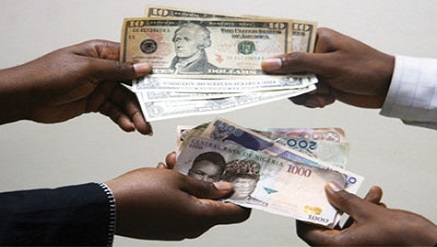
Mr. Lukman’ Otunuga, research analyst of FXTM, said the global markets received with shock the Central Bank of Nigeria’s decision to increase the monitory policy rate from 12 to 14 per cent.
Otunuga in an email to Nigeria CommunicationsWeek said, “Central Bank of Nigeria shocked the global markets during trading on Tuesday following the unexpected decision to raise Nigerian interest rates in an effort to quell the spiraling inflation.”
CBN on Tuesday raised the monetary policy rate, which serves as national key lending rate, to 14 percent, in order to encourage savings and investment.
Speaking after the monetary policy committee (MPC) meeting in Abuja, Godwin Emefiele, governor of the bank, said the committee voted to hike interest rates in the face of rising inflation.
“The committee noted that the negative real interest rates did not support the recent flexible foreign-exchange market as foreign investors’ attitude had remained lukewarm, showing unwillingness in bringing in new capital,” Emefiele said.

“The Committee noted that inflation had risen significantly, eroding real purchasing power of fixed income earners and dragging growth.”
He said the committee voted that MPR be raised from 12 percent in May to 14 percent — the highest in at least 10 years.
Cash reserve ratio (CRR) and liquidity ratio were maintained at 22.5 percent and 30 percent respectively.
“The MPC was further concerned that while the situation called for obvious tightening of the monetary policy stance, the technical recession confronting the economy and the prospects of negative growth to year-end needed to be factored into the policy parameters.”
The committee commended the CBN’s introduction of a flexible foreign exchange regime.
But, Otunuga said, “This has been the second time interest rates have been raised within six months in an effort to mitigate the mounting pressures of a weakening Naira. With the current rates at 14%, this has been the highest level ever and displays how the central bank will do all it must to guide the nation back onto the path of economic recovery.
“Sentiment still remains bearish towards Nigeria, and the recent decline in oil prices may punish the oil export nation further. As of now, Naira vulnerability may be a theme and further declines in value could be expected as the local currency is guided by the natural forces of supply and demand. It should be kept in mind that the nation’s problem remains depressed oil prices and the key is diversification which could reap benefits in the longer term.
Similarly, Mr. Charles Robertson, Global Chief Economist, Renaissance Capital, said that “Nigeria is getting it right..the gap between the official rate and the parallel rate is down from an uninvestable 80% to 20%”
He said that by contrast, Egypt with its recent measures to squeeze liquidity provided to Bureau de Changes (BDCs) is echoing what Nigeria did a few months ago and is currently heading in the wrong direction.
According to him, “Angola is in a strange world of its own – with a differential of over 70%.
“As we keep telling investors – have a look at Nigeria – they are clearly much closer to a clearing rate for the currency (our REER 20 year fair value estimate is 315-320/$)”.


The next currency crisis could accelerate the shift of the roughly $315 billion global stablecoin market into a digital-dollar alternative for citizens in emerging economies, notably in regions like sub-Saharan Africa and Latin America.

As local fiat currencies face devaluation and high inflation, citizens and businesses are increasingly utilizing smartphone-based stablecoins (such as USDT and USDC) as hedges and primary mediums of exchange.
According to the International Monetary Fund (IMF), the rapid adoption of dollar-linked digital assets—particularly in countries heavily affected by inflation like Nigeria—poses significant risks to monetary sovereignty.
With up to 95% of surveyed individuals in some African markets preferring to receive payments in stablecoins over local fiat, the rising volume of these decentralized, cross-border channels weakens domestic currency demand and dilutes the effectiveness of local monetary policy.
IMF observed in a report titled “Stablecoins in Nigeria: A Growing Cross-Border Channel” noted that the widespread use of stablecoins poses risks to monetary sovereignty, particularly as more individuals and businesses turn to digital dollar-linked assets for savings and transactions.
Nodding in agreement is Future Investment Initiative Institute (FII Institute), a non-profit organisation run by the Public Investment Fund, Saudi Arabia’s main sovereign wealth fund.
FII Institute said that central banks face structural challenges.
And according to the institute, when citizens move savings out of national banks and into private digital wallets, conventional capital controls lose their grip.
Institutions like the Bank for International Settlements warn that interest-bearing stablecoins compete directly with domestic-currency deposits, complicating financial oversight and making smartphone-based transfers incredibly difficult for authorities to monitor.
In Nigeria, Naira depreciation has pushed users toward dollar-stablecoins, according to report by Gino Matos in cryptoslate.com.
A stablecoin is a type of cryptocurrency designed to maintain a steady value by pegging its price to a reserve asset, such as a fiat currency (e.g., the U.S. dollar) or a commodity (e.g., gold).
They act as a bridge between traditional money and the digital asset world, providing the speed of crypto without the extreme price swings of assets like Bitcoin.
Federal government has reopened three federal government of Nigeria (FGN) bond issues valued at N1.2 trillion for subscription as part of efforts to raise long-term funds from the domestic debt market.

The Debt Management Office (DMO), which announced the offer on Tuesday, said the three reopened bond issues are each valued at N400 billion.
According to the DMO, the first offer is the January 2035 FGN Bond, a 10-year reopening, carrying an interest rate of 22.60 per cent per annum.
The second is the May 2028 FGN Bond, a 15-year reopening, with a coupon rate of 15.45 per cent per annum, while the third is the June 2037 FGN Bond, a 20-year reopening, also valued at N400 billion.
The office said the bond auction is scheduled for July 20, while successful subscriptions will be settled on July 22.
It explained that the bonds are offered at N1,000 per unit, with a minimum subscription of N50 million and additional investments in multiples of N1,000.
For the reopened bonds, the DMO said successful bidders would pay a price based on the yield-to-maturity that clears the auction, in addition to any accrued interest on the instruments.
Interest on the bonds will be paid every six months, while the principal will be repaid in full on the respective maturity dates.
The DMO reaffirmed that FGN bonds are backed by the full faith and credit of the Federal Government and constitute obligations chargeable on the general assets of the federation.
It added that the bonds qualify as trustee investment securities under the Trustee Investment Act and enjoy tax exemptions for eligible investors, including pension funds, under the Company Income Tax Act and Personal Income Tax Act.
The bonds are listed on the Nigerian Exchange (NGX) and FMDQ Securities Exchange and also qualify as liquid assets for banks in computing their liquidity ratios.
FGN bonds are long-term debt instruments through which investors lend money to the Federal Government in exchange for periodic interest payments and repayment of the principal at maturity.
Gigbanc, Nigerian fintech startup, has announced it is winding down operations, after three years, citing a tough fundraising climate.

Paul Omoregie Okundaye, and Babatope Oni, co-founders of Gigbanc
The company, which set out to build cross-border financial infrastructure for African freelancers, creators, entrepreneurs and businesses, confirmed the decision in a statement signed by its co-founders.
“After careful consideration, Gigbanc’s leadership has made the difficult decision to wind down operations,” the company said, adding that the move “reflects the broader funding environment affecting early stage startups in Africa, a challenge that has been widely documented across the ecosystem.”
Since its founding, Gigbanc grew a community of more than 150,000 people across multiple countries and processed over $7.28 million (N10 billion) in payment volume, helping thousands of users receive their first international payment.
The company also ran conferences, fellowships and community events aimed at connecting entrepreneurs and creators across the continent.
`Despite the shutdown, Gigbanc said it is not walking away emptyhanded.
The company disclosed that it is in active acquisition discussions with a prominent financial infrastructure firm, with further details to be shared once the process closes.
Paul Omoregie Okundaye, co-founder and CEO, and Babatope Oni, co-founder and CTO, framed the closure as the end of a chapter rather than the erasure of Gigbanc’s impact.
“While Gigbanc is winding down operations, we don’t see this as the end of what we built together. Instead, we see it as the completion of an important chapter,” the founders said. “The relationships, lessons, community, and impact we’ve created will continue to outlive the company itself.”
The founders thanked users for their trust throughout the company’s run, citing everything from transactions and feature requests to bug reports and criticism as forces that shaped the product
“We leave this journey incredibly proud. Proud of our team, who gave everything they had.
Proud of the community that rallied behind us,” they said.
Gigbanc’s exit adds to a growing list of African startups that have shut down or scaled back operations in recent years as venture funding on the continent has tightened, with founders increasingly citing capital scarcity as the primary driver behind closures and consolidations.

Next Currency Crisis May Turn $300Bn in Stablecoins into National Currencies

NIHSA Warns States of Possible Flood within Seven Days

FG to Raise N1.2 Trillion via Fresh Bond Offer – DMO

Gigbanc Nigerian Fintech Startup Closes Shop after 3 Years

Mbunabo, Nigerian Filmmaker Accuses Ghana TV Stations of Pirating Nollywood Films

NRC, Ponzi Scheme Collapses Resulting Loss of Billions of Naira

Nigeria Launches FreeTV Nationwide

NASENI Moves to Digitize CCB’s 5m Assets Declaration and Operations

Lebara Nigeria Launches Lebara Play, Africa’s First Telecom-Owned Micro-Drama Platform

CANAL+ Partners Samsung to Pre-Load DStv Stream on New Samsung TVs In Nigeria, Other African Countries




 News2 days ago
Xora Finance, Fintech Firm Refuses to Hire Nigerians over Alleged Dishonesty

 Telecom2 days ago
NCC Advances Dig Once Policy, Engages Stakeholders on Cost-Based Framework for Duct Sharing

 Telecom2 days ago
NCC to Keynote Telecom Sector Sustainability Forum 7.0

 General News2 days ago
FG Secures Fresh $208.3m World Bank Loan for Cash Transfer
 News2 days ago
How Ponzi Scheme Victims can Seek Legal Remedies — Lawyers

 News2 days ago
PalmPay Nigeria Appoints Samuel Oluyemi as Chief Operating Officer

 Telecom1 day ago
MTN Nigeria Slashes Cost of Broadband Internet Router, Unwraps New Data Bundles for Low-Budget Users

 General News2 days ago
SERAP Sues INEC over Alleged N800Bn 2027 Tinubu Campaign Fund