

News
More Headache for CDMAs as Report Paints Gloomy Year

A new report by Ernst & Young, has posted a poorer outlook this year for smaller mobile operators like those of the code-division multiple access (CDMA) segment in Nigeria, tracking a stringent operational conditions as the possibility of government bailout appears bleak, Nigeria CommunicationsWeek can report.
According to the Ernst & Young’s global report on ‘top 10 risks in telecommunications 2012’, the survival of CDMA operators hangs in the balance.
Specifically, the report assets that worldwide, telcos face daunting task of staying afloat due to competing demands for new products and service.
Ernst & Young, specialist in assurance, tax, transaction and advisory services in their latest report stated that a lack of will to move away from a defensive business strategy would be the most heinous crime for failure by telecom operators in 2012.
Jonathan Dharmapalan, global telecommunications leader at Ernst & Young says: “Telecom operators across the world face changing demands from customers, competitors and regulators, creating new pressures across their organizations. Failure to shift their business models to cater to data services is mission-critical for all and is this year’s leading sector risk.
“New approaches to pricing are crucial and operators have an important role to play as telecoms infrastructure become central to the development of other sectors, such as healthcare and utilities.“ he added
This sync with Nigeria CommunicationsWeek’s report of February 12, which quoted Alex Dadson, managing director, Qualcomm West Africa as saying that poor business strategy was responsible for failures among small operators, specifically the CDMA sector in Nigeria.
“The CDMA while an early entrant was also disadvantaged. We did not start out with nationwide CDMA licensing. There were riggings. The interconnect regime weighed against CDMA. All these problems have been subsequently fixed but CDMA took a beating as a result of business strategy, as a result of environmental factors,” said Dadson.
Mrs. Omobola Johnson, minister of communication technology acknowledges the challenges faced by small operators in Nigeria. She told reporters in Lagos recently that her ministry was looking into ways of reducing cost of business operation for them.
“From an investigation we carried out, we discovered that their greatest challenge arose from the cost of carrying their traffic to the point of destination. The cost deploying bandwidth and data from the undersea cables to their areas of need in Nigeria is quite expensive and this has brought a lot of strains on their interconnect charges from other operators,” said Johnson.
“We are presently working with them so that we can resolve their challenges. There must be a level playing ground for all the players in the sector for them to succeed,” the minister enthused.
But the regulatory agency, Nigeria Communications Commission, (NCC) thinks otherwise as its chief executive stated that CDMA operators have no peculiar operational problems that warrant any government bailout at the moment.
Dr. Eugene Juwah, executive vice chairman & CEO of NCC stated in Lagos that the Commission had asked the operators about their condition and they had not told him of any such challenges.
“We are a regulator and we provide a level-playing ground for all the players. There has not been official request from the CDMA community on any issue as per them facing any challenge – except issues that I read in the papers. As I speak, I don’t think they have any problems. I have not got any formal notice that they are having problems,” said Juwah.
Nigerian CDMA operators may have lost business valued at above N10 billion in 2011. The key indicator of revenue loss follows an arithmetic loss of customers from 6.1 million in January to close at 4.6 million by December 2011. The revenue loss calculation is predicated on average ARPU per month of N1, 000 in Nigeria.
Dharmapalan states that for operators to survive under the prevailing global harsh economic climate, they must “keep pace with changing user expectation.” The report ranks as #2 changing customer mindset as a major hiccup operators need to keep pace with to remain afloat. “Failure to do so would mean that demand cannot be turned into value.”
Ernst & Young ranks lack of regulatory certainty as number 10 key concerns among telcos. Adrian Baschnonga, Senior Telecommunications Analyst notes that “regulation of legacy parts of the business is well understood yet policies are evolving quickly in areas such as mobile spectrum release and super-fast broadband deployment. Engaging with a range of stakeholders is needed to help incentivize industry investment.”
“Failure to formulate clear viewpoints on privacy, in terms of responsibilities to end-users and other industry players, could undermine operators’ roles in the digital age” concludes Baschnonga.


Patience Okala, the National Coordinator and Chief Executive Officer of the Nigeria AfCFTA Coordination Office has urged African countries to stop exporting raw materials and instead focus on adding value to its natural resources if it is to fully harness the opportunities offered by the African Continental Free Trade Area.

She stated this on Thursday at the Streamsowers & Köhn 20th Anniversary Business Forum, where she stressed that value addition and beneficiation are essential to Africa’s industrialisation and long-term economic growth.
According to a statement issued on Friday by the Nigeria AfCFTA Coordination Office, she said the AfCFTA goes beyond the elimination of tariffs, serving as a framework for industrialisation, value addition, and job creation across the continent.
“AfCFTA is not only about tariffs; it is also about value addition. Africa has to stop exporting raw materials. We need to add value and ensure that beneficiation is done on the continent,” she said.
Okala also said Africa’s economic transformation would depend on the effective implementation of the AfCFTA rather than on the signing of trade agreements alone.

“We have moved beyond negotiations. The success of AfCFTA will be measured by the extent to which businesses can access new markets, trade seamlessly across borders, and benefit from the opportunities created by the agreement,” she said.
She noted that Nigeria had intensified efforts to implement the agreement under the leadership of the Minister of Industry, Trade and Investment, Dr Jumoke Oduwole, including the development of simplified AfCFTA guides in six languages to help businesses understand and take advantage of opportunities under the trade pact.
Okala called for stronger collaboration among governments, regulators, and the private sector to eliminate barriers to trade and investment and build a truly integrated African market.
“As we move from policy to implementation, our collective responsibility is to ensure that the opportunities created by AfCFTA become practical realities for businesses, particularly MSMEs, women-owned enterprises, and young entrepreneurs across the continent,” she said.

Cisco is exploring artificial intelligence (AI)-powered solutions to support smallholder farmers in Nigeria, as part of efforts to expand digital inclusion and technology adoption.

The initiative focuses on improving agricultural productivity through accessible, data-driven tools.
The move aligns with growing collaboration between Nigeria and the United States under the Commercial and Investment Partnership, which prioritises the digital economy, agriculture and infrastructure.
Speaking at the 2026 World Business Chicago, Brian Tippens, chief social impact and inclusion Officer at Cisco, said the company is assessing practical AI applications to help farmers combine local knowledge with data insights.
He said Cisco is exploring tools such as AI-enabled WhatsApp communities, geospatial mapping and weather intelligence to support day-to-day farming decisions.
The approach reflects a shift towards low-cost, mobile-first solutions suited to rural environments.
Tippens added that the Cisco Foundation is investing in early-stage startups developing technologies for local agricultural challenges.
Industry analysts note that AI adoption in emerging markets depends on locally relevant solutions, rather than large-scale enterprise deployments alone.
Beyond agriculture, Cisco plans to expand digital skills development in Nigeria through programmes such as the Cisco Networking Academy’s One Million Learners initiative.
Tippens said the programme also supports partnerships with organisations working with persons with disabilities, including those developing tools for people with visual impairments.
He added that Cisco’s social impact strategy aims to improve access to technology and promote inclusion, including in conflict-affected regions such as Borno State.
Cisco’s initiatives form part of broader efforts to link digital skills, connectivity and AI adoption to economic development in Nigeria.

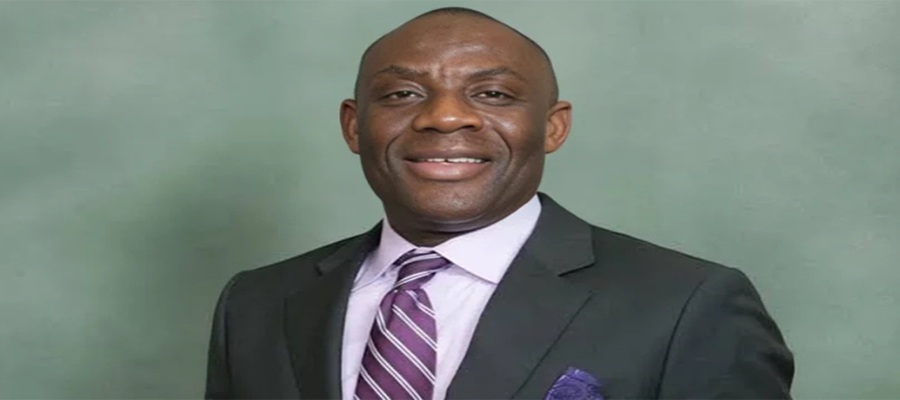
Federal Government has launched a nationwide Artificial Intelligence (AI) capacity-building programme for teachers in Federal Unity Colleges, with about 11,700 educators set to acquire digital skills aimed at improving classroom instruction and preparing students for a technology-driven future.

The initiative advanced with the signing of the Terms of Reference (ToR) between the Federal Ministry of Education and ICEDT Consult Limited, paving the way for the nationwide implementation of the AI Teacher Capacity Development Programme.
The programme, to be implemented through the ministry’s Education Support Services Department, is part of the Federal Government’s efforts to modernise Nigeria’s education sector, strengthen teacher professionalism and equip students with skills required in the digital economy under President Bola Tinubu’s Renewed Hope Agenda.
Speaking during the signing ceremony in Abuja, the Director of the Education Support Services Department, Gabriel Amudipe, described the initiative as a strategic investment in Nigeria’s teaching workforce and the future of education.
He said the nationwide rollout followed the successful completion of a pilot phase conducted in selected Federal Unity Colleges.
According to him, the implementation model developed by ICEDT Consult Limited will ensure effective coordination and quality delivery of the programme across the country’s six geopolitical zones.
Amudipe urged officials responsible for monitoring the project to ensure strict compliance with the implementation guidelines and maintain the standards achieved during the pilot phase.
“The ministry remains committed to supporting innovative initiatives that strengthen teacher professionalism, improve learning outcomes and promote the responsible integration of emerging technologies into education,” he said.
Earlier, the Deputy Director of the Education Support Services Department, Oladele Fapohunda, described the programme as a strategic intervention designed to deepen digital innovation across Federal Unity Colleges.
He stressed that collaboration among all stakeholders would be essential to achieving the objectives of the initiative nationwide.
Also speaking, the Head of Strategic Partnerships and Learning Scientist at ICEDT Consult Limited, Dr Abdulrahman Orosanya, said the Federal Government approved the national rollout after the successful pilot implementation in six Federal Unity Colleges representing Nigeria’s six geopolitical zones.
According to Orosanya, the pilot demonstrated the potential of Artificial Intelligence to improve lesson planning, classroom delivery, assessment methods and teachers’ productivity.
He said the nationwide implementation would strengthen teachers’ digital competencies, improve instructional delivery and support the government’s vision of building a technology-driven education system capable of producing globally competitive graduates equipped with 21st-century skills.
The ceremony ended with the formal signing of the Terms of Reference by officials of the Federal Ministry of Education and ICEDT Consult Limited, signalling the commencement of preparations for full implementation across all Federal Unity Colleges.
The ministry said the programme would directly train about 11,700 teachers, while thousands of students across the country’s Federal Unity Colleges are expected to benefit through improved classroom instruction, increased digital innovation and the responsible application of Artificial Intelligence in teaching and learning.
It reaffirmed its commitment to working with relevant stakeholders to modernise Nigeria’s education system, improve teacher quality and deliver inclusive, equitable and future-ready education nationwide.

Police Uncover Fake Diplomatic Number Plate Syndicate in Abuja

Davido Shares Past Suicidal Thoughts, Drops Oriadé Album

Gavi Okays $500m for Vaccines, PHCs in Nigeria

82% of Organizations Concerned about AI Risks Even as Adoption Accelerates – Survey Reveals

The Journey to Financial Freedom: Priscilla, a PalmPay Agent Now Owns a Store

NRC, Ponzi Scheme Collapses Resulting Loss of Billions of Naira

EFCC Busts NIS Visa Overstay Racket, Uncovers N700m in an Account

From Scarcity to Scale: What Africa Can Learn from India’s Agricultural Transformation

Tokenization, Blockchain Technology will Transform Financial Institutions – IMF

BON Establishes Six Ad Hoc Committees to Modernize Broadcasting




 E-Financial2 days ago
Access Bank Debunks Shutdown Report, Vows Action against Perpetrators

 E-Business2 days ago
Kaspersky Uncovers Cyber Threats Defining the First Half of 2026 in Nigeria, Others

 General News2 days ago
MENXTT TECH NG Offers Affordable Dell Laptops with Flexible Payment Plans

 Telecom2 days ago
ATU Summit Ends in Abuja with Landmark Declaration to Eradicate Continental Digital Divide

 Telecom2 days ago
Hon. Minister Dr. Kingsley T. Udeh and ASUS To Unveil First of a Kind Flagship Store in West Africa

 E-Financial2 days ago
$40Bn Net Reserves, Record Wealth, Relentless Poverty: Who Is Nigeria’s Economy Serving Today?

 E-Financial2 days ago
CBN Orders N19Bn Refunds to Customers as Complaints Rise

 General News2 days ago
EFCC Arraigns 4 over Alleged $5.3m Fraud Scheme