

General News
Nigerians Love to Shop, But Limited by Delivery System- Okeke


Mrs. Vivian Okeke, managing director and chief executive officer, TransRoyal Courier Nigeria Limited, said that delivery sector is key to the survival of online businesses, especially the e-commerce platforms.
Okeke with over 18 years’ experience in courier/postal industry, has built TransRoyal to a reputable standard plying regional, nation and international routes.
Prior to that, she had worked in the oil and gas industry. In this interview with Nigeria CommunicationsWeek, she stressed on key areas entrepreneurs must understudy to survive in the sector; berating Government for lackadaisical attitude towards the development of the sector.
TransRoyal Courier’s Beginning
We commenced operations in 1998 and currently have branch offices in all major cities in Nigeria. As a company with a penchant for excellence, we offer a variety of services; initially, our service was solely bulk-mailing which includes the distribution of mails such as annual reports, dividend warrants, among others. With time, we set our eyes on wider scopes.
This brought about the initial drive for us to open several offices, as a prerequisite for efficiency and speedy delivery.
Today, we render ‘Express Delivery’, which involves the delivery of mails/parcels for banks and other corporate institutions; through intra-city, nationwide, regional and direct services. We deliver such mails within 24-hours. We also diversified into haulage, logistics & cargo.
Through research, we found that sub-sector very attractive. We acquired trucks ranging between 5 to 30 tons.
One good thing about this aspect of our business is that the goods conveyed are covered by GIT insurance. We have a department on clearing and forwarding which has given our customers more reasons to do business with us. We clear goods for them, whether by air, land or sea and still deliver to their door-steps.
Warehousing is at the core of our business as well. There are customers who wouldn’t want to start opening warehouses, due to the finance and time involved, therefore, we delved into it. It has also helped our timely delivery of the goods, especially, across different regions.
Now the world has become a global village, removing the barriers in trading across borders, particularly, with the advent of the internet. Nigerians also should benefit from this.
Nigerians love to shop but are limited at the point of delivery. Many shops abroad do not ship goods directly to Nigeria. We at Transroyal are determined to meet the needs of businesses and our customers which led to our partnership with “Yourpersonalshopper.com”.
Challenges to Business Expansions
We were fortunate to have secured a SME loan from the bank in 2006. The loan actually helped our expansion plans, because it is not always easy for small businesses to secure such loans.
Today, we have been able to keep our heads above water, as the loans have been fully paid up.
Separating Self from Business
As a professional with many years of experience, I understand the risk of not differentiating between personal affairs and business.
I have also worked in the oil and gas industry where records and information management are key to performances.
Courier business involves adequate book-keeping and the recruitment of qualified personnel. Many think that our industry is an all comer’s affair. It is a lie.
If you are not equipped with the required skills, you will find it difficult to weather the storms. You should have qualified accountant, administrators, and other staff which lessens the burden on management, because you will pay less attention to the primary roles of these personnel. When you delegate duties, you have to back it up with the authority to carry them out.
E-Commerce Services (Delivery) Partnership with Yourpersonalshopper.com
That is our launching pad into the world of e-commerce delivery. On daily basis, people are embracing the platform.
There are those who are having issues about dispatching their parcels from overseas to Nigeria. We are standing in the gap.
Before now, people have to travel to buy and carry their goods themselves or wait till a relative or friend travels, before they can take delivery.
Now once you register with us, from the comfort of your home/office you can place your orders and have it delivered to your doorsteps, within a number of days.
If we calculate the man-hours lost, cost of traveling, visa cost, and other resources lost because you are traveling or sending someone to get the products, then you will appreciate this partnership, which takes the stress off the shoulders of our clients. Simply sign up with www.yourpersonalshopper.com.
E-Commerce vs Indigenous Courier Companies
The e-commerce platforms can thrive or deliver purchased items flawlessly with the help of courier companies. It is either they register a courier company with the Courier Regulatory Department of NIPOST or partner with an existing courier company.
In this era of specialization, it is quite cost-saving and more efficient to partner with a courier company than floating one which comes with its attendant challenges.
These challenges may delay operations and meeting customers’ demand on time. It is usually better to allow professionals handle the business.
Foreign Courier Companies Perform Better Than Indigenous, why?
I beg to differ with that notion. I don’t subscribe to the school of thought that says foreign courier companies perform better (in Nigeria) than the indigenous ones.
In Nigeria the foreign courier companies are mostly run by Nigerians. Even the indigenous courier companies have international partners.
Transroyal Courier has an international partner. The channels of delivery, mode of transport are the same so they both perform creditably well in terms of efficiency.
Government Neglecting Courier Sector
Apparently, there is a sort of debate that courier/postal sector be moved to the Ministry of Transport.
But, I feel, it is not about where we are placed as a sector rather it is where we will get adequate attention. It is very unfortunate that the post/courier is not being recognized.
The industry is seemingly abandoned by the past administrations. Since 1985 when the telecoms and postal was divided by the then Head of State, General Muhammad Buhari, we have seen the telecommunications industry grow in leaps and bounds, because they have an independent regulator, the Nigerian Communications Commission (NCC) which has been regulating this sector. Unlike the telecoms, the post has been neglected.
Without an independent regulator it will be difficult for the post to tap into its potentials. Even the Government owned NIPOST has not harnessed its full potentials. They are not finding it easy with a player-regulator responsibilities imposed on them.
The bureaucracies involved in carrying out their functions also limit their performances. And you cannot regulate yourself.
Government has been unresponsive to the plights of the sector. We have been clamouring for reforms in the sector since 2004, when the first national courier summit was held.
We were happy in 2015 when the Federal Executive Council (FEC) sent a bill to the National Assembly on the proposed reforms. We thought by now it would have been passed. Even smaller neighbouring African countries have regulators and the sector is adding value to the GDP of their respective economies.
Courier sector is very large and dynamic and has huge capacity to employ labour. If over 200 courier operators in Nigeria are to operate offices across the major cities in Nigeria, we can create thousands of jobs through this industry. However, we are confident the present administration will look into the plight of the sector.
Leading ANCO Delegation to the Institute of Courier (IoC)
Courier is a professional field. Thus, the Association of Nigeria Courier Operators (ANCO) deemed it wise to lead the cause for lifting the barriers to professionalizing the sector.
So, we considered the need for an Institute of Courier (in Nigeria) to standardize operations and project ethics of the profession.
We will be partnering with the Institute of Courier UK, Nigeria and British Universities to offer courier related courses, trainings and certifications. This will in no measure enhance skills and proper staffing in the sector, from managerial level to dispatch.
Relevance of Independent Regulator to Achieving the Course
Well, the Association believes having an Independent Regulator would have fast-tracked the development of the courier industry, but we as an association are unrelenting in our efforts to drive the development of the sector.
With an Independent Regulator the industry would contribute immensely to the Gross Domestic Product (GDP) of the country and provide thousands of jobs to Nigerians.
Impact of Certain Economic Policies on Courier Industry
Yes, certain economic policies do impact negatively on the courier industry, like the ban on motorcycles by some State Governments affected our business. Particularly in Benin where there is an outright ban on the use of motorcycles.
We appealed to some state governments who modified the ban to allow courier companies free access. As courier which must ensure timely delivery of items, the use of motorcycles is essential particularly many places where we have bad roads.
The power situation is not helping matters as well. We implore the government to end this perennial problem in the country. We know the great impact this will have on the economy.
‘Money Bags’ Investors in Courier Business
Investment is always welcome in the courier industry. Nigeria is a big market and there is always room for more.
They have to ensure they engage the right people with expertise and experience to ensure success.
This is one of the reasons a Regulator is needed to ensure things are done with best practices and rid the industry of unethical practices.
ANCO is at the forefront on the call on government to establish an Independent Regulator for the industry. That is the only way out. .
Multiple-Taxation
This is killing companies subtly, perpetuated mostly by local government and their agents. I don’t understand why they demand that we obtain license and pay levies per local government. This is Multiple Taxation. In other climes, once you have a paper from the Government, it covers your operations at every level.
This case of multiple taxation is prevalent in the oil producing States like Warri, Port Harcourt; every local government expects you to register with them. It is challenging and unhealthy for business growth. Because of this challenge, we have been having meetings with different stakeholders, as speed is paramount in courier business.
Delaying a dispatch bike or van for more than 10 minutes can cause untimely death. Yes! By the time you are to deliver a medical sample or laboratory test, and these local government officials detain the dispatch-man and his working tools, it can cause very serious damage in the life of another man.
Customer Care in Courier Sector
To us in TransRoyal, the customer is the king. We have a dedicated customer care unit that attends to the needs of customers to ensure their satisfaction.
Using our courier software and most up-to-date computer technology, enables our clients to track/trace the status of their shipments during their transit and provide full information on them at destination.
Our vision in Transroyal (TRC) is to create Trust, ensure Reliability and keep our customers’ Confidence always.
How Entrepreneurs can Thrive in Courier Business
As a starter (startup) it is not easy to float a courier business or any business for that matter. You need to learn the trade.
Courier business is capital intensive and you need expertise. There are technology, processes, and special skills needed for one to succeed in the business.
That is why we are emphasizing on trainings and certifications. Every department in courier business has its peculiarities.
Licensing and Renewal
The disagreement with regards to licensing, especially, the yearly renewal, has not been resolved.
The fees are arbitrary compared to other sectors and the courier business in other climes.
We have had series of meetings with the Courier Regulatory Department (CRD), which led to the former reducing of the fees, but in view of the economic realities, we still want a downward review of the renewal fees. This will encourage the industry to grow.
—



Chartered Risk Management Institute of Nigeria (CRMI) has highlighted potential benefits for Nigeria such as increased production flexibility, expanded market share, and improved revenue prospects following the United Arab Emirates’ decision to exit the Organisation of the Petroleum Exporting Countries (OPEC).

However, the Institute cautioned that these opportunities come with significant risks, including exposure to price volatility, reduced protection from coordinated supply management, intensified competition, and mounting fiscal pressures.
In a statement signed by Victor Olannye, registrar/chief executive officer, described the development as a major shift in global oil governance, with far-reaching implications for market stability and international energy dynamics.
Olannye noted that the move could trigger increased oil price volatility, heightened geopolitical tensions, and disruptions across global energy supply chains.
He urged corporate organisations, public institutions, financial bodies, and risk professionals to reassess their risk frameworks and strengthen resilience in response to evolving global realities.
He identified key risks to include a potential weakening of OPEC cohesion, oil price instability, geopolitical uncertainty, supply chain disruptions, macroeconomic volatility, and the possibility of further exits by member states.
In line with its mandate to promote sound risk management and support national development, the Institute advised corporate organisations to implement robust risk management frameworks, adopt dynamic hedging strategies, and diversify their business portfolios.
Financial institutions and investors were also urged to reassess energy-related risks, strengthen portfolio diversification, and enhance risk disclosure practices.
CRMI further called on government and policymakers to reinforce fiscal buffers, accelerate economic diversification, and promote the transition to renewable energy.
Individual risk professionals were encouraged to upskill in geopolitical risk analysis and energy economics while developing expertise in scenario planning and predictive analytics.
The Institute emphasised the need for stakeholders to reposition proactively to navigate the evolving geo-economic landscape. It also projected possible scenarios, including fragmentation of global oil governance structures, increased reliance on market-driven pricing mechanisms, and an acceleration of global energy transition efforts.
General News
UK Cracks Down on Russia’s Exploitation of Vulnerable Migrants and Deadly Drone Capability

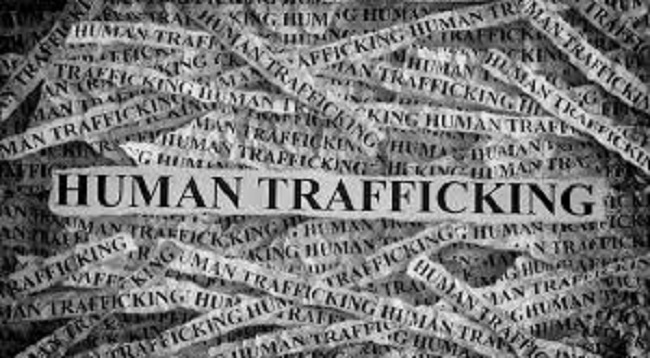
The UK has announced a raft of new sanctions to curb production of Russian drones and the nefarious networks that are exploiting vulnerable migrants from across the globe to support Russia’s illegal war in Ukraine. The latest action hits 35 individuals and entities, including those responsible for human trafficking networks, funnelling exploited migrants into Russia’s war machine.

Networks sanctioned by the UK have been deceptively recruiting foreign migrants in search of a better life and either sending them to the front line as cannon fodder or putting them to work in weapons factories. This includes through schemes like Russia’s Alabuga Start programme for drone production at a UK-sanctioned entity.
Russia continues to terrorise Ukraine by indiscriminately using drones, killing, and injuring innocent civilians and damaging critical infrastructure. Russia fired the equivalent of over 200 drones per day into Ukraine in March 2026, the highest ever monthly total. Russia is likely to exceed this grim record for a second consecutive month in April.
These attacks rely on domestic manufacturers and third country suppliers providing key components and technical support. This new action is designed to disrupt these supply chains and hold those responsible to account by targeting the businessmen and companies fuelling Russia’s drone manufacturing capabilities.
Sanctions Minister Stephen Doughty said: “The practice of exploiting vulnerable people to prop up Russia’s failing and illegal war in Ukraine is barbaric.
“These sanctions expose and disrupt the operations of those trafficking migrants as cannon fodder and feeding Putin’s drone factories with illicit components to target innocent civilians and vital infrastructure.
“The UK continues to lead international efforts to disrupt Russia’s war machine, ramping up pressure on its economy and confronting its hybrid threats. We stand shoulder to shoulder with Ukraine in defence of European security and our shared values.”
Sanctioned targets also include individuals and entities based in third countries, including Thailand and China, responsible for supplying drone components and other critical military goods to Russia.
Among those sanctioned is Pavel Nikitin, whose company develops Russia’s VT-40 drone – a cheap, mass-produced attack drone which has been used extensively by Russia in its attacks on Ukraine.
Also sanctioned are three individuals with links to the Russian state involved in recruiting individuals to travel to Ukraine to fight for Russia.
This includes Polina Alexandrovna Azarnykh, who, backed by the Russian state, has been facilitating the travel of individuals from countries including Egypt, Iraq, Ivory Coast, Nigeria, Morocco, Syria and Yemen through Russia to Ukraine, where they are deployed with minimal training and under dire conditions to the frontline to sustain Russia’s illegal war of aggression.
The UK remains unwavering in its support for Ukraine and will continue to use the full force of its sanctions powers to disrupt Russia’s hybrid threats and squeeze the Kremlin’s war machine. These measures underline our determination to hold Russia and its enablers to account, defend European security and support Ukraine’s fight for freedom.
Charge d’Affaires and British Deputy High Commissioner in Abuja, Mrs. Gill Lever, said: “Today, the UK sanctioned Russian-linked networks and individuals involved in the deceptive recruitment of vulnerable Nigerian men and women, who were misled into joining Russia’s frontline in its war against Ukraine.
“These sanctions shine a light on those who seek to exploit vulnerable Nigerians to sustain Russia’s illegal war, including through schemes such as the Alabuga Start Programme.
“Such practices knowingly place innocent civilians in grave danger, showing a complete disregard for their safety and wellbeing. Tragically, some have already lost their lives as a result.
“In February, the Ministry of Foreign Affairs advised citizens to exercise caution and avoid these schemes. We intend that today’s sanctions will further reduce the risk of harm and help protect others from similar exploitation.”

FirstCap, an investment banking firm and subsidiary of FirstHoldCo Plc., has successfully closed the ₦4.46 billion Series 1 Bond Issuance by LAPO MFB SPV Plc, reinforcing its strong leadership in Nigeria’s debt capital markets and deepening access to long term funding for high impact sectors.

Acting as Lead Issuing House, FirstCap structured the fund raising on behalf of LAPO MFB SPV Plc (a company sponsored by LAPO Microfinance Bank Limited to mobilise institutional capital targeted at SME financing, renewable energy expansion, and digital financial services, three critical drivers of inclusive and sustainable economic growth in Nigeria.
The transaction is underpinned by a compelling impact thesis, with proceeds strategically deployed to support small businesses and clean energy initiatives. The microfinance sector continues to demonstrate resilience and strong fundamentals positioning the issuance at the intersection of growth, sustainability, and financial inclusion.
Commenting on the transaction, Ukandu E. Ukandu, Managing Director, FirstCap Limited, said: “This successful issuance underscores our strategic commitment to directing capital where it delivers measurable economic impact. At FirstCap, we partner with institutions that have the scale, discipline, and vision to transform markets, and LAPO exemplifies these qualities.
The ₦4.46 billion bond is positioned to be a catalyst for SME growth, expanded energy access, and broader financial inclusion. We remain committed to structuring transactions that are not only bankable, but impactful and aligned with Nigeria’s long term economic trajectory.”
FirstCap Limited remains committed to leading from the forefront of Nigeria’s capital markets, structuring transactions that are bankable, impactful, and investable, while supporting the future trajectory of Nigeria’s economic development.”

Police Arrest Members of N713m Bank Fraud Syndicate, Chinese Suspect at Large

CRMI Warns of Risks, Sees Gains in UAE Exit from OPEC

Reps Claim NCC’s Weak Regulatory Oversight Responsible for Poor Telecom Services

Vitel Wireless Partners Fintechs to Expand Access to Services

Kaspersky Identifies Ongoing Supply Chain Attack on Official Daemon Tools Website Distributing Backdoor Malware

Kaspersky Discovers Vulnerability in Qualcomm Snapdragon Chips that can Lead to Data Loss & Device Compromise

FG to Gift Nigerians over 100 Free TV Channels from May 15

MTN Suspends Data, Airtime Borrowing Service over New FCCPC Lending Rules

What Adekunle Gold’s Support Means for ‘The Gathering on 100

Bank Customers to Pay N1,500 for ATM Card Issuance, Replacement – CBN




 General News3 days ago
Why 9 African Countries Are Looking to Nigeria for Data Protection Lessons

 E-Business3 days ago
Firm Spots Rising Scam Activity Around the 2026 World Cup, from Bogus Tickets to $500,000 “grant” Emails

 E-Financial3 days ago
CBN to Raise N700Bn in First Treasury Bills Auction this May

 Telecom3 days ago
Telcos Recover N2 Trillion following Crackdown on Indebted Subscribers

 Telecom3 days ago
Organized Criminals Plunder Telecom Infrastructure across Nigeria, Cause Service Disruptions

 Telecom3 days ago
MTN Nigeria Remits N878.7Bn Taxes, Levies in 2025

 E-Financial3 days ago
Why African Crypto Brands must Communicate like Banks, Not Startups

 E-Business2 days ago
Kled AI, US Data Firm Blocks Nigeria over High ‘Fraudulent Activity’