

General News
Nigeria – SA: Market Leaders as Foes

In 2005 while on my very first visit to South Africa, I noticed two South Africa nations. While the one is welcoming, friendly and easily shares views with distant visitors, the other is visibly agitated and antagonistic to visitors. For obvious reasons the Afrikaans are the least of the people you’d expect to welcome visitors to that enclave, especially when you’re a Nigerian considering the role we played in the anti-apartheid struggle; but here they are quite interested in discussing Nigeria. On the other hand, the large black populations of Zulu, Xhosa form a homophobic block most crudely against Nigerians. Nigerians are for unspecified reasons seen as threat in that nation. My friend Patrick Omorodion, was almost shot dead in 1997 while on official assignment as a sports reporter in that country. He was targeted for being a Nigerian. Back in 2005 my first shock was a black South African asking if we were from ‘Africa?’ Not known for being too cool to stupid comments I told the fella it was great to realize we were in Australia. He looked me straight in the eyes and moved on. But the messages have been shared albeit coded. The Nigeria – South Africa relations have ever remained in that fashion. The recent bilateral spat were inevitable only pending when the bubble will burst. The issues are fundamental and deep rooted. While one played the welcoming ‘big brother’ and accommodated all manner of visitors/investors from its newly freed brother, the other played the ‘benefactor’ brother considered his brother a kind of ‘pest’ to be avoided. South Africa’s political leaders have always reacted negatively to Nigeria and Nigerians. The new black political leadership of South Africa view Nigeria as the country capable of stopping it from the ambition of becoming a UN permanent member. At every given political for a, they do everything to counter a Nigeria move. Since the dethronement of apartheid, its leaders have never seen Nigeria as an ally. Whereas Nigerian political leaders have been naïve to believe they were friends. Recently, in the wake of the Ivorian political imbroglio, South Africa chose to be at parallel with Nigeria and ECOWAS just to prove the point of its continental political leadership. Ditto the recent election in the chair of the Africa Commission where President Jacob Zuma’s ex-wife remains in lock jam with the candidate of Gabon largely supported by the West and Central Africa block. No doubt South Africa remains the continent’s super power in commerce, technology and political leader board due to over 300 years of consistent political-economic engineering by the Dutch-Boer descendants, its new leaders must realize that what has made the new reality possible for them does not lie only the blood of their forebears, but it consumed the blood of other Africans who stood against injustice for them to be enthroned. The Nigerian economy was battered when late General Murtala Muhammed, chose to take Nigeria into the Frontline States. The nationalization of multinationals like Coca Cola, BP, Liver Brothers, Mobil and others was the beginning of Nigeria’s economic meltdown. While Nigeria remains open to South African investors, the same cannot be said of Nigerian investors gaining access in the former apartheid enclave. While working as a PR consultant with an agency in Lagos few years back, I ran a campaign for a Nigerian firm which bid to enter South Africa was blocked, whereas a South African company was allowed to land similar project in Nigeria. The business indiscretion of my then employer led to my unceremonious exit. Nigerians have always fought against the lopsidedness in the bilateral relationship between both nations. Unfortunately previous Nigerian rulers have deferred the issue, not minding even when Nigerians get killed for flimsy jealousy. Didn’t the killer of late South African reggae singer Lucky Dube, confessed in court he killed him in error believing the artiste was a Nigerian? President Goodluck Jonathan must take a look at the issues of both nations from a more introspective view point. Never should Nigeria play the under dog again. In my view, Nigeria should impress it on the South Africans that if they want to invest in Nigeria, then they should re-write their trade policy to accommodate Nigerian investors as well. At the moment, you can only invest in South Africa when you willingly write-off a minimum of 51% of your investment to some idle South Africans. That is unacceptable! There is nothing wrong if South Africans must be part of the investment – they must put down their own Rand to enjoy the dividends. On the lesser side of it, Nigerians (including officialdom) should realize that our ‘big man’ altitude does not work outside our shores. I paid about 50 Rand to get my inoculation at the point of entry in Johannesburg (because someone doing me good unpacked my yellow card at home without my knowledge). It is stated clearly in their rule books that if you do not have the correct yellow card, you’ll pay and get inoculated before entry or in the alternative, you’ll be deported immediately. Both nations cannot do without the other at the moment. South Africans should realize that Nigerians would always come into their country. Most international IT firms have South Africa as their Africa hub and for that Nigerians would always go there either as journalists, investors or just visitors. The evidence of Nigeria – South Africa relations is quite evident here with South Africa firms engaged in IT, telecom, engineering construction, diary farms, hospitality industry and retain market segment. It is in the same measure that Nigerians ask the South African government to open up its market to Nigerian investors to seek greater opportunities in international trade.



Nigeria Atomic Energy Commission (NAEC), has said that there are plans for Nigeria to begin to generate electricity from nuclear sources.

Mr Anthony Godwin Ekedegwa, chief executive, NAEC stated this when he recently visited Mr Umar Yusuf Girei, acting managing director, National Inland Waterways Authority (NIWA),in Abuja.
He was at NIWA’s office to solicit the support of NIWA in achieving the numerous advantages of using nuclear energy technology in the country.
According to him, the partnership of critical stakeholders in Nigeria will position the country well in developing and maintaining its nuclear power plant.
The NAEC chief said Nigeria intends to begin the generation of electricity from nuclear sources instead of fossil-based power plants and hydro-based power plants, stressing that for Nigeria to develop, there is a need for the country to diversify its energy needs.

In his remarks, Mr Girei assured NAEC of his agency’s readiness to collaborate on the advancement of a nuclear power plant in Nigeria.
He promised the full support of NAEC for the success of a nuclear power plant in the country, saying that as the organisation saddled with the responsibility of regulating and developing Nigeria Inland Waterways, his entity is strategically positioned to play a critical role in the federal government’s quest for sustainable energy through the new technology.

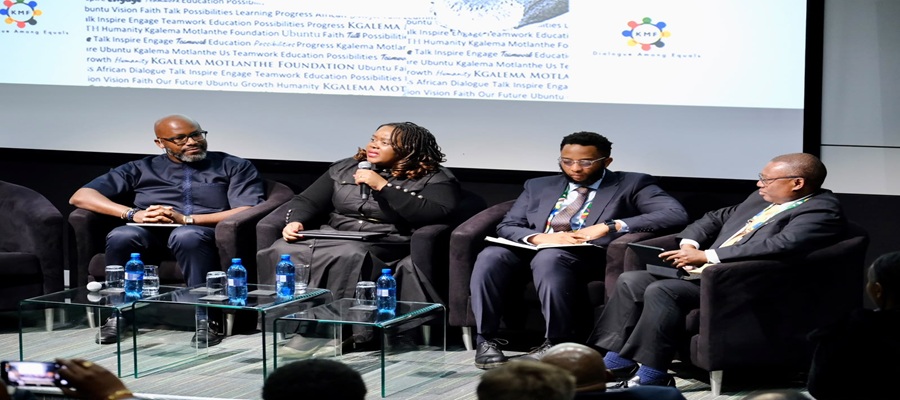
In a powerful call for continental solidarity, Ralph Mupita, Group CEO of MTN, has asserted that the future of the African continent depends on the dismantling of xenophobic barriers.

Speaking at the Kgalema Motlanthe Foundation (KMF) Winter Seminar, Mupita framed migration as a fundamental characteristic of the African identity, urging South Africa and other nations to embrace integration over exclusion.
He emphasised that the survival of African enterprises depends on a borderless approach to trade and talent. “The digital economy we’re fast moving to knows no borders.” Mupita declared, noting that the mindset of exclusion is an outdated relic that hinders the continent’s ability to compete globally.
He argued that for Africa to leverage the African Continental Free Trade Area (AfCFTA), the psychological barriers of xenophobia must be eradicated.
Providing a stark financial justification for this stance, Mupita highlighted MTN’s own operational reality as a blueprint for Pan-African success. “We earn about 80 to 82% of our earnings from outside South Africa,” he revealed, illustrating that the prosperity of South African-born entities is inextricably linked to their success across the rest of the continent. This figure underscores the interdependence of African economies and the danger of isolationist policies.
Mupita’s stance was strong advocating for unity: “The future of Africa will not be determined by the borders that separate us, but by the economic opportunities that connect us. Governments must set predictable policy and regulations.
Businesses will follow and allocate resources and capital. Together, we can build a continent where opportunity is more evenly shared and prosperity is more widely created.”
Analysts observing the seminar noted that Mupita’s remarks come at a critical juncture where economic volatility often fuels nationalist rhetoric. By tying the fight against xenophobia to the balance sheet, MTN is positioning Pan-Africanism beyond the moral imperative to its function as a business necessity. The CEO stressed that “Migration is part of who we are,” suggesting that the movement of people is the primary engine for the movement of capital and innovation.

Lagos Chamber of Commerce and Industry (LCCI) has urged the Federal Government and the National Pension Commission (PenCom) to suspend the proposed increase in Nigeria’s mandatory pension contribution from 18 per cent to 21 per cent, warning that the policy would raise the cost of doing business, threaten jobs and undermine enterprise sustainability at a time of mounting economic pressures.

Dr. Chinyere Almona, director general of the LCCI, said while strengthening retirement security remains an important policy objective, increasing mandatory pension contributions by three percentage points would impose additional financial burdens on businesses already grappling with high borrowing costs, persistent inflation, foreign exchange volatility, rising energy prices and multiple taxes.
According to the chamber, the proposed increase comes at a period when many businesses, particularly micro, small and medium-sized enterprises (MSMEs), are struggling to remain profitable amid Nigeria’s challenging operating environment.
The LCCI noted that Nigeria’s existing mandatory pension contribution rate of 18 per cent comprising 10 per cent by employers and 8 per cent by employees is already broadly aligned with the Organisation for Economic Co-operation and Development (OECD) average of 18.8 per cent.
It argued that raising the contribution to approximately 21 per cent would place Nigeria above several comparable economies, including the United Kingdom, where mandatory contributions stand at 8 per cent; the United States at 12.4 per cent; Kenya at 12 per cent, subject to earnings caps; and South Africa, where there is no equivalent mandatory private-sector pension contribution.
The chamber warned that implementing the proposed increase would significantly raise employment costs for employers, discourage new recruitment, constrain wage growth and place disproportionate pressure on MSMEs, which account for a substantial share of employment in Nigeria.
According to the LCCI, the higher payroll obligations could also reduce Nigeria’s competitiveness as an investment destination, encourage non-compliance with pension regulations and push more businesses into the informal sector.
“A stronger pension system cannot be built on weaker businesses,” the chamber stated, stressing that economic sustainability and business growth remain critical to expanding pension coverage over the long term.
The LCCI therefore called on the Federal Government to defer the proposal until a comprehensive Nigeria-specific actuarial and economic impact assessment is conducted to determine its implications for businesses, workers and the broader economy.
It also urged policymakers to engage in extensive consultations with organised private sector groups, labour unions and other key stakeholders before implementing any changes to the country’s pension contribution framework.
According to the chamber, the government’s immediate priority should be restoring business confidence, preserving existing jobs, encouraging investment and expanding the formal economy, which it described as the most sustainable pathway to improving retirement savings.
As an alternative to increasing contribution rates, the LCCI advised PenCom to focus on developing more innovative investment instruments capable of generating stronger returns on pension assets.
The chamber said improving investment performance would enhance contributors’ retirement savings without imposing additional financial obligations on employers and employees already facing difficult economic conditions.

History as Lagos Becomes First Nigerian State to Launch Greenhouse Gas Registry

AMCON Puts ntel Up for Sale, Seeks Investors

Nigeria Atomic Energy Commission Seeks Collaboration on Power Plants

AI Investment Gap Threatens Africa’s Future Growth

UNN to Partner Firm on AI, Smart Mobility Innovation Centre

NRC, Ponzi Scheme Collapses Resulting Loss of Billions of Naira

EFCC Busts NIS Visa Overstay Racket, Uncovers N700m in an Account

Tokenization, Blockchain Technology will Transform Financial Institutions – IMF

From Scarcity to Scale: What Africa Can Learn from India’s Agricultural Transformation

BON Establishes Six Ad Hoc Committees to Modernize Broadcasting




 E-Business2 days ago
Report Says Cybercriminals Deploy Malware to Hijack Crypto Wallets, Monitor Browsers Telegram

 News2 days ago
See Verified 20 Countries Nigerian Passport Holders Can Travel Visa-Free

 Telecom2 days ago
Subscribers, Telcos Warn FCCPC over Airtime Lending Enforcement

 Telecom2 days ago
NCC, REA Partner to Cut Telecom Costs with Renewable Energy

 E-Business2 days ago
NPC Opens 131 Births, Deaths Registration Centres in Anambra

 General News2 days ago
AfDB, Nigeria Urge African Control of Mineral Resources

 General News2 days ago
Lagos Chamber Opposes 21 Percent Pension Contribution, Warns of Job Losses

 Telecom2 days ago
Nigeria Pushes for United African Front Ahead of Global Telecoms Elections