

Telecom
MTN to Open 120 Modern Outlets Across Nigeria


MTN Nigeria has unveiled its plan to open 120 modern outlets across the country for the convenience of customers under an initiative tagged ‘Partner Shops.’ Two of such shops were officially launched in Lagos and Port Harcourt on March 14 and 15, 2012, respectively. Omatsola Barrow, Sales and Distribution executive, MTN Nigeria who represented Brett Goschen, the CEO said the initiative was born of MTN’s desire to bring its products and services together with a robust compliment of support and care within the reach of its customers across Nigeria. The unique customer service platform which was conceived, developed, and driven by the Sales and Distribution Department of MTN Nigeria, in collaboration with the company’s well established Trade Partners, was officially activated at the premises of Stratford Communications Limited in Lagos and Ben Jack Limited in Port Harcourt. Barrow said in view of the dynamic competitive environment and the increasing focus on data and ICT services, a partnership that continues to focus on sales of airtime and SIM cards at the wholesale level alone will not survive; hence, MTN’s introduction of this initiative. “In line with our vision to transit from being the country’s leading telecommunications provider to becoming Nigeria’s leading ICT Company, we believe that there is a pressing need to position our trade partners accordingly,” he explained. According to him, the customer management demand in the Nigerian market is high and in recognition of this, MTN currently operates the largest online customer management space in West Africa. “We are committed to continuous enhancement of our offerings towards delivering the quality of service that Nigerians richly deserve. We will work to ensure that our customers feel the tangible impact of these improvements in the very near future,” he said. The CEO of one of the shops, Chief Ben Jack in his comments commended MTN Nigeria for coming up with the concept and offering him an opportunity to be part of it. He assured MTN customers that the shops would meet their aspirations.


Airtel Nigeria has strengthened its nationwide retail and distribution network as part of its continued investment in enhancing service delivery and making telecommunications and digital services more accessible to millions of Nigerians.

The company’s retail ecosystem comprises more than 4,000 exclusive Airtel shops and over 200,000 retail touch-points nationwide, including partner stores, channel partners and neighborhood agents. This network ensures that subscribers can conveniently easily access SIM registration, device purchases, airtime and data recharge, customer support and other digital solutions.
Commenting on the company’s retail distribution strategy, Dinesh Balsingh, CEO, Airtel Nigeria, said,
“Telecommunications goes beyond the physical infrastructure, it is important that we are able to reach people where they live and work. That is why we continue to invest in a strong retail and distribution ecosystem that enables us to bring Airtel closer to our customers while delivering a consistent, high-quality experience wherever they are.”
According to Joypratip Sengupta, Director, Sales and Distribution, Airtel Nigeria, the company’s distribution network plays a vital role in ensuring seamless service delivery.

“Our retail network is designed to ensure that our services reach customers efficiently. It is a combination of efficient logistic systems, strong partnerships and local engagement that enables us to consistently meet the needs of our customers across the country,” he said.
The strengthened distribution strategy complements the company’s ongoing investments in network infrastructure and digital innovation, recognising that customer proximity remains a critical driver of service excellence and digital inclusion.
In addition to improving customer access, Airtel’s extensive retail ecosystem continues to create economic opportunities for thousands of entrepreneurs, distributors, retailers and small business owners who form an integral part of the company’s value chain.
As demand for accessible, interconnected digital services continues to grow across Nigeria, Airtel remains committed to investing in improving its service delivery and ensuring that every subscriber enjoys quality service.
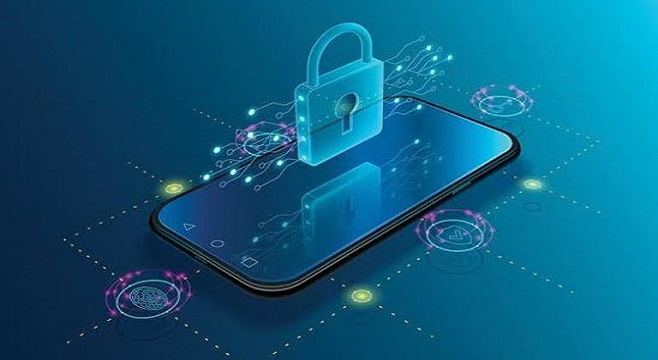
Kaspersky’s latest global survey shows a change in how people go online: 60% of survey participants from the Middle East, Turkiye, and Africa (META) region now claim their smartphone is the main device they use to access the Internet, pushing the PC into a secondary role.

But as the amount and sensitivity of data stored on these phones keep growing, cybersecurity experts warn that users’ security habits aren’t keeping up.
According to the survey* 60% of respondents from the META region consider a smartphone their primary device for accessing the Internet. The most active smartphone users are representatives of Gen Z, with 67% of all global respondents aged 18-28 choosing a mobile phone as their main device.
With mobiles as the full-fledged rivals of computers in accessing the Internet, the amount of important data stored on them has also increased significantly. Personal photos and videos are leading the pack. 60% of users in the META region store visual memories on their devices. Close behind are contact details (51%), text messages and chats history (45%) and important personal documents such as IDs and passports (43%).
At the same time, a substantial portion of users in the META region keep work‑related data on their smartphones (37% emails, 22% calendars and 17% even store access to corporate systems), blurring the line between personal and professional realms.
Financial credentials and login details appear on 40% of devices, while emerging categories like AI chat histories (30%) and gaming accounts (26%) signal new types of personal data stored on personal devices.
“Now our smartphones serve as full‑featured assistants that touch every aspect of our lives. The data we entrust to them goes far beyond photos, phone numbers or text messages. Consequently, the main question is no longer “what we store,” but “how we protect it,” requiring security to become as integral to the device as the data it carries,” comments Anton Kivva, cybersecurity expert at Kaspersky.
Three keys to mobile data security
To help users navigate this new digital reality safely, Kaspersky experts have issued a three-step security plan:
- No data should live on your phone only
A smartphone should never be the sole repository for any type of information. While having everything at your fingertips is convenient, accidental deletions, loss or hardware failure can make recovery impossible without reliable backups or cloud sync.
The most sensitive data like passwords, ID or financial details requires special attention and preferably be kept in a protected format. Use a dedicated security solution like Kaspersky Password Manager, which apart from securely keeping credentials and bank cards, has a special secret vault functionality aimed at storing important documents, for example, scanned Passports/IDs and PDF files, addresses and notes. Thanks to the cross-device synchronisation it allows access to the data from any gadget.
- Create a guard against digital threats
In Q1 2026 only, more than 2.67 million attacks utilising malware, adware or unwanted mobile software were prevented and more than 306,000 malicious installation packages were discovered.
Mobile devices require the same cyber protection as PCs. Kaspersky experts recommend cybersecurity solutions such as Kaspersky Premium that provide comprehensive protection – starting with scanning apps for potential threats upon installation, and using AI‑driven features to block malicious and phishing links in real time and prevent data or money losses, among many other security layers.
- The “what if” scenario planning
Phone loss always occurs unexpectedly, but a few proactive steps can dramatically reduce its impact:
Turn on location services. Both Android and iOS include built-in tools that can locate a lost phone and, if needed, wipe its data remotely. Kaspersky for Android app activates this capability through the Where Is My Device feature.
- Enable automatic backups.Regular backups ensure that photos, videos, documents, contacts and other vital data can be restored even if the device is lost or stolen.
- Configure instant auto‑lock.Setting the phone to lock immediately after the screen turns off keeps it inaccessible to thieves or cyber‑criminals when you’re not using it.
- Keep the device physically safe.In public spaces, never leave your phone unattended or within easy reach, avoid placing it on tables, in back pockets or any other vulnerable spot.
“We often underestimate how much valuable information we keep on our mobile devices and how vulnerable that data truly is. Ask yourself: When was the last time I backed up my photos or notes? What’s my plan if my phone goes missing? Do I verify links before I click them? While most users automatically think of security software for their computers, phones lag behind. It’s time to give your everyday digital companion the same robust cyber‑protection it deserves,” adds Anton Kivva, cybersecurity expert at Kaspersky.


Nigeria will host telecommunications, Information and Communication Technology (ICT) and digital economy ministers from across Africa for the 7th Ordinary Session of the African Telecommunications Union (ATU) Conference of Plenipotentiaries (CPL-26), scheduled for July 23 to July 24 in Abuja.

The conference, the highest decision-making body of the ATU, is expected to bring together ministers, regulators, industry leaders, development partners and other stakeholders from the Union’s 52 member states to deliberate on Africa’s digital and telecommunications agenda for the next four years.
A statement by the organisers said delegates would adopt the Union’s strategic direction, approve its 2027–2031 budget and work programme, elect a new Secretary-General and determine the composition of the Administrative Council.
The conference will also harmonise Africa’s common positions ahead of the International Telecommunication Union (ITU) Plenipotentiary Conference scheduled to hold later this year in Doha, Qatar.
The Minister of Communications, Innovation and Digital Economy, Dr Bosun Tijani, described the conference as a significant milestone for Africa’s digital future.
“Nigeria is honoured to host the 7th Ordinary Session of the ATU Conference of Plenipotentiaries at a defining moment for Africa’s digital future.
“As countries across the continent accelerate digital transformation, it is increasingly important to strengthen regional cooperation, develop common positions on emerging technologies, and create enabling environments that attract investment, build digital talent and expand meaningful connectivity.
“Our role as host reflects the commitment of President Bola Ahmed Tinubu to building an innovation-driven economy while strengthening African cooperation on digital infrastructure, technology governance, skills development and investment,” he said.
One of the major highlights of the conference will be a ministerial dialogue on “Achieving Africa’s Meaningful Connectivity,” jointly organised by the ATU and the GSMA.
The dialogue will explore practical strategies for expanding affordable, reliable and quality connectivity across the continent, with emphasis on infrastructure investment, service quality, affordability and ensuring that digital access delivers tangible economic and social benefits.
Also speaking ahead of the conference, the Secretary-General of the ATU, Mr John Omo, said the meeting would provide member states with an opportunity to strengthen the Union’s capacity to drive Africa’s digital ambitions.
He said the decisions to be taken in Abuja would shape the ATU’s ability to support national priorities, sustain Africa’s participation in global telecommunications forums and respond effectively to emerging technological developments over the next four years.
The conference is expected to conclude with the adoption of the Abuja Declaration, which will provide governments, regulators, industry stakeholders and development partners with a common framework for advancing Africa’s digital transformation agenda.
According to the organisers, hosting the conference underscores Nigeria’s commitment to regional collaboration and reinforces the country’s growing leadership in digital policy, technology governance and investment promotion across Africa.

NPC Opens Nationwide Digital Birth, Death Registration Platform

FG Launches C.L.I.C.K.D., Consumer Credit Scheme for Tech Devices

Airtel Nigeria Expands Retail Footprint to Strengthen Customer Access Nationwide

Ovaloop Technologies Unveils Digital Tools to Formalize SMEs Operations Across Africa

Kaspersky Survey Highlights the Need for Smartphone Security

NRC, Ponzi Scheme Collapses Resulting Loss of Billions of Naira

NASENI Moves to Digitize CCB’s 5m Assets Declaration and Operations

Lebara Nigeria Launches Lebara Play, Africa’s First Telecom-Owned Micro-Drama Platform

CANAL+ Partners Samsung to Pre-Load DStv Stream on New Samsung TVs In Nigeria, Other African Countries

Tokenization, Blockchain Technology will Transform Financial Institutions – IMF




 News3 days ago
Adebutu, PDP Chieftain Accuses Nigerian Governors of Embezzling LG Allocations

 E-Financial3 days ago
Access Holdings Sells 7.44% Stake in Ghana Unit

 E-Financial3 days ago
NDIC Urges Youths to Shun Ponzi Schemes, Embrace Savings

 E-Business3 days ago
SERAP to Sue NASS over Bill Empowering NDPC to Regulate Social Media

 News3 days ago
NIMASA Unveils Accelerator Scheme to Drive Innovation, Sustainable Growth

 E-Financial3 days ago
NRS Issues July 31 Deadline for e-Invoicing Compliance

 News3 days ago
ICPC Secures Final Forfeiture of N941m Linked to IPPIS Fraud

 News3 days ago
eBusinessLife Advocates Greater Support for Girls in ICT as Students Showcase AI Innovations