

General News
Nigeria’s Focus on ICT Without ‘Design Technology’ Not Helpful- Maduka

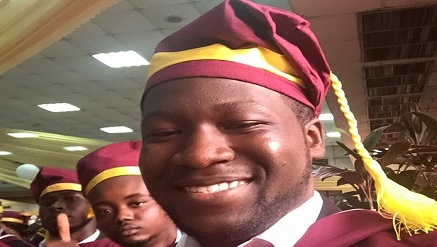
Smart Maduka, co-founder and head, Design and Analytics, Project Dove Initiative, said that Nigeria’s focus on information and communication technologies with little attention given to design technology portends a gloomy future for indigenous technology development.
Maduka said in this interview with peter oluka calls for improved investment on technology inclined students by angel investors and manufacturing sector to boost capacity in the industry.
Electric/eco-friendly Car
We were group of students that saw the diminishing values of crude oil and the attendant problems. We talked to one another, because we are very passionate about this country, we felt there was a need to think about the future and it is our responsibility as student compatriots to solve our problems ourselves. That was how D0ve Project Initiative came to light, to create solutions to our over dependence on fossil fuels, the ever increasing price and scarcity and the environmental pollution they cause.
Support

When we were building the car, we had two major. challenges- technical and financial. On the technical angle, we manoeuvred our way around. Thank God for the school that provided us with a workshop to work; technologists were there to put us through in some practical aspects of the project. Financially, it was really tough on us because as students, there were enough needs like purchasing textbooks, but we had to tax ourselves to raise the funds; the car project was financially sponsored completely by us as students. Presently, some of my team members are corps member, while other team members are final year students.
Taking Dove Project to Other Schools
We felt there is a need to ‘challenge’ students to be creative solution providers, hence our decision to take the project to other schools. We know that Nigerian students are geniuses with creative minds, therefore, from the little resources, we want to establish Dove Initiative to demonstrate that we as students can move the country forward.
Seed funding would be provided to these schools to aid the development of the club in the school. We are all complaining about global warming, with the United Nations and other agencies leading the race to addressing this challenge, we have to move to eco-friendly cars. We believe that these students will keep working on new developments, keeping our country on its toes with regards technological developments. This is how to build indigenous technology, enhance our manufacturing and export abilities.
We don’t need a soothsayer to tell us our GDP will rise. What actually boosts first world countries’ economy is manufacturing. Look at United States, Switzerland, Germany and others, manufacturing drives the economy. So, at the time of studentship, someone who does not have so much to think about, that is the right time to invest on them for creative solutions.
Universities and Technology Solutions
The whole idea of Dove Initiative is to challenge students to come up with solutions to societal problems. Dove Initiative is like a design board. Unfortunately, in Nigeria, we focus on ICT and lay down on Designs ICT will thrive better when we have Design at the centre. Imagine we have Nigerian made smart car, ICT will thrive better. So, Dove Initiative, outside the fact that it is purely electric, will spur the interest in students to think about solutions to every aspect of the economy.
Manufacturing Plants Need to Engage Students
I am very happy that we have a manufacturing company like Innoson Motors in this country. My research about the Company shows the founder appreciates innovation. With people like that Nigeria will get on the better part of technological advancement. We need venture capitalists to understand that investing in students has much potential. When you invent in the youths the economy thrives, failure to do so you have ignited a ticking bomb that will explode in no distant time. So, the focus is on manufacturing companies to partner with Universities to ‘harvest’ the best brains, nurture them, then, Nigeria will be one of the greatest in the world. If we get willing investors, within a year we can develop a commercially viable model of this car. We do not need just financial support, technical support is paramount too. There are capable hands in this industry like Aliyu Jelani; they need to mentor people like us. With all the money in the bank without technical capabilities there won’t be any car.
Marketing The idea
We have been to several exhibitions- Nigeria Energy Forum, Tech+ 2016, and others, just to promote the initiative. If we fail to foster indigenous technology, a time will come in Nigeria that we will not be able to survive.
Support from Angel Investors and Interest on Fundamental Ideas
I think it is high time we panned focus from the transiting things and programmes to more serious ideas. Why is it easy for corporate organizations to throw money around when it comes to entertainment, but ideas like this, they find it difficult to be convinced. This is time for Nigerians to begin to think Nigeria.
If we had toed that line we wouldn’t be in the present mess we are in now. A lot of people are selfish- just about ‘what is in it for me’. When we were building this car, right at the design stage, we approached some people for sponsorship, but they claimed it was still on paper and therefore ‘not viable’. Some people thought it was destined to fail because we were just Nigerian students. So, we had to starve ourselves to raise resources to build this car. When you love something you wouldn’t mind the present pain. Today, we have a prototype to show the world and prove that Nigerian students are capable of taking up seemingly difficult problems and solving them effectively and efficiently.
Future Focus
If any car manufacturing company abroad calls for my attention, I will not decline, because I need to be more prepared to serve my country (Nigeria). I plan to travel abroad for Masters Course in Product Design and my partner, Automotive Engineering. As I said earlier, I am passionate about the country, but at this stage we can’t possibly do everything hence we need knowledge from ‘outside’ to build indigenous technology.
How Govt Can Support Technological Development
I am impressed with the government for recognizing that technology is the way to go. There are a lot of programmes now to support startups. But it shouldn’t end with startups in ICT, as there are a lot of innovators that need backing. Look at the global innovation index, in ICT, Nigeria is about 69th in the world. That is a very huge feat, but when it comes to design in technology, Nigeria is nowhere to be found. If the government can key into investing in the students, then this will be great for everyone
I believe that Technology Can and Should be a boon to the society and that new mode of thinking is the way forward to creating a sustainable future we want to live in. A time will come that for Nigeria to survive, technology will be the only solution. It is a thinking bomb. Just recently, a resolution was passed in Germany that by 2030 all internal combustion engine (ICE) cars will be phased out. In other worlds, internally fueled cars will not be available anywhere in Germany, rather purely electric vehicles.
This is Germany where ICE cars were invested. It is known that German resolution traditionally shaped European Countries resolution. So, when all car manufacturing plants go electric, we will be forced to buy them and when we do, how do we intend to power the cars? With our erratic power supply? What happens to our oil? How about the cars maintenances? That is why D0ve is here now; that by the time we get to the problem, we would have developed solutions. We want to solve the problem of the future now.



Chinonso Akujobi, former staff of Access Bank in Lagos, has been remanded in Ikoyi prison after she was arraigned on a five-count charge bordering on stealing to the tune of N294.5m.

Akujobi who is being prosecuted by the Economic and Financial Crimes Commission (EFCC) was arraigned before Justice I.O. Ijelu of the State High Court sitting in Ikeja, Lagos.
EFCC alleged that Akujobi stole the money between January and December 2025 while under the employment of Access Bank Plc.
As stated in one the charges, the defendant stole the money through unauthorized payments from the general ledger of Access Bank to her account number 0036668871 with the name Chinonso A., Uchechi A. and Florence A., thereby committing an offence of stealing, contrary to Section 280 and punishable under Section 287 of the Criminal Law of Lagos State, 2015.
The defendant pleaded “not guilty“ to the charges when they were read to her.
In view of this, S.M.Yabo, prosecution counsel, asked the court for a trial date and also prayed for the remand of the defendant in a Correctional centre.
Justice Ijelu, thereafter, adjourned the case till October 8, 2026, for the hearing of the bail application and the commencement of trial.
The Judge also ordered that the defendant be remanded in the Ikoyi correctional Centre.

The Nigerian Safety Investigation Bureau (NSIB) says the flight captain of the VMO Aero aircraft that landed on a roadway near Asaba Airport in Delta State told investigators that the observer pilot mistakenly identified the paved road as the runway before touchdown.

The bureau disclosed this in a preliminary report released on Thursday on the June 10 incident, which prompted the Nigeria Civil Aviation Authority (NCAA) to ground the private jet.
The aircraft had seven people on board, including the pilot-in-command (PIC), second-in-command (SIC), an observer pilot, a cabin crew member and three passengers.
According to the report, the aircraft was cleared by Air Traffic Control (ATC) to approach Runway 11 at Asaba Airport after the crew requested a right orbit.
The crew initially discontinued the approach, executed a missed approach and repositioned for a second landing attempt.
NSIB said the crew reported that the aircraft’s navigation systems indicated it was correctly established on the published RNAV Runway 11 approach.
“The PIC and SIC reported that the observer pilot identified the paved surface ahead as the runway,” the report stated.
However, the observer pilot gave investigators a different version of events.
According to NSIB, he said the aircraft remained inside cloud until late in the approach and that the Ground Proximity Warning System (GPWS) repeatedly issued “TERRAIN, TERRAIN, PULL UP” alerts.
He also said he observed a telecommunications mast directly ahead and instructed the flight captain to abandon the approach and climb immediately.
The bureau further disclosed that a cabin crew member reported that one of the passengers became concerned after overhearing discussions among the pilots and asked whether one of them was undergoing training. The passenger was reportedly reassured that all three pilots on board were experienced captains.
NSIB said no abnormal events were reported in the cabin before touchdown.
The aircraft eventually landed at about 8:57 a.m. on an under-construction paved roadway near Asaba Airport instead of the designated runway.
The bureau said its investigation into the incident is ongoing, while the preliminary report highlights conflicting accounts among the cockpit crew over the circumstances that led to the erroneous landing.


European Union has warned Meta Platforms Inc. that it could face a significant financial penalty unless it changes what regulators describe as the “addictive design” features of Facebook and Instagram.

The European Commission issued the warning in preliminary findings released on Friday, saying Meta had failed to sufficiently address risks posed by its platforms, particularly to children and vulnerable users.
The Commission said features such as infinite scrolling, personalised content recommendations and automatic video playback were designed in ways that encouraged excessive engagement with the platforms.
EU Executive Vice-President for Tech Sovereignty, Security and Democracy, Henna Virkkunen, said protecting the physical and mental well-being of European citizens should be a priority for social media companies.
The Commission said Meta should consider introducing design changes, including disabling autoplay and infinite scrolling by default, providing effective screen-time reminders and adjusting recommendation systems to reduce the focus on maximising user engagement.
The findings were issued under the European Union’s Digital Services Act (DSA), which sets obligations for major online platforms to address risks associated with their services.
Meta, however, rejected the Commission’s conclusions, saying it disagreed with the findings but would continue engaging with European regulators.
The company said it had already implemented measures aimed at protecting younger users, including Teen Accounts that allow parents to manage screen time limits and restrict access during night hours.
The EU said its investigation, which began in 2024, found that existing time-management tools on Facebook and Instagram could easily be bypassed, while parental controls required technical knowledge that limited their effectiveness.
Regulators also expressed concerns over children’s nighttime use of the platforms and the possibility that features such as Reels and Stories could encourage compulsive behaviour.
If the Commission’s preliminary findings are confirmed, Meta could face a fine of up to six per cent of its annual global revenue under the DSA.
The warning comes as the EU steps up efforts to strengthen online safety measures for children, with an expert panel established by European Commission President Ursula von der Leyen expected to present recommendations on protecting minors online.
Several EU member states, including France, have also supported discussions on restricting social media access for children, following Australia’s decision to ban users under 16 from accessing social media platforms.
Meanwhile, the Commission is continuing a separate investigation into whether Meta’s recommendation algorithms create “rabbit hole” effects by directing users towards increasingly extreme content.

Police Busts Syndicate Who Allegedly Stole N3Bn from Financial Institution

MTN Accelerates Network Expansion to Meet Surging Telecom Demand

Court Remands Akujobi, Ex Access over alleged Theft of N294.5m

TeKnowledge, Equinix Partner to Advance Nigerian Digital Infrastructure

NSIB Faults Runway Identification, Reveals Cockpit Disagreement in Asaba Jet Incident

NASENI Moves to Digitize CCB’s 5m Assets Declaration and Operations

Mobile Internet Gender Gap Widest in Africa – GSMA

Nigeria Launches FreeTV Nationwide

CANAL+ Partners Samsung to Pre-Load DStv Stream on New Samsung TVs In Nigeria, Other African Countries

Lebara Nigeria Launches Lebara Play, Africa’s First Telecom-Owned Micro-Drama Platform




 Telecom2 days ago
NCC Seeks Cost-Based Pricing Framework for Ducts

 E-Financial2 days ago
CBN Warns against Rejection of N100 Banknotes

 Telecom1 day ago
Fixed Wired Internet Market Lags as Mobile Gains Ground

 News2 days ago
Flutterwave Secures Circle Ventures Investment to Deepen USDC Payment

 Telecom2 days ago
Meta Introduces Muse Image With Advanced AI Image Editing Across WhatsApp and Instagram

 E-Financial2 days ago
BVN Enrollments Hit 69.55m- NIBSS

 News2 days ago
How EFCC Turned Recovered Loot Into School Supplies for Thousands of Nigerian Students

 News2 days ago
CJN Warns Judges: Reject Gifts or Risk Petitions and Ruined Careers