

News
Femi Kuti, Jesse Jagz, Niniola Thrill at Etisalat’s Abuja Concert


It was a full dose of home-made musical hits at the weekend for the music loving residents of the Federal Capital Territory, Abuja when Afrobeat legend and four time Grammy Awards nominee, Femi Kuti, stormed the political capital for his first ever live concert in the city.
The high-profile event, put together by Chocolate City Group in partnership with Nigeria’s most people-friendly network, Etisalat, was a musical experience with the Afrobeat legend and some other acts including established performers like Niniola and Jesse Jagz as well as upcoming ones like Dunnie, Keline, ArrowMafia, Ricky Sani, Cheso and Anderson Afrolover.
Signs of a memorable night had filled the air once news about the concert broke into the public dormain, and so it turned out as many fun seekers, love birds, business partners, friends and families as well as foreigners swarmed around the Sheraton Field to be part of the historic outing.
Expectedly, the evening began with performances from several upcoming stars like Anderson Afrolover, Ricky Sani, Cheso, Dunnie, Keline and ArrowMafia, with the last four giving very impressive accounts of themselves as they perform singles upon singles upon different genres of music
With the ticking hours clawing the late evening hours steadily towards the midnight zone, and expectations rising, the show swung into life with the coming to stage of singing sensation, Niniola who got down to real dancing with some of the fans.

Hip Hop crooner, Jesse Jagz did not need any introduction as vibes from his hit singles such as Murder Dem, Boom, Jaga Love, Bend Down Low, Bad Girl and Sugarcane Baby proved his popular with the audience.
With the right atmosphere already created, and members of the Positive Force Band arrayed on stage, it was self-evident what a night awaited the fans.
Full of the energy that has remained a standout feature of his performances, Femi Kuti guided the audience through a music journey beginning with some of his smashing hits like Wonder Wonder, Survival, Plenty Nonsense, Live for Today, Sorry Sorry, Truth Don Die, BengBengBeng, The World is Changing, No Place for my Dream and Changes.
The social crusader in him was let out intermittently as he spoke out against social injustice, corruption and indeed any form of social vices bedeviling the Nigerian state, to the admiration of the fans who sang along some of the hit tracts.
One of the high moments of the night came on the heels of his mastery of the saxophone. He had played a long mono-note on this for over ten minutes without breaking, thus confirming his rating as one of the most sought after and best live performers in the world.
Some of the fans who spoke about the Concert expressed delight at the opportunity to be part of the musical experience.
“Being in Abuja, we have always expected something like this. Coming here tonight is one of the happiest moments of the year to me because most times that I have anything to do in Lagos, I always go to the Shrine. So, seeing Femi in Abuja is fantastic, “enthused Omar Lawal, a Civil Servant
For Norwegian, kaspark, thye night was an opportunity to see Femi perform live after he could not do so on a previous visit to the Afrikan Shrine in Lagos. “I have heard about Femi Kuti before now because he is very popular in Norway. I have also been to the Shrine in Lagos but I never got to see him there Tonight is going great for me and I am enjoying myself,” he said so elatedly.


Patience Okala, the National Coordinator and Chief Executive Officer of the Nigeria AfCFTA Coordination Office has urged African countries to stop exporting raw materials and instead focus on adding value to its natural resources if it is to fully harness the opportunities offered by the African Continental Free Trade Area.

She stated this on Thursday at the Streamsowers & Köhn 20th Anniversary Business Forum, where she stressed that value addition and beneficiation are essential to Africa’s industrialisation and long-term economic growth.
According to a statement issued on Friday by the Nigeria AfCFTA Coordination Office, she said the AfCFTA goes beyond the elimination of tariffs, serving as a framework for industrialisation, value addition, and job creation across the continent.
“AfCFTA is not only about tariffs; it is also about value addition. Africa has to stop exporting raw materials. We need to add value and ensure that beneficiation is done on the continent,” she said.
Okala also said Africa’s economic transformation would depend on the effective implementation of the AfCFTA rather than on the signing of trade agreements alone.
“We have moved beyond negotiations. The success of AfCFTA will be measured by the extent to which businesses can access new markets, trade seamlessly across borders, and benefit from the opportunities created by the agreement,” she said.
She noted that Nigeria had intensified efforts to implement the agreement under the leadership of the Minister of Industry, Trade and Investment, Dr Jumoke Oduwole, including the development of simplified AfCFTA guides in six languages to help businesses understand and take advantage of opportunities under the trade pact.
Okala called for stronger collaboration among governments, regulators, and the private sector to eliminate barriers to trade and investment and build a truly integrated African market.
“As we move from policy to implementation, our collective responsibility is to ensure that the opportunities created by AfCFTA become practical realities for businesses, particularly MSMEs, women-owned enterprises, and young entrepreneurs across the continent,” she said.

Cisco is exploring artificial intelligence (AI)-powered solutions to support smallholder farmers in Nigeria, as part of efforts to expand digital inclusion and technology adoption.

The initiative focuses on improving agricultural productivity through accessible, data-driven tools.
The move aligns with growing collaboration between Nigeria and the United States under the Commercial and Investment Partnership, which prioritises the digital economy, agriculture and infrastructure.
Speaking at the 2026 World Business Chicago, Brian Tippens, chief social impact and inclusion Officer at Cisco, said the company is assessing practical AI applications to help farmers combine local knowledge with data insights.
He said Cisco is exploring tools such as AI-enabled WhatsApp communities, geospatial mapping and weather intelligence to support day-to-day farming decisions.
The approach reflects a shift towards low-cost, mobile-first solutions suited to rural environments.
Tippens added that the Cisco Foundation is investing in early-stage startups developing technologies for local agricultural challenges.
Industry analysts note that AI adoption in emerging markets depends on locally relevant solutions, rather than large-scale enterprise deployments alone.
Beyond agriculture, Cisco plans to expand digital skills development in Nigeria through programmes such as the Cisco Networking Academy’s One Million Learners initiative.
Tippens said the programme also supports partnerships with organisations working with persons with disabilities, including those developing tools for people with visual impairments.
He added that Cisco’s social impact strategy aims to improve access to technology and promote inclusion, including in conflict-affected regions such as Borno State.
Cisco’s initiatives form part of broader efforts to link digital skills, connectivity and AI adoption to economic development in Nigeria.

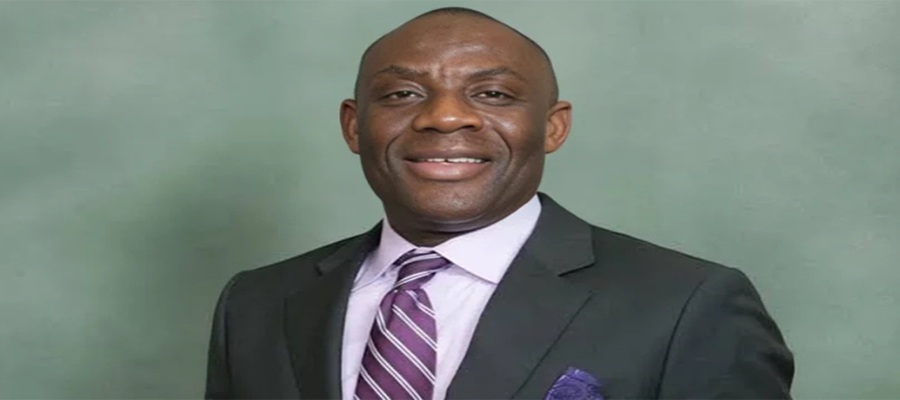
Federal Government has launched a nationwide Artificial Intelligence (AI) capacity-building programme for teachers in Federal Unity Colleges, with about 11,700 educators set to acquire digital skills aimed at improving classroom instruction and preparing students for a technology-driven future.

The initiative advanced with the signing of the Terms of Reference (ToR) between the Federal Ministry of Education and ICEDT Consult Limited, paving the way for the nationwide implementation of the AI Teacher Capacity Development Programme.
The programme, to be implemented through the ministry’s Education Support Services Department, is part of the Federal Government’s efforts to modernise Nigeria’s education sector, strengthen teacher professionalism and equip students with skills required in the digital economy under President Bola Tinubu’s Renewed Hope Agenda.
Speaking during the signing ceremony in Abuja, the Director of the Education Support Services Department, Gabriel Amudipe, described the initiative as a strategic investment in Nigeria’s teaching workforce and the future of education.
He said the nationwide rollout followed the successful completion of a pilot phase conducted in selected Federal Unity Colleges.
According to him, the implementation model developed by ICEDT Consult Limited will ensure effective coordination and quality delivery of the programme across the country’s six geopolitical zones.
Amudipe urged officials responsible for monitoring the project to ensure strict compliance with the implementation guidelines and maintain the standards achieved during the pilot phase.
“The ministry remains committed to supporting innovative initiatives that strengthen teacher professionalism, improve learning outcomes and promote the responsible integration of emerging technologies into education,” he said.
Earlier, the Deputy Director of the Education Support Services Department, Oladele Fapohunda, described the programme as a strategic intervention designed to deepen digital innovation across Federal Unity Colleges.
He stressed that collaboration among all stakeholders would be essential to achieving the objectives of the initiative nationwide.
Also speaking, the Head of Strategic Partnerships and Learning Scientist at ICEDT Consult Limited, Dr Abdulrahman Orosanya, said the Federal Government approved the national rollout after the successful pilot implementation in six Federal Unity Colleges representing Nigeria’s six geopolitical zones.
According to Orosanya, the pilot demonstrated the potential of Artificial Intelligence to improve lesson planning, classroom delivery, assessment methods and teachers’ productivity.
He said the nationwide implementation would strengthen teachers’ digital competencies, improve instructional delivery and support the government’s vision of building a technology-driven education system capable of producing globally competitive graduates equipped with 21st-century skills.
The ceremony ended with the formal signing of the Terms of Reference by officials of the Federal Ministry of Education and ICEDT Consult Limited, signalling the commencement of preparations for full implementation across all Federal Unity Colleges.
The ministry said the programme would directly train about 11,700 teachers, while thousands of students across the country’s Federal Unity Colleges are expected to benefit through improved classroom instruction, increased digital innovation and the responsible application of Artificial Intelligence in teaching and learning.
It reaffirmed its commitment to working with relevant stakeholders to modernise Nigeria’s education system, improve teacher quality and deliver inclusive, equitable and future-ready education nationwide.

Police Uncover Fake Diplomatic Number Plate Syndicate in Abuja

Davido Shares Past Suicidal Thoughts, Drops Oriadé Album

Gavi Okays $500m for Vaccines, PHCs in Nigeria

82% of Organizations Concerned about AI Risks Even as Adoption Accelerates – Survey Reveals

The Journey to Financial Freedom: Priscilla, a PalmPay Agent Now Owns a Store

NRC, Ponzi Scheme Collapses Resulting Loss of Billions of Naira

EFCC Busts NIS Visa Overstay Racket, Uncovers N700m in an Account

From Scarcity to Scale: What Africa Can Learn from India’s Agricultural Transformation

Tokenization, Blockchain Technology will Transform Financial Institutions – IMF

BON Establishes Six Ad Hoc Committees to Modernize Broadcasting




 E-Financial2 days ago
Access Bank Debunks Shutdown Report, Vows Action against Perpetrators

 E-Business2 days ago
Kaspersky Uncovers Cyber Threats Defining the First Half of 2026 in Nigeria, Others

 General News2 days ago
MENXTT TECH NG Offers Affordable Dell Laptops with Flexible Payment Plans

 Telecom2 days ago
ATU Summit Ends in Abuja with Landmark Declaration to Eradicate Continental Digital Divide

 Telecom2 days ago
Hon. Minister Dr. Kingsley T. Udeh and ASUS To Unveil First of a Kind Flagship Store in West Africa

 E-Financial2 days ago
$40Bn Net Reserves, Record Wealth, Relentless Poverty: Who Is Nigeria’s Economy Serving Today?

 E-Financial2 days ago
CBN Orders N19Bn Refunds to Customers as Complaints Rise

 General News2 days ago
EFCC Arraigns 4 over Alleged $5.3m Fraud Scheme