

Telecom
Telecom Operators’ Call Centres and Subscribers’ Issues

The adoption of Business Process Outsourcing (BPO) model by Global System for Mobile communications (GSM) in the management of their call centres has helped to a large extent in easing difficulties subscribers faces in accessing call centres.
Before the adoption of outsourcing model in the call centre operations, subscribers who have issues with their service hardly speak to humans for resolving such issues rather they where meant to follow interactive voice response system, in most cases does not resolve such issues.
But, with outsourcing, the chances of subscribers that put call to call centres to speak with humans have increased.
However, the greatest challenge facing outsourcing of call centres to the ‘so’ called experts is training.
Most of the attendants at almost all the GSM operators call centres are not knowledgeable in the products and services offered by the operators.
There have been situations where different attendants offer different explanations to a particular issue of a subscriber.
What this suggests is that the attendants are not properly trained in the products and services of operators they represent, rather emphases are concentrated on politeness of attendants to subscribers calling the centres as against training on services of the operator they interface with their subscribers.
Recently, this writer had issue with the service of transferring airtime to a subscriber which was not delivered while the airtime was deducted.
However, the writer put several calls to the call centre of the operators all the three attendants he spoke with could not offer explanation on what happened and how to revert the airtime that was deducted.
A call centre is operated by a company to administer incoming product support or information inquiries from telemarketing, clientele, product services, and debt collection are also made.
In addition to a call centre, collective handling of letters, faxes, live chat, and e-mail at one location is known as a contact centre.
A call centre is often operated through an extensive open workspace for call centre agents, with work stations that include a computer for each agent, a telephone set/headset connected to a telecom switch, and one more supervisor stations.
It can be independently operated or network with additional centres, often linked to a corporate computer network, including mainframes, microcomputers and LANs.
What this means is that a telephone or internet service provider that is based in Lagos with its major transmission equipment installed in Lagos can give service to a location such as Abuja or Uyo by simply installing another transmission equipment and trans-receiver station that will transmit calls from the sundry location to the major switch at Lagos.
Subscribers to the service in Abuja or Uyo as the case may be will enjoy the service without having to see the people rendering the service but agents not directly employed by the service provider as well as their equipment.
The question that arises is how can this subscriber reach out to the service provider when he or she has issues with the service? Such issues as recharging of phones, where recharge card numbers have been scratched off, SIM card issues among others.
These issues are addressed through contact to the service providers’ call centre located mostly at major towns or at the operational base of the operator depending on the coverage of the operator as well as the technology in use especially for internet service providers.
Subscribers of GSM networks in the country in the past 10 years have not had it smooth reaching call centres of their network to address issues.
There has been tells of woes as subscribers often time spend 60 minutes waiting to talk to call centre agent while others don’t ever talk to human beings but machine in the name Interactive Voice Response (IVR).
Interactive voice response (IVR), is a technology that allows a computer to detect voice and keypad to detect voice and keypad inputs, IVR technology is used extensively in telecommunications, but is also being introduced into Automobile system for handsfree operation. IVR System can respond with pre-recorded or dynamically generated audio to further direct users on how to proceed.
IVR systems can be used to control almost any function where the interface can be broken down into a series of simple menu choices.
In telecommunications IVR systems generally scale well to handle large call volumes.
More so, the claim by operators that their call centre service is 24 hours has been found deceitful as none of the operators’ call centres could be reached between 8pm and 7am.
Efforts by Operators
As the industry gets matured operators have begun to adopt different strategies to manage their call centres for effective service delivery. MTN has expanded its call centres to accommodate large number of agents to be able to attend to many subscribers at the same time. The telecommunications giant has also refocused its management by outsourcing it to a more competent company for the management of its call centres for an improved service delivery.
Airtel on its part having identified call centre outsourcing as the way forward to addressing the inefficiency of management of its call centres have signed an agreement with Spanco to operate and manage its call centres.
Kapil Puri, Chairman & Managing Director, Spanco, said: “Bharti Airtel was the pioneer of adopting the BPO model across all its areas of operations in India. The experience and success that it achieved created a whole new sector in the country that is now regarded as the global centre of excellence for outsourcing.
Currently over 4,000 people are employed in Africa supporting Bharti Airtel’s customer service operations. Going forward the number of people employed in managing Bharti Airtel’s customer service functions will increase as Bharti Airtel expands its network and customer base.
It is the expectations of subscribers that as these initiatives and more take root, operators should intensify effort on training their call centres attendants on the products and services the offer for better understanding as well as improvement in their ability to resolving issues.


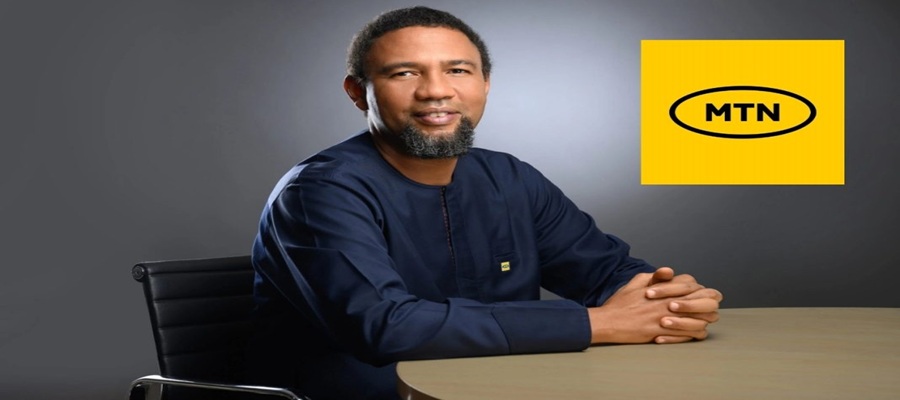
MTN Nigeria has raised the bar for corporate disclosure in Africa after publishing its 2025 sustainability report in full compliance with International Financial Reporting Standards S1 and S2.

Dr. Karl Toriola, CEO of MTN Nigeria,
The report, independently assured by Ernst & Young, marks the telecom operator’s seventh consecutive annual sustainability publication and third year as an early adopter of the global framework ahead of its mandatory implementation.
Dr. Karl Toriola, CEO of MTN Nigeria, said, “strong governance and ethical conduct are foundational to our sustainability strategy. We reinforced compliance through our Conduct Passport Framework and robust internal controls.”
He added that “in May 2025, we became the first telecommunications company in Nigeria to publicly present a sustainability report on the Nigerian Exchange Group platform, an important milestone in our commitment to IFRS S1 and S2- aligned disclosure and accountability.”
The company also secured Carbon Disclosure Project ratings of ‘B-’ for climate change and ‘C’ for water security.
Under the IFRS S2 framework, the telecoms operator disclosed climate-related risks linked to flooding, heat stress, regulatory changes and possible future taxes or charges on carbon emissions, following a climate scenario analysis completed in 2024.
The report also showed that MTN Nigeria now uses a digital reporting format – XBRL. This makes its sustainability and governance data easier for investors and ESG rating agencies to access and analyse through automated systems.
The Company also carried out assessments to understand how sustainability issues affect both its business operations and society at large, while measuring its overall economic, environmental and social impact from 2021 to 2024.
In addition, over one-third of MTN Nigeria’s biggest suppliers (based on spending) have committed to supporting the company’s net-zero emissions goals, although these commitments have not yet gone through an independent audit or verification process.


Nigerian Communications Commission (NCC) and the Corporate Affairs Commission (CAC) have announced a new compliance requirement mandating telecommunications companies to obtain regulatory approval before effecting significant changes in their ownership structure.

The directive, jointly issued by the two agencies, requires any proposed transfer of ownership or control of shares amounting to 10 per cent or more of the total share capital of a company licensed by the NCC to secure a Letter of No Objection from the commission before such transactions can be registered with the CAC.
The agencies said the requirement was in line with the provisions of Section 90 of the Nigerian Communications Act (NCA) 2003, Regulation 28(2) of the Competition Practices Regulations, 2007, and Regulation 42 of the Licensing Regulations, 2019.
According to the statement, the regulations empower the NCC to oversee and review transactions involving licensed communications companies and ensure fair competition within the sector.
“Effective immediately, any proposed transfer of ownership or control of shares in a licensee of the Nigerian Communications Commission amounting to 10 per cent or more of the total share capital, as well as any series of share transfers which in aggregate exceed 10 per cent of the total share capital of the licensee, shall require a Letter of No Objection from NCC in order for the changes to be effected and registered with the CAC,” the statement said.
The agencies explained that the CAC would henceforth ensure that all applications for changes in shareholding structures involving 10 per cent or more of a telecommunications company’s share capital are accompanied by evidence of prior approval from the NCC.
They noted that the measure was aimed at preserving a fair and competitive market structure within the communications sector by preventing direct or indirect anti-competitive practices.
According to the statement, the new requirement will also strengthen regulatory oversight of significant changes in ownership and control of licensed telecommunications operators.
The agencies said the initiative would enhance transparency, boost investor confidence, provide regulatory certainty and safeguard the long-term sustainability and stability of the communications industry.
The NCC and CAC reaffirmed their commitment to promoting a transparent, stable and competitive business environment in Nigeria.
They pledged to continue working closely to ensure fair market practices, strengthen regulatory certainty and support the orderly and sustainable development of the nation’s communications sector.

National Agency for Science and Engineering Infrastructure (NASENI) has signed a Memorandum of Understanding (MoU) with the Rural Electrification Agency (REA) to promote locally manufactured renewable energy technologies under the Federal Government’s ‘Nigeria First Policy’.

L-R: EVC/CEO, National Agency for Science and Engineering Infrastructure, Mr. Khalil Suleiman Halilu; Director-General of the Bureau of Public Procurement (BPP), Dr. Adebowale Abraham Adedokun; and Dr. Abba Abubakar Aliyu, Managing Director and Chief Executive Officer of the Rural Electrification Agency (REA), at the signing of the MoU on implementation of Nigeria First Policy for offtake of NSSENI’s renewable energy products for rural electrification projects held on Friday, June 19, 2026 at BPP’s office in Abuja.
The agreement signing was facilitated by the Director-General of the Bureau of Public Procurement (BPP), Dr. Adebowale Abraham Adedokun at the BPP headquarters in Abuja on Friday, June 19, 2026.
Speaking at the event, the Executive Vice Chairman/CEO of NASENI, Mr. Khalil Suleiman Halilu, said the Agency is focused on linking research, production, and commercialization to ensure that innovations are translated into market-ready products.
He said “NASENI would scale up renewable energy production, including solar panels and streetlights, through initiatives such as DefFrontier, to strengthen local manufacturing and reduce import dependence, adding that the Agency will meet the renewable energy requirements of REA.”
Instead of continuous importation of technologies, machines and equipment for producing renewable energy solutions, NASENI by this MoU will be committed to local manufacturing and domestication of the technologies, equipment and other ways and means of proliferation of renewable resource in the country and to increase the nation’s off-grid energy solutions.
The Managing Director/CEO of REA, Dr. Abba Abubakar Aliyu, described the relationship with NASENI as a strategic partnership aimed at building Nigeria’s renewable energy ecosystem through local production and deployment.
He stated that “while NASENI provides the manufacturing and technological capacity for renewable equipment, REA will focus on deploying solutions to expand electricity across rural areas.”
Meanwhile, the Director-General of BPP, Dr. Adebowale Abraham Adedokun, said the Nigeria First Policy, exemplified by this agreement, is aimed at strengthening local content, ensuring value for money, and promoting accountability in public procurement.
He emphasized that implementation of the agreement will be performance-based, with strict monitoring to ensure compliance and measurable outcome. He added that the MoU is expected to deepen collaboration between NASENI and REA in expanding renewable energy and reducing dependence on imported technologies.
The MoU will be implemented through NASENI’s subsidiary company, NASENI Devfrontier Green Energy FZE and REA limited liability company, RAMco.The two Federal Government agencies seek to establish a strategic collaboration under which REA shall offtake PV modules, inverters, energy storage batteries of NASENI-Devfrontier Green Energy FZE directly or through its approved distribution companies/assembly and manufacturing factory.
As part of the agreement, REA shall provide institutional visibility to enable NASENI participate in electrification projects; facilitate opportunities for engagements between NASENI and eligible developers/contractors under REA programs; ensure that such facilitation is consistent with applicable procurement, local content, and transparency requirements; and also collaborate with NASENI in promoting standardized, high-quality PV technologies across its programme portfolio.

Galaxy Backbone @ 20, Unveils New Identity

ALTON Backs CBN on Local Data Hosting Rule for Banks, Fintechs

MTN Nigeria Commits to Ethical Conduct with IFRS S1, S2 Compliance

NDPC to Review Data Law to Address AI, Privacy Concerns

FG Moves to End Double Taxation

CBN Extends PoS Geo-Fencing Enforcement Deadline to August 2026

London Strengthens Global Investment Ties with Africa @ First Ever London-Africa Business Summit

FG Targets Alleged N3tn Capital Flight, Opens Airtime Credit Market to Nigerian Fintechs

Japan, UNESCO Boost Digital Learning in 15 CoEs with Donation of ICT Equipment

African Electric Vehicle Platform Raises $215m to Scale Electric Mobility in Nigeria, Others




 Telecom3 days ago
TikTok, ICC Gather Nigeria’s Entrepreneurs to Drive Small Business Growth and Digital Transformation

 E-Business3 days ago
Payaza Launches AI-powered Storefront Platform to Drive Cross-border Commerce

 Telecom3 days ago
Nigeria Moves to End Solar Imports as NASENI, REA Seal Major Renewable Energy Deal

 Telecom3 days ago
How a New NITDA-TikTok Partnership Could Transform Thousands of Nigerian Businesses

 E-Business3 days ago
FG Bans Use of Gmail, Other Personal Emails for Civil Service Operations

 E-Financial3 days ago
NAICOM’s 18 Months Management Spill @ African Alliance Ends

 E-Financial3 days ago
Standard Bank Targets $15.4b SME Growth in Nigeria, Others with Trade Expansion Drive

 General News3 days ago
Indwelt Studios Seeks Increased Awareness @ World Sickle Cell Day