

News
Ndukwe, Former NCC Boss, Others Laud Think Breakfast Series


Industry experts have commended the “Think Breakfast Series” (tBs), a strategic initiative put together by Nigeria CommunicationsWeek and CFAtech.ng which is aimed at bringing industry experts together to brainstorm and discuss the biggest trends and issues impacting industries in Nigeria.
The tBs is a gathering of 30 passionate executives, decision makers and thought leaders who have to the capacity to proffer solutions to issues affecting their industry and Nigeria through a brainstorming session done over breakfast.
The interesting thing is that tBS is already receiving accolades from industry veterans and startups. Engr. Ernest Ndukwe, former EVC of Nigeria Communications Commission and Chairman, Open Media Group, who is the Lead Discussant/Moderator has described tBs as a crucial gathering that would add value to the Nation and industry at large.
He puts it succinctly “as a leader in Nigeria’s digitization efforts, I can boldly say that forums and meetings like tBs are important to sustain the tempo of technology development.”
Meanwhile, Nkem Begho, CEO, Future Software, has also expressed her support for tBs stating that the act of brainstorming amongst decision makers and other top executives would be of enormous importance to the ecosystem. “Every serious economy cannot over emphasize the need to think and brainstorm,” she added.
Yes, this is certainly another laudable project that is designed to add value and this is something we are committed to.
Engr. Ernest Ndukwe would lead the discussion as well as moderate the proceedings, while a few other top executives both in the private and public sectors have expressed their willingness to also be part of the discussants.
For us the orgainisers, we believe that Nigeria has a plethora of challenges that must be solved if she must be a great nation indeed and tBS would serve as a platform to assist Nigeria in achieving the greatness it deserves within the comity of nations. This is simply why we are bringing you this series.
The maiden edition of Think Breakfast Series (tBs) comes up on the 25th of January, 2017 by 8am at the Prime Chinese Restaurant, Plot 860 Bishop Aboyade Cole Street Victoria Island, Lagos.
It is strictly by invitation because we want to maintain a high quality but if you are a top executive and would like to to join other key decisions makers in the first series of tBs, register @ http://tbs.com.ng/tbs-registration/ and also contact us if you would like to partner the tBs team.
tBS will no doubt be a gathering of great minds with solutions that can transform the country.


As digital payment adoption continues to grow across Nigeria and emerging markets, the next phase will depend not just on innovation, but on the strength, reliability, and trustworthiness of the infrastructure behind it.

While the ecosystem has made clear progress in recent years, trust remains a critical issue for users, businesses, and operators alike. Questions around resilience, security, interoperability and transaction reliability continue to shape how the market evolves and how confidently digital payments can scale.
These issues will be central to the deliberations at Digital Pay Expo 2026, where fintech leaders, payment operators, and other ecosystem stakeholders will gather under the theme, “Seamless Digital: Fostering Pan-African Market Expansion in the Era of AI.”
PalmPay’s participation reflects its continued commitment to building trusted and scalable payment infrastructure, while contributing to the broader industry efforts to strengthen systems, standards, and partnerships needed to support long-term ecosystem growth.
Speaking ahead of the event, Olorunfemi Hanson, Head of Marketing and Communications at PalmPay Nigeria, said: “As the financial services ecosystem continues to grow, trust and reliability become even more important.
“The industry’s next phase will be shaped not only by innovation, but by the strength of the infrastructure supporting it. Digital Pay Expo provides an important platform to address the resilience, interoperability, and trust issues that will shape the future of digital payments growth across Africa.”
The event, scheduled to be held from the 17th to the 18th of June, 2026, will feature Chika Nwosu, Managing Director of PalmPay Nigeria, alongside other distinguished guests, including the Director-General, Payment System Management Department (PSMD), Central Bank of Nigeria. The event will examine how the industry can balance innovation, regulation, and scalability while strengthening trust across the digital payments value chain.
For PalmPay, this event reinforces its role in supporting a more resilient, secure and scalable payments ecosystem for Nigeria and emerging markets more broadly.
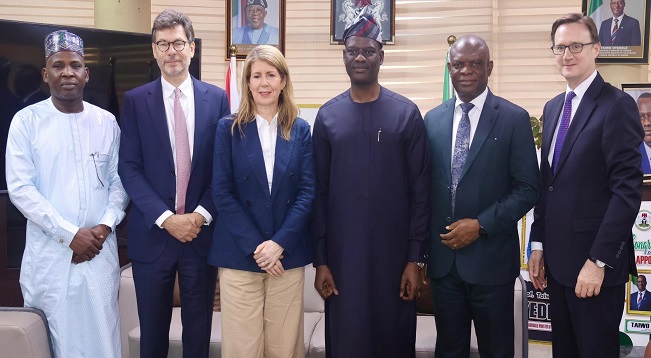
The UK Minister for Africa and International Development, Baroness Jenny Chapman, has concluded a two-day visit to Nigeria, during which she announced a new £15 million Growth Programme, deepened cooperation on digital transformation and health, and visited communities benefiting directly from UK investment on the ground.

The visit, spanning Abuja and Kaduna, underscored the breadth and depth of the UK–Nigeria Strategic Partnership and marked a significant step towards both countries’ shared priorities.
The UK–Nigeria Growth Programme
The centrepiece was the meeting with Nigeria’s Minister of Finance and Coordinating Minister of the Economy, Mr. Taiwo Oyedele. During their meeting, they discussed the new UK–Nigeria Growth Programme. Over three years, it will accelerate economic transformation, unlock private investment and support Nigeria’s transition from macroeconomic stabilisation to sustained, reform-led growth.
Alongside the Growth Programme, the UK announced deeper collaboration on Nigeria’s digital economy through the SPRIRET initiative, delivered under the UK’s Digital Access Programme. SPRIRET will support digital governance reforms across five Nigerian states, reducing regulatory barriers and enabling greater investment and innovation in broadband, digital services and emerging technology.
The Minister of Finance and Coordinating Minister of the Economy, Mr. Taiwo Oyedele said: “We continue to value the UK–Nigeria relationship, one of the most important partnerships for both our countries. Today, that relationship extends beyond traditional ties and now focuses on development, growth, and shared prosperity.
“The UK–Nigeria Growth Programme helps bring this partnership to life—supporting capital market development, technology investment, small businesses, and technical assistance. We look forward to seeing how these opportunities deliver lasting benefits and drive progress for both countries.”
Trade and bilateral ministerial meeting
During the visit, Baroness Chapman met with the Minister of Industry, Trade and Investment, Dr Jumoke Oduwole. Discussions covered progress under the Enhanced Trade and Investment Partnership (ETIP), including boosting exports via the Developing Countries Trading Scheme, fintech and capital markets links.
Kaduna: building on two decades of partnership
In Kaduna, Baroness Chapman met with Governor Uba Sani to take stock of over 20 years of UK–Kaduna partnership and explore how cooperation can deepen shared priorities. She heard from the business community and key institutional investors about their investment aspirations and the role of the UK in supporting investment mobilisation and enabling climate finance.
She met with community animal health workers and livestock breeders to discuss the UK’s support on breeding techniques, animal health and livestock vaccines. She also visited Unguwan Sanusi Primary Health Care Centre, which serves approximately 20,000 people in Kaduna South, hearing directly from patients and frontline health workers about the impact of UK-supported health programmes.
At the end of the visit, the UK Minister for Africa and International Development, Baroness Jenny Chapman, said: “This visit has reinforced everything I believe about the UK–Nigeria partnership.
“That it is deep, it is real, and it is moving in the right direction. From launching our new Growth Programme with Honourable Minister Oyedele, to meeting from frontline health workers in Kaduna — every conversation this week has shown me a country full of ambition and a partnership that is genuinely delivering for both sides.
“Nigeria is a partner that the UK is proud to stand alongside and I leave more convinced than ever that the next chapter of this partnership is its most exciting yet. The UK is here for the long term, and we are ready to grow together.”

More than 810 million women across low- and middle-income countries (LMICs) remain offline, with Sub-Saharan Africa recording one of the world’s widest mobile internet gender gaps.

According to the GSM Association’s (GSMA’s) Mobile Gender Gap Report 2026, released this week, women in LMICs are still 12% less likely to use mobile internet than men, leaving an estimated 200 million fewer women connected than their male counterparts.
This is despite mobile internet becoming the primary gateway to the digital economy, according to new research from the GSMA.
The report reveals that of the 810 million women who remain offline globally, more than two-thirds live in Sub-Saharan Africa and South Asia −regions that continue to experience the widest disparities in digital access.
The findings highlight significant implications for Africa, and the challenges facing governments, mobile operators and development agencies seeking to expand digital inclusion.
The report notes that Sub-Saharan Africa’s mobile internet gender gap stands at 26%, second only to South Asia’s 25%. The divide becomes even more pronounced outside major cities.
“In LMICs, the gender gap in mobile internet adoption tends to be two to three times wider in rural areas than urban areas. In 2025, across all LMICs, the gender gap in mobile internet adoption was more than three times wider in rural areas than in urban areas.
“There is also a difference at the regional level, where the gender gap in mobile internet adoption is wider in rural than urban areas of LMICs in every region except Europe and Central Asia.”
For Africa, the rural challenge is particularly severe, the report warns.
The GSMA found that the gender gap in mobile internet adoption reaches 34% in rural areas of Sub-Saharan Africa, compared to 21% in urban centres.
Device challenge
Smartphone ownership remains a major obstacle to digital inclusion. The report found that women across LMICs are 13% less likely to own a smartphone than men, representing approximately 210 million fewer women with access to internet-enabled devices.
Across Sub-Saharan Africa, only 34% of women own smartphones, with the region recording a smartphone ownership gender gap of 22%, with access to internet-enabled devices remaining one of the most important factors influencing whether women eventually adopt mobile internet services.
“The type of mobile device a person owns matters, as it typically affects whether and how they use the internet. Once someone owns a smartphone, they are much more likely to be aware of mobile internet, adopt it and use it regularly and in a variety of ways. In fact, once women own a smartphone, these metrics more closely resemble those of men,” notes the report.
Barriers persist
Despite growing awareness of mobile internet and its benefits, women continue to face multiple barriers to meaningful participation in the digital economy.
The report identifies affordability, literacy and digital skills as the leading barriers preventing women from getting online.
Even after gaining access, women frequently report safety and security concerns, data costs and connectivity quality as obstacles to broader internet use.
The report notes: “Addressing rural gender gaps is essential to advancing digital inclusion for women overall. In particular, women who live in rural areas tend to have limited physical access to essential services and may have the most to gain from better access to mobile and mobile internet.
“Addressing gender gaps in mobile ownership, particularly of smartphones, and in mobile internet use can help women in rural areas benefit from these digital technologies to the same extent as men.”
Claire Sibthorpe, head of digital inclusion at the GSMA, warns that progress is not happening quickly enough and emerging technologies such as artificial intelligence risk creating new forms of digital exclusion.
“While there has been a slow narrowing of the mobile gender gap since 2022, much more is needed to address the persistent and significant gender gaps in mobile internet adoption and use.
“We live in an increasingly digital world and the proliferation of technologies such as AI are creating greater digital divides and inequities, elevating the need to ensure digital inclusion for all.”

Galaxy Backbone @ 20, Pledges Nationwide Connectivity, Data Sovereignty

KidsCook Showdown 2.0 Set to Empower Public School Pupils with Culinary, Life Skills

CBN Orders Banks, Fintechs to Host Payment Data Locally

PalmPay Joins Industry Leaders @ Digital Pay Expo 2026

UK Bans TikTok, Instagram, Facebook for Under-16s in Landmark Crackdown

CBN Extends PoS Geo-Fencing Enforcement Deadline to August 2026

NCC Drafts New Rules for Virtual Mobile Operators

TD Africa, HPE Drive Conversations on the Future of Intelligent Networking

London Strengthens Global Investment Ties with Africa @ First Ever London-Africa Business Summit

Easybuy Partners WAWUAfrica to Upskill 10 Million Youths and Women, Boosting Nigeria’s Economic and Financial Inclusion




 E-Business2 days ago
AI-Powered Cyber Threats Put Nigerian Banks on Alert

 E-Business2 days ago
CSOs Raise Alarm over Nigeria’s Data Protection Crisis

 General News2 days ago
₦5m up for Grabs as 10 Startups Clash at the Gathering on 100 Pitchathon Aba

 E-Financial2 days ago
CBN to Expand eNaira for Salaries, Pensions and Welfare Payments

 General News2 days ago
CBN Moves to Stop Banks From Using Customers’ Money for Fintech Subsidiaries

 E-Financial2 days ago
CBN to Bar HoldCos from Influencing Banks’ Lending Decisions

 Telecom2 days ago
NITDA Reveals Why AI Could Be Nigeria’s Biggest Wealth Creator, Not Oil

 Telecom2 days ago
NASENI Unveils Ambitious Plan to Produce 600 Million Diagnostic Kits Annually