

Telecom
4 Ways to Manage a Cracked iPhone Screen


Despite the recession and how expensive the iPhone is, a majority of people in Nigeria still buy and use the product.
Most of these owners, however, are from time to time faced with the challenge of a cracked screen. No doubt, dropping your phone and cracking the screen can completely ruin your day.
However, it does not have to be the end of the world. Of course, buying a new phone once your screen is cracked might not be the first option. And even if you did not opt in for phone insurance, and your warranty is exhausted, it might be worth considering other solutions for the damaged screen. Read on to learn Jumia Travel’s solutions for your cracked iPhone screen.
Ignore The Crack and Move On
So, your iPhone screen has cracked, not completely destroyed or totally removed …it is not the end of the world.
First, check out the phone’s basic functions: Are the screen sensors still reactive? Is the text legible? Does the screen still respond to your touch? Can you still receive and make calls easily? If yes, then just move on and make up your mind to push through.

Fix It Yourself
Thanks to Youtube and the internet, anyone can basically build or fix anything these days. While the DIY (do-it-yourself) solution can be a little risky, it can be achieved with the right tools and a little know-how which you can get online. Fixing it yourself is sometimes even cheaper than an insurance claim.
A full replacement screen and front for a iPhone7, for instance, can be bought from computer village or from online stores. You would then need to find instructions on how to proceed from a website like iFixit or follow guidelines from a video on Youtube.
The process can be frustrating and take a few hours to complete, however, it gives techies the most satisfaction. Note that this solution is not recommended if you have any doubts, as you could cause even more damage.
Visit A Local Repair Shop
This only makes sense when the damage is not too severe and your manufacturer’s warranty period is expired. If there is no Apple store in your area, searching the Internet for local repair stores in your area with good reviews or visit a local mall for a repair kiosk.
Cracked screen repairs typically cost around NGN 100,000 or more, and can take anywhere from a few minutes to an hour or two.
Ensure you find a provider who will repair your phone while you wait. Independent repair shops are actually a lot cheaper than manufacturer’s shops, but the risk of them not fixing it to a high standard is always there.
Sell the phone
If the crack it lethal or maybe it is not the first time the screen is getting cracked and you have had the iPhone for a long time, it might not be worth paying for repairs. However, rather than throw it away, as you can sell the damaged device to iPhone vendors to get a bit of money back.
This is an easy thing to do at computer village or Saka Tinubu, VI.
The phone technicians in those areas gladly buy broken devices, so they can use the spare parts. It is however important to bear in mind that damaged phones will only get you about 50 percent or less of what the device was originally worth.
The point is that you will use that cash towards a replacement phone so that you can get it at a lower price.


MTN Nigeria is accelerating investments in network expansion and modernization to address rising demand for mobile and data services across the country.

The operator is deploying additional base stations, upgrading existing infrastructure, and expanding fiber connectivity to improve network capacity, coverage, and service quality.
The investments are designed to support increasing smartphone adoption, higher data consumption, and the growing use of digital services by consumers and businesses.
MTN said the expansion aligns with its long-term strategy to enhance customer experience while strengthening Nigeria’s digital infrastructure.
The company expects the ongoing upgrades to improve connectivity, support economic growth, and enable broader access to reliable telecommunications services as demand for high-speed broadband continues to increase.

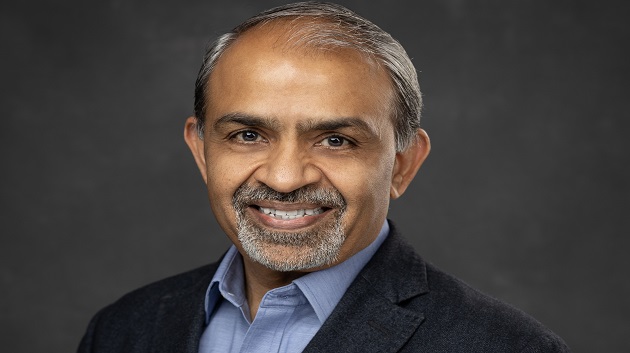
Airtel Africa’s CEO, Sunil Taldar, has announced the telco’s commitment to connecting 5,000 schools across its operating countries in Africa to the internet by 2027 through its philanthropic arm, Airtel Africa Foundation, in partnership with the United Nations Children’s Fund (UNICEF).

So far, the $57m partnership, which was launched in 2021, has cumulatively connected 3,296 schools and provided access to over 2 million learners and about 40,000 teachers. 64 digital learning platforms have been zero-rated thereby enabling more than 11m users to access educational content at no cost.
Speaking during a visit to St. Monica’s Girls School in Lusaka, which is one of the 300 schools already connected to the internet in Zambia, the Airtel Africa CEO stated that the initiative is having a profound impact on the quality of education by expanding access to digital learning resources for African children, in collaboration with governments.
Mr Taldar added: “Students are accessing best-in-class education from the curriculum developed by UNICEF in partnership with various Ministries of Education and provided through Airtel’s connectivity.
“We are also training teachers, so that they deliver digital education effectively. We aim to continue deepening meaningful connectivity in schools by providing free internet access, zero‑rated platforms and training teachers across the continent”.
Expressing her appreciation, the Headmistress of St. Monica’s Girls’ School, Sr Matilda Soloko said: “Being among the first schools connected in the initial stage, our learners have been able to study using the learning portal and their studies have been intensified. We remain grateful to Airtel and UNICEF.”
UNICEF’s Country Representative for Zambia, Dr Saja Farooq Abdullah said: “What this partnership has brought is really bridging the equality gap and the digital divide. It is making sure that every child learns wherever they are. It was exciting and interesting to see and hear from the girls how they can learn at their own pace, how they can review the materials, and how they do their homework with comfort.
The Director of Secondary Education in Zambia’s Ministry of Education, Yvonne Mwemba Chuulu lauded UNICEF and Airtel for the partnership saying: “At the Ministry of Education, we cannot do it alone, and we are grateful for the partnership that we have today.
“Our children are able to learn in a blended fashion, where we have a teacher who is also employing digital devices. We have also heard from the learners that they are able to access the portal when they are at home, which is a good thing because our learners continue to learn in the comfort of their homes”.
The School Connection programme is expanding digital learning to learners in 13 countries: Chad, Congo, Democratic Republic of Congo, Gabon, Kenya, Madagascar, Malawi, Niger, Nigeria, Rwanda, Tanzania, Uganda, and Zambia. By equipping these schools with internet connectivity and training teachers on using the digital tools, it is providing children, particularly in underserved and remote regions, with the digital tools and skills they need to thrive.
Airtel Africa Foundation is advancing inclusive development across four strategic pillars, Financial Inclusion, Education, Environmental Sustainability and Digital Inclusion.

MultiChoice has officially become a wholly owned subsidiary of French media company Canal+, marking the completion of one of the largest acquisitions in Africa’s media and entertainment industry.

The integration brings the South Africa-based pay television operator under the full ownership of Canal+, a global media group with operations in 70 countries.
Announcing the completion of the transaction on Thursday, Chief Executive Officer of Canal+ Africa and MultiChoice, David Mignot, described the development as the beginning of a new phase of growth for the broadcaster.
“MultiChoice is now a full subsidiary of a truly international media group operating in 70 countries.
“The group was founded in France, is listed in London and Johannesburg, and has a strong African presence with operations in more than 45 countries,” Mignot said.
The acquisition combines Canal+’s international operations with MultiChoice’s extensive footprint across sub-Saharan Africa, where it serves millions of households through its DStv and GOtv platforms, as well as the Showmax streaming service.
According to Canal+, the integration will strengthen MultiChoice’s competitive position by giving it access to broader financial resources, technology, content partnerships and operational expertise.
The company said the combined business would increase investment in local content production, sports broadcasting and streaming services as competition intensifies from global platforms such as Netflix, Amazon Prime Video and Disney+.
The transaction is also expected to provide MultiChoice with greater access to international markets at a time when traditional pay television operators are adapting to changing consumer viewing habits and the rapid growth of digital streaming platforms.
Canal+ has expanded steadily across Africa over the past decade and now assumes full control of a business operating in more than 45 African countries, further strengthening its position in the continent’s media and entertainment sector.
The acquisition followed Canal+’s gradual increase in its shareholding in MultiChoice, which began in 2024.
After exceeding the regulatory threshold, the company launched a mandatory offer in April 2024 to acquire the remaining shares of the Johannesburg-listed broadcaster.
Following regulatory approvals and shareholder acceptance, Canal+ secured control of MultiChoice in 2025 before completing the process that has now made the company a wholly owned subsidiary.
Industry observers describe the acquisition as one of the most significant media transactions involving an African company, reflecting a broader trend of consolidation as global entertainment firms seek greater scale to compete in the streaming era.

Police Busts Syndicate Who Allegedly Stole N3Bn from Financial Institution

MTN Accelerates Network Expansion to Meet Surging Telecom Demand

Court Remands Akujobi, Ex Access over alleged Theft of N294.5m

TeKnowledge, Equinix Partner to Advance Nigerian Digital Infrastructure

NSIB Faults Runway Identification, Reveals Cockpit Disagreement in Asaba Jet Incident

Nigeria Launches FreeTV Nationwide

NASENI Moves to Digitize CCB’s 5m Assets Declaration and Operations

NRC, Ponzi Scheme Collapses Resulting Loss of Billions of Naira

Lebara Nigeria Launches Lebara Play, Africa’s First Telecom-Owned Micro-Drama Platform

CANAL+ Partners Samsung to Pre-Load DStv Stream on New Samsung TVs In Nigeria, Other African Countries




 Telecom2 days ago
Fixed Wired Internet Market Lags as Mobile Gains Ground

 News2 days ago
Study Reveals How Moniepoint is Powering Nigeria’s $11Bn Food Service Sector

 Broadcasting2 days ago
BON Establishes Six Ad Hoc Committees to Modernize Broadcasting
 News1 day ago
Police Busts Syndicate Who Allegedly Stole N3Bn from Financial Institution

 Telecom1 day ago
DStv, GOtv Owner MultiChoice Officially Joins Canal+ Group

 E-Business2 days ago
New NIMC Act Strengthens Data Protection, Privacy – Director

 General News2 days ago
Court Adjourns Alleged Binance Tax Evasion Case over Settlement Talks

 General News2 days ago
Xenophobic Attacks: OYC Threatens to Picket MTN Nigeria Offices