

E-Business
Microsoft Says Windows 7 Outdated, not Secured with Patches

Microsoft on Tuesday warned business customers to begin migrating from Windows 7, exactly three years before it reaches end of life.
Mr. Markus Nitschke, the Head of Windows at Microsoft Germany in a statement said that enterprises would pay dearly for sticking with the platform’s outdated security compared with Windows 10.
According to him, Windows 7 does not meet the requirements of modern technology, nor the high security requirements of IT departments.
“While newer tools make Windows 7 less difficult for enterprise customers to migrate from than XP, Microsoft is still urging corporate customers to begin the transition three years out from Windows 7’s end of support.
“They stressed that enterprise faces enormous dangers if they do not. “Microsoft has kicked off its three-year countdown for Windows 7’s end of extended support, warning enterprises they will pay dearly for sticking with the platform’s outdated security compared with Windows 10.

“Enterprises can of course delay upgrading until Jan. 13, 2020, when extended support ends for the 2009 OS and it no longer receives patches, unless the customer is paying for a pricey Microsoft Custom Support Agreement.
“However, as Microsoft has warned, Windows 7, which moved to extended support in 2015, is outdated and will drive up operating costs from remediating malware attacks that wouldn’t penetrate Windows 10 systems.
“As early as in Windows XP, we saw that companies should take early steps to avoid future risks or costs,” he said.
Nitschke said that the message came as Microsoft published research showing that Windows 10 Anniversary Update in-built security could neutralise two recent zero-day exploits even without the patches required to protect earlier versions of Windows.
He said that Windows 10’s modern security features touted by Microsoft include Windows Hello biometric login, its AppContainer sandboxing technology, and Windows Defender Advanced Threat Protection. According to him, it will gain new features in the upcoming Creators Update.
He said due to the pressure to upgrade, enterprise organisations on Windows 7 soon would not have the additional zero-day protection offered by EMET or the Enhanced Mitigation Experience Toolkit since 2009. Nitschke added that Microsoft in November extended EMET’s end of life from January 2017 to July 31, 2018.


TeKnowledge and Equinix announced a partnership to accelerate secure hybrid and multi-cloud adoption and enable AI-ready digital infrastructure across the region.

Nigeria’s digital transformation is accelerating rapidly, with the digital economy being a significant contributor to the country’s gross domestic product (GDP).
As demand for cloud services, AI adoption, digital payments and data-driven innovation continues to accelerate across West Africa, the partnership is positioned to advance the region’s digital transformation.
By combining Equinix’s in-country and global data centre infrastructure and secure interconnection capabilities with TeKnowledge’s expertise in designing, deploying and managing AI, data, customer experience and cybersecurity solutions, organisations can accelerate innovation while maintaining data residency and sovereignty requirements.
Together, the organisations empower enterprises and government institutions to bridge the gap between digital ambition and execution through secure, high-performance digital environments built on local infrastructure and delivered by local talent.
Speaking, CEO and President, TeKnowledge, Aileen Allkins, said: “Organisations across Africa are increasingly looking to modernise their infrastructure while maintaining the performance, security, and compliance required to support growth.
Through our partnership with Equinix, we are combining world-class digital infrastructure with deep local expertise to help customers accelerate cloud adoption, strengthen resilience, and unlock new opportunities through AI and emerging technologies.”
Managing Director of Equinix West Africa, Wole Abu, expressed delight at partnering with TeKnowledge to bring together Equinix’s globally interconnected platform, spanning over 280 data centres and 10,000 customers worldwide.

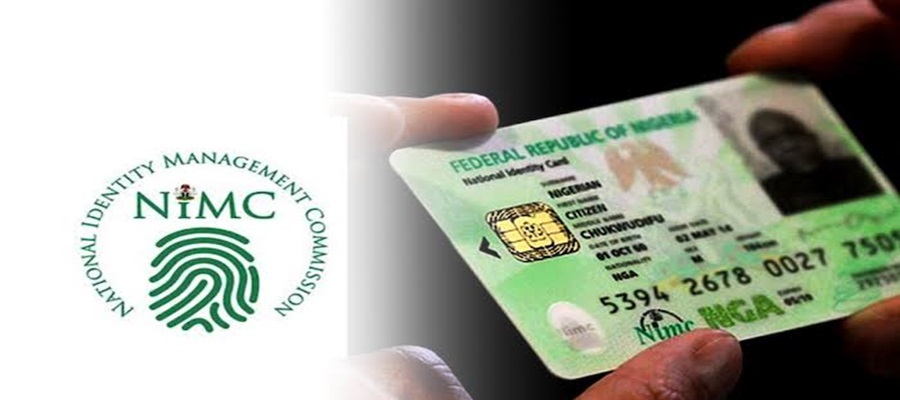
Uche Chigbo, coordinating director of Operations, National Identity Management Commission, (NIMC), has said the newly enacted NIMC Act strengthens data protection and privacy, expands identity coverage to include everyone in Nigeria and Nigerians in the diaspora, and provides the legal framework for a secure and trusted digital identity ecosystem.

She said the new law replaces the 2007 NIMC Act, which had become outdated due to rapid technological advancements, evolving cybersecurity threats, the growth of the digital economy, and the enactment of the Nigeria Data Protection Act.
According to her, the updated legislation better positions the Commission to deliver Nigeria’s digital identity agenda and improve access to government and private sector services.
“The Act itself has taken in a whole lot of things to make sure that NIMC is well-positioned to be able to deliver on the identity agenda and program of Nigeria. The area of universal coverage was expanded within the Act so that NIMC can enroll everybody that is within the soil of Nigeria—male, female, children, whether they are IDPs or orphans or whatever it is, and even Nigerians in diaspora.
“There is quite a lot within the Act that over the few days and weeks, even with my Director-General’s courtesy visit, we are trying to sensitize and educate the general public, and also bring awareness to this new Act so that people will know what are the rights that exist within it, what are the obligations, what are the stronger enforcement and penalties that has also been expanded within the Act, and then what are also the regulatory autonomy that has been given to NIMC to make sure that they drive the digital identity ecosystem in Nigeria,” she explained.
“There’s a lot of provisions and changes with the new Act. Um, the NIMC 2007 Act has been operating for close to 19 years now. So, we can see that, um, you can actually say it’s almost obsolete. And then with a lot of technological advancements in the world now, with the enactment of the Nigeria Data Protection Act, and then with also a lot of evolving security challenges, cybersecurity challenges, as well as the ever-growing digital economy, it became very necessary that a comprehensive review of the NIMC Act should be done.
So, that 2007 Act has been repealed and a new NIMC 2026 Act is in place,” she explained.
Chigbo clarified that the National Identification Number (NIN) is Nigeria’s unique identifier and the only valid means of identification for accessing government services.
She added that it enables secure identity verification and improves access to services.
“NIN has been designated as the unique identifier in Nigeria and then by the government of Nigeria establishing it as the only valid means of identification for assessing government services. So, NIN, it’s positioned to be a valuable tool for empowering citizens and legal residents to facilitate access to service delivery in Nigeria. And it’s also a tool for people to be able to prove their identity as they go about their daily businesses,” she said.
Speaking on identity harmonisation across government agencies, Chigbo said NIMC is integrating identity databases to enable Nigerians to access services seamlessly using the National Identification Number (NIN), while other agencies continue to issue functional identities for specific purposes.
“There’s a distinction between a foundational identity and a functional identity. NIMC provides the foundational identity, which answers the question, ‘Who are you?’ Are you a Nigerian or a legal resident? Who are you? That’s what NIMC is providing. All these other agencies that you have mentioned, they provide functional ID, which is an ID that relies on the foundational ID, where they have established who you are and then they are now trying to answer the question, ‘Are you now eligible to have these services? Are you now eligible to benefit from this transaction or scheme?’ So, those are two different distinctions.”
However, Chigbo said NIMC’s mandate is to harmonise and integrate identity systems across government, with the amended Act designating the Commission as the sole repository for biometric data.
“However, NIMC mandate is to make sure that we harmonize and integrate with all these agencies so that you’re one and the same person in any of the databases or registries that you have. The Act that has been expanded and amended also positions NIMC as the only repository for biometric data capture so that we can have effective identity management and coordination in Nigeria.
“So, that harmonization is already happening, the integration is already happening,” she stated.
She also disclosed that NIMC has introduced an online modification portal that allows Nigerians to begin the process of correcting or updating their personal information from the comfort of their homes or offices.
“But also, NIMC we have a modification portal that enables you to sit in the comfort of your home or office to be able to start the process of correction or updates of your data. We already have a self-service modification portal that allows you to make corrections,” she disclosed.
On the cost of obtaining a NIN, Chigbo clarified that enrolment and issuance of the National Identification Number are free.
She, however, noted that some other identity-related services attract approved fees, which are published on the NIMC website and paid electronically through the government Remita platform.
“Enrollment for the issuance of the National Identification Number, NIN, is free. There are other services, identity services that NIMC provide. Those ones have their charges, and those fees and charges are publicized on the NIMC website so that people can see what those charges are. And NIMC does not collect cash. Our transactions and the charges are paid electronically through the government Remita platform,” she said.

International Monetary Fund (IMF) has retained Nigeria’s economic growth forecast at 4.1 per cent for 2026, while warning that rising prices of essential goods could worsen poverty and food insecurity in the country.

IMF
The IMF made the projection in its July 2026 World Economic Outlook (WEO) Update, released on Wednesday.
According to the report, Nigeria’s Gross Domestic Product (GDP) is projected to grow by 4.1 per cent in 2026 and improve to 4.3 per cent in 2027, with both forecasts unchanged from the Fund’s April outlook.
The IMF also maintained its growth projections for sub-Saharan Africa at 4.3 per cent in 2026 and 4.5 per cent in 2027.
The Fund said Nigeria’s economic outlook continued to benefit from improved macroeconomic stability and favourable terms of trade but cautioned that the rising cost of essential commodities remained a major concern.
“Nigeria is supported by improved macroeconomic stability and favourable terms-of-trade effects, though higher prices for essentials are expected to further aggravate poverty and food insecurity,” the report stated.
The IMF noted that economic performance across sub-Saharan Africa would remain uneven, reflecting differences in policy implementation, reform progress and countries’ exposure to external shocks.
It added that oil-importing and non-resource-intensive economies would likely face increased pressure from rising food and energy prices, while some larger economies continued to benefit from earlier macroeconomic reforms.
Globally, the IMF revised its 2026 growth forecast downward to 3.0 per cent from the 3.1 per cent projected in April but raised its 2027 forecast to 3.4 per cent.
According to the Fund, the downgrade for 2026 reflects the impact of the ongoing conflict in the Middle East, although stronger demand driven by advances in artificial intelligence and technology adoption has helped cushion some of the adverse effects.
Despite the resilience of the global economy, the IMF warned that risks remained tilted to the downside.
It identified renewed trade tensions, geopolitical conflicts and tighter global financial conditions as key threats to economic growth.
The Fund urged governments to rebuild fiscal buffers through credible fiscal consolidation, improved revenue mobilisation, stronger tax administration, efficient public spending and increased investment in infrastructure, skills development and targeted social protection programmes.
It also advised commodity-exporting countries to avoid excessive public spending during periods of high commodity prices.
“Economies benefiting from commodity windfalls and the upturn in the global technology cycle should avoid procyclical spending and save or redeploy gains within a credible medium-term fiscal framework anchored in debt sustainability,” the report stated.
The IMF further called on policymakers to accelerate structural reforms aimed at boosting productivity, strengthening labour markets, expanding digital and physical infrastructure, promoting predictable trade policies and enhancing international cooperation to support sustainable economic growth.

Police Busts Syndicate Who Allegedly Stole N3Bn from Financial Institution

MTN Accelerates Network Expansion to Meet Surging Telecom Demand

Court Remands Akujobi, Ex Access over alleged Theft of N294.5m

TeKnowledge, Equinix Partner to Advance Nigerian Digital Infrastructure

NSIB Faults Runway Identification, Reveals Cockpit Disagreement in Asaba Jet Incident

Nigeria Launches FreeTV Nationwide

NASENI Moves to Digitize CCB’s 5m Assets Declaration and Operations

NRC, Ponzi Scheme Collapses Resulting Loss of Billions of Naira

Lebara Nigeria Launches Lebara Play, Africa’s First Telecom-Owned Micro-Drama Platform

CANAL+ Partners Samsung to Pre-Load DStv Stream on New Samsung TVs In Nigeria, Other African Countries




 Telecom2 days ago
Fixed Wired Internet Market Lags as Mobile Gains Ground

 News2 days ago
Study Reveals How Moniepoint is Powering Nigeria’s $11Bn Food Service Sector

 E-Financial3 days ago
BVN Enrollments Hit 69.55m- NIBSS

 Broadcasting2 days ago
BON Establishes Six Ad Hoc Committees to Modernize Broadcasting

 General News3 days ago
CAC to Sanction Companies with Incomplete Business Letters From August 1

 General News2 days ago
Court Adjourns Alleged Binance Tax Evasion Case over Settlement Talks

 E-Business2 days ago
New NIMC Act Strengthens Data Protection, Privacy – Director

 General News2 days ago
Xenophobic Attacks: OYC Threatens to Picket MTN Nigeria Offices