

News
NELEX Backs TheMap.online on Digital Jobs for Nigerians


Federal Ministry of Labour and Employment, through its department- National Electronic Labour Exchange (NELEX), has expressed support to TheMap.online, an indigenous e-Commerce platform, in its drives to create digital jobs for teeming young Nigerians.
The platform, TheMap.Online was developed using Google maps open source code by adding a lot of Nigerian local contents to make it the number one intelligent directory in the country.
Speaking on the support that may lead to partnership, Mrs Miemiye Badeje, director of NELEX, said that the Federal Government of Nigeria owned website, NELEX, has always been active for connecting jobseekers to credible employment creators in conditions of freedom, and equal opportunities.
The Director said that the Division within the Employment and Wages Department of the Federal Ministry of Labour and Employment, supports TheMap.online for job creation targeted at unemployed, under employed, youth corpers, uneducated/illiterates, students, retirees, pensioners, internally displaced persons (IDPs), traders, house wives, artisans/craftsmen, disabled/handicapped ,etc, in Nigeria and also in diaspora, “as the developers of the initiative are deploying platforms such as Google platforms, Facebook, Instagram, Twitter, LinkedIn, YouTube, Pinterest, Tumblr, IMO, Skype, Snap chat, custom mobile apps, etc, to create multiple job opportunities that can enable Nigerians to work and make money from home or any location”.
“We have always been on the vanguard for digital jobs in the country, she sees TheMap.online platform as credible, all encompassing, and falls in line with the President Muhammadu Buhari’s job for all agenda. Therefore, we endorse the platform and urge young Nigerians to embrace the opportunities inherent.

“This is a life transforming platform as people are already taking advantage which enables them to better their worth by operate various businesses online ranging from; online restaurants, online salon, online filling stations, online banking, online gymnasium, online pickup/delivery, online media houses, online shops, online farms, online customer service, online school and so much more. We are proud to work with the developers to make this a reality as they are taking Google maps a step further by not only adding those features that does not work well in Nigeria but have automated and incorporated local businesses, location icons, hotspots and created jobs out of them,” Mrs Badeje. added.
Speaking to Nigeria CommunicationsWeek on the Initiative, Mr. Anyanso MMA, the Internet Infrastructure Developer at Edu Hub Consults, and developer of TheMap.online, said that the choice of approaching NELEX was borne out of the desire to drastically reduce the number of unemployed youths in the country, generate more economic activities and facilitate cash circulation.
“You can visit any location, places or businesses in Nigeria and interact with their products and services virtually from the comfort of your home. A very good example; you can visit Computer Village, Balogun Market, Alaba International Market, Ladipo Market in Lagos, while you are relaxing in your bedroom at Abuja, FCT. Our platform enables you visit each shop in those market places, see products, negotiate price with each seller, can see products on video calls and above all you can purchase any item there and pay cash on delivery at your door step or pay cashless online.
“We have digitalized every business and every location in Nigeria ranging from, malls, properties for sale/lease, gymnasium, shops, retailing, education, marketplaces, restaurants, salons, taxi stands, hotels, car wash, auto service/mechanic workshops, vulcanizers, public toilets, filling stations, artisans/craftsmen settlement, banks, roadside stalls/kiosks, schools, laundry dry cleaning, factories/industries, you can imagine the rest, and pu them at the touch of your finger tips” he said.
Mr. Anyanso MMA said that bringing several businesses and locations online requires a lot of manpower to drive and complete value chains to keep both offline and online locations active and functioning.
“TheMap.online allows any interested Nigerian to own any kind of business online and operate it and make money from home provided they have a smart phone, or mobile devices; Android, iOS, Windows or Blackberry, telecoms network and active internet bundle,” he added.
He said that signing up on the platform starts with training sessions, after which “they install various mobile apps, web apps and portal according to their training. Recommend necessary hardware a participant/business requires to run their businesses such as; weighing scale; Android Bluetooth mobile printer; POS terminal, mobile barcode scanners; Smart phones; Mobile devices, game consoles; Motion sticks/motion cameras; Quantum health equipments, amongst others.
“From our backend we can assign them jobs/duties/tasks to be completed online or deploy them to physical locations where they can perform various tasks according to their training and make money”, he said, adding that “Job assignments to our trainees most times are determined by; availability online, transaction proximity, type of duty to perform based on customer request, et cetera.
According to Mr. Anyanso, through its Bounce Back (BB) concept attached to the digital job creation which will positively impact internally displaced persons, (IDP’s), in northern Nigeria who will be trained on how to better their lives through ecommerce, earn money with dignity and also come back to the society become relevant and fit in. Corperpreneur package for Nigerian Youth Corpers, Studenterprise for undergraduates in higher institutions, eSME for freelancers, house wives, artisans/craftsmen, entrepreneurs/business owners, those intending to start any type of business and those who do not have any idea of what to do.



Patience Okala, the National Coordinator and Chief Executive Officer of the Nigeria AfCFTA Coordination Office has urged African countries to stop exporting raw materials and instead focus on adding value to its natural resources if it is to fully harness the opportunities offered by the African Continental Free Trade Area.

She stated this on Thursday at the Streamsowers & Köhn 20th Anniversary Business Forum, where she stressed that value addition and beneficiation are essential to Africa’s industrialisation and long-term economic growth.
According to a statement issued on Friday by the Nigeria AfCFTA Coordination Office, she said the AfCFTA goes beyond the elimination of tariffs, serving as a framework for industrialisation, value addition, and job creation across the continent.
“AfCFTA is not only about tariffs; it is also about value addition. Africa has to stop exporting raw materials. We need to add value and ensure that beneficiation is done on the continent,” she said.
Okala also said Africa’s economic transformation would depend on the effective implementation of the AfCFTA rather than on the signing of trade agreements alone.
“We have moved beyond negotiations. The success of AfCFTA will be measured by the extent to which businesses can access new markets, trade seamlessly across borders, and benefit from the opportunities created by the agreement,” she said.
She noted that Nigeria had intensified efforts to implement the agreement under the leadership of the Minister of Industry, Trade and Investment, Dr Jumoke Oduwole, including the development of simplified AfCFTA guides in six languages to help businesses understand and take advantage of opportunities under the trade pact.
Okala called for stronger collaboration among governments, regulators, and the private sector to eliminate barriers to trade and investment and build a truly integrated African market.
“As we move from policy to implementation, our collective responsibility is to ensure that the opportunities created by AfCFTA become practical realities for businesses, particularly MSMEs, women-owned enterprises, and young entrepreneurs across the continent,” she said.

Cisco is exploring artificial intelligence (AI)-powered solutions to support smallholder farmers in Nigeria, as part of efforts to expand digital inclusion and technology adoption.

The initiative focuses on improving agricultural productivity through accessible, data-driven tools.
The move aligns with growing collaboration between Nigeria and the United States under the Commercial and Investment Partnership, which prioritises the digital economy, agriculture and infrastructure.
Speaking at the 2026 World Business Chicago, Brian Tippens, chief social impact and inclusion Officer at Cisco, said the company is assessing practical AI applications to help farmers combine local knowledge with data insights.
He said Cisco is exploring tools such as AI-enabled WhatsApp communities, geospatial mapping and weather intelligence to support day-to-day farming decisions.
The approach reflects a shift towards low-cost, mobile-first solutions suited to rural environments.
Tippens added that the Cisco Foundation is investing in early-stage startups developing technologies for local agricultural challenges.
Industry analysts note that AI adoption in emerging markets depends on locally relevant solutions, rather than large-scale enterprise deployments alone.
Beyond agriculture, Cisco plans to expand digital skills development in Nigeria through programmes such as the Cisco Networking Academy’s One Million Learners initiative.
Tippens said the programme also supports partnerships with organisations working with persons with disabilities, including those developing tools for people with visual impairments.
He added that Cisco’s social impact strategy aims to improve access to technology and promote inclusion, including in conflict-affected regions such as Borno State.
Cisco’s initiatives form part of broader efforts to link digital skills, connectivity and AI adoption to economic development in Nigeria.
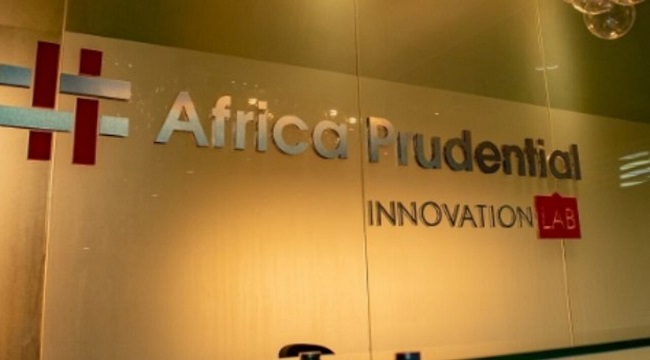
Africa Prudential Plc has reaffirmed its commitment to sustainable growth and digital transformation after posting another strong half-year financial performance, driven by robust growth in its core registrar business, technology-driven solutions and increased activity in Nigeria’s capital market.

Speaking during the company’s H1 2026 Investor Call on Tuesday, the management outlined plans to deepen revenue diversification and accelerate innovation as part of efforts to reduce reliance on interest income and strengthen long-term profitability.
The company reported gross earnings of ₦4.28 billion for the first half of 2026, representing a 27 per cent increase from ₦3.34 billion recorded in the corresponding period of 2025.
Profit before tax rose by 22 per cent to ₦2.41 billion, while profit after tax climbed 18 per cent to ₦1.59 billion.
Net operating income also increased by 27 per cent to ₦4.21 billion, while total assets grew by 13 per cent to ₦46.53 billion. Shareholders’ funds similarly rose by 13 per cent to ₦12.52 billion.
According to the company, the impressive performance was driven by sustained growth in its registrar business, increased corporate actions across the Nigerian capital market, stronger treasury earnings supported by the prevailing interest rate environment and rising adoption of its technology-enabled products and services.African Mineral Wealth
Managing Director and Chief Executive Officer, Dr. Catherine Nwosu, said Africa Prudential is steadily evolving from a traditional share registrar into a diversified technology and business solutions provider serving the broader capital market ecosystem.
Addressing concerns from investors about the sustainability of earnings if interest rates decline, Nwosu said the company was deliberately expanding its non-interest income sources.
“Interest rates influence our treasury income positively, but that is why we are deliberately diversifying our revenue streams. Our strategy is to grow recurring fee-based business lines such as our digital solutions, Know Your Customer (KYC) services, AGM technology, probate services and the SabiVest mobile app. Over time, this will reduce our reliance on interest income and create a more balanced and resilient earnings mix,” she said.
She noted that increasing activity in the Nigerian capital market presents fresh opportunities for technology-driven solutions.
“With capital market activity nearly doubling over the past year, demand for seamless digital investor experiences, improved market efficiency and stronger compliance standards continues to grow. We are investing in technology-enabled solutions that position us to capitalise on these opportunities while delivering sustainable value to our shareholders,” she added.
Looking ahead, the company identified five strategic priorities for the second half of 2026, including driving sustainable growth through its core registrar business and new revenue streams, accelerating technology-led product innovation, strengthening brand leadership, investing in talent development and reinforcing corporate governance.
The investor call attracted institutional investors, shareholders, analysts, regulators and other capital market stakeholders, reflecting strong interest in Africa Prudential’s earnings outlook, revenue diversification strategy and long-term growth plans.

Police Uncover Fake Diplomatic Number Plate Syndicate in Abuja

Davido Shares Past Suicidal Thoughts, Drops Oriadé Album

Gavi Okays $500m for Vaccines, PHCs in Nigeria

82% of Organizations Concerned about AI Risks Even as Adoption Accelerates – Survey Reveals

The Journey to Financial Freedom: Priscilla, a PalmPay Agent Now Owns a Store

NRC, Ponzi Scheme Collapses Resulting Loss of Billions of Naira

EFCC Busts NIS Visa Overstay Racket, Uncovers N700m in an Account

From Scarcity to Scale: What Africa Can Learn from India’s Agricultural Transformation

Tokenization, Blockchain Technology will Transform Financial Institutions – IMF

BON Establishes Six Ad Hoc Committees to Modernize Broadcasting




 Telecom2 days ago
Clydestone Ghana Sues MTN Over Mobile Money

 News2 days ago
IHS Nigeria Donates Business-Support Equipment to Empower People with Disabilities in Abuja Community

 E-Business2 days ago
Kaspersky Uncovers New Mirage Kitten Malware Used in Cyber-espionage Campaign Across Africa, Others

 News2 days ago
Africa Prudential Unveils Digital Growth Strategy

 E-Financial2 days ago
Afreximbank Raises $1.5b in Largest-ever Bond Issuance

 E-Financial2 days ago
CBN Fines Banks N430m for Ignoring Customers’ Complaints

 E-Financial2 days ago
SEC Begins Full e-Registration for Capital Market Operators

 E-Financial2 days ago
Elon Musk Launches Invite-only X Money with Visa Debit Card