

General News
Turkish Airlines Denies Alleged Death of Passenger on Board

Turkish Airlines has has described as ‘malicious’, a publication (not in Nigeria CommunicationsWeek) that a Nigerian, Oguadinna Somtochukwu, from Nnewi Anambra, resident of Kuala Lumpur, Malaysia died inside a plane he boarded from Lagos to Kuala Lumpur.
When contacted on Thursday on the matter, a top management source of the airline reliably said: “We will like to inform you that there is no iota of truth in the story.”
According to the source, “This is a blatant lie, and that somebody attributed the death of a person whose name did not even appear on the manifest of Turkish Airlines, is a sign of crude journalism and wickedness
“We have checked the information with Malaysian authorities As a matter of fact, it was on another airline, whose name we will not share the name.
“Within the scope of this information, we clearly and loudly say that it did not happen on Turkish Airlines flight; it has got nothing to do with Turkish Airlines.
“Why is it stated this way is another case which will be investigated and necessary official steps will be taken for all who are part of fabricating and distributing this lie,” said the official sources.
Meanwhile, no fewer than 266 passengers, who missed their flight from Lagos to Istanbul on Monday due to temporary cabin’s air-conditioning malfunctioning, had been successfully airlifted to Turkey on Tuesday night.
In a telephone conversation from Turkey, a passenger, who did not want his name in print, confirmed that they landed safely in Turkey.
Explaining what caused the delayed flight, an eye-witness at the airport said, “The AC issue happened when the passengers started boarding the aircraft TK626 on Monday. The airline notified the Nigerian Aviation Handling Company Plc (NAHCO), which also collaborated with them to resolve it in record time, but some passengers started behaving funny, almost attacking the crew, as if what happened was a technical issue. It was just a matter of asking them to come out of the plane for the crew to restart the engine.
“However, all entreaties made by the crew members to explain the situation to them why they should come out to resolve the issue to enable them fly that Monday night were rejected as many of the passengers started behaving unruly. Assuming they had listened while trying to explain things to them on time, they would have been airlifted them to Turkey that night.
“After they had caused delay and it was clear they could not fly again for the day, the airline had to lodge them in Golden Tulip hotel in Apapa, fed them to their satisfaction and on Tuesday, the passengers were airlifted around 10.30 p.m after the technical crew had done a re-check in.”
Based on the eye witness account, the online report that many passengers fainted as a result of the AC issue was false and a figment of the journalist’s imagination, adding that the only woman who needed help due to fatigue and dizziness requested for medical attention from the crew and the nurses at Federal Airports Authority of Nigeria.
With the quick intervention and response of the airlines, some passengers were of the opinion that the airline is committed to serving its customers in Nigeria and across it’s over 296 destinations worldwide by putting safety first.
They also thanked the airlines for putting in necessary measures in place for the safety of the passengers no matter what happens.
However, some passengers were of the opinion that the airline should not accept the kind of unruly behaviour from any passenger.
According to the passengers, Turkish Airlines did more than enough to satisfy them, advising that the management of Turkish Airlines should sue the unruly passengers for causing discomfort and wasting the time of other law abiding passengers.
—



Dominion Consultancy Concepts has officially announced the second edition of the KidsCook Showdown, a unique educational and creative cooking competition designed to foster leadership, teamwork, creativity and accountability among children ages 6 to 8.

Following its successful debut in 2025, this latest edition marks a significant milestone by securing the official approval of the Lagos State Universal Basic Education Board (LASUBEB). For the first time, the initiative will shine a spotlight on public education, featuring 20 children within the ages of 6 to 8 years old, selected from 10 public primary schools across the Kosofe Local Government Area.
The KidsCook Showdown is far more than a typical cooking contest. Under the close guidance of professional chefs, the young participants will work in teams to tackle fun, high-energy culinary challenges.
Rather than focusing solely on the final dish, a panel of judges will evaluate the children on essential life skills: teamwork, confidence, time management, communication, and hygiene.
Speaking about the vision behind the program, Enitan Tanimowo, Director of Dominion Consultancy Concepts, emphasised the importance of introducing children to household chores early.
“Our goal is to inspire children to see cooking not just as a chore, but as a fun, creative way to develop themselves, learn discipline, and build confidence and these skills help them into the future,” Tanimowo stated.
“By expanding into our public schools with LASUBEB’s vital support, we are ensuring that children from all backgrounds get an equal opportunity to develop leadership and accountability in a structured, inspiring environment.”
Tanimowo added that the initiative directly aligns with the United Nations Sustainable Development Goals—specifically SDG 3 (Good Health and Well-being) and SDG 4 (Quality Education)—by using hands-on, practical learning to promote balanced nutrition and social development. The event is bringing together parents, teachers, and professionals to champion the next generation.
The grand scale of this edition is made possible through the robust corporate and media backing of industry-leading brands. This year’s KidsCook Showdown is proudly supported by Zuri Seasoning, Ribena, Channels TV, Integrated Indigo Limited, and other partners committed to youth development and impactful community engagement in Nigeria.
Together, these partners are helping transform the kitchen into a classroom where future leaders are shaped, one recipe at a time.

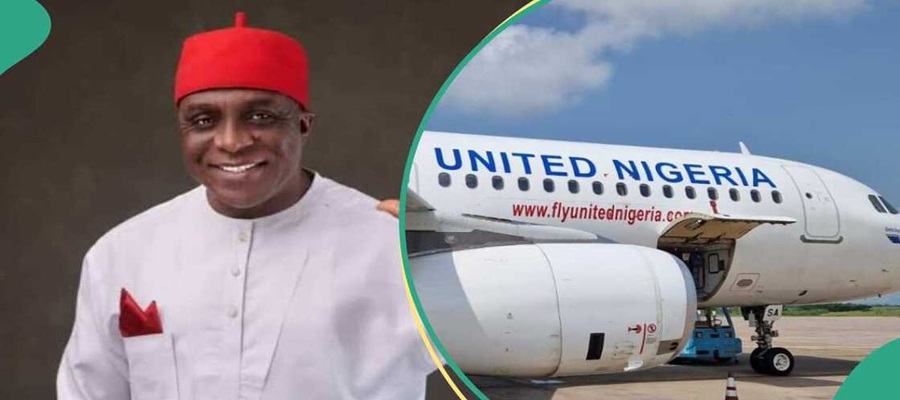
Government of Guinea-Bissau has signed a Memorandum of Understanding (MoU) with Nigeria’s United Nigeria Airlines to establish AIR BISSAU, a national carrier, for the West African country, to boost its aviation industry and reduce its dependence on foreign airlines.

The agreement, signed in Bissau, the capital of Guinea-Bissau, was disclosed in a statement made available by the airline on Sunday.
The MoU was signed by Dr Florentino Pereira, minister of Transport, Telecommunications and Digital Economy, Guinea-Bissau and Prof Obiora Okonkwo, executive chairman of United Nigeria Airlines.
Recall that Nigeria currently has no national carrier despite repeated calls by industry stakeholders for its establishment to facilitate reciprocal flight rights to foreign destinations, particularly the United States.
Attempts to establish a national carrier through a partnership with Ethiopian Airlines also hit a brick wall following lawsuits by the Airline Operators of Nigeria, an association for which Okonkwo once served as spokesperson.
Other factors that contributed to the failure of the national carrier project included deep-seated political issues, allegations of fraud and a controversial ownership structure.
In the latest agreement between the Nigerian airline and Guinea-Bissau, which was made available to our correspondent, both parties will “explore a comprehensive cooperation framework aimed at establishing a fully operational national airline with Osvaldo Vieira International Airport in Bissau serving as the operational base and hub for the carrier’s initial routes.”
For decades, Guinea-Bissau has relied largely on regional carriers and charter services to connect its citizens and businesses to other countries.
A key component of the MoU is the creation of a joint venture company that will operate as Guinea-Bissau’s national airline.
Under the arrangement, United Nigeria Airlines will provide the majority of the financial investment, operational expertise, aircraft and management for the new carrier.
Extending beyond commercial operations, the Nigerian carrier is expected to “provide and operate an executive jet for the use of the President and Government of Guinea-Bissau.”
To facilitate the project, the government pledged to “facilitate the registration and licensing of the new national carrier in line with domestic laws and streamline authorisation processes through both the Civil Aviation Authority of Guinea-Bissau and the Civil Aviation Authority of Nigeria.”
Guinea-Bissau also agreed to designate AIR BISSAU as its official national carrier, granting it “full rights over all existing Bilateral Air Services Agreement entitlements.”
According to the MoU, the designation would give the airline “significant leverage in securing route rights and authorisations to regional and international destinations,” described as an important commercial and diplomatic asset.
The government further committed to ensuring that Osvaldo Vieira International Airport receives the infrastructure support required for the airline’s operations, including access provisions, ground support services and assistance with customs, immigration and security compliance.
Additionally, Guinea-Bissau pledged to invest in the establishment of the airline and create mechanisms that would protect and incentivise investment through the existing Investment Code and applicable tax frameworks.
As part of efforts to develop local aviation expertise, United Nigeria Airlines plans to train “qualified Guinean nationals including pilots, cabin crew, and technical maintenance personnel” and employ local staff wherever feasible in line with government employment policies.
The MoU makes it clear that operational control of the airline will remain with the Nigerian carrier.
“For the purposes of safety, reliability, and efficiency, the overall management, operational control, and general direction of the new airline will rest with the management team of United Nigeria Airlines,” the statement noted.
Both parties also agreed to provide full liability and hull insurance coverage for all flight operations, conduct annual independent safety and maintenance audits, and establish asset protection mechanisms for investors.
The agreement takes immediate effect and will remain valid for 18 months or until a substantive joint venture agreement is concluded.
The International Monetary Fund (IMF) has recommended introducing taxes on fuel products and telecommunications services in Nigeria.

According to the IMF, this is part of broader measures to increase government revenue and create fiscal space for development spending and social interventions.
The international financial organization argued that stronger revenue mobilisation had become increasingly important as Nigeria’s fiscal position remained under pressure despite recent reforms.
This comes as Nigerians are protesting against worsening standard of living made worse by widespread insurgency.
The recommendation was contained in the IMF’s 2026 Article IV Consultation report on Nigeria, where the Fund argued that additional tax measures would be needed over the medium term despite the recent overhaul of the country’s tax system.
“Further tax policy changes will likely be needed—such as increasing the VAT rate, extending VAT to fuel products, rationalising tax expenditures in particular VAT exemptions on extractive industries and some customs duties, and introducing telecom excises—to complement administrative gains,” the IMF said.
The institution, however, cautioned that the timing of any new taxes must take into account Nigeria’s rising poverty levels and worsening food insecurity.
“The timing of reforms must consider the poverty and food insecurity situation and ensure that the cash transfer system is in place and funded,” the Fund added.
A previous attempt by the Federal Government to impose a five per cent excise duty on telecom services met strong resistance from operators, subscribers and consumer advocacy groups before it was suspended and eventually scrapped.
Telecommunications firms had maintained that the industry was already weighed down by multiple taxes, rising energy costs, foreign exchange challenges and infrastructure constraints.
They warned that any additional levy would likely be transferred to consumers through higher call and data tariffs.
Similarly, proposals to tax fuel products have faced opposition from labour unions and private sector organisations amid concerns over the rising cost of living following the removal of petrol subsidies and increases in transport and food prices.
The IMF’s latest recommendation comes as the Fund projects that Nigeria will require stronger revenue mobilisation efforts to sustain planned increases in public spending and provide support for vulnerable households.
According to the report, revenue-enhancing tax policies could generate additional revenue equivalent to 3.9 per cent of Gross Domestic Product within three years of implementation.
The Fund identified a two-percentage-point increase in the Value Added Tax rate as the largest contributor, with a projected revenue gain of 0.8 per cent of GDP.
The report also projected that removing pioneer status incentives and revising free zone regulations would generate an additional 0.7 per cent of GDP.
Reforms to capital gains taxation and adjustments to personal income tax bands, allowances and rates were each estimated to contribute 0.6 per cent of GDP.
The IMF further estimated that a top-up tax on multinationals and large firms could raise 0.5 per cent of GDP, while rationalising investment allowances would contribute another 0.4 per cent.
Notably, the category labelled “others”, which includes telecom excise duties and measures such as a carbon tax on fuel, was projected to generate an additional 0.4 per cent of GDP in revenue.
Beyond new tax measures, the Fund said Nigeria could achieve even greater gains through improved tax administration.
It projected that administrative reforms would generate an additional 3.1 per cent of GDP through better compliance, stronger enforcement and efforts to reduce informality in the economy.
According to the report, measures such as fiscalisation, electronic invoicing and cross-validation of tax deductions could generate 1.5 per cent of GDP, while expanded tax identification registration and consolidation of taxpayer databases could contribute a further 1.6 per cent of GDP.
The IMF acknowledged that some of Nigeria’s recently enacted tax reforms would reduce government revenue in the short term because they were designed to support households and small businesses.
It estimated that revenue-reducing measures would lower revenues by 2.4 per cent of GDP.
Expanded VAT input credits, additional zero-rated items and broader exemptions on basic consumption goods were projected to account for 1.7 percentage points of the decline.
Lower corporate income tax obligations for smaller firms would reduce revenues by 0.4 per cent of GDP, while lower personal income tax rates and expanded exemptions for low-income earners would account for another 0.3 percentage-point reduction.
Overall, the IMF projected that the combined impact of revenue-enhancing measures, administrative reforms and revenue-reducing policies would result in a net increase in government revenue equivalent to 4.6 per cent of GDP over the medium term.Nigerian investment opportunities

Galaxy Backbone @ 20, Pledges Nationwide Connectivity, Data Sovereignty

KidsCook Showdown 2.0 Set to Empower Public School Pupils with Culinary, Life Skills

CBN Orders Banks, Fintechs to Host Payment Data Locally

PalmPay Joins Industry Leaders @ Digital Pay Expo 2026

UK Bans TikTok, Instagram, Facebook for Under-16s in Landmark Crackdown

CBN Extends PoS Geo-Fencing Enforcement Deadline to August 2026

NCC Drafts New Rules for Virtual Mobile Operators

TD Africa, HPE Drive Conversations on the Future of Intelligent Networking

London Strengthens Global Investment Ties with Africa @ First Ever London-Africa Business Summit

Easybuy Partners WAWUAfrica to Upskill 10 Million Youths and Women, Boosting Nigeria’s Economic and Financial Inclusion




 General News1 day ago
₦5m up for Grabs as 10 Startups Clash at the Gathering on 100 Pitchathon Aba

 E-Business1 day ago
CSOs Raise Alarm over Nigeria’s Data Protection Crisis

 E-Financial1 day ago
CBN to Expand eNaira for Salaries, Pensions and Welfare Payments

 General News1 day ago
CBN Moves to Stop Banks From Using Customers’ Money for Fintech Subsidiaries

 E-Business23 hours ago
AI-Powered Cyber Threats Put Nigerian Banks on Alert

 E-Financial1 day ago
CBN to Bar HoldCos from Influencing Banks’ Lending Decisions

 Telecom1 day ago
NITDA Reveals Why AI Could Be Nigeria’s Biggest Wealth Creator, Not Oil

 Telecom1 day ago
NASENI Unveils Ambitious Plan to Produce 600 Million Diagnostic Kits Annually