

News
Eko Atlantic’s ‘Great Wall of Lagos’ Passes 6KM


The new city being built adjacent to Victoria Island, Lagos, dubbed Eko Atlantic, with the iconic ‘Great Wall of Lagos’ has surpassed 6 kilometres in length.
Construction of the Great Wall of Lagos, which can be seen from space, began construction in 2009.
The wall, which will reach 8.5 kilometers upon completion, is a large sea revetment that protects the emerging new city, Victoria Island, and parts of Lekki from the threat of flooding due to coastal erosion and ocean surge.
“Various Nigerian and international searches show that the erosion rate of the Lagos coast, since as far as back 1910’s, when the record began, has been in the order of 2 to 10 meters per year” said Daniel Kamau, managing director, Royal Haskoning Engineering Consultants, the appointed marine engineers for the Eko Atlantic Project. “The land where Eko Atlantic is being built existed historically, but has eroded over a long period. Eko Atlantic will restore some of the land lost to the sea and protect it from erosion,” he concluded.
The revetment uses a proven method of Accropode units as primary armour for the structure. Each accropode is made on site and weighs 5 tons. 100,000 accropodes will be placed in a predefined grid, using a GPS system for pin-point accuracy.

The basic principles of revetment, as a proven engineering solution for river and coastal protection, have been used for centuries, if not millenniums, around the world.
The sea wall is designed and tested to handle the worst storms in hundreds/thousand years, putting into consideration global warming and rising sea levels.
As the final step to the Great Wall of Lagos, a 8.2 kilometre long, 12.5 metre wide, promenade will be built on top of the Great Wall.
This promenade will provide a tremendous amount of recreational space to residents looking to take advantage of the ocean front open area and impressive ocean view.
“When finished, the Great Wall of Lagos will ensure that everyone living and working within the ten square kilometres of reclaimed land for Eko Atlantic, Victoria Island, and parts of Lekki are protected from the sea.” said Mr. David Frame, managing director, South Energyx Nigeria Limited.
Furthermore, it should be noted that approximately 8km of coast adjacent to the east of Eko Atlantic has been protected by construction of 18 rock groynes by Lagos State Government as their ongoing program to protect the coastline of Lagos State from coastal erosion. Eko Atlantic and the groynes protect a combined 16km of Lagos coast, including a majority of coastal communities in Lagos, which were previously subjected to severe flooding and erosion.
Eko Atlantic City is the single most ambitious and comprehensive mixed use development planned to come on stream in the West Africa sub-region in recent times.
It is expected that the new city will be home to about 450,000 residents, with commuter volume expected to be about 300,000 people daily.
Self-sufficient and sustainable, it includes state-of-the-art infrastructure, its own 24/7 power supply, portable water, advanced telecommunications, spacious roads and 200,000 trees.
Eko Atlantic is a planned mixed-use city located on reclaimed land adjacent to Victoria Island in Lagos.
The project began in 2003 as a permanent solution to protect Bar Beach in Victoria Island from the effects of severe coastal erosion, and to safeguard Victoria Island and parts of Lekki from the threat of flooding.



DataPro Rating Agency has upgraded the long-term credit rating of Dangote Cement Plc to AA+ from AA, citing the company’s strong financial performance, market leadership and ability to meet its financial obligations despite Nigeria’s challenging economic environment.

In its latest rating report, the technology-driven credit rating agency also affirmed Dangote Cement’s short-term rating at A1, with a Stable Outlook. The ratings are valid until June 16, 2027.
DataPro said the upgrade reflects the cement maker’s sustained financial strength, resilient operating performance and dominant position in Nigeria and across Africa.
According to the agency, the assessment followed a comprehensive review of the company’s capital base, earnings, liquidity, corporate governance, regulatory compliance and the sustainability of its financial performance over the medium to long term.
It noted that Dangote Cement’s strong brand, leading market share, solid earnings, robust asset base and experienced management continue to strengthen its ability to meet financial commitments on time.
The agency also highlighted the company’s outstanding financial performance in 2025.
According to the report, Dangote Cement posted N4.31 trillion in revenue during the year, representing a 20 per cent increase from the previous year. Profit before tax more than doubled, rising 109 per cent to N1.53 trillion, driven by higher sales, improved operating efficiency, lower finance costs and a stronger capital structure.
DataPro said the AA+ long-term rating indicates low credit risk and reflects excellent financial strength, business profile and operating performance relative to its rating benchmarks.
It added that the A1 short-term rating signifies good credit quality and shows that the company has a strong capacity to meet its short-term financial obligations as they fall due.
The rating agency, however, noted that the credit rating has a maximum shelf life of 12 calendar months in line with international best practice and should be used only as a reference, not as an offer to trade in securities or as a substitute for investors’ independent judgement.

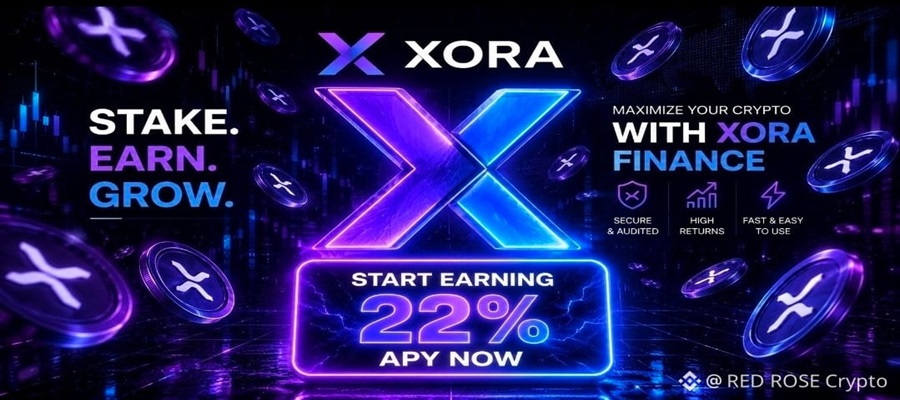
Xora Finance has announced it will no longer consider job applicants from Nigeria.

Xora Finance is a digital bank founded by Joren Lundgren, in February 2026 and allows users to deposit and earn interest on their XRP cryptocurrency.
Lundgren, founder, in an announcement on X (formerly Twitter), cited an ongoing pattern of misconduct, such as dishonesty and theft, from previous Nigerian hires as the reason for the decision.
This sudden blanket ban came just days after the company’s official career page was aggressively recruiting remote workers for marketing and content roles.
The announcement generated heavy backlash online, with many people upset that a blanket rule punishes honest job seekers.

Some lawyers have said that victims of Ponzi schemes have legal remedies, although recovering lost funds and prosecuting perpetrators remain major challenges.

A Ponzi scheme is an investment fraud that pays existing investors with funds collected from new participants rather than from actual profits.
Operators lure victims by promising high returns with little to no risk.
The scheme inevitably collapses when the flow of new investors slows down.
Some lawyers who spoke to News Agency of Nigeria (NAN) separate interviews with on Sunday, said that victims could pursue civil actions to recover their money.
Mr Chibuikem Opara, a lawyer at Justification Chambers, Ikeja,said many Nigerians continued to fall victim to Ponzi schemes in spite of repeated warnings.
Opara said it was wrong to attribute participation in Ponzi schemes to a lack of investment opportunities, noting that promoters often exploit investors’ greed through promises of unrealistic returns.
“What you cannot take away is the fact that many Nigerians have fallen and continue to fall victim to these schemes every time,” he said.
According to him, victims may individually or collectively institute civil actions against the beneficiary company for breach of contract or refund arising from failure of consideration.
Opara said victims could also unite to seek an order from the Federal High Court to wind up the beneficiary company.
He, however, noted that such efforts might yield little benefit if perpetrators had already siphoned the funds and left behind an empty shell.
The lawyer said available remedies largely depended on the actions of relevant authorities, adding that recipient accounts could be frozen to facilitate fund recovery and support winding-up proceedings.
Opara said regulators and law enforcement agencies often became aware of Ponzi schemes only after substantial losses had occurred.
According to him, victims frequently failed to report suspicious schemes early enough to enable timely intervention.
He added that funds are sometimes moved outside the country before authorities become aware of the fraud.
Opara also cited inadequate information and the deceptive nature of the schemes as major obstacles to investigation and prosecution.
“Most times, everything about the schemes is made to appear elusive, just like the profits promised to victims,” he said.
Also speaking, Mr Vincent Aminu of A.F. Aminu and Co. advised that victims of investment scams should report such cases to appropriate law enforcement agencies on time.
Aminu said victims could petition the Economic and Financial Crimes Commission (EFCC) or file reports with the police.
He said that after investigation, prosecutors could bring charges against suspects under relevant fraud-related laws, including provisions of the Criminal Code and the Advance Fee Fraud and Other Fraud Related Offences Act.
Beyond criminal prosecution, Aminu said .victims could pursue civil actions to recover their money
According to him, such actions may be based on breach of contract, unjust enrichment, or fraudulent misrepresentation, depending on the circumstances.
He added that victims could petition the Securities and Exchange Commission (SEC), which could investigate illegal operators, shut down unauthorised platforms, and freeze assets.
He identified the anonymity of online fraudsters as one of the biggest challenges confronting investigators.
According to him, many operators concealed their identities through fake digital profiles and technologies that made tracking them difficult.
Aminu also noted that victims who delayed taking legal action risked losing opportunities for redress.
He added that prolonged court proceedings often delayed justice for victims.
“Many fraud-related cases take years before the court reaches a verdict, thereby delaying justice for victims,” he said.
Also, Mr Chris Ayiyi of Ayiyi Chambers, Apapa, described Ponzi schemes as a gamble that benefited early participants at the expense of later investors.
Ayiyi said some early entrants received returns on their investments, thereby encouraging others to join the schemes.
He said the schemes eventually collapsed, leaving late investors to bear the losses
The lawyer called for a complete ban on Ponzi schemes or sustained public enlightenment campaigns against them.
He urged the National Assembly to enact laws that would strengthen regulation and provide greater protection for investors.
According to him, stronger legal safeguards are necessary in a country operating a capital-based economy.

Tinubu Orders NIMC to Enrol Every Nigerian by End of this Year – DG

Nigerians Accumulate $59Bn in Cryptocurrency Assets —FDC

Nearpays, Nigerian Fintech Becomes First African Startup to Win UN’s AI for Good Innovation Factory

Nokia’s 14 Years of Mobile-Phone Supremacy Ended in an Afternoon

MTN Nigeria Slashes Cost of Broadband Internet Router, Unwraps New Data Bundles for Low-Budget Users

NRC, Ponzi Scheme Collapses Resulting Loss of Billions of Naira

Nigeria Launches FreeTV Nationwide

NASENI Moves to Digitize CCB’s 5m Assets Declaration and Operations

Lebara Nigeria Launches Lebara Play, Africa’s First Telecom-Owned Micro-Drama Platform

CANAL+ Partners Samsung to Pre-Load DStv Stream on New Samsung TVs In Nigeria, Other African Countries




 News2 days ago
Xora Finance, Fintech Firm Refuses to Hire Nigerians over Alleged Dishonesty

 Telecom2 days ago
NCC Advances Dig Once Policy, Engages Stakeholders on Cost-Based Framework for Duct Sharing

 Telecom2 days ago
NCC to Keynote Telecom Sector Sustainability Forum 7.0

 General News2 days ago
FG Secures Fresh $208.3m World Bank Loan for Cash Transfer
 News2 days ago
How Ponzi Scheme Victims can Seek Legal Remedies — Lawyers

 News2 days ago
PalmPay Nigeria Appoints Samuel Oluyemi as Chief Operating Officer

 General News2 days ago
SERAP Sues INEC over Alleged N800Bn 2027 Tinubu Campaign Fund

 E-Business2 days ago
Kaigama,Catholic Archbishop of Abuja Warns against Misuse of AI