

News
Bellafricana’s ACE 2017 Advocates ‘Made-In-Nigeria’ Patronage


In continuation of the role it plays in the Nigerian economy by helping as many quality creative small businesses be at the forefront of the market, Bellafricana.com has also launched African Creative Exhibition and Awards (ACE Awards) to encourage those engaged in creating richer platforms.
The Founder, Bukky Asehinde, wonders, “Why should we wait on financial backing from the government and big institutions to help this industry? When we can create a platform to connect these Afrocentric businesses, they are maximising raw materials in Nigeria (Africa), providing employment for local talents within the country and creating wealth for the Nation”.
According to her, young people shouldn’t be in the business of waiting for the government to fix every hole in the economy rather take-up creative and innovative ideas to make the economy even better.
“There has been a rise in the number of Afrocentric (made in Nigeria, Africa) brands that have great quality with little or no financing from both the government and bigger institutions. Bellafricana, an initiative with a focus on Made-in-Nigeria Non-oil products development where customers and suppliers engage and transact, aims to bridge the buyer-seller gap and create a wider outreach for Nigerian (African) products locally & globally,” she said.
Bukky Asehinde said that she aims to help creative Afrocentric businesses in Africa understand the business of a creative hence she created a platform to enable creative MSMEs thrive, whilst doing all it takes to bring the quality products to the forefront of the market.
“I so much believe that a support group/community for these businesses will enhance the Non-oil export in the Nigerian economy. Under a year, Bellafricana has over 200 Creative businesses subscribed to her platform and over 50 verified businesses. Research shows that about 52% of all small businesses in Nigeria are home-based, as you may already know, the growth of any Nation is dependent on the small businesses. What better way to connect these small businesses to their consumers than online?
“You must agree with her that Nigeria is an import driven nation and if we are looking to diversify and become an export driven nation, it starts from MSMEs. They are creating jobs and empowering local talents”, she explained.
In her quest to bring as many quality Made-in-Nigeria (Africa) brands to the forefront of the market, Bukky has put together an initiative to Celebrate Small Creative Businesses with the aim of encouraging more talents in Nigeria (Africa) to look inwards, be original and create more globally acceptable brands.
An initiative called African Creative Exhibition and Awards (termed ACE Awards), backed by the Nigerian Export Promotion Council and endorsed by Nigerian-British Chamber of Commerce, Nigerian-American Chamber of Commerce, Lagos Chamber of Commerce and Industry and Nigeria-Britain Association.
The first of its kind in Nigeria (Africa), taking place on the 17th of April, 2017 (Easter Monday), a 3 phase event; Conference, Exhibition and Awards Gala. Both the Exhibition and the Conference will be held concurrently and the Awards will be held in a dinner gala to close the event.
“The watch word at Bellafricana is Quality, to this effect; the organisers of the Bellafricana ACE Awards have assured the availability of top quality creative Afrocentric businesses to exhibit. You will be able to access a wide variety of discounted quality made in Nigeria products all under one roof in these 6 focus categories; Arts & Crafts, Fashion, Health & Beauty, Home & Living, Food Produce & Snacks and Technology related products.
During the conference themed: ‘Practical Steps to taking your business Global’, keynote speaker: Mr Olusegun Awolowo, CEO, Nigerian Export Promotion Council, will take the participants round the business sphere which will help them take critical decisions.
Others scheduled to speak at the Conference include: Marketing Your Creative Business Globally – Tobi Asehinde (CEO Vibe Web Solutions); How to Monetize your Creative Idea – Lola Coker-Esu (An International Speaker, CEO Lola Tips); Branding that speaks for you – MrLanreAdisa (CEO Noah’s Ark); Taking Your Non-Oil Export Global (Export) – Ms. Sade Bembatoum-Young (CEO African Sustainable SME Export Trade Solutions); Sustainability and Succession Planning for Creative Businesses – Mrs Toki Mabogunje (CEO TMC & Co)
She further said that ACE awards themed: ‘Celebrating Creativity and Innovation’ has opened for nominations in various categories and Award competition through event.
“Bellafricana is always finding ways to help both budding and established creatives to harness the resources available to build their businesses stronger.
To this end, the conference will feature enlightening and engaging talks from renowned business men and women who have quality experience in these fields;
Voting is currently ongoing for the awards and ends on April 5. The categories include: Best Indigenous Textile Designer; Best Emerging Beauty Brand; Best Emerging Fashion Brand; Best Creative Solution (ICT); Best Supportive Made-in-Nigeria Celebrity of the Year; Best Eco-friendly Product Innovation; Best Innovative Product of the Year; Best Pioneer Craftsman/woman of the Year (Over 10 years) and Best Food Produce Innovation.
Others are Best Creative Kid Entepreneur; Best Creative Social Enterprise of the Year; Best Creative Kids Brand; Best Emerging Artist; Best Emerging Home & Lifestyle Brand and Best emerging African Brand.


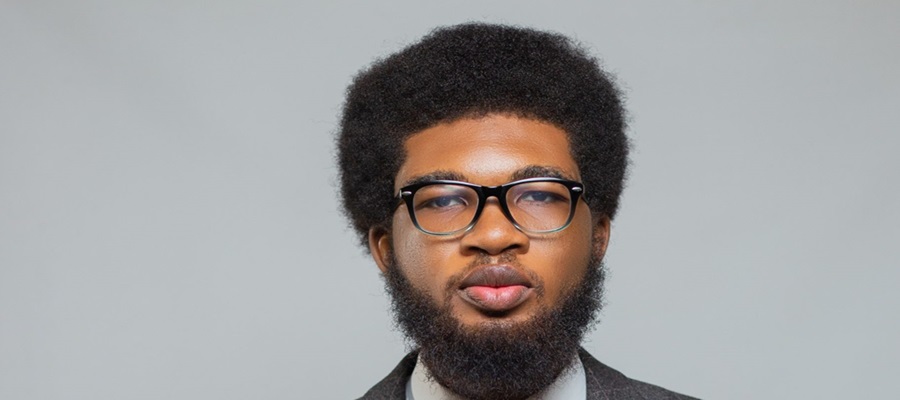
Joshua Ichor, a Nigerian geoscientist and innovator, has secured a rare invitation into the prestigious EWOR Fellowship, one of Europe’s most selective founder programmes built for outlier entrepreneurs with the potential to create billion-euro companies.

Joshua Ichor
The invitation places Ichor inside EWOR’s elite founder ecosystem, a powerful European platform associated with a reported €60 million commitment to backing exceptional founders building the next generation of globally significant companies.
EWOR describes itself as a fellowship for founders who “think in decades and build in days.” The platform says it backs the top 0.1% of founders building potential €10 billion+ companies, with mentorship from unicorn-builders and a founder-first model designed for exceptional entrepreneurs.
For Ichor, the selection is more than another milestone. It is a signal that one of Europe’s most ambitious founder networks sees major global potential in the Nigerian innovator.
While the technology Ichor is currently building has not been disclosed to the public, sources close to the development describe it as a powerful and ambitious piece of technology with the potential to scale internationally.
The project remains under wraps as Ichor continues to refine the product, strategy, and long-term market direction.
According to the fellowship invitation, EWOR believes Ichor is among the few founders with what it takes to build a company that could be valued at €1 billion or more.
That belief places him in a rare class of founders being watched not only for what they have done, but for what they are quietly building next.
EWOR has earned attention for its radical selectivity and founder-first approach.
Its own platform highlights a 0.1% acceptance rate, describing the fellowship as a community of outlier founders who push and sharpen one another.
EWOR’s public materials also reference the fellowship as “Harder than Y Combinator,” built by unicorn founders for founders seeking a higher level of ambition.
The fellowship connects selected founders with a powerful network of unicorn builders, investors, and operators.
Ichor is expected to build alongside a high-calibre founder community that includes names such as Ricky Knox, known for two nine-figure exits; Andrew Nutter, associated with a €180 million revenue company and Sequoia Scout experience; Nick D’Aloisio, widely known for achieving a major technology exit as a teenager; and Jörgen Tveit, who raised one of Europe’s biggest-ever pre-seed rounds by a first-time founder.
The EWOR ecosystem also gives founders access to sessions with globally recognized operators and investors, including Fabrice Grinda, founder of OLX; Kevin Hartz, founder of Eventbrite and Xoom; Mark Ghermezian, founder of Braze; and Michael Baum, founder of Splunk.
For a Nigerian geoscientist to enter this circle is a major statement. It shows that African technical talent is increasingly stepping into the same rooms as some of the world’s most ambitious venture-backed founders.
Ichor’s current technology remains confidential, but the conviction from EWOR suggests that the opportunity is significant.
The details are not yet be public, but the direction is clear: Joshua Ichor is building something with global ambition.
EWOR’s wider network includes some of the world’s leading startup investors and venture names, including A16Z, Accel, Atomico, Balderton, Earlybird, EQT, FJ Labs, Lakestar, Sequoia, Speedinvest, World Fund, and others.
Its platform says fellows raise at 50–300% higher valuations than average, further underlining the strength of the ecosystem around selected founders.

To mark the occasion of World Password Day, Kaspersky experts analysed 231 million unique passwords in major password leaks from 2023 to 2026, and uncovered several key patterns.

First, 68% of modern passwords can be cracked within a day. Second, it turned out that the vast majority of compromised passwords either begin or end with a digit – a common pattern that makes them potentially vulnerable to brute force attacks.
And third, users also favour positive and trending words; for example, over the past couple of years, use of the word “Skibidi” in analysed passwords surged 36 times, mirroring the rise of that Internet trend.
In recent years, secure passwords’ rules have become a widely discussed topic. More and more services now demand passwords that are at least 10 characters long, include an uppercase letter, and contain a number or a symbol.
Yet a comparative analysis of leaked passwords from the past few years shows that even following some of those rules does not guarantee resistance to brute‑force or AI‑driven attacks.
Kaspersky experts share practical advice on how to make passwords more complex and secure, and how not to repeat common mistakes.
Be creative with using symbols and numbers
Among the leaked passwords that contain just one symbol, the “@” sign tops the list, appearing in 10% of cases. The next most common symbol is a dot (.), found in 3% of passwords. Among all analysed passwords “@” takes second place in terms of prevalence, and in third place is “!”.
Numbers also follow similarly predictable patterns:
53% of examined passwords end with digits;
17% begin with digits;
Nearly 12% include a numeric sequence that resembles a date (from 1950 to 2030);
3% of leaked passwords include keyboard sequencies like “qwerty” or “ytrewq”, but most of them are digital sequencies like “1234”.
Alexey Antonov, Data Science Team Lead at Kaspersky, notes that commonly used symbols, numbers, or dates – especially when placed in obvious positions (such as at the beginning or end of a password) – significantly simplify brute force attacks for cybercriminals. That’s why it’s highly recommended to give preference to less popular characters, and avoid numeric or keyboard sequences.
“Bruteforce works by systematically trying every possible character combination until the correct password is found. When attackers already know which characters users tend to favour, the time required to crack a password drops dramatically. To avoid the temptation of choosing predictable symbols, entrust password creation to dedicated generators that produce random letters, numbers, and symbols with equal probability”, says Alexey Antonov.
Between… Eden and hell: Try to avoid using words in a password
The research shows that emotional and trending words frequently become the basis for a password. For example, from 2023 to 2026 the use of the word “Skibidi” in passwords increased 36 times – mirroring the rapid rise of that Internet trend.
Kaspersky experts have also conducted analysis of the occurrence of positive and negative words in passwords, and it turned out that there are more positive ones. Among those regularly appearing are positive words like “love”, “magic”, “friend”, “team”, “angel” and “star”, “eden”. Interestingly, positive words are much more common than negative ones. However, words like “hell”, “devil”, “nightmare” and “scar” also occur.
“Using a single‑word password, even with a trailing number or a special character, is a weak choice. The pattern is too predictable, making it easy for attackers to guess. Instead, craft a passphrase that strings together several unrelated words, each supplemented with internal numbers and symbols, and sprinkle in a few intentional misspellings.
The longer and more random and unpredictable the password is, the harder it is to crack. As an additional way to protect yourself, enable two-factor authentication (2FA) wherever possible,” recommends Alexey Antonov.
Is password length important?
It’s well known that longer passwords are harder to crack, and the analysis of leaked passwords confirms this principle. However, with the rise of AI driven tools, length alone no longer guarantees security: even lengthy passwords can be compromised if they follow predictable patterns.
The research shows that short passwords of up to eight characters that appeared in the leak are typically cracked by brute force attacks in under a day. However, thanks to AI-powered smart algorithms, more than 20% of 15-character passwords can be broken in less than a minute.
What’s more 60.2% of all analysed passwords – regardless of length – can be cracked in about an hour; 68.2% – in a day.
In the examples provided, the calculations assume a single RTX 5090 GPU and the MD5 algorithm. In real‑world scenarios, attackers can rent multiple GPUs – ten, a hundred, or even more. Under such conditions, the cracking rate would increase potentially by several orders of magnitude.
In modern terms, truly secure passwords not only meet the gold standard of 16+ characters, but also consist of random, non-repeating letters, numbers, and symbols, and are unique for each account. To help users create such passwords, Kaspersky has added a password generation feature to the Kaspersky Password Generator website. Now users can not only check their passwords for leaks, but also generate secure passwords for free.
For easy and secure password management, auto-fill, and cross-device synchronisation consider using a password manager in which all credentials are stored in a secure vault and protected by a single master password. This eliminates the need to remember hundreds of passwords while keeping them safe from breaches.
What’s more, not only passwords, but also passkeys can be created and stored directly in Kaspersky Password Manager, which allows not only to sign in to supported services with a single tap, but also to access passkeys on all devices owing to secure synchronisation.
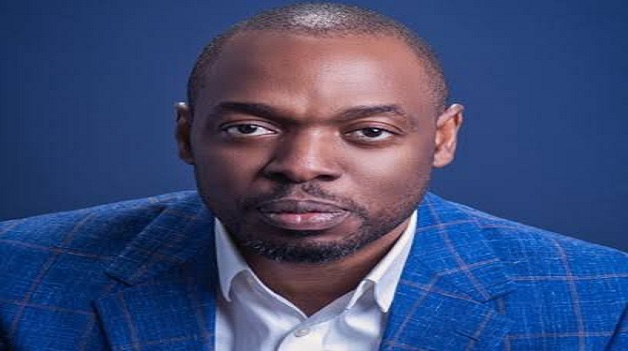
Cybervergent has launched version 3.0 of its artificial intelligence (AI)-native posture management platform and expanded operations into Kenya, Ghana, and SA.

The move, according to the company, introduces automated risk verification for enterprises and aims to position Africa as a force in digital governance technology.
It goes on to say the latest platform upgrade introduces continuous posture management, replacing traditional point-in-time governance, risk, and compliance reporting with real-time verification systems.
An AI engine independently verifies 99.9% of audit and monitoring findings before they appear on enterprise dashboards, according to Cybervergent.
It says risk management, compliance, audit, and data security operations are integrated into a unified system built for cloud and on-premise environments.
According to Cybervergent, the platform maps more than 4 500 controls across frameworks, including the Nigeria Data Protection Act (NDPA), International Organisation for Standardisation (ISO) 27001, and System and Organisation Controls (SOC) 2.
Cybervergent says the rollout of its first South African customer validates the platform’s readiness for highly regulated enterprise markets and strengthens its expansion strategy across Africa’s leading technology and financial hubs.
The company is also adopting a channel-first deployment model, working with local partners and system integrators in Lagos, Accra and Johannesburg to scale verified security infrastructure for enterprises navigating increasingly complex regulatory demands.
“We built verification into the architecture,” said Ayomide Daniels, co-founder and chief scientist at Cybervergent. “If a finding is not traceable back to source documentation, it does not reach the dashboard.”
Cybervergent rebranded from Infoprivacy in late 2023 to reflect its shift towards AI-automated cybersecurity.
The start-up previously focused on data privacy compliance in the West African market before pivoting to its current integrated posture management model.

CPN Begins Crackdown on Quack IT Professionals, Vows Tougher Action against Cybercrime

IMF Fears AI-Powered Cyberattack Could Spark Global Financial Crisis

ATCON Seeks Stiffer Penalities to Deter Infrastructure Attacks, Vandalism

FG Says It May Reject World Bank Loans over Delays

Joshua Ichor, Nigerian Innovator Bags Europe’s €60m Fellowship

Kaspersky Discovers Vulnerability in Qualcomm Snapdragon Chips that can Lead to Data Loss & Device Compromise

FG to Gift Nigerians over 100 Free TV Channels from May 15

MTN Suspends Data, Airtime Borrowing Service over New FCCPC Lending Rules

Bank Customers to Pay N1,500 for ATM Card Issuance, Replacement – CBN

FCCPC Licenses 5 Firms for Airtime, Data Lending as Telcos Step Aside




 Telecom3 days ago
MTN, VDT, Zoracom, Digital Realty Back 2026 Girls in ICT Campaign

 Telecom2 days ago
Unity Bank Disburses N500m Loan Facility to Support Small Traders

 E-Business3 days ago
New Phishing Campaign Uses CAPTCHA Traps to Steal Login Credentials

 E-Business3 days ago
Nigeria Hit by 24.1m Data Breaches – Surfshark

 Telecom3 days ago
Court Blocks Telcos from Cutting Nairtime’s Credit Services

 Telecom2 days ago
Airtel Africa Profits Hit $813m on Strong Nigerian Operations Performance

 E-Financial2 days ago
MasterCard, BMONI Partner to Improve Digital Payments

 E-Business3 days ago
NITDA Warns of AI-Powered DeepLoad Malware Targeting Banks, Govt Agencies