

E-Business
NowNow Says ‘Ditch Traditional Leather Wallet’ as Mobile App Goes Live

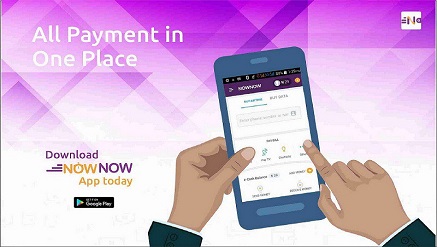
NowNow, has launched an innovative consumer mobile wallet (M-Wallet) to boost financial inclusion in the country.
NowNow, a mobile wallet offering from Contec Global InfoTech Limited is a PCI DSS compliance platform which ensures all transactions are secure and certified by Commodo SSL.
Mr. Sahir Berry, the managing director of NowNow told Nigeria CommunicationsWeek that the m-wallet has been unleashed as an app for doing payments recharges and transfer money electronically.
The wallet, Nigeria CommunicationsWeek learnt, can be opened against a mobile number, First Name and Last Name. You can use the service if you have a smartphone and internet access to the phone. The NowNow Wallet is easy to use, safe and having faster payment process.
The NowNow wallet aims to eradicate the habit of keeping traditional leather wallets.

“The NowNow wallet, “allows user to perform mobile recharge, bill payments, money transfer to bank accounts, Peer to Peer transfer very quickly directly from the pre-funded wallet without entering the card details every time before performing the transaction.
“You don’t have to carry your leather wallet full of debit cards. Every time you don’t have to put your card details for every payment which is actually minimizing the risk of exposing your full bank account, unlike using a Bank app or USSD code especially at smaller merchants you may not be comfortable exposing your card or bank account details or for performing simple transactions like Mobile Recharge, Pay TV, Money Transfers”.
He said that over a period of few months’ consumers will be able to use NowNow wallets for payments at offline and online merchants.
“Moreover, when you pay using our wallet you will get cash back for every transactions or you may get a free discounted coupons usable at eatery, shoe shop, saloon, boutique redemption of the coupon may end up making your transaction absolutely free,”
Mahesh Nair, chief operating officer of the company, further explains he is optimistic about the future of mobile wallets in Nigeria in the coming years. As more people go mobile and embrace the newer and faster ways of making payments from mobile wallet.
Speaking further, the MD said that by using NowNow Wallet (App) customers stand to get “Hassle free fast, secure transaction procedure; cash back or discount coupon on every transaction; limiting your exposure to your direct full bank account to all merchants, especially for smaller transactions and monitor and keep a control on your daily expenses.
Other Specialities:
The NowNow app allows the unbanked easy access to financial services. Users gain access to a wide variety of financial and value added services which include but is not limited to being able to;
Receive Money Using Only a Phone Number
Send a request for money that allows people to pay you with a simple tap. Whether you’re collecting money for a group dinner or contributing to a friend’s upcoming nuptials, we make it easy for everyone to send and receive money.
Generate a QR Code and request for money is a very easy functionality available on the app.
Send Money Within Seconds
Send money to anywhere in Nigeria in just seconds. Send Money to NowNow wallet holders in the country using their mobile number.
Transfer Money and Cash Out at NowNow Agent point without an account number.
Transfer Funds to Bank Accounts
With your NowNow wallet you are able to transfer money to any bank account in the country and the money will be delivered to recipient’s account in minutes any day, anytime 24x7x365.
Pay Utility Bills with No Delays
Renew your subscription with your favourite pay TV and internet service provider. You can also take care of your electricity bill using your NowNow wallet. Merchants you can make payment using your NowNow wallet include but is not limited to GOtv, DStv, StarTimes, Consat, Smile Networks, Spectranet, Swift Internet, IkejaElectric.We can even buy itune credits, good play, xbox, skype credits and much more.
NowNow, Nair said, is constantly working to add more merchants and billers on the platform.
Purchase Airtime/Data
Recharge: Now stop scratching heads on scratch cards and USSD for recharging your airtime and data packs. You can easily recharge from anywhere and anytime and happily continue with our phone calls with our loved ones using NowNow Wallet.
Creating A NowNow Wallet
So now you don’t have to take the stress of carrying and paying by cash for any transactions the mobile wallet can be used for all types of transactions.
Over a period of time the wallet will be accepted at all online and offline merchants the idea is to promote wallet transactions.
Funding Your NowNow Wallet
You can fund your mobile wallet through any of the following ways: at any NowNow agent outlet; using the internet banking platform. At Bank branch, using your debit/credit card.
How It Works: Select phone number from your contact list; create a beneficiary list for recipients of your most frequent transactions; send and request money from using QR code; earn rewards for every transaction performed.



National Population Commission (NPC) has announced commencement of full digital registration of births and deaths through the VitalReg platform, which became operational nationwide on July 1, 2026.

Chidi Ezeoke, federal commissioner representing Anambra, disclosed this in Awka during a press conference to announce commencement of full digital birth and death registration under the Electronic Civil Registration and Vital Statistics (E-CRVS) system and the marking of World Population Day commemorated every July 11.
He revealed that a total of 131 registration centres had been opened in the 21 local government headquarters and several communities in the state, adding that more centres would be opened later.
Ezeoke described the initiative as a major milestone in Nigeria’s Civil Registration and Vital Statistics (CRVS) system, to ensure every birth and death in the country was captured through a digitally enabled registration platform.
“It builds on the launch of the E-CRVS system and the inauguration of the National Coordination Committee on Civil Registration and Vital Statistics by President Bola Tinubu on Nov. 8, 2023.
“A total of 4,011 functional registration centres has been established across the 774 LGAs of the federation and the commission iswas working to expand the number to about 8,000.
“In Anambra, 131 registration centres have been opened in the 21 local government headquarters and several communities. More centres had been proposed for the state,” he said.
According to the Commissioner, the VitalReg platform would provide faster registration services, 24-hour online access, digital certificate issuance where applicable, reduced paperwork and waiting time, improved data validation and a more secure national CRVS database.
While noting that the platform would serve as a foundational database to support other national data systems and strengthen interoperability across Nigeria’s digital identity ecosystem, Ezeoke urged Nigerians and other stakeholders to support the initiative by ensuring prompt registration of all births and deaths.
Speaking on the 2026 World Population Day themed, “Realising the Hopes and Aspirations of Young People – Today and for the Future”, the Commissioner called for greater investment in education, healthcare, skills development, decent employment opportunities and youth participation in governance for sustainable national development.
Earlier, Mr Obiakonwa Okagwu, state director, NPC, said the occasion served as a reminder of great opportunities provided to harness young people’s capabilities, which he said would shape the future of the country when adequately harnessed.
He called on residents to take registration of births and deaths as national responsibility, just as he urged the media to take the message on civil registration to all parts of the State.
E-Business
Report Says Cybercriminals Deploy Malware to Hijack Crypto Wallets, Monitor Browsers Telegram

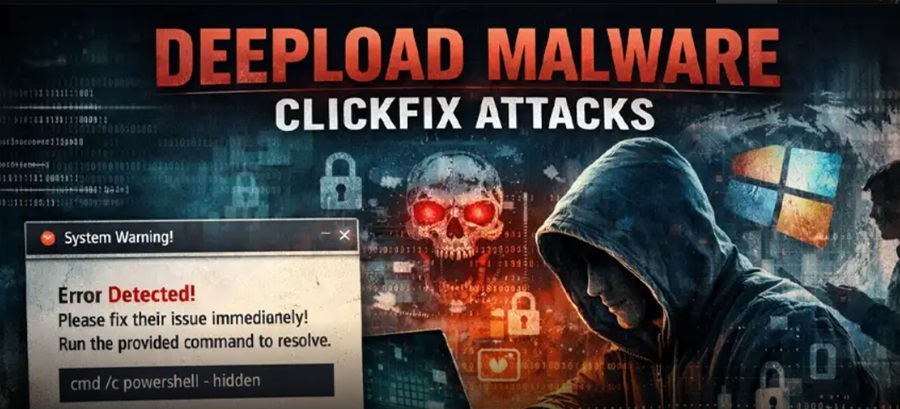
Cybersecurity researchers at Kaspersky have uncovered a sophisticated malware framework, dubbed OkoBot, that is targeting cryptocurrency users by stealing wallet recovery phrases, browser credentials and other sensitive information through a multi-stage attack campaign spanning more than 25 countries.

The researchers said the malware, active since April 2025, employs more than 20 malicious payloads and has evolved into an advanced cybercrime platform focused on compromising digital asset holders. According to Kaspersky’s Global Research and Analysis Team (GReAT), the campaign remains active and has already affected hundreds of users worldwide.
Kaspersky disclosed that one of the framework’s most dangerous components, known as SeedHunter, injects malicious code into legitimate cryptocurrency wallet applications, including Ledger Wallet, Ledger Live and Trezor Suite, before displaying fake recovery phrase prompts designed to trick victims into surrendering their seed phrases.
The security firm explained that once attackers obtain a victim’s recovery phrase, they gain complete control over the cryptocurrency wallet, enabling them to transfer digital assets with virtually no chance of recovery.
Commenting on the discovery, Dmitry Galov, security researcher at Kaspersky’s GReAT, said.
“This campaign has been running for more than a year and remains active. OkoBot is not just a single piece of malware but an extensible framework built primarily to compromise cryptocurrency users.”
Galov added that the malware is continuously maintained and enhanced, underscoring the attackers’ long-term focus on financial theft.
According to Kaspersky, victims are typically infected through ClickFix phishing attacks or malicious GitHub repositories masquerading as legitimate software downloads. In one instance, a fake Microsoft SQL Server Management Studio repository secretly installed a trojanized version of the Audacity audio editor embedded with malicious code.
Following the initial compromise, the attackers deploy a PowerShell downloader called TookPS,which establishes an encrypted SSH connection to attacker-controlled infrastructure.
The malware then harvests browser cookies, wallet files, stored credentials and system information before downloading additional malicious modules.
Among the additional payloads is OkoSpyware which monitors more than 100 applications, which includes cryptocurrency wallets and password managers—records user activity and captures keystrokes and video of application windows. Another module silently installs malicious browser extensions capable of stealing financial information and authentication tokens.
However, Kaspersky’s telemetry indicates that the largest concentrations of victims have been recorded in Brazil, Vietnam, Canada, Mexico and Türkiye, although the malware campaign has spread to users across more than 25 countries.
The cybersecurity firm advised cryptocurrency users never to enter wallet recovery phrases into prompts displayed by desktop applications or websites unless they have independently verified their authenticity.
Furthermore,It also urged users to download wallet software exclusively from official sources, enable multi-layered endpoint protection, and remain cautious of software offered through unofficial repositories or phishing websites.
Kaspersky noted that while hardware wallets themselves remain secure, attackers are increasingly exploiting the software that accompanies them, making user awareness a critical line of defence against evolving cryptocurrency-focused cyber threats.

Human Rights Writers Association of Nigeria (HURIWA) has opposed a bill seeking to compel major global social media companies to establish physical offices in Nigeria.

The rights advocacy group urged the National Assembly to discard the proposed legislation, warning that it could become a tool for censorship and undermine citizens’ constitutional right to freedom of expression, despite being presented as a measure to strengthen Nigeria’s digital economy and improve corporate accountability.
The position was contained in a presentation submitted yesterday by Emmanuel Onwubiko, national coordinator, HURIWA, to the chairman of the Senate Committee on ICT and Cyber Security.
The bill, sponsored by Senator Ned Munir Nwoko, has already passed second reading in the Senate and is before the committee for further legislative consideration.
HURIWA said it carefully reviewed the proposed legislation and concluded that compelling global technology companies to establish offices in Nigeria was unnecessary and potentially counterproductive.
The organisation argued that while the firms generate substantial revenue from Nigeria’s vast digital market, they already engage Nigerians through existing structures, including paying eligible content creators, working with local technology professionals and participating in legal proceedings whenever required.
According to the group, appointing local representatives where necessary would adequately address concerns about engagement with regulators and users without forcing the companies to maintain physical offices.
It also dismissed claims that mandatory country offices would significantly improve consumer complaint resolution, technology transfer or employment generation.
HURIWA maintained that the platforms already have effective feedback mechanisms for resolving users’ complaints and routinely appear before Nigerian courts through their representatives whenever litigation arises.
The group, however, said its greatest concern was the potential for the proposed law to be used as an instrument for restricting freedom of expression.
It argued that establishing local offices could expose global social media companies to pressure from government authorities to remove online content considered critical of those in power.
According to the rights group, the presence of social media companies in Nigeria could become an avenue for authorities to pressure them into abandoning internationally recognised digital rights standards in favour of politically motivated content moderation.
It recalled previous attempts to regulate social media in Nigeria that generated widespread concerns over possible restrictions on free speech, stressing that any legislation affecting the digital space must contain clear safeguards against abuse.
The organisation warned that the proposed law should never become “a backdoor mechanism for government surveillance, arbitrary content removal or political censorship.

See Verified 20 Countries Nigerian Passport Holders Can Travel Visa-Free

NPC Opens 131 Births, Deaths Registration Centres in Anambra

Lagos Chamber Opposes 21 Percent Pension Contribution, Warns of Job Losses

Subscribers, Telcos Warn FCCPC over Airtime Lending Enforcement

NCC, REA Partner to Cut Telecom Costs with Renewable Energy

NRC, Ponzi Scheme Collapses Resulting Loss of Billions of Naira

EFCC Busts NIS Visa Overstay Racket, Uncovers N700m in an Account

Tokenization, Blockchain Technology will Transform Financial Institutions – IMF

From Scarcity to Scale: What Africa Can Learn from India’s Agricultural Transformation

Spotify partners Afro Nation Portugal to expand African music experience




 Telecom2 days ago
GSMA Supports Abuja Declaration on Meaningful Connectivity for Africa, Joins Partners to Launch ATLAS Umoja

 Telecom2 days ago
Airtel Secures Another 10-year Spectrum Renewal in Nigeria

 Telecom2 days ago
MTN Nigeria Warns Customers Against Fake ‘One Month Free Data’ Promotion

 News2 days ago
Nigeria, Israel Strengthen Research, Technology Collaboration

 E-Business2 days ago
HURIWA, CLO Protests Bill Asking Social Media Firms’ to Open Shops Nigeria

 Broadcasting2 days ago
Glo Sponsored African Voices to Feature Netflix’s “The Polygamist” Stars

 E-Financial2 days ago
Moniepoint as a Key Driver in Expanding Financial Access for Businesses in Nigeria

 General News2 days ago
Anambra Govt Bans Graduation Ceremonies in Anambra Schools