

General News
600m Africans Lack Electricity-Heutinck

Eric Heutinck, general manager, MAGHREB and West Africa, Royal Philips Electronics is a consummate salesman. Royal Philips Electronics of the Netherlands is a diversified health and well-being company, focused on improving people’s lives through meaningful innovation. As a world leader in healthcare, lifestyle and lighting, Philips integrates technologies and design into people-centric solutions, based on fundamental customer insights and the brand promise of “sense and simplicity”. Heutinck in this interview said that ‘‘Quality LEDs offer part solutions to some of the key issues we face today, including energy crisis, climate change, resource scarcity, safety in our cities and an enhanced sense of health and wellbeing. He spoke to peter ugwu.
An overview of Philips Cairo to Cape Town Road Show
Philips’ Cairo to Cape Town road show, with a stop over in Lagos, was focused on efficient energy solution and as at today we have the most reliable and cost-effective solar LED lighting solution for outdoor lighting purposes.
Royal Philips Electronics is a diversified health and well-being company, focused on improving people’s lives through meaningful innovation.
As a world leader in healthcare, lifestyle and lighting, Philips integrates technologies and design into people-centric solutions, based on fundamental customer insights and the brand promise of “sense and simplicity.
Philosophy behind Solar LED Project
Apparently, LED lighting can deliver very high energy efficiency, long life, and excellent quality of light, design flexibility, controllability and colour – all of which are essential to creating solutions which will improve lighting.
In fact, Philips’ prediction is that by 2020 about 75 per cent of the global lighting market (value) will be LED based, a figure derived from both current sales data and we think about around future trends.
But this still leaves a huge installed base of much older less efficient lighting solutions which are a considerable and unnecessary drain on our resources.
The facts and figures supporting a rapid switch to LED lighting are that lighting currently consumes an average of 19 per cent of global electricity production and the great majority of this current lighting is based on older less efficient technologies developed before 1970.
A full switch to the latest LED lighting would provide very significant energy savings of up to 80% in many applications and an average of 40 per cent for all lighting.
For Africa this equates to approx $10 billion per annum in running costs, or 50 million tonnes of carbon or the equivalent output of 35 medium sized power plants.
In most cases it is a simple switch to make and it should also be noted that more than three quarters of all lighting is in the commercial and industrial world rather than the home.
Interestingly, many global initiatives are currently being taken by companies, governments and NGO’s to speed up the rate of switch.
The rate of adoption will also depend on other factors such as further cost price reductions, the speed of investment and basically how persuasive , the quality end of the lighting industry is in creating awareness and getting the world to switch.
Why Focus on Africa
Philips has global presence, however Philips market intelligence shows that out of 1.6 billion people that lack access to electricity worldwide, 600 million of them are in Africa. The continent with population density of about 1.2 billion is piqued by such uneven access to electricity following debility posed in electricity generation, distribution and transmission.
The results come from a global research study undertaken by Philips into the effects of a switch to more energy efficient LED lighting and are based on Philips internal market figures.
Managing Large Market
It is important to note that we have reached a tipping point in the development of high quality light emitting diodes (LEDs) where this exciting new technology can now be used for general lighting in almost all applications.
Quality LEDs offer part solutions to some of the key issues and opportunities we face today – the energy crisis, climate change, resource scarcity, safety in our cities, productivity in our offices, and an enhanced sense of health and well being to name but a few.
So, the first step we have mapped out is the road show, which will afford the people ample opportunity to get first hand information across to Nigerians on the product. In essence, the road show is our awareness campaign.
Secondly, we will constitute pilot projects in Nigeria and solidify our contact with the government to see outline benefits inherent in the solution and take up demands.
What Spurred the Project?
Well, what is on the mind of Philips is to improve peoples’ lives.
If you take a look, in Nigeria there are a lot of people without electricity, and even others that have access to electricity don’t enjoy it to the fullness, probably due to increasing costs and power cuts, so what Nigerians will need is a cost-effective and efficient electric supply solution.
With our new solution, people can save up to eight per cent lighting. Same time, if there is no electricity grid; it takes a lot of money and time to do that. But in this solution you don’t need the grid.
Impact on Peoples Lives
It is very incredible how it will improve peoples’ lives because one can imagine how the communities go dark as from 7pm, but with a project like this, children can play longer and even study, meetings can hold, while businesses continue.
It will also help municipal authorities create more livable urban environments by applying new, future-proof LED lighting solutions to enhance city lives.
Safety Perspective
Well, it is Philips’ product and by implications it fulfilled all the European and African regulations. First of all, it is a low voltage system, so no risk.
And the LED aspect shows it has low power consumption mechanism.
The solar powered solution does not require any grid to function. That is new Solar Gen2 offers a highly energy-efficient LED solution which is superior to any conventional lighting and allows for a lamp post spacing of up to 50 meters, much wider than with other solutions, while at the same time complying with stringent EU road lighting standards (ME3).
By charging street lighting during the day, Solar Gen2 can also supplement the capacity of the conventional electricity grid. The Gen2 Philips solution also has an entry level range of good value with low medium and high lumen packages ranging from 1500lm to 6000lm.
And the construction is done in such a way that the charging and discharging of the battery happens in a smart way so as to maximize battery life and it can dim the light levels when required based on a self learning intelligence and a history log.
Employment Benefits
If you are considering building a system like this, you will need engineers. For instance, an estate may decide to go for this, you will also need engineers’ capacity to achieve the plan and by that employment is being made available to the people.
And in consideration of the need to have a local assemble in Nigeria, we will still need people to work with.
Challenges
I think the biggest challenge for the government currently is to give everybody power supply.
And there is such a big demand for power supply that is why you have power cuts. So, there will be no complication.
Also the government will be happy to see a platform to reduce the level of power consumption, because it will give room for further projects. And we are currently running a promotion as means to reach out to the people.


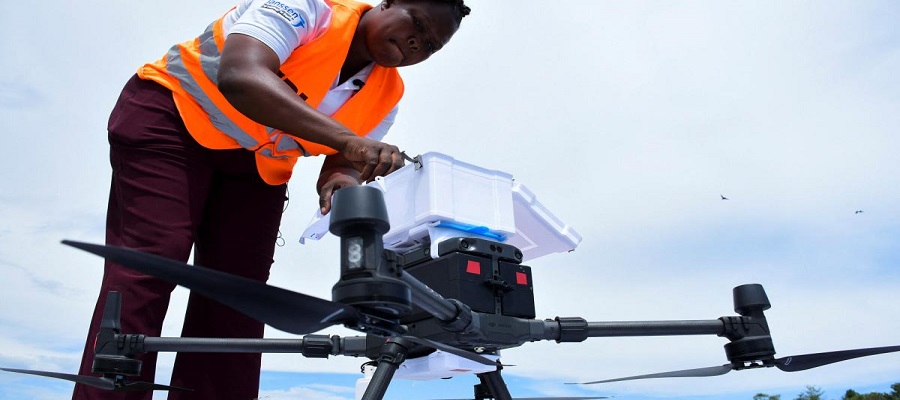
Nigerian Army has acquired additional drones and other advanced force multipliers to strengthen surveillance operations, improve target acquisition, and enhance precision strike and casualty evacuation capabilities.

Lt.-Gen. Waidi Shaibu, chief of Army Staff (COAS), said that the new drones will boost surveillance, precision strikes.
Shaibu, who disclosed this in a statement shared via the Nigerian Army’s official X handle, noted that the conference provided a platform for critical assessment of ongoing operations and the development of forward-looking strategies to address Nigeria’s evolving security challenges.
He said deliberations at the Nigerian Army Conference Centre, Asokoro, focused on sharpening operational responses, strengthening training frameworks and adapting to the demands of modern security warfare.
According to him, the resolutions reached are aimed at building a more agile, combat-ready, technologically driven and mission-oriented force capable of responding effectively to emerging threats.
A key highlight of the reforms is the Army’s increasing investment in modern warfare technology, including the acquisition of additional tactical drones and the reconfiguration of Army aviation assets for combat roles.
Shaibu explained that these developments have significantly enhanced intelligence gathering, precision targeting, operational mobility and casualty evacuation across various theatres of operation.
He also highlighted ongoing improvements in recruitment, advanced training, professional military education and leadership development, stressing that discipline, competence and meritocracy remain central to building a stronger institution.
Reaffirming his “soldier-first” philosophy, the COAS said troop welfare remains a top priority, stressing that “troop welfare remains non-negotiable; well-motivated soldiers operating in conducive environments are critical to mission success.”
He urged senior officers to ensure that resolutions from the conference are fully implemented in field operations, stressing that the true value of the gathering lies in measurable impact on the battlefield.
Describing the ongoing reforms, Shaibu said: “We are not just reforming the Army; we are building a lethal, technology-driven fighting force where only discipline, merit, and mission success matter.”
The Army Chief expressed appreciation to President Bola Ahmed Tinubu for his support, as well as the Minister of Defence, Minister of State for Defence, Chief of Defence Staff, service chiefs and intelligence agencies for their continued collaboration.
The conference ended with the presentation of commendation plaques to senior officers recognized for outstanding contributions to operational effectiveness.

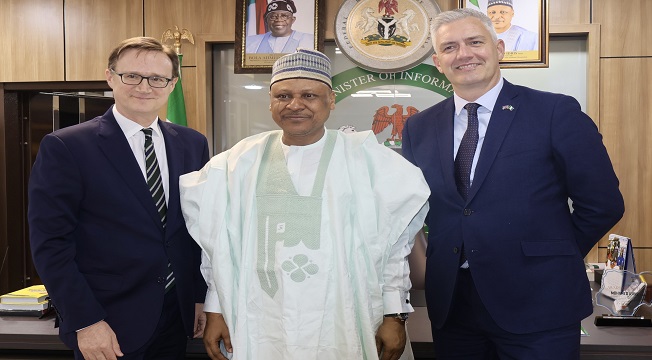
The UK Special Envoy for Freedom of Religion or Belief (FoRB), David Smith MP, concluded a three-day visit to Abuja this week, marking Nigeria as the first focus country he has visited under the UK’s FoRB strategy.

During the visit, David Smith MP held a wide range of meetings with senior Nigerian government officials, religious leaders, civil society organisations, and local communities – reflecting the UK’s commitment to sustained, practical engagement and partnership on freedom of religion or belief in Nigeria.
Meetings included discussions with the National Security Adviser, Mallam Nuhu Ribadu, the Honourable Minister of Information and National Orientation, Mohammed Idris, and the Governor of Plateau State, Caleb Mutfwang.
The Special Envoy also met with the co-chairs of the Nigeria Inter-Religious Council, Archbishop Daniel Okoh, President of the Christian Association of Nigeria, and HRH the Sultan of Sokoto, Muhammadu Sa’ad Abubakar III, President-General of the National Supreme Council for Islamic Affairs.
At the end of the visit, the UK Special Envoy for Freedom of Religion or Belief, David Smith MP, said: “Over the past few days, I have been honoured to meet a wide range of people — from senior government figures and civil society to faith leaders and local communities. I came to listen, learn, and see both how freedom of religion or belief is experienced in everyday life, and how it connects to – and is a core part of addressing – Nigeria’s wider challenges around security and cohesion.
“Some of the most powerful moments of this visit were at community level. Visiting Father Emmanuel Unamba’s parish and meeting Christian and Muslim neighbours living side by side was a real reminder that peaceful coexistence is something people build every day through leadership, dialogue, and shared responsibility.
“What I take away from this visit is the importance of further progress being Nigerian led, rooted in strong institutions and inclusive dialogue, with FoRB at its heart. The UK will continue to support practical efforts in ensuring greater peace, security and prosperity for all.”
The visit also included a roundtable with partners of the UK’s Strengthening Peace and Resilience in Nigeria (SPRiNG) programme, a £38 million UK government-funded conflict and resilience programme operating primarily in Kaduna, Katsina, Benue and Plateau states.
During the visit, Special Envoy David Smith MP held meetings with the Institute for Peace and Conflict Resolution, the Nigerian National Human Rights Commission, and civil society organisations working at the intersection of insecurity and religious freedom. He also visited the National Mosque and the National Ecumenical Centre in Abuja.
Speaking to the various stakeholders, Mr Smith called for greater tolerance across religion or belief in Nigeria and hoped that the cohesion he saw on a community level in the capital, could be achieved nation-wide with the same resolve. He hoped to continue these dialogues with interlocutors in the UK.
The visit builds on the momentum of President Tinubu’s State Visit to the United Kingdom in March 2026, which reinforced the UK-Nigeria Strategic Partnership and included interfaith events attended by President Tinubu and His Majesty The King, underlining both countries’ shared commitment to fostering constructive interfaith dialogue.
Women’s financial inclusion remains a critical challenge globally. According to Women’s World Banking, over one billion women lack access to formal financial services, limiting their potential for economic empowerment.

The reality is no different in Nigeria. The EFInA Access to Financial Services (A2F) 2023 survey highlights a significant gender disparity in Nigeria: 30% of adult women are completely excluded from both formal and informal financial services, compared to 21% of men. This means that out of Nigeria’s 57 million adult women, approximately 17 million remain financially isolated.
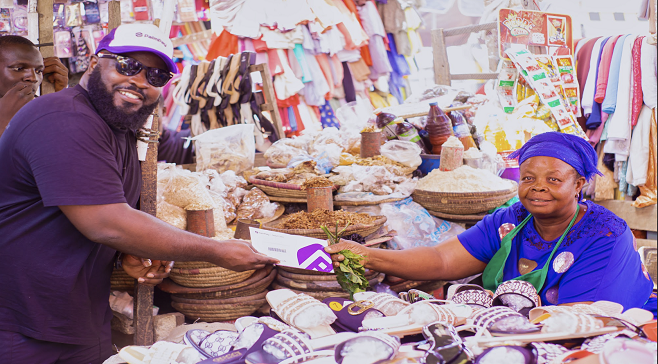
To bridge this gap, PalmPay has been actively investing in grassroots women’s empowerment by dismantling the knowledge barriers that hinder financial growth. Last year, the fintech platform took this mission directly to the commercial heart of Northern Nigeria: Sabon Gari Market in Kano and Central Market in Kaduna.
In these markets, thousands of women set up their stalls to deal in spices, textiles, grains, and consumer goods. They are the undeniable backbones of the economy, working around the clock to provide for their families.
While these female entrepreneurs possess immense business acumen, a staggering number have historically been left behind by the formal financial sector. For a market woman, being unbanked means trading entirely in cash. Without basic financial literacy or the right digital infrastructure, hard work alone isn’t enough to scale a business.
Recognising this gap, PalmPay stepped away from traditional banking boardrooms and went directly to the market. PalmPay launched a targeted financial inclusion and capacity-building initiative across Kano and Kaduna states. The core mission was straightforward: take the mystery out of digital banking and equip thousands of women entrepreneurs with the exact knowledge and tools required to thrive in a digital economy.
Backed by the royal endorsement of the Emir of Kano, Dr Muhammadu Sanusi II, the solution was delivered through:
- PalmPay team members conducted hands-on financial literacy workshops right inside the markets, teaching women how to separate personal expenses from shop revenue, calculate true profit margins, and budget for inventory.
- Women opened digital bank accounts on the spot and were equipped with reliable PalmPay POS terminals and mobile app tools.
- Micro-business branding support, including storefront branding, transactional merchandise, and market umbrellas to shield them from the elements.
The true impact of this initiative is best seen through the eyes of the market women themselves. Consider the transformation of a typical trader in Sabon Gari Market who spent years operating strictly with cash-box accounting.
Before the intervention, she faced the constant anxiety of missing cash, unverified bank transfers, and untracked inventory purchases. Today, with a PalmPay POS terminal on her counter and instant payment notifications triggering seamlessly on her phone, the chaos has been replaced by complete financial control.
When you empower a market woman, you don’t just improve a single business; you stabilise an entire household and uplift a community. By transitioning over 2,000 women in Kano and Kaduna from the vulnerabilities of an all-cash system to the security of digital banking, PalmPay has helped convert everyday survival into scalable success.
As these newly banked entrepreneurs continue to master cash-flow management and leverage instant digital settlements, they are proving that with the right partner, grassroots commerce can become a powerful engine for national economic growth.

NCC Begins Review of Nigeria Telecoms Policy after 26 Years

STBMAN Warns of “Broadcasting Crisis”, Urges Tinubu to Halt NBC’s DSO

MTN to Turn its African Tower Network Into a Distributed AI Compute Grid

Elon Musk to Become First World’s Trillionaire with SpaceX Historic IPO

Army Acquires New Drones to Boost Surveillance, Precision Strikes — COAS

MTN, VDT, Zoracom, Digital Realty Back 2026 Girls in ICT Campaign

Vitel Wireless Partners Fintechs to Expand Access to Services

Kaspersky Discovers Vulnerability in Qualcomm Snapdragon Chips that can Lead to Data Loss & Device Compromise

Bank Customers to Pay N1,500 for ATM Card Issuance, Replacement – CBN

FCCPC Licenses 5 Firms for Airtime, Data Lending as Telcos Step Aside




 General News3 days ago
UAE’s Exit from OPEC: Eroding Pricing Power, Saudi Arabia’s Response, and the Implications for Nigeria

 E-Financial3 days ago
Court Orders Globus Bank to Pay Firm N256m for Breach of Contract

 General News3 days ago
US to Deploy Wireless Technology in Nigeria, Others

 Telecom3 days ago
Lagos Warns against Fake Emergency Calls, Says Rising Misuse Put Lives at Risk

 E-Financial3 days ago
AFC Invests $100m in Africa-focused Technology Fund Managers

 News3 days ago
Systems, Not Skin Colour, Hold the Key to Africa’s Development, Says Evans Woherem

 Telecom2 days ago
Google unveils Gemini-powered advertising, commerce tools at Marketing Live 2026

 E-Financial2 days ago
Griffin Capital Group Launches Integrated Financial Services Group Positioned to Strengthen Capital Formation in Nigeria, Africa