

E-Financial
Investors On Edge Ahead of NFP

FXTM Research Analyst Lukman Otunuga comments on Gold charged to a fresh 5 month high at $1269 during early trading on Friday after reports were released that the U.S military launched an airstrike on Syria which soured risk appetite.
A strong sense of unease infiltrated the financial markets during trading on Friday with investors staying clear of riskier assets after reports were released that the U.S military launched an airstrike on Syria.
The possible threat of geopolitical tensions heightening from the airstrikes has created a risk-off trading atmosphere which left Asian shares mixed.
The lack of upside momentum from Asian markets has already contaminated European equities with the diminishing appetite for risk potentially limiting gains on Wall Street this afternoon. It must be kept in mind that participants were already jittery ahead of the Trump-Xi summit and this fresh development may compound to the horrible cocktail of uncertainty.
Trump-Xi summit round 2
Although the Trump-Xi summit has been somewhat overshadowed by the US strike on Syria, investors may still pay very close attention to how the meeting between these two world leaders progresses.
While Donald Trump has said that he has developed a friendship with Chinese President Xi Jinping, this may be tested today as the two leaders discuss trade, North Korea, and other important market moving issues.
A situation where the outcome of the meeting seems unfavorable and unsuccessful could intensify the risk aversion ultimately boosting Gold.
NFP in the Spotlight
The solid ADP report and hawkish Fed minutes this week have allowed the Greenback to regain its attitude with the Dollar Index trading around 100.78 as of writing. With short-term bulls simply looking beyond the Trump uncertainties and focusing on positive economic data, the Dollar could be poised for further upside.
Investors may direct their attention towards the pending NFP report this afternoon which could offer some insight to how the US labor force fared in March.
A blockbuster NFP figure that exceeds expectations coupled with a surprise rise in average hourly earnings could boost the Dollar further. From a technical standpoint, the breakout above 100.75 could open a path higher towards 102.00.
Gold Breaks Above $1260
Gold charged to a fresh 5 month high at $1269 during early trading on Friday after reports were released that the U.S military launched an airstrike on Syria which soured risk appetite. With risk aversion set to heighten as markets ponder over the ramifications of the U.S airstrike, Gold and other safe-haven assets may receive a solid boost.
While there is a possibility of a positive NFP report pressuring Gold prices, the downside shocks may be limited by the jitters.
From a technical standpoint, bulls need a solid daily close above $1260 for a further incline higher towards $1300.
Commodity spotlight – WTI
WTI Crude was propelled towards $52.90 on Friday after the U.S airstrikes on Syria sparked speculations of a threat to supplies. Although the sharp upsurge in prices has turned oil somewhat bullish on the daily charts, the bearish fundamentals remain intact. With the oversupply concerns still a dominant theme in the oil markets, extreme upside gains may be limited.
From a technical standpoint, bulls have won the battle this week with prices breaking above $52. For the upside to continue and display sustainability, a solid breakout and daily close above $53 will be needed. In an alternative scenario, bears have a chance to reclaiming control back below $51.


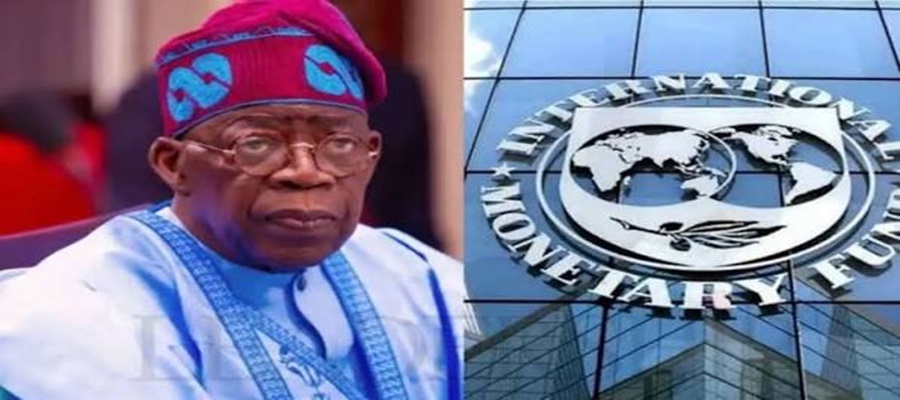
International Monetary Fund (IMF) has raised concerns over Nigeria’s fiscal transparency, disclosing that about two per cent of the country’s Gross Domestic Product (GDP), estimated at N8.83 trillion, was omitted from recent official budget documents.

Bola Tinubu
Unreported public spending—also known as off-budget expenditure—happens when a government spends money on public projects or services without including those costs in official budget documents.
This practice hides the true size of the government’s deficit, hides debt accumulation, and distorts overall economic data.
The IMF said the unreported expenditure has created a significant gap between Nigeria’s reported fiscal deficit and its actual financing requirements, making government borrowing appear lower than it truly is.
Speaking at an industry event in Lagos, Christian Ebeke, resident representative of IMF in Nigeria, said the expenditure should have been reflected in the country’s fiscal accounts to present a more accurate picture of public finances.
“So far we think that there are about two per cent of GDP of expenditure that were not reported that should be reported and should be recorded, so that this statistical discrepancy will disappear,” Ebeke said.
The estimate translates to approximately N8.83 trillion, based on the National Bureau of Statistics’ (NBS) latest nominal GDP figure of N441.5 trillion for 2025.
According to the NBS, Nigeria’s nominal GDP increased from N372.8 trillion in 2024 to N441.5 trillion in 2025 following improved performance across both the oil and non-oil sectors.
Using the Central Bank of Nigeria’s average exchange rate of N1,436 to the dollar for 2025, the omitted expenditure amounts to about $6.15 billion.
Ebeke attributed the discrepancy largely to capital projects executed outside the formal budget framework, noting that the omission had distorted assessments of Nigeria’s fiscal position and public investment profile.
He explained that some government spending was neither captured in approved budget documents nor reflected in budget implementation reports, resulting in an understatement of the country’s actual fiscal deficit.
According to him, the lack of comprehensive reporting also complicates coordination between fiscal and monetary authorities, as policymakers are left without a complete picture of government finances.
“The lack of full reporting can also complicate coordination between fiscal and monetary policy, as policymakers may not have a clear picture of the true deficit,” he said.
Ebeke warned that off-budget spending raises broader concerns about accountability, procurement processes and institutional oversight, stressing that improving fiscal transparency should remain a priority for the government.
“Improving transparency is critical,” he added, noting that expenditures outside the formal budget process undermine effective oversight and public accountability.
The IMF representative, however, acknowledged that the Federal Government has begun taking steps to address the problem through legislative reforms aimed at bringing previously unreported expenditures within the formal budget framework.
He said the authorities were working to amend existing budget laws to ensure greater disclosure of government spending but stressed that such reforms must be accompanied by timely and comprehensive budget implementation reports.
According to him, closing the reporting gap is essential to strengthening public financial management, improving transparency and restoring confidence in Nigeria’s fiscal framework.
The IMF’s latest observations come months after the National Bureau of Statistics rebased Nigeria’s economy, changing the GDP base year from 2010 to 2019, a revision that significantly increased the size of the country’s economy and, by implication, the value of expenditure estimates expressed as a percentage of GDP.
The concerns also follow the IMF’s recent Article IV Consultation on Nigeria, in which the Fund commended the Federal Government’s ongoing economic reforms for improving macroeconomic stability and boosting investor confidence, while cautioning that persistent structural weaknesses continue to limit the impact of the reforms on the broader population.

Visa is expanding access to Visa Pay for additional issuers across Africa through a software development kit (SDK) that enables banks, mobile money operators, and fintechs embed Visa Pay capabilities into their existing mobile applications and to launch virtual cards and payment experiences quickly and securely.

According to a statement from the company, the solution is an interoperable and secure way for banked and unbanked consumers to transact and move money across participating banks, fintechs and mobile networks.
Issuers adopting Visa Pay’s SDK span multiple markets across the continent including Ghana, the Democratic Republic of Congo, Sudan, Comoros, Mauritius, Zambia, Zimbabwe, Botswana, Tanzania, and Sierra Leone.
With integrated issuer processing capabilities, built-in customer experience, tokenisation readiness and Visa-certified security and compliance components, SDK helps accelerate and simplify the deployment of Visa Pay, particularly in markets where infrastructure constraints can slow digital transformation.
Looking ahead, Visa Pay will continue to evolve with new capabilities designed to further simplify everyday payments. Among the features expected to launch soon is Tap to Pay, which will enable consumers to make secure contactless payments by simply tapping their phone at a contactless-enabled checkout terminal, said the firm.
“Visa Pay is designed to help issuers meet a wide range of market needs, from secure e-commerce and remittances to mobile money-linked virtual cards, humanitarian disbursements, person-to-person payments and future contactless experiences,” said Godfrey Sullivan, senior vice president and head of products and solutions for Central and Eastern Europe, Middle East and Africa at Visa.
“The adoption of Visa Pay represents an important step in strengthening our digital payments capabilities and supporting our broader digital transformation agenda. At a time when Sudan’s current challenges have increased the need for resilient and accessible financial services, we believe digital payment solutions play a critical role in enhancing customer convenience, supporting business continuity, and promoting financial inclusion” commented Yousif Eltinay, CEO of United Capital Bank, Sudan.
According to Jesse Jackson, chief digital and innovation officer for Tanzania Commercial Bank, from a business perspective, Visa Pay will enable it accelerate digital adoption among both consumers and merchants, increase transaction activity within its ecosystem, expand merchant acceptance and strengthen customer engagement.
“It also supports our broader goal of driving financial inclusion by bringing more individuals and businesses into the digital economy.”


Nigeria Deposit Insurance Corporation (NDIC) has warned members of the public against carrying out any transactions with the 46 microfinance banks whose operating licences were revoked by the Central Bank of Nigeria (CBN).

NDIC
The corporation issued the warning on Thursday following the revocation of the licences by the CBN on July 1, 2026.
In a statement, the NDIC said it had been appointed the official liquidator of the failed banks pursuant to Section 12(2) of the Banks and Other Financial Institutions Act (BOFIA) 2020 and Sections 55(1) and 55(2) of the NDIC Act 2023.
It stated that the affected microfinance banks were no longer authorised to carry out banking business in Nigeria following the withdrawal of their licences.
The corporation cautioned members of the public against engaging in any unauthorised transactions with the closed banks or attempting to tamper with their assets and records.
It warned that any attempt by individuals to remove, conceal, retain or interfere with the assets, records or properties of the failed institutions would constitute a violation of the law and could attract appropriate legal sanctions.
According to the NDIC, it has commenced the process of an orderly closure of the banks through their immediate takeover, verification of depositors and payment of insured deposits to eligible customers.
The corporation assured depositors that the liquidation process would be conducted in accordance with relevant laws and regulations.
It added that depositors and the general public would be kept informed on further steps regarding the liquidation exercise, including the verification process and payment of insured sums to eligible depositors.
The NDIC urged customers of the affected banks to remain calm, assuring them of its commitment to protecting insured deposits and ensuring an orderly resolution of the failed financial institutions.

Court Declares Keystone Bank Staff Wanted over Alleged N35m Fraud

IMF Raises Concerns over N8.83 Trillion Unreported Spending in Nigeria’s Budgets

NOTAP to Commercialise University Research, Expands Patent Drive

FG Unveils Digital Postcode System for MDAs

BoI, NBCC Sign MoU to Deepen Bilateral Trade, Industrial Growth and Investment

Mobile Internet Gender Gap Widest in Africa – GSMA

London Strengthens Global Investment Ties with Africa @ First Ever London-Africa Business Summit

FG Targets Alleged N3tn Capital Flight, Opens Airtime Credit Market to Nigerian Fintechs

Japan, UNESCO Boost Digital Learning in 15 CoEs with Donation of ICT Equipment

Nigeria Launches FreeTV Nationwide




 News2 days ago
Verve Strengthens Global Acceptance Across Leading Digital Platforms

 News2 days ago
Army Says Terrorists Now Recruiting, Raising Funds Online

 Telecom2 days ago
Lebara Nigeria Becomes Member of GSMA Network

 E-Business2 days ago
Kaspersky Warns of The Gentlemen Ransomware Group Expanding Operations with New Malware

 Telecom2 days ago
Airtel Nigeria Deepens Focus on Data Usage Transparency @ Customer Forum

 Telecom2 days ago
Vitel Wireless Warns Public, Says it Not Running any Investment Scheme

 E-Financial2 days ago
Bank of Industry Appoints Kuramo Capital as Manager of Dice Fund of Funds

 General News2 days ago
FG to Abolish JSS-SSS Separation Policy after 20m Pupils Drop Out