

News
Telecom Industry Rings Worries Over Vandals


The telecom industry waxed worriedly at the weekend over the growing targeted attacks on telecom equipment, infrastructure and telecom workers and urged the government to declare ICT equipment, critical national infrastructure that must be protected by law, Nigeria CommunicationsWeek can report.
Vandalism is a problem that affects the delicate tripod on which the telecom industry stands: the regulator; operators; and the subscribers.
Though figures are hard to come by, this senseless crime is believed to be costing the industry billions of naira annually and denying Nigerians of better quality of service from the operators.
Although most vandals do not have a clear motives for their acts, investigations showed that basic social problems; lack of awareness of the critical nature of the infrastructure; and attitudes are at the root of vandalism.
The Nigeria Communications Commission (NCC) acknowledged the growing attacks and said it has begun moves for a bill in the national assembly to underpin the importance of industry’s infrastructure.
Nodding in agreement, telecom subscribers and operators said that ICT infrastructure is a national resource which must be protected just like railway and electricity infrastructures are protected by law.
Nigeria CommunicationsWeek gathered that it cost about $150,000 to install a single base station together with its tower, special antennas, and two generators to power the station.
These equipment are like the central nervous system of communications because they allow subscribers make and receive calls are targets of vandals and thieves.
But the infrastructure are easy preys to vandals who are exploiting the lax security situation and absence of stiff punishment for offenders.
Emeka Oparah, vice president, corporate communications/corporate social responsibility at Airtel Nigeria said vandalisation of the telecom service equipment are regular occurrences.
He cited the example of base station in Abia state where Airtel Nigeria lost four generators to the vandals.
The state has over the years gained notoriety for unfriendliness to the telecommunications infrastructure.
It took a more dangerous dimension in 2010 when six hapless telecommunications maintenance workers were killed in Aba, the commercial hub of the State.
The workers, members of the MTN workgroup which included two policemen were said to have gone to carry out maintenance operation at a base transmission station in Aba.
Nigeria CommunicationsWeek gathered that apart from theft of generators and vandalisation of telecommunications equipment, the industry has also been plagued by the rising incidence of damage to their fibre-optic networks.
MTN said that on the average it suffers more than 70 fibre cuts in various locations across the country every month.
Wale Goodluck, corporate services executive at MTN warn of the long-term negative impact on quality of service and national security.
Findings showed that cuts on the fibre-optic networks are as a result of poor road construction practices; willful damage perpetrated by criminal elements and sabotage.
Dr. Emmanuel Ekuwem, president of Teledom Group and former president, Association of Telecommunications Companies of Nigeria (Atcon) said the vandalisation of telecom infrastructure has negative impact in further investment in the sector with the attendant ripple effects on the economy including job losses, poor quality of service, reduced taxation to the government and so on.
Nigeria CommunicationsWeek gathered that the industry suffers with any minor errors (technical faults, accidents, vandalisation, data recording errors, etc.) that can alter, disrupt or block the system processes unintentionally.
These disruptions not only disconnect subscribers, but could cause embarrassment to businesses and national security.
Deola Ogunbanjo, president, National Association of Telecommunications Subscribers of Nigeria (NATCOMMS), said that telecommunications equipment must be declared critical national infrastructure to prevent it from vandalisation.
Checks with security agencies and the Nigerian Communications Commission, the industry regulator, showed they are aware of the development.
Tony Ojobo, director, Public Affairs of the NCC, said that the commission has initiated moves for a bill to protect telecom infrastructure.
The NCC has already constituted an Industry Working Group (IWG) on Multiple Taxations seeking the discontinuance of illegal taxes/multiple regulations on telecommunication infrastructure as a strategy to deepen ICT Penetration and improve the Quality of Service (QoS), National Security and overall socio-economic development of the country as well as to facilitate the designation of telecom infrastructure as Critical National Infrastructure (CNI).



Flutterwave has secured a strategic investment from Circle Ventures, the venture capital arm of Circle Internet Group, to accelerate the expansion of its USDC payments and settlement infrastructure across Africa.

This comes as demand for faster and more efficient cross-border transactions grows.
The investment strengthens Flutterwave’s ambition to integrate USDC settlement into its existing payment ecosystem, allowing businesses to receive payments in local currencies while settling in the dollar-backed stablecoin.
The company said the move would reduce settlement delays and transaction costs while enabling near-instant settlements beyond traditional banking hours.
The announcement comes after Flutterwave participated in the launch of the Circle Payments Network in 2025, marking a deeper collaboration between the two companies in advancing digital payment infrastructure across the continent.
Flutterwave said the investment aligns with its strategy of positioning stablecoins as a key component of Africa’s financial infrastructure, while ensuring blockchain-based payment services operate within existing regulatory and compliance frameworks.
Commenting on the development, Flutterwave Founder and Chief Executive Officer, Olugbenga Agboola, said the investment would help build the infrastructure required for the next phase of global money movement from Africa.
According to him, stablecoins have evolved beyond experimentation into core financial infrastructure capable of transforming how businesses move money across borders.
“This support from Circle Ventures is about backing the rails that will power the next era of global money movement from Africa. Stablecoins like USDC are no longer an experiment; they are becoming core financial infrastructure.
“By embedding USDC settlement into our current payments infrastructure, we are building a system that lets businesses move money at the speed of the internet. This fundamentally changes how payments from Africa connect to the world, and it positions Flutterwave as the default stablecoin gateway for the continent,” Agboola said.

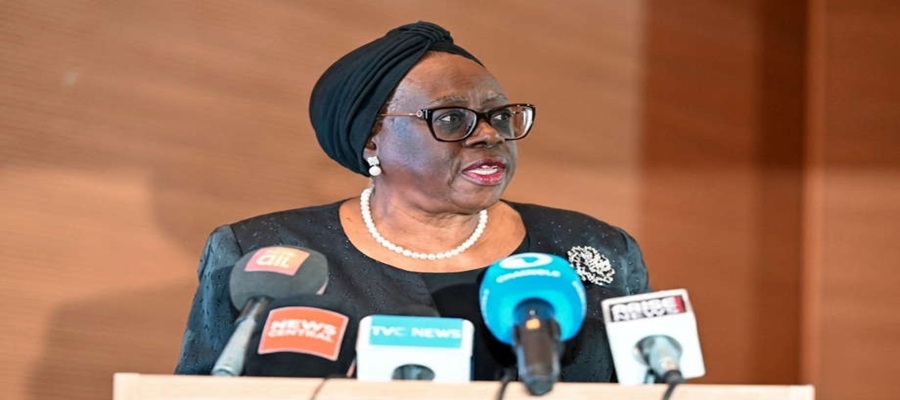
Justice Kudirat Kekere-Ekun, Chief Justice of Nigeria (CJN), has cautioned newly appointed judges of the lower courts against accepting unsolicited gifts, warning that such actions could expose them to petitions and erode public confidence in the judiciary.

The CJN gave the warning at the opening of an induction course for newly appointed judges in Abuja on Tuesday.
Represented by the Administrator of the National Judicial Institute (NJI), Justice Babatunde Adejumo, Kekere-Ekun urged the judges to uphold the highest standards of integrity and ensure the speedy and fair dispensation of justice.
She said judicial officers must remain above reproach in both their official and personal conduct.
“Most importantly, do not allow unsolicited gifts. You must equally avoid throwing unnecessary birthday parties. People will seize the opportunity to bring unsolicited gifts that can lead to petitions,” she said.
The CJN also advised the judges to work harmoniously with court officials, including registrars and exhibit keepers, while maintaining professionalism in the discharge of their duties.
She urged them to familiarise themselves with court rules to avoid being misled by legal practitioners and cautioned against the excessive use of contempt powers.
“You must work harmoniously with all the officials under you and ensure that you manage them diplomatically and technically. Read the rules of court so that lawyers will not take you for a ride,” she said.
Kekere-Ekun stressed that prompt and fair determination of cases was essential to sustaining public trust in the nation’s judicial system.
In his remarks, Justice Adejumo congratulated the new judges on their appointments, describing their elevation to the Bench as a significant responsibility in upholding constitutional supremacy, the rule of law and access to justice.
He said the induction programme was designed to equip participants with knowledge of judicial ethics, courtroom management, substantive and procedural law, and the practical skills required for effective adjudication.
Adejumo noted that the lower courts remain the first point of contact for most Nigerians seeking justice and play a critical role in the effective administration of the country’s judicial system.
He urged the judges to make the most of the training as they prepare to assume their responsibilities on the Bench.
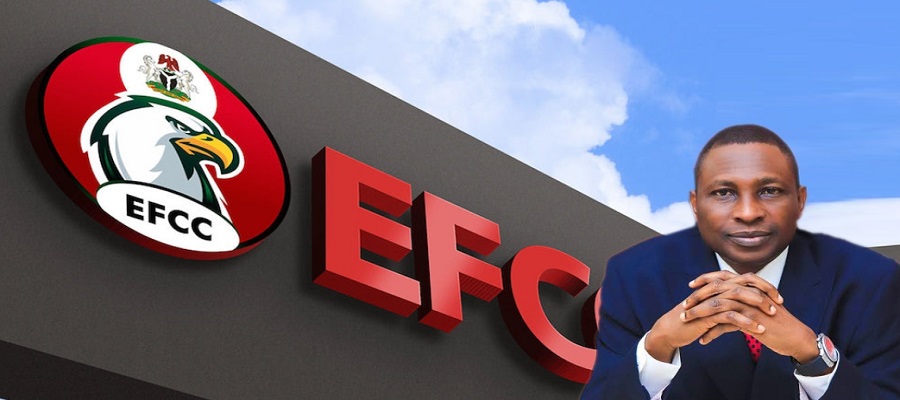
Economic and Financial Crimes Commission (EFCC), on Tuesday, July 7, handed over 1,452 items recovered from proceeds of crime to the Federal Ministry of Education to support schools across the country.

The recovered items, comprising 501 double-step bunk beds, 939 mattresses and 12 wooden beds with mattresses, were formally presented to the Minister of Education, Tunji Alausa, at a ceremony in Abuja by the Chairman of the EFCC, Ola Olukoyede.
Speaking at the event, Olukoyede said the items were recovered during the commission’s “Operation Eagle Flush,” a nationwide operation conducted in late 2024 against cybercrime and other financial offences.
He described the operation as the largest single operation ever undertaken by the commission.
According to him, the operation led to the arrest of 792 suspects, including 193 foreign nationals, all of whom were investigated, prosecuted and convicted before the foreign nationals were deported after serving their jail terms.
Olukoyede said the decision to transfer the recovered items to the education ministry was in line with the Federal Government’s resolve to channel recovered assets into projects that directly benefit Nigerians.
The EFCC chairman noted that the handover was not the first intervention from recovered assets directed at the education sector.
He recalled that a forfeited university was previously transferred to the Federal Government and converted into the Federal University of Applied Sciences, Kachia.
Olukoyede also said recovered proceeds of crime had supported the establishment of the student loan scheme through the Nigerian Education Loan Fund.
He stated that more than 1.4 million students had benefited from the initiative, arguing that improved access to education would help reduce the attraction of cybercrime among young Nigerians.
He added that the commission would continue to recover proceeds of crime and ensure they were deployed transparently.
Receiving the items, Alausa commended the EFCC chairman for adopting a proactive approach to tackling corruption, particularly procurement-related offences and cybercrime.
He described education as central to the Federal Government’s economic agenda and said President Bola Ahmed Tinubu had deliberately directed recovered assets towards strengthening the sector.
The minister disclosed that the Federal University of Applied Sciences, Kachia, admitted about 3,000 students in its first academic session and is expected to increase its intake to over 5,000 students in its second year.
He also revealed that the initial N50 billion seed funding for the Nigerian Education Loan Fund came from recovered proceeds of crime.

CAC to Sanction Companies with Incomplete Business Letters From August 1

BVN Enrollments Hit 69.55m- NIBSS

CBN Warns against Rejection of N100 Banknotes

Data Protection Industry Hits N16.3Bn in 3 Years- NDPC

NCC Seeks Cost-Based Pricing Framework for Ducts

NASENI Moves to Digitize CCB’s 5m Assets Declaration and Operations

Mobile Internet Gender Gap Widest in Africa – GSMA

Nigeria Launches FreeTV Nationwide

CANAL+ Partners Samsung to Pre-Load DStv Stream on New Samsung TVs In Nigeria, Other African Countries

CredibleVoteNG Opens Free Access to all Polling Units in Nigeria after INEC Demanded N1.Bn for Register




 News1 day ago
NRC, Ponzi Scheme Collapses Resulting Loss of Billions of Naira

 General News2 days ago
IHS Nigeria, FCT-HSES Concludes Clean Cooking Energy Campaign “Project Breathe Clean Air” in Abuja

 E-Business2 days ago
Kaspersky Transforms Threat Intelligence Reporting into an Interactive Content Hub

 News2 days ago
Microsoft to Lay Off 4,800 Workers

 Broadcasting2 days ago
NELFUND Investigates 34 Universities Over Students’ Missing Tuition Refunds

 Telecom2 days ago
Airtel Africa Cuts Diesel Dependence by 9.1m Litres

 Telecom2 days ago
A New Blueprint – How Strategic Collaboration is Rewriting the Narrative on Youth Drug Abuse

 News2 days ago
Access Bank, Fifth Chukker and UNICEF Renew Commitment to Expanding Educational Opportunities for Nigeria’s Most Vulnerable Children