

E-Financial
FXTM Analysis: Sterling, Trump & Gold In Focus

FXTM Research Analyst Lukman Otunuga comments on Sterling ahead of the UK general election and Trump’s anticipated “phenomenal” tax reforms and the Dollar.
The Brexit-related jitters may return with a vengeance in the coming weeks if complications arise from the European Union government toughening their negotiation positions. Official Brexit talks have yet to commence, but the EU has already dished out fresh demands, focusing on residency rights and even limits on financial services.
While Theresa May continues to suggest that a Conservative victory in the UK general elections in June may bolster her negotiating powers, the repeated demands from the European Union indicates otherwise with the bloc looking to play hardball.
May is scheduled for a preliminary Brexit showdown with the President of the European Commission, Jean-Claude Juncker, and the EU’s Chief Brexit Negotiator, Michel Barnier, this evening which could be an early test. With the topic of the £50 billion Brexit bill likely to be key in the meeting, this Downing Street dinner could be one to remember.
Sterling/Dollar remains trapped in a range on the daily charts, but repeated weakness back below 1.2775 could open a path lower towards 1.2600. In an alternative scenario, a daily close above 1.2875 may open a path towards 1.3000.
Trump Tax Announcement In Focus
A feeling of anticipation has gripped financial markets today as investors prepare for Trump’s big announcement clarifying how and when his “phenomenal” tax reforms will play out.
The proposed tax cuts in the States have attributed to the impressive stock market rally with Trump expected to trim corporate income tax rate from 35% to 15%. Although there is the possibility of the Dollar stabilizing in the short term if Trump delivers, concerns still linger over the plan being light on details. Even if Trump offers markets the eagerly anticipated insight on tax reforms, recent reports from the US Congress Joint Committee on Taxation suggest that tax reform may reduce government revenues by $2 trillion over the next 10 years, which may weigh on sentiment.
The possibility of corporations actually paying more from the tax cuts may encourage participants to carefully re-evaluate Trump’s tax reforms.
Commodity spotlight – Gold
The renewed appetite for risk has left safe-haven investments in the dust with Gold losing some of its safe-haven glimmers this week.
Sellers have exploited the risk-on trading environment to install heavy rounds of selling on the yellow metal with prices hovering around $1260 as of writing. Although geopolitical tensions and overall uncertainty may support the yellow metal in the longer term, short term bears could reclaim control below $1260.
If the Macron-inspired risk-on rally persists this week, then Gold may be exposed to further losses.
From a technical standpoint, the yellow metal is coming under increasing selling pressure on the daily charts. A breakdown and daily close below $1260 should encourage a further decline towards $1240. In an alternative scenario, bulls need to keep above $1260 for a further incline back towards $1280.
—


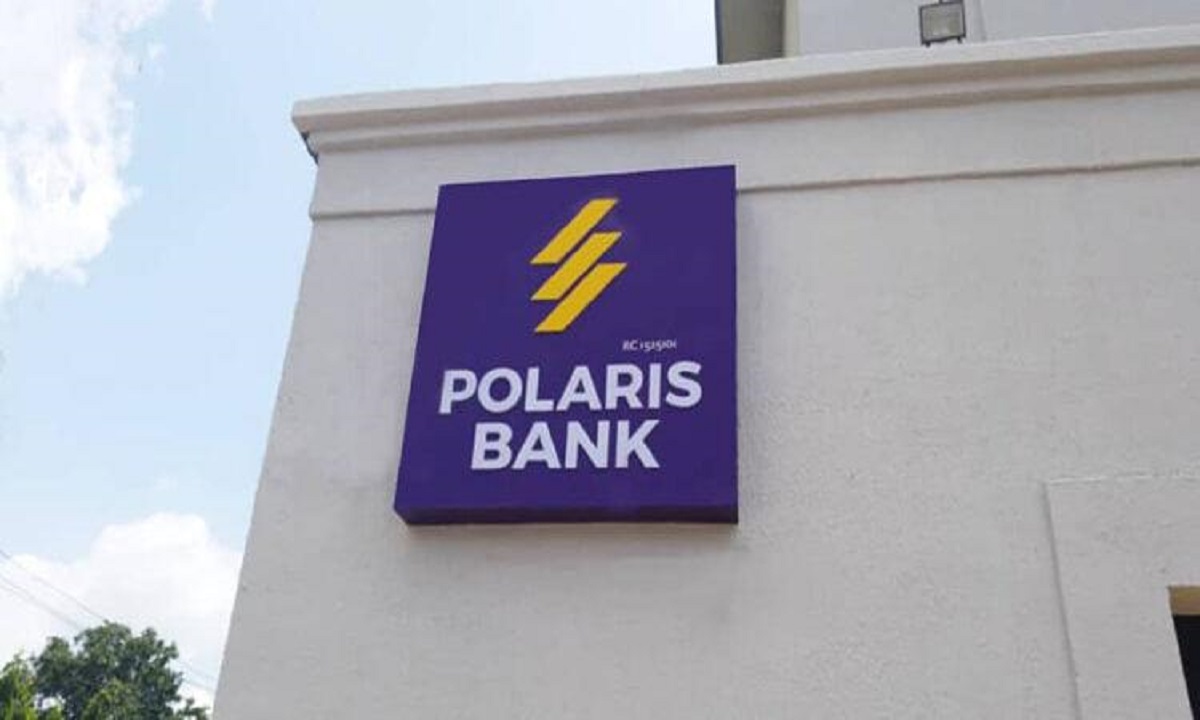
Central Bank of Nigeria (CBN) has debunked rumours suggesting that Polaris Bank is undergoing liquidation, assuring the public that the country’s banking system remains stable and secure.

Polaris Bank
The apex bank disclosed this in a post on X, where it shared a screenshot of a viral claim and flagged it as false.
It clarified that the claims, suggesting Polaris Bank had failed to meet recapitalisation requirements and was set for liquidation, are entirely false and do not reflect the current state of the Nigerian banking sector
“The Central Bank of Nigeria has noticed reports, in certain media outlets, about a recommendation for the Federal Government to take over some CBN-supervised financial institutions,” said Hakama Sidi-Ali, apex bank’s acting Director, Corporate Communications, in a statement.
“To avoid any doubt, Nigerian banks are still safe and sound. The CBN advises the public to go about their daily lives without getting disturbed by reports regarding the health of Nigerian banks that have not come from the CBN.
“The CBN is fully equipped to carry out its statutory duty of ensuring the stability of Nigeria’s financial system. “We assure the general public and depositors that their funds are safe in Nigerian financial institutions. “Bank customers are therefore advised to proceed with their banking transactions as u
The clarification was after a viral post, claiming that Polaris Bank was facing liquidation for failing to meet the Bank’s recapitalisation requirements, and could soon lose its operating licence, with the Nigeria Deposit Insurance Corporation set to take over the process.
It further alleged that founder of the Eleganza Group, Razaq Okoya, had made a bid to acquire and revive the bank, pending approval from regulators and shareholders.
Sharing a screenshot of the viral claim, however, the apex bank flagged it as “fake content.”
It clarified that the claims, suggesting Polaris Bank had failed to meet recapitalisation requirements and was set for liquidation did not reflect the current state of the Nigerian banking sector.
“This content is fake. Let the public be guided. The Nigerian Banking System is Safe and Secure,” the bank said.
On April 1, the CBN confirmed that 33 banks successfully met the revised minimum capital requirements under its recapitalisation programme, marking a significant milestone in strengthening the financial system.
African Development Bank Group (AfDB) has approved a $200 million loan to Nigeria to support a landmark digital infrastructure initiative aimed at expanding broadband access, developing digital skills and driving large‑scale job creation.

The financing will support the Digital Value Chain Infrastructure for Boosting Employment project, known as D‑VIBE or Project BRIDGE. The initiative seeks to deploy about 90 000 kilometres of new open‑access fibre optic cable across Nigeria, extending the national fibre backbone from roughly 30 000 km to about 120 000 km.
The expanded network will connect all 774 local government areas, including schools, hospitals, agro‑industrial zones, rural communities and commercial centres. It will also establish cross‑border digital links with Benin, Cameroon, Niger and Chad, strengthening regional integration.
Nigeria is Africa’s most populous country and West Africa’s largest economy, with the digital sector increasingly contributing to gross domestic product growth. The project is expected to close major connectivity gaps, raise productivity and unlock job opportunities for young people.
D‑VIBE is structured as a public‑private partnership through a special purpose vehicle, with public ownership capped at between 25% and 49% and private sector participation ranging from 51% to 75%.
This structure is intended to address high fibre rollout costs, including construction and right‑of‑way challenges.
The African Development Bank loan forms part of an $800 million sovereign financing package, alongside $500 million from the World Bank and $100 million from the European Bank for Reconstruction and Development.
Total project financing is estimated at $2 billion, including a $25.79 million European Union grant, a $2.6 million Multilateral Cooperation Centre for Development Finance preparation grant and at least $1.2 billion in private sector investment.
“Nigeria has the talent, the market and the ambition, but lacked the backbone infrastructure to connect opportunity with potential,” said Abdul Kamara, Director General of the African Development Bank Group’s Nigeria Office.
“This project will deliver high‑speed connectivity nationwide and equip young people to build digital careers.”
Beyond physical infrastructure, the project will support affordable devices, large‑scale digital skills training and digital platforms in priority sectors. It also includes cybersecurity, competition reforms and resilience measures, including greater use of renewable and hybrid power.
D‑VIBE is expected to help create up to 2.8 million jobs and raise broadband penetration from 45% to around 70% by 2030. The project aligns with Nigeria’s Vision 2050 and continental development priorities.

World Bank has warned that Nigeria faces a deepening early childhood development crisis in health, nutrition, and learning, threatening long-term productivity and economic growth amid persistent poverty.

World Bank
In its April 2026 Nigeria Development Update, “Nigeria’s Tomorrow Must Start Today: The Case for Early Childhood Development,” the bank noted moderate 2026 growth driven by services like ICT, financial services, and real estate, following 4.0 per cent GDP expansion in 2025. Inflation eased to double digits via tight policy, stable exchange rates, and better food supply, while reserves hit $45.5 billion gross by end-2025, covering 8.7 months of imports.
Fiscal deficit widened slightly as non-oil revenues rose to 8.5 per cent of GDP from improved tax administration, e-filing, and VAT e-invoicing, though wage growth lagged inflation, leaving real incomes strained and poverty unchanged.
The bank highlighted poor outcomes with 110 of 1,000 children dying before age five, 40 per cent stunted, and 52 per cent developmentally off-track at school entry—gaps three times wider in poor households and exceeding 40 points between rich and poor. It urged investment in the first 2,000 days for better education, earnings, health, and cohesion.
Regionally, Sub-Saharan Africa’s 2026 growth forecast dipped to 4.1 per cent from 4.4 per cent due to Middle East conflict inflating fuel and fertiliser costs.
Finance Minister Wale Edun countered with recovery signs: falling inflation, rising non-oil revenues, declining debt-to-GDP, and stabilising naira via digital tracking, audits, and PPP shifts. Budget Director Tanimu Yakubu described reforms as correcting imbalances from subsidies and multiple rates, boosting FAAC revenues 40 per cent and reserves over $40 billion, with debt under 30 per cent of GDP.
NACCIMA President Jani Ibrahim called for data-driven strategies amid tax changes, inflation, and global tensions, eyeing AfCFTA, digital economy, and green investments for growth.

FG to Gift Nigerians over 100 Free TV Channels from May 15

FG New Approves Biometric Passenger Verification System for Airports Security

STBMAN, NBC Bicker over Alleged Due Process Breaches

CBN Dismisses Polaris Bank Liquidation Claim

AfDB Okays $200m for Nigeria’s Digital Backbone, Others

Spotify’s Loud & Clear Report Reveals Over ₦60Bn Revenue for Nigerian Artists in 2025

Kuda MFB Increases Kuda for Her Business Grants to ₦10 Million

Why JustMarkets Is a Strong Choice for Gold Trading

Canal+ to Cut Jobs as Part Sweeping Restructuring

Nigeria tops global rankings for USDT, USDC ownership




 E-Financial2 days ago
How Sterling Bank Is Empowering 1m Women with ₦500Bn

 E-Financial2 days ago
See Key Changes in BVN Rule from May 1 by CBN

 E-Financial2 days ago
Paga Group Rejigs Leadership as Oviosu, Founder Becomes Group CEO

 Broadcasting2 days ago
INEC Warns Broadcasters against Misinformation ahead of 2027 Polls

 E-Financial2 days ago
Reputation: The Real Currency Powering Fintechs

 E-Business2 days ago
Jumia Expands Nationwide Footprint, Deepens Reach Across Underserved Nigerian Cities

 News2 days ago
Google, UpSkill Universe Relaunch Hustle Academy to Bring Free AI Skills to Africans

 Telecom2 days ago
Meta Unveils Muse Spark: MSL’s Groundbreaking People-First AI Model