

General News
NES Seeks Harmonization Economic Policies

The Nigerian Economic Society (NES) has called on the Federal Government to properly articulate its policies and strategies to enhance economic growth as well as create opportunities for the private sector to access regional and global markets.
The NES made the call yesterday in eleven-point communiqué read by the President, Professor Akpan H. Ekpo to round off the Society’s 49th Annual conference with theme, "Global Competitiveness and the Nigerian economy: The way forward" held in Abuja.
The Society further urged the Federal Government to introduce innovation in the payments system, invest in agricultural sector, create an environment to discourage rent seeking particularly in oil sector, improve infrastructural facilities in the country, massively fund the education sector at all levels and promote Small and Medium Enterprises, among others.
According to Prof. Ekpo, "Government should create an environment to discourage rent seeking, particularly in oil sector. More reforms are necessary in the sector, particularly in the light of recent mind-boggling revelations in the operations of Department of Petroleum Resources and the allocation and payments for oil blocks, from the public hearing on the oil sector by the House of Representatives.
"There is the need for Government to improve infrastructural facilities in the country, particularly in the transport and energy sectors as well as improving human capacity to promote efficiency and competitiveness of the economy.

He stressed that efforts should be made to break the monopoly of Power Holding Company of Nigeria (PHCN) in power transmission by bringing in other companies, by breaking the country in to five or six zones and franchise granted to each of these larger power companies for each zone to enhance rapid growth in the sector.
He canvassed for encouragement of foreign banks to enter the Nigerian banking landscape to encourage inflow of foreign capital and help drive down costs of credit and administration leading to low interest margins.
In respect of education, the NES noted that with the seeming unattractiveness of employment in the sector, the government needed to review wages in the sector to attract capable hands and grantee quality education for the country and enhance its competitiveness.
The Society emphasized the need for cooperation of all stakeholders, private and public operators in the economy in addressing the economic problems of the country particularly in the power sector.


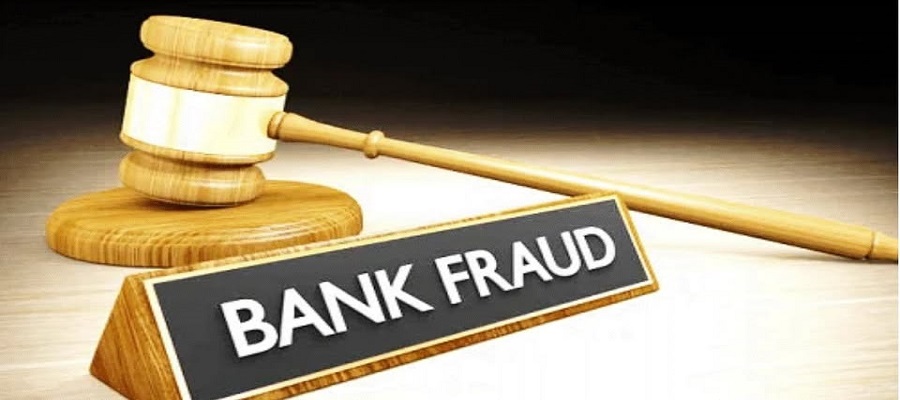
Chinonso Akujobi, former staff of Access Bank in Lagos, has been remanded in Ikoyi prison after she was arraigned on a five-count charge bordering on stealing to the tune of N294.5m.

Akujobi who is being prosecuted by the Economic and Financial Crimes Commission (EFCC) was arraigned before Justice I.O. Ijelu of the State High Court sitting in Ikeja, Lagos.
EFCC alleged that Akujobi stole the money between January and December 2025 while under the employment of Access Bank Plc.
As stated in one the charges, the defendant stole the money through unauthorized payments from the general ledger of Access Bank to her account number 0036668871 with the name Chinonso A., Uchechi A. and Florence A., thereby committing an offence of stealing, contrary to Section 280 and punishable under Section 287 of the Criminal Law of Lagos State, 2015.
The defendant pleaded “not guilty“ to the charges when they were read to her.
In view of this, S.M.Yabo, prosecution counsel, asked the court for a trial date and also prayed for the remand of the defendant in a Correctional centre.
Justice Ijelu, thereafter, adjourned the case till October 8, 2026, for the hearing of the bail application and the commencement of trial.
The Judge also ordered that the defendant be remanded in the Ikoyi correctional Centre.

The Nigerian Safety Investigation Bureau (NSIB) says the flight captain of the VMO Aero aircraft that landed on a roadway near Asaba Airport in Delta State told investigators that the observer pilot mistakenly identified the paved road as the runway before touchdown.

The bureau disclosed this in a preliminary report released on Thursday on the June 10 incident, which prompted the Nigeria Civil Aviation Authority (NCAA) to ground the private jet.
The aircraft had seven people on board, including the pilot-in-command (PIC), second-in-command (SIC), an observer pilot, a cabin crew member and three passengers.
According to the report, the aircraft was cleared by Air Traffic Control (ATC) to approach Runway 11 at Asaba Airport after the crew requested a right orbit.
The crew initially discontinued the approach, executed a missed approach and repositioned for a second landing attempt.
NSIB said the crew reported that the aircraft’s navigation systems indicated it was correctly established on the published RNAV Runway 11 approach.
“The PIC and SIC reported that the observer pilot identified the paved surface ahead as the runway,” the report stated.
However, the observer pilot gave investigators a different version of events.
According to NSIB, he said the aircraft remained inside cloud until late in the approach and that the Ground Proximity Warning System (GPWS) repeatedly issued “TERRAIN, TERRAIN, PULL UP” alerts.
He also said he observed a telecommunications mast directly ahead and instructed the flight captain to abandon the approach and climb immediately.
The bureau further disclosed that a cabin crew member reported that one of the passengers became concerned after overhearing discussions among the pilots and asked whether one of them was undergoing training. The passenger was reportedly reassured that all three pilots on board were experienced captains.
NSIB said no abnormal events were reported in the cabin before touchdown.
The aircraft eventually landed at about 8:57 a.m. on an under-construction paved roadway near Asaba Airport instead of the designated runway.
The bureau said its investigation into the incident is ongoing, while the preliminary report highlights conflicting accounts among the cockpit crew over the circumstances that led to the erroneous landing.

Federal High Court in Abuja has adjourned the Federal Government’s alleged tax evasion case against Binance Holdings Ltd. cryptocurrency exchange, until September 24, 2026, to allow both parties more time to pursue an out-of-court settlement.

Justice Emeka Nwite fixed the new date on Thursday after Moses Ideho, counsel to the Federal Government, informed the court that discussions aimed at resolving the dispute amicably were still ongoing.
Ideho, a deputy director of Legal and Prosecution at the Nigeria Revenue Service (formerly the Federal Inland Revenue Service), told the court that the matter, which had been scheduled for a report on settlement or continuation of trial, could not proceed.
According to him, one reason for the delay was the reported elevation of Justice Nwite to the Court of Appeal, while the second was the continued reconciliation efforts between the parties.
“The parties are still exploring settlement in the charge that led to this case,” Ideho told the court.
Sunday Agaji, counsel to Binance, did not oppose the application for adjournment, following which Justice Nwite postponed proceedings until September 24 for either a report on the settlement discussions or continuation of trial.
The case was previously adjourned on May 12 after both the Federal Government and Binance informed the court that negotiations were underway to settle the matter outside the courtroom.
Binance had first indicated its willingness to pursue an amicable resolution on March 24.
The cryptocurrency company was re-arraigned on July 12, 2024, on a four-count charge bordering on alleged tax evasion.
Ayodele Omotilewa, Nigerian representative, pleaded not guilty on behalf of the company.
The re-arraignment followed the removal of Binance executive Tigran Gambaryan and his colleague, Nadeem Anjarwalla, from the charge after the Federal Government amended the case to make Binance Holdings Ltd the sole defendant.
Justice Nwite had, on June 14, 2024, discharged and struck out the names of Gambaryan and Anjarwalla after the prosecution filed the amended charge.
Binance is also facing a separate criminal prosecution by the Economic and Financial Crimes Commission (EFCC), which accuses the company of laundering about $35.4m.
In addition, the Nigeria Revenue Service is pursuing a separate civil suit against Binance before another judge of the Federal High Court, seeking approximately $79.5bn in alleged economic losses linked to the company’s operations in Nigeria.

Police Busts Syndicate Who Allegedly Stole N3Bn from Financial Institution

MTN Accelerates Network Expansion to Meet Surging Telecom Demand

Court Remands Akujobi, Ex Access over alleged Theft of N294.5m

TeKnowledge, Equinix Partner to Advance Nigerian Digital Infrastructure

NSIB Faults Runway Identification, Reveals Cockpit Disagreement in Asaba Jet Incident

NASENI Moves to Digitize CCB’s 5m Assets Declaration and Operations

Mobile Internet Gender Gap Widest in Africa – GSMA

Nigeria Launches FreeTV Nationwide

CANAL+ Partners Samsung to Pre-Load DStv Stream on New Samsung TVs In Nigeria, Other African Countries

Lebara Nigeria Launches Lebara Play, Africa’s First Telecom-Owned Micro-Drama Platform




 Telecom2 days ago
NCC Seeks Cost-Based Pricing Framework for Ducts

 E-Financial2 days ago
CBN Warns against Rejection of N100 Banknotes

 News2 days ago
Flutterwave Secures Circle Ventures Investment to Deepen USDC Payment

 Telecom1 day ago
Fixed Wired Internet Market Lags as Mobile Gains Ground

 Telecom2 days ago
Meta Introduces Muse Image With Advanced AI Image Editing Across WhatsApp and Instagram

 E-Financial2 days ago
BVN Enrollments Hit 69.55m- NIBSS

 News2 days ago
How EFCC Turned Recovered Loot Into School Supplies for Thousands of Nigerian Students

 News2 days ago
CJN Warns Judges: Reject Gifts or Risk Petitions and Ruined Careers