

E-Financial
Visa Expands Global Transaction Processing


Visa, a global payments technology company, Monday, announced expanded transaction processing capabilities in two state-of-the-art data centers in Singapore and the United Kingdom.
The new global processing hubs will increase the speed, resilience and geo-diversity of Visa’s infrastructure, while strengthening the company’s ability to deliver new and more sophisticated ways to pay in today’s hyper-connected global economy.
“Commerce and payments are in the midst of an historic shift from analog to digital. A growing majority of people around the globe are leaving cash behind and reaching instead for their cards and devices to pay,” said Rajat Taneja, executive vice president of technology at Visa. “With our technology investments in Asia and Europe, we’re scaling up our infrastructure to meet the explosive growth in digital and mobile payments, while maintaining the secure, convenient and always-on service that our clients and partners expect.”
The Singapore and UK data centers will complement Visa’s existing processing facilities in North America. With four synchronized data centers, Visa’s expanded footprint will boost the redundancy and resilience of its infrastructure, minimizing the likelihood of service disruptions to Visa’s 16,600 financial institutions, millions of merchant acceptance locations, and 3 billion cards.
The two centers are equipped with best-in-class technology, including high-performance hardware and energy-efficient power and cooling infrastructure. Visa plans to start processing global transactions in the two facilities in 2018.
Singapore Data Center
Visa’s 10,000 square foot data center in Singapore is Visa’s first transaction processing center in Southeast Asia and will serve clients, cardholders and merchants across the region and in Visa’s global network.
“As home to our Asia Pacific headquarters, Singapore is already a major hub for the Visa business,” said Chris Clark, group executive, Asia Pacific, Visa. “With our new processing facility in Singapore, we’re strengthening our ability to meet rising demand for digital payments, while driving the pace of payment innovation across the Asia Pacific region.”
“We are delighted that Visa has chosen Singapore as the location for its new data center, reinforcing Singapore’s position as a trusted business and technology partner,” said Mr. Kelvin Wong, assistant managing director, Singapore Economic Development Board. “This investment strengthens the sophistication of Visa’s business footprint in Singapore and is a testament to Singapore’s regional leadership in data management and connectivity.”
The new data center is Visa’s third major investment in Singapore in the last two years. In September 2016, Visa launched the first international campus of Visa University at its headquarters in Singapore. In in April 2016, Visa launched the Singapore Innovation Centre, a destination for clients, partners and developers across the region to work alongside Visa experts and jointly create next-generation commerce applications.
United Kingdom Data Center
In June 2016, Visa Inc. announced the completion of its acquisition of Visa Europe, starting a multi-year process to combine the two companies into a unified global organization with a shared technology platform.
This integration brings 3,200 European clients onto VisaNet, Visa’s global transaction processing network, and involves a retrofit of Visa’s legacy data center in the UK.
Once fully retrofitted, the 10,000 square foot facility will bring increased operational resilience for clients in the region while accelerating the speed-to-market for new payment innovations in the European market.
“The launch of our state-of-the-art data center in Europe is a critical milestone, enabling all our clients and partners to take advantage of Visa’s global technical resources and assets,” said Bill Sheedy, CEO Europe, Visa Inc.


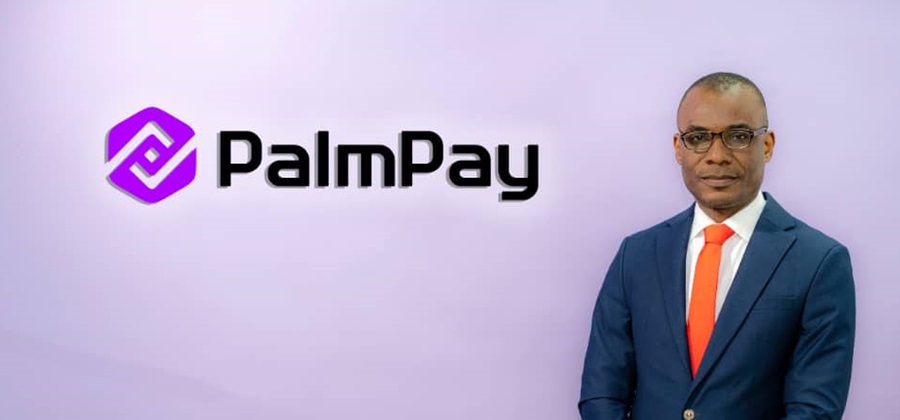
PalmPay said that it has surpassed 35 million users, a figure that reflects a broader transition in the sector from rapid customer acquisition to sustained, everyday financial usage.

Chika Nwosu, Managing Director-CEO, PalmPay Nigeria
The consumer payments platform entered Nigeria’s fintech market in 2019 and is today a major player, offering a suite of financial services including transfers, bill payments, and digital insurance to promote financial inclusion.
In a market historically shaped by traditional banks, emerging fintechs, and a strong cash culture, scale alone is no longer the defining benchmark of success.
Instead, attention is shifting to how effectively platforms integrate into the daily financial routines of individuals and businesses.
Central to PalmPay’s growth is its alignment with Nigeria’s payment infrastructure.
The platform has executed live transactions on the National Payment Stack operated by the Nigeria Inter-Bank Settlement System (NIBSS), placing it within an interoperable framework that connects banks, fintechs, and other financial service providers.
Within this ecosystem, industry observers note that competition is increasingly determined by system performance—uptime, transaction success rates, and reliability—rather than product differentiation alone.
However, integration at the infrastructure level does not automatically translate to inclusion. According to data from Enhancing Financial Innovation and Access (EFInA), a significant proportion of Nigerians—particularly in rural and underserved communities—remain outside the formal financial system.
To address this gap, PalmPay has expanded its agent network, mirroring a wider industry approach that combines digital platforms with physical access points.
Through these agents, users can carry out deposits, withdrawals, transfers, and onboarding, effectively bridging the divide between cash-based transactions and digital finance.
This hybrid model has become a cornerstone of financial service delivery in Nigeria, underscoring the importance of distribution alongside technology.
Beyond core payment services, PalmPay has also extended into financial literacy and capacity-building initiatives, targeting underserved groups such as women-led businesses and first-time digital users. The move signals a growing recognition that access alone is insufficient without the knowledge and confidence to participate fully in the financial system.
Overall, PalmPay’s reported scale offers insight into a maturing fintech landscape, where growth is increasingly defined not just by user numbers, but by the extent to which platforms become embedded in the everyday financial lives of Nigerians.

Police prosecutors from the Lagos State Criminal Investigation Department (SCID) have arraigned Nnedimma Arah, a senior manager at First Bank Limited, before the Federal High Court, Lagos, over allegations of forgery.

Before Nnedimma’s arraignment, the detectives had filed a three-count charge against her and one Temitope Ogheneteme, based on advice from the office of the Director of Public Prosecutions (DPP).
But during the proceedings, Emmanuel Eze, Police prosecutor, urged the court to remove Temitope Ogheneteme’s name from the charge, citing the DPP’s legal advice.
Justice Daniel Osiagor, trial judge, granted this request, and Ogheneteme was discharged.
This amendment left Arah, who is the branch manager of Dosumu, Lagos Island, and an Associate Chartered Accountant (ACA), as the sole defendant in Charge No. FHC/L/582C/2025.
Arah was accused of forging a letter of undertaking, supposedly issued by Freshborn Industries Limited on August 12, 2022, to cover foreign exchange differences.
Eze claimed that the alleged forgery occurred from January 2023 to January 2024 at the Dosunmu Branch.
He claimed that the document was forged with the intent to deceive, harming Freshborn Industries Nigeria Limited and its representatives, Anene Ikenna and Anene Chinyere Angela.
The prosecutor further maintained that the offence is punishable under Section 1(2)(c) of the Miscellaneous Offences Act.
The defendant pleaded not guilty to the charge.
Her defence requested bail, noting she had previously been on administrative bail and had attended court proceedings diligently.
Justice Osiagor granted her bail in the sum of N5 million with one surety in like sum.
The case’s progress was delayed earlier because the Office of the Director of Public Prosecutions (DPP) was reviewing the case file after a petition from First Bank.
In a letter dated January 26, 2026, the DPP asked the police to review the case under the Administration of Criminal Justice Act.
The bank’s petition to the Attorney-General stated that the dispute involved a $400,000 credit facility to Freshborn Industries Limited, which is also pending in a civil suit before the Lagos State High Court.
The bank argued that the criminal charges stem from a commercial dispute and warned that this could constitute an abuse of the legal process.
The judge has fixed the trial for July 14 and 15, 2026.
E-Financial
Ezekiel Sanni, SVP Moniepoint Extols the MFB’s Track Record as Unique Service Model Redefining Nigeria’s Agency Banking


Moniepoint Microfinance Bank (Moniepoint MFB) has reaffirmed its leadership in Nigeria’s agency banking space, positioning its track record and distinctive service model as a game-changer for the sector, while committing to deepen value creation across the entire ecosystem.

Beyond service provision, the Bank is cementing its identity as the homegrown, technological backbone of the real economy, built by Nigerians to solve the specific complexities of the local commercial landscape.
Speaking on the Bank’s evolving strategy, Ezekiel Sanni, Senior Vice President (SVP), Distribution Network Sales, Moniepoint MFB, said the Bank’s approach is built on a clear understanding that agency banking must be anchored on consistent enterprise support, trust building, and real economic value for agents, merchants and their customers.
“Agency banking has grown significantly in reach, but the next phase of growth will be defined by quality of service and depth of engagement,” Ezekiel Sanni, SVP, Distribution Network Sales, said. “At Moniepoint MFB , we have built a model that prioritises not just access, but meaningful, routine local support for the merchants and communities we serve while our engineering is a commitment to the stability that these businesses need to thrive.”
At the core of this approach is the deployment of dedicated field-based managers who work closely with agents, providing hands-on, on-the-ground support tailored to their daily operations. Unlike conventional systems, where engagement often ends after onboarding, Moniepoint MFB maintains continuous interaction with agents, driving product usage, resolving operational challenges, and strengthening long-term partnerships.
By combining digital infrastructure with a strong physical presence, the Bank has created a hybrid service model that delivers both scale and human connection. This proximity enables faster issue resolution and supports always-on mentorship, where merchants receive ongoing business guidance, real-time operational support, and on-the-job training, particularly in critical areas such as fraud detection and anti-money laundering (AML) regulatory compliance.
“When you are close to the agent, you are in a position to go beyond providing a service to building capability,” Mr. Sanni added. “Our teams work alongside agents to strengthen their operations, improve compliance awareness, and ultimately protect both their businesses and the broader financial system.”
According to the Bank, the impact of this approach extends beyond agents and merchants to last-mile customers, who benefit from more reliable service, safer transactions, and greater confidence in the financial system they interact with daily.
Moniepoint MFB’s model has been further strengthened by its track record over the past few years as the bona fide operating system for small businesses. The Bank has integrated value-added services, such as inventory management, savings product, and access to working capital loans, into its platform, embedding itself in merchants’ day-to-day operations and significantly increasing the value delivered.
“Our aspiration has been to become indispensable to the businesses we serve,” Ezekiel noted. “When your banking partner is also supporting your inventory, helping you navigate other obligations, and providing access to capital, the relationship becomes stronger and more impactful.”
The Bank’s strong performance metrics reinforce this positioning as Nigeria’s largest merchant acquirer, powering 8 out of every 10 in-person payments made across the country, driven by reliability, fast transaction processing, rapid settlement cycles, and a range of other benefits. This consistency has also helped build a reputation for reliability, which the Bank describes as a key competitive moat in a market where agents often consolidate around a single provider.
“In many cases, agents are effectively choosing a long-term partner they trust to be stable, responsive, and dependable. That is the trust we have deliberately built, that continues to differentiate us even as we work hard to contribute meaningfully to the broader growth and development of the financial ecosystem,” Mr. Sanni added.
The Bank reiterated that it sees agency banking not just as a channel but as critical infrastructure for economic participation and an enduring financial inclusion. Moniepoint’s commitment is to keep strengthening that infrastructure, supporting merchants, empowering customers, and continuing to serve as the reliable, indigenous engine that keeps Nigeria’s real economy moving.

Leo Stan Ekeh Foundation to Open Portal for 1,000 University Tech Scholarships on Monday

Karex, World’s Top Condom Maker to Hike Prices due to Iran war

US Library Blames Hackers for Viral Posts Urging Violence in Nigeria

IshowSpeed’s African Tour was ‘Spy Job,’ for Elon Musk- Seun Kuti

PalmPay Hits 35m Users’ Milestone

NBC Boss Urges Content Ceators to Participate in DSO

NITDA Takes Over National Digital Architecture System

DLM SPV PLC Lists ₦9.00bn AAA-Rated Medium-Term Notes on FMDQ Exchange, Sets Benchmark in Corporate Bond Market

FG Shifting Focus to “Meaningful Connectivity” to Drive Inclusion – Minister

Jury Finds Meta, Google Liable for Woman’s Social Media Addiction




 E-Business2 days ago
Lagos Unveils Cybersecurity Guidelines to Tackle Rising Digital Threats

 Telecom2 days ago
NBC Warns Broadcasters Against Bullying Guests, Passing Opinions as Facts

 News2 days ago
FG Borrows N100Bn from Unclaimed Dividends, Dormant Bank Accounts

 E-Financial2 days ago
CitiTrust Heads to Appeal Court over Alleged Ponzi Scheme

 Telecom2 days ago
WATRA Secretary sees Resilience as a Critical Link in West Africa’s Digital Economy

 Telecom2 days ago
Why Nigeria Must Embrace .ng Now – NiRA Reveals Five Critical Steps

 Telecom2 days ago
Tech Shake-Up: Snap Cuts Hundreds as AI Drives Efficiency Push

 News2 days ago
FG Carpets W/Bank, Denies Alleged Diversion of Federation Revenue