

E-Financial
FIRS Boss Hails VAIDS Tax System


Mr Babatunde Fowler, Chairman, Federal Inland Revenue Service (FIRS), says with the introduction of Voluntary Assets and Income Declaration Scheme (VAIDS), no Nigerian can evade tax payment.
Fowler said this at the 138th Quarterly Meeting of the Joint Tax Board (JTB) on Monday in Abuja.
The theme of the meeting was “Administering Voluntary Assets and Income Declaration Scheme (VAIDS) – 2017 in Nigeria: The role of stakeholders.’’
Fowler, also the Chairman of JTB said every Nigerian would be held accountable with the introduction of the new scheme.
He said that the so called “untouchable citizens’’ were willing to pay tax without forcing them under the scheme.

According to him, the board has received positive response so far on the scheme.
To improve tax compliance, the Federal Government said tax offenders stand to enjoy 29 per cent waiver on overdue taxes if they take advantage of VAIDS.
The VAIDS programme is aimed at reducing tax payers’ liability and creates more awareness on the statutory function of every working citizen to pay tax.
The scheme which started July 1, offers a window for those who, before now, have not complied with extant tax regulations to remedy their positions by providing them limited amnesty to enable voluntary declaration and payment of liabilities.
Fowler said the Memorandum of Understanding (MoU) adopted between the FIRS and State Internal Revenue Service including that of VAIDS had been working very well.
“From the point of FIRS, all the money generated is shared between the three tiers of government; the collaboration between states and FIRS is improving.
“I hope the collaboration will continue to get better,’’ he said.
Fowler said that the JTB meeting had improved the collaboration between private and public sector.
He said the meeting would focus on the review of VAIDS and actions that would be taken after the implementation of the scheme.
“I will also want to thank the stakeholders for all the activities and the Acting President who is in the fore front of the tax drive.’’
The meeting witnessed the handing over of the outgoing Executive Secretary and Incoming one.
Mr Oseni Elamah, new Executive Secretary, pledged to serve the body and to take it to a greater height.
“I pledge to serve you as a body and to also support each of you individually in your various capacities toward the realisation of Joint Tax Board in creating a tax friendly environment.
“I will also support you in fulfilling your mandate to optimise revenue for the various tiers of government,’’ Elamah said.
Elamah is the immediate past Chairman of Edo State Internal Revenue Service.
Also speaking, Mr Mohammed Abubakar, the outgoing Executive Secretary of JTB urged the new official to take the board to greater height.
Abubakar, who served for seven years called on the members of the board to support Elamah to enable him succeed.
No fewer than 90 participants from JTB, FIRS, State Internal Revenue Service and representatives of Nigeria Governor’s Forum attended the meeting.


Federal Ministry of Finance has halted enforcement of about N680 million in disputed fees imposed by the National Insurance Commission (NAICOM) on NICON Insurance Limited and Nigeria Reinsurance Corporation (Nig Re) as part of the ongoing insurance industry recapitalisation exercise.

The Ministry also directed NAICOM to suspend its demand that the two companies transfer their entire recapitalisation funds into an escrow account with the Central Bank of Nigeria (CBN), pending determination of a petition challenging the legality of the charges and the directive.
The intervention followed a July 27, 2026 petition by NICON and Nig Re over what they described as unlawful fees and regulatory demands arising from the implementation of the Nigerian Insurance Industry Reform Act (NIIRA) 2025.
In a letter to the Commissioner for Insurance, Raymond Omachi, permanent secretary, Federal Ministry of Finance, on behalf of Taiwo Oyedele, minister of Finance and coordinating minister of the Economy, requested that NAICOM provide a detailed response and legal justification for the disputed requirements.
The Ministry specifically directed the Commission to suspend enforcement of the contested processing and verification fees, the one per cent Capital Injection Fee, and the directive requiring the companies to transfer their full recapitalisation funds to a CBN escrow account.
The dispute centres on NAICOM’s assessment of a one per cent fee on capital injected by operators, alongside additional processing and verification charges prescribed under Appendix 2 of the Commission’s Minimum Capital Requirement Guidelines.
According to the petition, the combined assessments amounted to N305 million for NICON and N375 million for Nig Re, bringing the disputed charges to N680 million.
The companies are also challenging what they described as an unconstitutional requirement to transfer more than the statutory proportion of their recapitalisation funds to the CBN.
They contend that Section 16(3) of NIIRA 2025 provides for a 10 per cent statutory deposit, and not the transfer of the entire capital injection into an escrow account.
The companies told the Ministry that they had already met the July 31, 2026 recapitalisation deadline.
NICON said it injected N420 billion, while Nig Re injected N30 billion into Mudaraba Term Deposit accounts with Lotus Bank Limited. The companies maintained that the amounts exceeded their adjusted recapitalisation requirements of N16 billion and N28 billion, respectively.
They further stated that they had deposited N42.5 billion and N43.5 billion respectively with the CBN, in compliance with the statutory deposit requirement under Section 16(3) of the new law.
The companies also disclosed that they had made initial payments of N480 million and N75 million, respectively, in fees.
The Finance Ministry’s directive effectively places the disputed charges and escrow requirement on hold while NAICOM is expected to justify the legal and regulatory basis for its actions.
The intervention could have wider implications for the insurance industry’s recapitalisation programme, particularly as operators face regulatory deadlines to strengthen their capital base under the new insurance law.
The controversy also raises questions about the extent to which regulatory guidelines can impose additional financial obligations on operators beyond those expressly provided for under the enabling legislation.
NAICOM is now expected to respond to the Ministry’s request and explain the statutory basis for the one per cent capital injection fee, the additional processing and verification charges, and the requirement for the full capital injection to be transferred into a CBN escrow account.

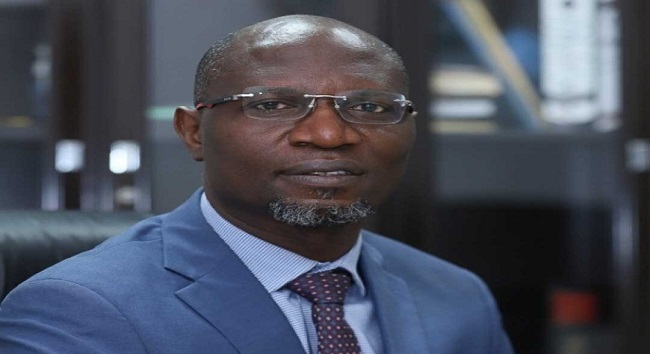
The Securities and Exchange Commission (SEC) has launched a nationwide awareness campaign aimed at helping investors and beneficiaries recover unclaimed dividends and inherited investments, as part of efforts to strengthen investor protection and reduce the volume of dormant assets in Nigeria’s capital market.

The initiative, unveiled in Abuja through the Probate/Unclaimed Monies Awareness and Investor Clinic, seeks to educate investors, beneficiaries and estate executors on probate procedures, estate administration and the processes involved in accessing financial assets left behind by deceased relatives.
Speaking at the event, Dr Emomotimi Agama, the Director-General of the SEC, said the Commission was addressing a long-standing challenge that had prevented many families from accessing investments belonging to deceased relatives.
Agama said many beneficiaries face difficulties obtaining probate, letters of administration, death certificates and other documents required to claim shares, dividends and other financial assets.
“For many Nigerian families, the death of a loved one who held shares, dividends or other investments marks the beginning of a long and often confusing journey,” he said.
According to him, the complexity surrounding estate administration often leaves beneficiaries unable to access legitimate investments and other financial assets inherited from deceased relatives.
He described unclaimed dividends and dormant assets as a major concern for the Nigerian capital market, noting that the funds represent money that should be benefiting families but remains idle because beneficiaries are unable to access them.
“Across our market, unclaimed dividends and dormant assets represent real money—money that belongs to real families, sitting idle, disconnected from the people it was meant to serve,” Agama said.
The SEC DG said the Commission was committed to bridging the gap through policy reforms, investor education and sustained engagement with investors, beneficiaries and other stakeholders in the capital market.
He stressed the importance of ensuring that investors and their families were adequately informed about the procedures for documenting, preserving and transferring financial assets to beneficiaries.
Agama said the awareness campaign would also provide an avenue for members of the public to better understand probate processes and the requirements for recovering unclaimed monies and inherited investments.
Also speaking, the Acting Chief Executive Officer of Meristem Registrars and Probate Services Limited, Ms Nkechinyelu Okoye, identified poor awareness and inadequate estate planning as major factors contributing to the accumulation of unclaimed financial assets.
Okoye said some beneficiaries were unaware that financial assets such as shares and dividends formed part of a deceased person’s estate, while others did not know that their deceased relatives had investments in the capital market.
She added that some beneficiaries were also unfamiliar with the documentation and legal procedures required to establish their entitlement and successfully claim the assets.
According to her, these challenges often result in financial assets remaining unclaimed for extended periods, even when legitimate beneficiaries are available.
The initiative is expected to improve public awareness of probate and estate administration procedures while helping more families identify and recover investments and other financial assets belonging to them.
It is also part of broader efforts to reduce the volume of unclaimed dividends and dormant assets in the capital market and ensure that funds belonging to investors and their beneficiaries are returned to their rightful owners.
Debt Management Office (DMO) said the federal government spent N3.14 trillion on servicing its domestic debt in the first quarter of 2026.

The office disclosed the data in its latest domestic debt service report for Q1 2026.
The figure comprises N2.97 trillion in interest payments and N169.68 billion in principal repayments.
The agency said in January, the government spent N741.82 billion on domestic debt service, while the figure rose to N967.67 billion in February.
Debt service increased further to N1.43 trillion in March, bringing the total for the quarter to N3.14 trillion.
The March figure was 47.7 percent higher than the N967.67 billion recorded in February and 92.7 percent above the N741.82 billion spent in January.
Also, the debt office said interest payments accounted for about 94.6 percent of total domestic debt service during the quarter.
The DMO said treasury bills accounted for the largest share of interest payments at N1 trillion, while interest on federal government bonds stood at N1.96 trillion.
The agency said the government also paid N4.24 billion in interest on FGN savings bonds during the period.
The DMO said the principal component of the debt service comprised N169.68 billion in repayments on local-denominated promissory notes.
Overall, the government’s domestic debt service rose sharply through the quarter, with March accounting for almost half of the N3.14 trillion spent between January and March.
Nigeria’s public debt increased by 0.01 percent to N159.35 trillion in the Q1 of 2026.

Affordable, Flexible Streaming Platforms May Kill PAYtv – Report

FG Suspends NAICOM’s N680m Insurance Recapitalisation Fees

FG Taps Indian, Chinese Technologies to Tackle $2.5Bn in Food Losses

MTN Nigeria Clocks 25, Connects over 90m People

Subscribers to Seek Legal Redress if Poor Quality of Service Continue in September

EFCC Busts NIS Visa Overstay Racket, Uncovers N700m in an Account

Fact-Check: Elon Musk’s “Tesla Pi Phone” is Internet Rumor

NBC Tasks Broadcasting Stations over 2028 DSO Global Deadline

NBC Scraps Annual Digital Access Fee on DSO

Glo Sponsored African Voices to Feature Netflix’s “The Polygamist” Stars




 Telecom1 day ago
MTN Alerts Subscribers over Fake 25GB Anniversary MTN Data Giveaway

 E-Business1 day ago
X Replaces Revenue Sharing wit New Creator Rewards Programme

 E-Financial1 day ago
Interswitch, Temenos Commit to Advancing Nigeria’s Digital Banking Technology

 General News1 day ago
Fake Agency: ICPC Indicts NITDA, Others over Inadequate Due Diligence

 E-Financial1 day ago
FG Spent N3.1 Trillion on Domestic Debt Servicing in Q1- DMO

 General News1 day ago
UNESCO Taps Oguamanam,Nigerian Scholar to Advisory Body on Science, Tech Ethics

 General News1 day ago
Tax Reform Built on Taxing Prosperity, Not Poverty– Adedeji

 Broadcasting1 day ago
Awba-Ofemili Unveils 2026 Health Campaign, Offers Free Medical Screening