

E-Financial
Expert Tasks CBN on Cryto Currency Trade

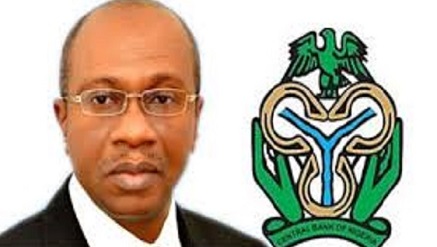
Mr Peter Moradeyo, Chief Executive Officer of Xchangerate.oi, has called on the Central Bank of Nigeria to come up with a profound policy framework for the adoption and trading in Crypto currency in Nigeria.
Moradeyo said this at the launching of its CBM 2.0 model of Crypto currency trade held in Lagos. The programme also features graduation ceremony of 16 people who participated in their 30 days online training programme and awards were given to supportive staffs and customers.
He said that the Crypto currency trade is a growing phenomenon in Nigeria that requires proper education and policy framework for its users so that they will not be scammed.
He noted that although the Central Bank of Nigeria had earlier announced that Nigerians should be weary of a crypto currency trade, said mere announcement cannot deter people who are spending their own money but the regulatory agency can help in providing proper education and direction.
Moradeyo, who is also The Principal Consultant, Crypto Plus Certified said “you cannot stop people from spending their money the way they want. We can only advise them on what and how to better use their money”.

He said: “CBN should tell us what it is and what is not. They need to advise us appropriately so that everyone will be guided to make the right decision. They need to properly let Nigerians understand the concept of Crypto currency trade and see how they can help the users have the correct information. So when the users appreciate it correctly, they are able to make their inform decision.
He noted that Crypto currency is a digital asset from blockchain technology designed to work as a medium of exchange using cryptography to secure transactions and to control the creation of additional units of the currency. Crypto currencies are a subset of alternative currencies or specifically digital currencies.
He opined that that Automated Teller Machines (ATM) for crypto currencies have been launched in Canada, U.K. Germany, South Korea, Brazil, India, with the sole aim of aiding banking technology,
He added that the continued red light by the Central Bank of Nigeria against it, while other countries are beating us to it is not the best. It is imperative that they let Nigerians know how they can take advantage of it.
Moradeyo, who restated the commitment of its company with the new CBM Model said that crypto currency market is growing massively and we want to get 2, 500 people on board so they can take advantage of the opportunities in the Crypto currencies market.
He said: “The government should live up to their responsibility and have their interest at heart and release a statement that is favourable to Nigerians them and educate them correctly, so they can benefit and be enlisted as participants in the normal trading of Cryptocurrency.”


KudiWave Technologies Limited has raised questions over the transfer of N750,369,439.04 from its account with PalmPay Limited, seeking clarification on the timing, destination and circumstances surrounding the transaction.

In a statement, on Tuesday, KudiWave said the disputed debit was recorded on July 15, 2026, under the narration “Judicial Adjustment”.
The company said it was not notified of, or did not authorise, the transaction.
According to KudiWave, it had already approached the Federal High Court in Lagos to challenge an earlier order affecting its account.Politics News Service
The company said its application, filed on July 3, sought to set aside the June 29 order and stay its execution.
“The motion was heard on July 13 and adjourned for ruling. Two days later, the N750.37 million was transferred out of the account,” the company said.
KudiWave further stated that PalmPay had been served with the application before the July 15 transaction and did not file a counter-affidavit opposing the application.
The company also raised questions about an earlier movement of funds on July 11, which it said became apparent after access to the account was restored.
According to KudiWave, its account records showed that the funds were moved on July 11 and returned the same day before another transfer was recorded on July 15.
“PalmPay moved the money on July 11 and sent it back that same day. They then took it out again on July 15. When the account was opened, we saw how the money had been moved around while the account was frozen and we were not aware of it,” the company said.
The dispute followed an ex parte order obtained by the Inspector General of Police through officers of the Police Special Fraud Unit in Ikoyi, which placed restrictions on accounts belonging to several parties, including KudiWave, pending investigation.
The restriction was subsequently implemented on KudiWave’s account with PalmPay.
Further proceedings were filed under Suit No. FHC/L/CS/795/2026 before Justice Ibrahim Ahmad Kala of the Federal High Court, Lagos Judicial Division, in relation to funds standing to KudiWave’s credit.
KudiWave said the court granted an application on June 29.
The company subsequently challenged the order, arguing that it had not been properly served with the processes leading to the decision and had not been effectively brought before the court when the application was heard.
According to KudiWave, Justice Kala considered the company’s subsequent application on July 22 and set aside, vacated and discharged the June 29 order.
The company said the court also directed that the restrictions placed on its account be removed.
KudiWave further stated that the court examined the circumstances surrounding the purported service of the processes and raised questions about whether leaving documents at a gate, without sufficient indication of the company’s specific address, amounted to effective service.
The company quoted the court as describing the circumstances surrounding the service as “very curious”.
KudiWave also said the ruling recognised the court’s inherent power to set aside its own decision where circumstances justify such intervention.
The July 22 ruling came after the July 15 transfer.
KudiWave, however, said the transaction should be considered in the context of the fact that the June 29 order was already being challenged and that its application had been argued before the court two days earlier.
The company has also questioned the destination of the funds.
According to KudiWave, its understanding of the June 29 order was that the identified funds were to be transferred to a designated Police Recovery Account associated with the Police Special Fraud Unit.
The company said its account records instead indicated that the N750,369,439.04 was transferred to an Access Bank business account.
KudiWave said it wants clarification on the identity of the beneficiary, the instruction that authorised the transfer and the basis for the July 11 movement of funds.
“The issue for us is simple. If the order identified a particular account for the funds, there must be a clear explanation of why our records show the money going elsewhere and who ultimately received it,” the company said.
KudiWave said it was seeking a reconciliation of transactions carried out on its account during the restriction period and was considering further legal and regulatory steps in relation to the disputed transactions.
The company also said that, during earlier efforts to resolve the restriction, Barrister Prince Oko, its Company Secretary, met with officers of the Police Special Fraud Unit.
KudiWave alleged that a request for N50 million was made in connection with efforts to remove the restriction and said the company rejected the request.
The allegation has not been independently established and has not been determined by a court.
KudiWave maintained that its concerns do not relate to compliance with lawful court orders but to whether the transactions involving its funds were carried out in accordance with the terms of the relevant judicial directive.
The company said it wants clarification on the July 11 transactions, the subsequent N750,369,439.04 transfer on July 15, the destination of the funds and the circumstances surrounding the transactions.


Credit demand for house purchases by Nigerian households rose to 9.6 index points in the second quarter of 2026 (Q2 2026), indicating increased borrowing for personal home acquisition.

The Central Bank of Nigeria (CBN) disclosed this in its Credit Conditions Survey Report for Q2 2026, which showed an overall increase in credit availability across secured, unsecured and corporate lending during the period.
The apex bank said lenders also recorded lower default rates across major lending categories.
According to the report, credit demand increased to 15.1 index points for secured lending and 15.2 index points for corporate lending, while demand for unsecured lending remained subdued at -1.2 index points.
Within the household segment, consumer loan demand increased to 11.2 index points, while credit for house purchases rose to 9.6 index points.
Mortgage and re-mortgage lending also increased to 13.3 index points, while demand for small business lending to households climbed to 26.4 index points.
For unsecured household credit, demand for overdrafts and personal loans rose to 7.9 index points, while credit card lending declined to -2.0 index points.
In the corporate sector, credit demand expanded across different business categories.
The report showed that demand rose to 26.5 index points among small businesses, 25.5 index points for medium-sized Private Non-Financial Corporations (PNFCs), and 8.9 index points for large PNFCs.
Credit demand from Other Financial Corporations (OFCs), however, remained unchanged at 0.0 index points.
The CBN further reported that commercial banks observed a broad-based decline in default rates across secured and unsecured loans.
Default rates also declined across corporate borrower categories, including small businesses, medium-sized and large PNFCs, as well as OFCs.
The latest figures indicate stronger household and business appetite for credit during the quarter, particularly for housing, consumer needs and small business activities, amid an overall improvement in lending conditions.

Federal Ministry of Finance has halted enforcement of about N680 million in disputed fees imposed by the National Insurance Commission (NAICOM) on NICON Insurance Limited and Nigeria Reinsurance Corporation (Nig Re) as part of the ongoing insurance industry recapitalisation exercise.

The Ministry also directed NAICOM to suspend its demand that the two companies transfer their entire recapitalisation funds into an escrow account with the Central Bank of Nigeria (CBN), pending determination of a petition challenging the legality of the charges and the directive.
The intervention followed a July 27, 2026 petition by NICON and Nig Re over what they described as unlawful fees and regulatory demands arising from the implementation of the Nigerian Insurance Industry Reform Act (NIIRA) 2025.
In a letter to the Commissioner for Insurance, Raymond Omachi, permanent secretary, Federal Ministry of Finance, on behalf of Taiwo Oyedele, minister of Finance and coordinating minister of the Economy, requested that NAICOM provide a detailed response and legal justification for the disputed requirements.
The Ministry specifically directed the Commission to suspend enforcement of the contested processing and verification fees, the one per cent Capital Injection Fee, and the directive requiring the companies to transfer their full recapitalisation funds to a CBN escrow account.
The dispute centres on NAICOM’s assessment of a one per cent fee on capital injected by operators, alongside additional processing and verification charges prescribed under Appendix 2 of the Commission’s Minimum Capital Requirement Guidelines.
According to the petition, the combined assessments amounted to N305 million for NICON and N375 million for Nig Re, bringing the disputed charges to N680 million.
The companies are also challenging what they described as an unconstitutional requirement to transfer more than the statutory proportion of their recapitalisation funds to the CBN.
They contend that Section 16(3) of NIIRA 2025 provides for a 10 per cent statutory deposit, and not the transfer of the entire capital injection into an escrow account.
The companies told the Ministry that they had already met the July 31, 2026 recapitalisation deadline.
NICON said it injected N420 billion, while Nig Re injected N30 billion into Mudaraba Term Deposit accounts with Lotus Bank Limited. The companies maintained that the amounts exceeded their adjusted recapitalisation requirements of N16 billion and N28 billion, respectively.
They further stated that they had deposited N42.5 billion and N43.5 billion respectively with the CBN, in compliance with the statutory deposit requirement under Section 16(3) of the new law.
The companies also disclosed that they had made initial payments of N480 million and N75 million, respectively, in fees.
The Finance Ministry’s directive effectively places the disputed charges and escrow requirement on hold while NAICOM is expected to justify the legal and regulatory basis for its actions.
The intervention could have wider implications for the insurance industry’s recapitalisation programme, particularly as operators face regulatory deadlines to strengthen their capital base under the new insurance law.
The controversy also raises questions about the extent to which regulatory guidelines can impose additional financial obligations on operators beyond those expressly provided for under the enabling legislation.
NAICOM is now expected to respond to the Ministry’s request and explain the statutory basis for the one per cent capital injection fee, the additional processing and verification charges, and the requirement for the full capital injection to be transferred into a CBN escrow account.

NUPRC Warns of Counterfeit, AI-Generated Appointment Letters

KudiWave Asks for Clarification over N750m Transfer from PalmPay Account

NCC Reports over 5,000 Fibre Cuts in 6 Months

PalmPay Reinforces Commitment to Youth Empowerment on International Youth Day

ipNX Joins Calls for Innovation-Friendly Ecosystem and Stronger Local Opportunities at Regenesys AI Summit

EFCC Busts NIS Visa Overstay Racket, Uncovers N700m in an Account

Fact-Check: Elon Musk’s “Tesla Pi Phone” is Internet Rumor

NBC Tasks Broadcasting Stations over 2028 DSO Global Deadline

NBC Scraps Annual Digital Access Fee on DSO

Glo Sponsored African Voices to Feature Netflix’s “The Polygamist” Stars




 E-Business2 days ago
X Replaces Revenue Sharing wit New Creator Rewards Programme

 Telecom2 days ago
MTN Alerts Subscribers over Fake 25GB Anniversary MTN Data Giveaway

 E-Financial2 days ago
Interswitch, Temenos Commit to Advancing Nigeria’s Digital Banking Technology

 E-Financial2 days ago
FG Spent N3.1 Trillion on Domestic Debt Servicing in Q1- DMO

 General News2 days ago
Fake Agency: ICPC Indicts NITDA, Others over Inadequate Due Diligence

 General News2 days ago
UNESCO Taps Oguamanam,Nigerian Scholar to Advisory Body on Science, Tech Ethics

 General News2 days ago
Tax Reform Built on Taxing Prosperity, Not Poverty– Adedeji

 Telecom1 day ago
MTN Nigeria Clocks 25, Connects over 90m People