

News
Concerns as FG Mulls Electricity Generation from Radiation

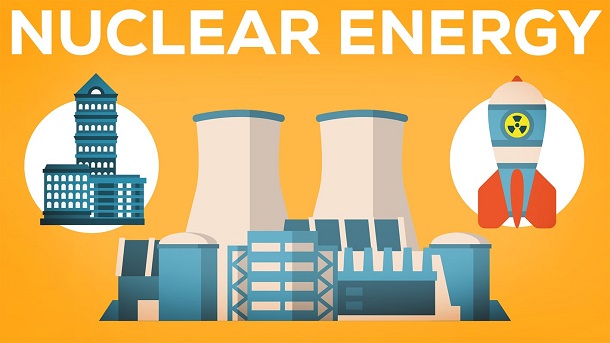
Nigerian Nuclear Regulatory Authority (NNRA) Tuesday revealed that it is considering the possibility of producing electricity from radiation.
Prof. Lawrence Dim, director general, who stated this during the second technical meeting on Personal Dosimetry for Dosimetry Service Providers and Radiation Safety Advisers in Abuja, said that many countries are already utilizing radioactive materials for heating purposes.
But some Nigerians have warned that electricity from radiation might have unintended consequences.

Edward Essien, CEO, Holla Services warned that radiation can increase cancer rates and that Nigeria was not advanced to handle nuclear technologies
However, Dim, represented by Prof. Timothy Akpa, general manager, Radiological Safety, stated that as safety measures and consciousness in the industry improves, the world, including Nigeria, will use vehicles that are fueled by radioactivity.
The NNRA boss said that: “We are now starting to see how we can begin to use radiation in producing electricity. In many countries many radioactive materials are being used for heating purposes.
“Like I often say in the meeting, it may likely be that in the future as safety consciousness grow all over the world we will soon begin to use vehicles running on fuel of radioactivity and Nigeria cannot afford to be behind.”
He disclosed that the meeting was convened to address issues bordering on efficient and effective radiation worker, public and environmental monitoring of the duties of the Personal Dosimetry Service Providers (DSPs) and Radiation Safety Advisers (RSAs).
According to him, the dearth in the amount of DSPs and RSAs to cover the entire country birthed the maiden edition of the National Technical Meeting in 2008 and has yielded positive results as there has been a significant increase in the number of both DSPs and RSAs accredited by the NNRA to operate in Nigeria.
Dim noted that the number of DSPs and RSAs accredited by the authority currently stands at five and 17 respectively.
He explained that “Dosimetry is the measurement of dose. What do we mean by dose: the energy the body takes when you radiate the body. You measure it and make sure that the amount of energy that enters the body is not so much as to cause biological damage to the body.”
Asked to explain the essence of the meeting, Dim said that: “It is a requirement by IAEA that every country should have a system of dosimetry which they will use as a benchmark to know how much radiation that the people are getting. And that the people are not over exposed in the course of either medical examination in the course or in the work in the industry ionizing radiation.”
Meanwhile, a safety consultant, Dr. Modupe Olusegun, said that the idea of having the meeting was to bring the operators to have a feedback to the regulatory authority.
She noted that the essence was that the operator would take advantage of the meeting to table their areas of success and challenges.
She said that most of the clients in the industry are always keen about consultants when they are applying for licenses and disappear after securing the license.
Olusegun urged the NNRA to compel the clients (operators of nuclear activities) to cooperate with the nuclear safety consultants.



Ogba Ogbaga, an Abuja-based lawyer, has said that he has been instructed to institute legal proceedings against MTN Nigeria, Airtel Nigeria, Globacom, 9mobile and MultiChoice Nigeria, operators of DStv, over what he described as unfair consumer practices relating to expiring data bundles and television subscriptions.

In a statement posted on Facebook, Ogbaga said his law firm, GIMBG Legals, received instructions from its client, KAA, also known as KaaTruths, to challenge the companies’ subscription policies in court.
According to him, the proposed suit will question whether telecom operators and DStv’s subscription models comply with provisions of the Federal Competition and Consumer Protection Act (FCCPA) 2018 and other applicable laws.
Ogbaga alleged that telecom providers operate internet data services that are unfair to consumers, claiming subscribers sometimes do not receive the services they paid for but still lose their subscriptions once the validity period expires.
He also criticised DStv’s subscription model, arguing that consumers lose paid viewing time due to factors such as power outages, adverse weather conditions and service interruptions, while subscriptions continue to count down regardless.
“Our clients have complained that MTN data services are unduly one-sided,” Ogbaga said, adding that the legal action would also extend to other telecommunications providers and DStv.
He said the court action would seek judicial determination on whether the companies’ subscription practices comply with consumer protection laws.
The lawyer also invited interested legal practitioners to collaborate on the case, saying his firm would provide updates as the matter progresses.
In a separate Facebook post on Wednesday, Ogbaga said previous policy discussions, town hall meetings and debates at the National Assembly had failed to address the concerns raised by consumers.
He argued that telecom operators regularly carry out maintenance and network upgrades that temporarily disrupt services without extending customers’ subscription periods, while DStv subscribers also lose viewing time because of electricity outages and weather-related disruptions.

The National Insurance Commission (NAICOM) has commenced the issuance of new licence certificates to insurance companies that successfully met the industry’s new minimum capital requirements, marking the formal beginning of a new regulatory era aimed at strengthening the financial capacity, governance and global competitiveness of Nigeria’s insurance sector.

At a ceremony held at the Commission’s headquarters in Abuja, the Commissioner for Insurance, Olusegun Ayo Omosehin, presented the new licence certificates to compliant operators, describing the exercise as a major milestone in the industry’s recapitalisation programme.
According to the Commission, a total of 43 insurance companies declared compliant with the new capital requirements are expected to receive the new licence certificates in phases.
Omosehin congratulated the successful companies, saying the issuance of the new licences signals the beginning of a stronger regulatory framework anchored on improved capitalisation, sound corporate governance, innovation and sustainable growth.
He urged operators to leverage their enhanced capital base to develop innovative insurance products, improve operational efficiency and deepen insurance penetration across the country.
The Commissioner said the Commission expects the recapitalised companies to deliver stronger financial performance while maintaining high standards of professionalism and customer service.
He also announced that NAICOM’s next major regulatory initiative would be the implementation of the Risk-Based Capital (RBC) framework, under which insurers’ capital levels would be aligned with the risks inherent in their respective business portfolios.
According to him, the new framework will further strengthen the industry’s resilience by ensuring that insurers maintain capital commensurate with the risks they underwrite, thereby enhancing policyholder protection and boosting market confidence.
Omosehin reaffirmed the Commission’s commitment to removing regulatory impediments where necessary while maintaining effective oversight to safeguard policyholders and strengthen confidence in the insurance market.
The issuance of the new licence certificates marks the commencement of a phased transition to higher capital standards aimed at improving the financial capacity, solvency and claims-paying ability of insurance companies operating in Nigeria.


Management of Nigeria CommunicationsWeek Media has withdrawn its publication titled “Adefolarin Ogunsanya and the Allegations of Shareholder Interference and Self-Dealing at Pan African Towers,” which was published on its platform.

The decision to retract the story follows an editorial review to ensure that the platform maintains the highest standards of accuracy, fairness and responsible journalism in reporting matters that are the subject of ongoing judicial proceedings.
Nigeria CommunicationsWeek acknowledges that the issues raised in the publication remain before the courts and have not been finally determined.
Accordingly, the organisation has decided to remove the article from its platforms pending the conclusion of the legal processes or the availability of additional verified information.
The publication regrets any inconvenience or misunderstanding the report may have caused to readers or any individuals or organisations mentioned in the story.
Nigeria CommunicationsWeek remains committed to the principles of balanced, factual and ethical journalism and will continue to uphold professional standards in its coverage of judicial and corporate governance matters.

ITUC-Africa Faults FG’s Plans to Remove Electricity Subsidy

SEC Begins Full e-Registration for Capital Market Services

NAICOM Revokes Nigeria Reinsurance’s Licence over Failure to Meet MCR

Many Nigerian Airlines May Collapse within 30 Days – Onyema

Ogbaga, Abuja Lawyer to Sue Telcos, DStv over Alleged Unfair Practices

NRC, Ponzi Scheme Collapses Resulting Loss of Billions of Naira

From Scarcity to Scale: What Africa Can Learn from India’s Agricultural Transformation

EFCC Busts NIS Visa Overstay Racket, Uncovers N700m in an Account

BON Establishes Six Ad Hoc Committees to Modernize Broadcasting

How EFCC Turned Recovered Loot Into School Supplies for Thousands of Nigerian Students




 E-Business2 days ago
Kaspersky Identifies Cyberespionage as a Growing Threat Across Africa, Others

 Broadcasting2 days ago
NBC Files Fresh Appeal against Judgment Barring it from Imposing Fines on Broadcast Stations

 News2 days ago
INTERPOL Report Shows AI Powers 55% of Cybercrimes in Africa Amid $484m Losses

 E-Financial2 days ago
Nigerians Lost N25.85Bn to Digital Payment Fraud in 2025 –CBN

 Telecom2 days ago
Why Strong Institutions Remain Africa’s True Growth Engine

 News2 days ago
Nigeria Expands Deep-tech Skills Pipeline

 General News2 days ago
ASUS and Konga Unveil West Africa’s First Flagship Experience Store in Lagos

 E-Financial2 days ago
NRS Announces 30 Percent Tax on Corporate Crypto Income