

E-Business
What Nigerians Should Look Out for on Digital Rights, Policy Landscape in 2018

By Adeboye Adegoke
The year 2018 was heralded by the unfortunate news of the arrest of a UK-based, Nigeria blogger by men of the Special Anti-Robbery Squad popularly referred to as SARS at the early hours of Monday, January 1, 2018, at his residence in Anambra state.
While Internet users and enthusiasts especially those who are actively engaged on different platforms on the Internet were looking forward to new applications, innovations and other forms of exciting developments as the year approached, the first Internet-related news in Nigeria had to be the arrest of the blogger Daniel Elombah in a gestapo-style operation which is suitable, only for armed and hardened criminals.
This is not in any way a departure from what was witnessed throughout last year but more than anything, this is a signal that we must brace up for policies that seeks to control how people use Internet platforms in 2018 and these will be for different reasons; ranging from the sheer desire by politicians to control the narratives, launder their image as the election approaches as well as legitimate concerns around security usually demonstrated by policies aimed at curbing fake news and hate speeches.
It is definitely an interesting year ahead and more than before, the Nigerian citizens would be called upon as the guardian of the space as the government would be an increasing vested interest in Internet Policy discourse.
Forecasting 2018 suggest to me that many Nigerians will be forced to get involved in the policy process as we did when the infamous “Anti-Social Media Bill” was introduced in the Nigerian Senate in 2015 and the reason is not far-fetched; I will delve into it immediately;
The 2019 General Elections: 2018 is the pre-election year. Engagement on social media platforms is about to increase geometrically. In an African focused study titled ‘How Africa Tweets’ conducted in 2015, Nigeria was the second largest country in Africa with geolocated tweets (360) million.
Also, According to Data by Internet Stats, Nigeria has 16,000,000 active Facebook users as at June 2017. These stats are to underscore how much we have embraced the use of Social media platforms in Nigeria especially for political debates, discourse, commerce and Social Interactions. While the platform providers will be smiling to the bank, the conversations will get heated, politicians will try to shape the narratives, political parties will attempt at selling their agenda.
There will be hate, fake news and policies will be contemplated to curb fake news, hate and insightful comments and this, the government will leverage to its political advantage by targeting dissent and opposing voices.
One important focus area for Digital Rights organisations in 2018 is to work with other civil society organisations and concerned citizens to fight the monster of fake news as the election approaches.
It is also important to pay attention to what the various platforms are doing to address the problems because the policies adopted by these platforms have implications for Digital Rights as well. Facebook, for example, is deleting accounts at the request of the U.S. & Israeli governments on the bogus grounds of “incitement”.
In 2018, the government will collaborate more with ISP’s, Telecoms Companies to censor, limit content etc. It will use security agencies to clamp down on bloggers and people who express dissenting views but these will be justified by the need to fight fake news, hate speech and insightful comments. There is no better indicator to this assertion than the Hate Speech (Prohibition) Bill, 2017 (HB. 1211) sponsored by a member of the ruling All Progressive Party (APC): One of the lows of lawmaking in Nigeria is that the public doesn’t have access to the content of Bills being considered except you have access to insiders, but the name of this Bill gave it away as a likely dangerous Bill which will be used to gag free speech as the 2019 elections approaches.
Apart from elections, other factors that will shape the Digital Rights and Policy discourse in 2018 are considered below;
NCC Internet Code of Practice: The Nigeria Communications Commissions (NCC) has not done badly with respect to making its draft regulation available for the public and it regularly calls for stakeholder’s input.
Where it has erred however is how it sometimes jettison inputs without feedback to those who made the inputs as to why those inputs were not captioned. One wonders if the calls for Stakeholder’s inputs were genuine or it’s just about “fulfilling all righteousness”. The NCC must consider this as an important feedback.
The Draft Internet Code of practice, however, appears to be a great initiative and one that promotes the open and free internet. The stated objectives of the code are to: a) Protect the right of Internet users to an Open Internet; b) Provide clear guidelines to Internet Access Service Providers on the use of traffic management practices; c) Outline the obligations of Internet Access Service Providers in relation to the protection of consumers’ personal data; d) Outline the obligations of Internet Access Service Providers in the handling of offensive and potentially harmful content, and the protection of minors online; e) Ensure adequate safeguards are put in place by Internet Access Service Providers against unsolicited internet communications; f) Establish best practices for Internet Governance in Nigeria, in line with emerging issues and global trends.
The application of the first part of objective “D” is definitely one to look out for as it is prone to manipulations by the powers that be. Whether this will happen or not is a function of how independent the NCC is. Unfortunately the NCC is rarely independent of the government of the day, neither is there proofs that it queries memo from the office of the National Security Adviser but let’s wait and see how these code will fare when and if it becomes operational.
FCC decision to Repeal Net Neutrality: Federal Communication Commission FCC is the United States of America equivalent of the NCC.
In a 3-2 close call, it voted to repeal net neutrality in the United States in December 2017. Someone might wonder how that’s relevant to Nigeria. It is relevant because a lot of countries including Nigeria look up to the United States for policy direction.
It must be noted that the NCC has been under pressure before now by telecoms and ISP’s to allow them to apply extra charges for OTT services, this, the NCC resisted over the years. With the development in the US, business interest will have a “legitimate” example in their quest to subdue Net Neutrality principles and milk internet users by discriminating against Internet traffic/applications according to how much internet users are able to pay for desired services. The Youtube, Instagram, Snapchat and online streaming services’ lovers would be largely affected if this happens.
The Positives for Internet Users
Two Important draft legislation is on the verge of becoming Law in Nigeria, The Digital Rights and Freedom Bill (HB 430) which among other reasons situate human rights in the midst of technological innovations to help balance out the need for innovation on one hand, the need for rule of law on the other as emerging National security concerns are addressed. Also, Data Protection Bill (HB 02) address the need for Data protection law in Nigeria.
It is hoped that these two legislations which have been passed by the House of Representatives become law by getting the required Senate concurrence and Presidential Assent in 2018.
These two draft legislation have the potential to militate against any form of abuse and violations, feared, as we prepare for elections.
Adeboye @adeboyeBGO is a Digital Rights Advocate with Paradigm Initiative.


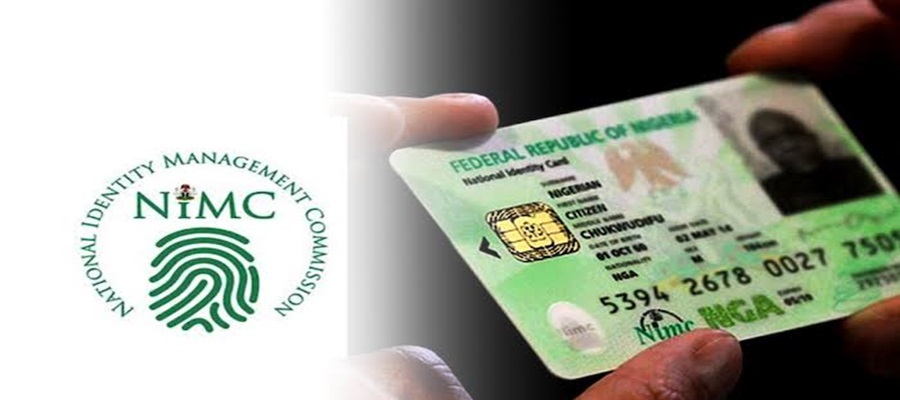
National Identity Management Commission (NIMC) has said thet more than 136 million Nigerians and legal residents have been enrolled in the National Identity Database (NIDB).

In a statement on Tuesday, Kayode Adegoke, head of corporate communications, NIMC, said Abisoye Coker-Odusote, chief executive officer (CEO) of the commission, announced the milestone during a courtesy visit to the ministry of budget and economic planning.
In April 2025, NIMC said over 117.36 million Nigerians had been enrolled as of February 28, 2025.
The visit was part of the commission’s ongoing stakeholder engagements with ministries, departments and agencies (MDAs) on the implementation of the NIMC Act 2026.
Presenting the new Act, Coker-Odusote said the legislation repeals and replaces the 2007 NIMC Act, modernising Nigeria’s digital identity ecosystem by positioning the national identification number (NIN) as the country’s foundational identity under the “one person, one identity” policy.
She said the law also establishes NIMC as the root certificate authority for the national digital infrastructure and introduces stronger data protection and cybersecurity measures, as well as digital credentials.
“The Federal Government remains committed to enrolling and issuing NINs to all Nigerians and legal residents within the shortest possible time,” Coker-Odusote said.
She added that NIMC is ready to collaborate with the ministry of budget and economic planning to leverage the NIN for economic planning and national development initiatives.
Speaking during the visit, Abubakar Atiku Bagudu, the minister of budget and economic planning, reaffirmed the federal government’s commitment to the implementation of the NIMC Act 2026.
Bagudu described the legislation as “a transformative milestone” that would strengthen Nigeria’s digital identity ecosystem and accelerate national planning and development.
He commended the NIMC director-general and the commission’s leadership for their efforts in securing the passage of the legislation, noting that it provides “a solid legal foundation for a trusted, secure, and inclusive national identity management system”.
The minister, however, said the true measure of the Act’s success would lie in its implementation and the benefits it delivers to Nigerians.
“The true measure of the Act’s success will lie in its effective implementation and the tangible benefits delivered to citizens,” he said.
Bagudu also called for stronger collaboration across the federal, state and local governments to build public confidence in the national identity system and eliminate the duplication of identity databases across government institutions.
He said the NIN should serve as Nigeria’s single, universally accepted identity standard, supporting efficient service delivery and good governance.
On June 26, President Bola Tinubu signed the NIMC Act 2026 into law, repealing the commission’s 2007 establishing Act.
At the time, Olubunmi Tunji-Ojo, minister of interior, said the legislation would strengthen Nigeria’s legal framework for digital identity management, cybersecurity and secure digital authentication, while reinforcing the NIN as the country’s foundational identity credential under the “one person, one identity” principle.
Plateau State Public Complaints Commission (PCC), an agency of the state established to investigate complaints of abuse of office, administrative injustice and other forms of official misconduct is allegedly collecting personal information from members of the public through its website with no privacy policy.

According to investigation by Foundation for Investigative Journalism (FIJ), PCC is falling short of a key transparency requirement under Nigeria’s data protection laws.
FIJ found on Tuesday that PCC collects personal information from members of the public through its website despite providing no privacy policy explaining how that information is collected, processed, stored or protected.
The commission serves as the state’s ombudsman, receiving complaints free of charge against public institutions and private organisations on issues including wrongful dismissal, victimisation and administrative negligence.
Yet, while its online complaint portal requests personal information such as names, phone numbers, email addresses, subject lines and complaint details, visitors are given no privacy notice explaining what becomes of that information after it is submitted.
The omission means visitors are not told why their information is being collected, how long it will be retained, the legal basis for processing it or the rights available to them as data subjects.
WHAT IS THE POSITION OF THE LAW?
The guidelines issued by the National Information Technology Development Agency (NITDA) are explicit: every government website is required to have a privacy policy.
Section 10.4 (i, ii) of the NITDA guidelines mandates all government websites to exercise diligence when collecting personal details or information about visitors on their websites.
The requirement is intended to ensure transparency and accountability in the handling of personal information, allowing visitors to understand why their data is collected, how it will be used and the safeguards in place to protect it.
Similarly, the Nigeria Data Protection Act (NDPA) 2023 requires data controllers to provide privacy notices to individuals before, or at the point of, collecting their personal information.
Such notices are expected to disclose, among other things, the purpose for collecting the data, the legal basis for processing it, the period for which it will be retained and the rights available to data subjects.
Section 27 of the NDPA states:
(1) Before a data controller collects personal data directly from a data subject, the data controller shall inform the data subject of the – (a) identity, residence or place of business of, and means of communication with the data controller and its representatives, where necessary;
(b) specific lawful basis of processing under section 25(1) or 30(1) of this Act, and the purposes of the processing for which the personal data are intended;
(c) recipients or categories of recipients of the personal data, if any;
(d) existence of the rights of the data subject under Part VI;
(e) retention period for the personal data;
(f) right to lodge a complaint with the Commission in accordance with section 46 (1) of this Act; and
(g) existence of automated decision-making, including profiling, the significance and envisaged consequences of such processing for the data subject, and the right to object to and challenge such processing.
Without a privacy policy, visitors have no way of knowing the commission’s data-handling practices or the safeguards, if any, in place to protect the personal information they submit through the website.
At press time, the Plateau State Public Complaints Commission’s website had no privacy policy.
Federal government has directed key digital regulators to suspend the implementation of new rules affecting internet platforms and online intermediaries while it develops a unified national regulatory framework.

Dr Bosun Tijani, minister of Communications, Innovation and Digital Economy
The directive was issued on Tuesday by Dr Bosun Tijani, minister of Communications, Innovation and Digital Economy, after chairing a strategic meeting with the leadership of the Nigerian Communications Commission (NCC), the National Information Technology Development Agency (NITDA), and the Nigeria Data Protection Commission (NDPC).
The minister in a statement, said that the rapid growth of the digital economy has created areas where the responsibilities of the three regulators increasingly overlap, particularly in artificial intelligence, online safety, and data protection.
He said that a coordinated approach is needed to provide regulatory clarity, protect investor confidence, and support innovation.
Dr Tijani noted that as part of the directive, the agencies will temporarily halt the implementation of recently introduced guidelines in these overlapping areas.
However, the Minister said that they will continue to carry out their statutory responsibilities within their respective legal mandates.
Dr Tijani said that a Joint Technical Coordination Committee will now be established to work with industry players, academics, and civil society on a single, coherent regulatory framework.
The minister added that the move is designed to improve coordination across government, create a more predictable business environment, and strengthen Nigeria’s position as a leading destination for digital investment in Africa.

Court Declares ARCON’s N60Bn Fine against Facebook Nigeria Illegal

NIN Enrollment Hits over 136m as New ID Law Takes Effect

NRC, Ponzi Scheme Collapses Resulting Loss of Billions of Naira

Plateau PCC Collects Nigerians’ Data without Privacy Policy – FIJ

FG Suspends New Internet Regulations to Prevent Overlapping Rules

NASENI Moves to Digitize CCB’s 5m Assets Declaration and Operations

Mobile Internet Gender Gap Widest in Africa – GSMA

Nigeria Launches FreeTV Nationwide

CANAL+ Partners Samsung to Pre-Load DStv Stream on New Samsung TVs In Nigeria, Other African Countries

CredibleVoteNG Opens Free Access to all Polling Units in Nigeria after INEC Demanded N1.Bn for Register




 E-Financial3 days ago
Tokenization, Blockchain Technology will Transform Financial Institutions – IMF

 General News3 days ago
NIS Deploys Advanced Surveillance Masts, other Critical Infrastructure to Boost Border Security

 General News2 days ago
IHS Nigeria, FCT-HSES Concludes Clean Cooking Energy Campaign “Project Breathe Clean Air” in Abuja

 Broadcasting3 days ago
Obi, NDC Presidential Candidate Faces N50Bn Defamation Claim over Alleged Podcast Remark

 E-Business3 days ago
Weebly Websites to Shut Down for Nigeria, 66 Other Countries from September

 E-Financial3 days ago
FG Denies N8 Trillion ‘Shadow Budget’, Says IMF Quoted out of Context

 Telecom3 days ago
No Plans for Fresh Tariff Hike – MTN

 News3 days ago
World Bank Sounds Alarm: Low Revenue, Not Debt, Is Nigeria’s Biggest Fiscal Threat