

Telecom
Starcomms Seeks Shareholders Nod for Capcom’s Lifeline

Starcomms Plc is seeking its shareholders’ approval to allow the injection of the much needed capital; technology; and expertise from Capcom Limited to rejig the troubled operator.
The shareholders nod at the company’s 2011 annual general meeting and court-ordered meeting scheduled for December 28, would pave way for the creation of the biggest CDM operator in the country which promises better returns on investment for all the stakeholders.
Starcomms said yesterday it is posting shareholders documentation relating to Capcom Limited proposed investment into the Company.
Capcom is the special purpose vehicle solely created to make an equity investment into Starcomms and was established in 2012 with money raised from investment and hedge funds, family offices and industry partners with years of commercial experience in emerging markets, especially Africa.
Starcomms has recently faced severe operational and financial challenges on account of the shifting competitive landscape in Nigeria’s telecommunications industry.
The challenges have resulted in the company operating with an unsustainably high level of debt and a stagnating operating performance.
As a consequence, Starcomms faces severe liquidity crisis and the board of directors has therefore considered options available to introduce new capital into the Company.
Without this new capital the company will fail as a going concern and shareholder value will be lost.
Olusola Oladokun, interim CEO of Starcomms Plc said, “Starcomms has experienced significant challenges over the past two years, at the heart of which have been the changing competitive and operational dynamics of the Nigerian telecommunications industry, especially in the voice business.
“As a result, the Board of Directors has been considering a number of options to re-position the Company for growth. After careful consideration, we believe that the investment by Capcom, which will provide the capital required for continued operations as well as enabling investment in new technology, combined with the injection of new spectrum and the CDMA assets of Multi-links, creates the best possible platform for Starcomm’s future. We strongly recommend – and look forward to – the transaction being approved by our Shareholders.” He added.
The new Starcomms will provide a strong and stable platform for the future, with the newly invested capital allowing the Company to service current debt obligations and so remain a going concern whilst enabling it to invest for future growth.
Capcom will inject US$98 million of cash and US$112million of independently valued assets into the Company with the proposed rights issue subsequently raising further cash for use as working capital.
Ademola Eleso, Capcom’s CEO designate for Starcomms post transaction completion, said: “the opportunities for data providers in Nigeria have only started to be tapped. By combining additional spectrum from Multi-Links and MTS with the existing network and subscriber base of Starcomms we believe we can quickly create Nigeria’s leading provider of mobile broadband through an industry-leading “4G”-LTE network. This can only be good news for Starcomms’ loyal customers, partners, staff and Shareholders and I and our whole team look forward to the challenge of building Nigeria’s new Broadband internet champion.”
The new Starcomms will also provide access following completion of the transaction, to a contiguous 20MHz of spectrum in the 1900MHz range, the largest such allocation of any telecoms provider in Nigeria following the injection into the Company by Capcom of the spectrum allocations of Multi-Links and MTS.
This aggregation of spectrum will enable Starcomms to deliver a complete range of mobile broadband services using new generation IP-enabled, highs peed broadband 4G/LTE technology.
According to the Capcom, the new business will be a focused and strong business model based on the Company’s core offering, data services, the highest margin per user segment in the industry.
It is promised a market driven, fair and transparent recapitalisation solution for the Company that offers opportunities for Shareholders as the company develops as well as afresh and experienced management team and a new Board of Directors with extensive experience in telecoms globally and with a proven culture of adherence to corporate governance best practice and a track record of risk management excellence.
The Transaction will be effected through a scheme of arrangement to be followed by a Private Placement and a Rights Issue.
The Scheme will involve the cancellation of N3,448,646,872 in the Company’s share capital, comprising 6,897,293,744 ordinary shares of 50 kobo each, and the subsequent issuing of 662,550,000new, fully paid up ordinary shares to Capcom, constituting 90.5% of the post scheme-reorganised, issued share capital.
As part of the Transaction, Capcom will inject a combination of assets and cash into Starcomms worth $210 million.
Part from the shareholders, the transaction is also subject to obtaining various regulatory approvals including those of the Federal High Court, the Securities and Exchange Commission and the Nigerian Communications Commission which has already confirmed its “approval-in-principle”.
On the basis that the scheme and special resolutions are duly voted on and approved by Shareholders it is intended that following the necessary regulatory approvals Capcom will take control of Starcomms, install new management and nominate a new board of directors.
The company will be embarking on an investor roadshow to present the transaction to Shareholders, the dates and venues for which will be communicated to them directly. For those Shareholders unable to attend in person the Presentation will also be available to download on the investor relations section of the Starcomms website at:ir.starcomms.com


Federal Competition and Consumer Protection Commission (FCCPC) has dismissed claims of a ban on airtime and data borrowing services across Nigeria’s telecom sector.

FCCPC
The clarification comes amid the suspension of MTN Nigeria’s “Xtratime” service, which the operator linked to the Digital, Electronic, Online or Non-Traditional (DEON) consumer lending regulations introduced in July 2025.
FCCPC Executive Vice Chairman, Dr. Okechukwu D. Amaechi, stated that disruptions stem from operators’ failure to meet the January 5, 2026 compliance deadline, not any prohibitive directive.
The DEON framework mandates registration, transparent fee disclosures, ethical recovery practices, data safeguards, and robust complaint mechanisms to curb consumer harm from hidden charges and aggressive tactics.
“No ban exists on airtime borrowing or data advances; lawful value-added services remain accessible post-compliance,” FCCPC affirmed in its statement.
Authorities intervened following widespread complaints over unexplained deductions and poor transparency, aiming to restore market confidence.
MTN’s pause reflects individual business choices by non-compliant providers, with the commission urging regularization for service resumption.
The regulations promote accountability for third-party partners and regulatory oversight, fostering a fairer digital lending ecosystem without halting core telecom offerings.
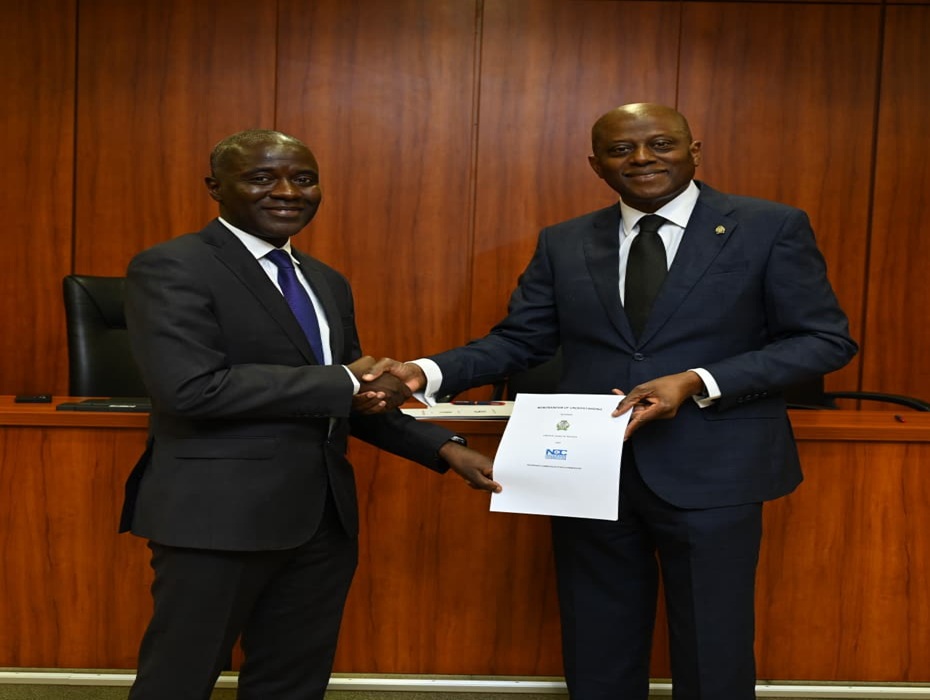
Nigerian Communications Commission (NCC) and the Central Bank of Nigeria (CBN) have signed a Memorandum of Understanding (MoU) that both organisations said would safeguard consumers against fraud while opening opportunities for them to leverage the potentials of the telecommunications and financial sectors.

Dr Aminu Maida, Executive Vice Chairman/CEO, Nigerian Communications Commission, NCC; and Mr. Olayemi Cardoso, Governor, Central Bank of Nigeria, during the signing Memorandum of Understanding between NCC and CBN, 20th of April 2026, at the CBN”s Headquarters Abuja.
The MoU was signed as NCC and CBN inaugurated a Joint Committee on Payment Systems and Consumer Protection and a Joint Committee on Telecoms Identity Risk Management System (TIRMS) Portal.
The Executive Vice Chairman and Chief Executive Officer of NCC, Dr Aminu Maida said the MoU provides a structured framework for cooperation in critical areas including payment system integrity, fraud mitigation, digital inclusion, and the protection of consumers, micro, small and medium-sized enterprises, which he noted will translate into practical outcomes that strengthen trust, deepen inclusion, and support a secure and resilient digital economy.
Dr Maida described the signing of the MoU as an important milestone in “the regulatory stewardship” of Nigeria’s digital economy, which reflects a shared commitment to collaboration in strengthening financial system stability, advancing digital inclusion, and protecting consumers in an increasingly interconnected ecosystem.
He said “The Commission places significant importance on collaboration. Indeed, many of the critical milestones we have achieved in addressing some of our industry’s challenges—and even in leapfrogging our sector—have been made possible through strategic partnerships and sustained collaboration. Our collaboration with the Central Bank is not new.
“Over the years, our two institutions have demonstrated the value of close regulatory coordination. A notable and recent example is our collective effort in resolving the long-standing USSD debt impasse—an intervention that restored confidence, preserved service continuity, and safeguarded the interests of consumers, telecom operators, and financial institutions alike. That experience reaffirmed a simple truth: that complex, cross-sector challenges are best addressed through structured collaboration.
“This MoU provides a clear framework for cooperation in critical areas such as payment system integrity, consumer protection, fraud mitigation, and the responsible use of digital infrastructure.
“In particular, it supports initiatives that promote secure digital payments, enhance trust in mobile-enabled financial services, and extend safe access to underserved populations and MSMEs.
‘For the NCC, this MoU speaks directly to one of the critical pillars of our strategic focus: leveraging cross-sectoral innovation to deliver a safe, resilient, inclusive and trusted digital ecosystem.
“As mobile numbers increasingly underpin identity, authentication, and financial access, collaboration with the CBN is essential to ensuring that innovation is matched with strong governance, system stability, and consumer safeguards,” Dr. Maida declared.
The EVC explained that the collaboration is designed “For the prevention of electronic fraud, which has become increasingly pervasive, with significant implications for the integrity of our digital economy. Through the Telecom Identity Risk Management System (TIRMS) Portal—which aggregates data on churned (recycled) phone numbers, as well as numbers flagged within your sector—the Financial Services Industry will now have enhanced visibility into the status of phone numbers, one of the most widely utilized resources in your sector, although regulated by the NCC.
“This means that the Financial Institutions will be able to determine when a line is active, when it has been swapped, when it has been disconnected due to inactivity and reassigned to a new subscriber, and when it has been flagged for suspicious or fraudulent activity.
“This ensures that our financial services industry is better equipped with timely and relevant information to effectively combat e-fraud, particularly those perpetuated using phone numbers, in the country.
“The second area I want to highlight is an overarching one that both our institutions have consistently championed: it is the protection of Nigerian consumers. With this handshake, consumers who experience issues such as airtime recharges that do not deliver value can be assured of prompt resolution within the shortest possible time.
“The establishment of a platform for sustained engagement, coordinated policy responses, and joint action as new risks and opportunities emerge across the digital and financial landscape by this MoU, positions our two institutions to remain proactive, aligned, and effective in fulfilling our respective mandates,” the EVC stated.
CBN Governor, Mr Olayemi Cardoso described the MoU as one that will strengthen coordination on approvals, technical standards, and innovation trials, including sandbox testing that supports market-led solutions while safeguarding stability.
He said, “Going forward, the Central Bank of Nigeria remains fully committed to working with the Nigerian Communications Commission to deliver a safer, more resilient, and more inclusive digital financial system—one that supports national productivity, protects consumers, and strengthens trust in Nigeria’s digital economy.”
Mr Cardoso subsequently inaugurated the Joint Committee on Payment Systems and Consumer Protection and the Joint Committee on Telecoms Identity Risk Management System (TIRMS) Portal, which he said would put the protection of consumers of both sectors from fraud at the forefront.
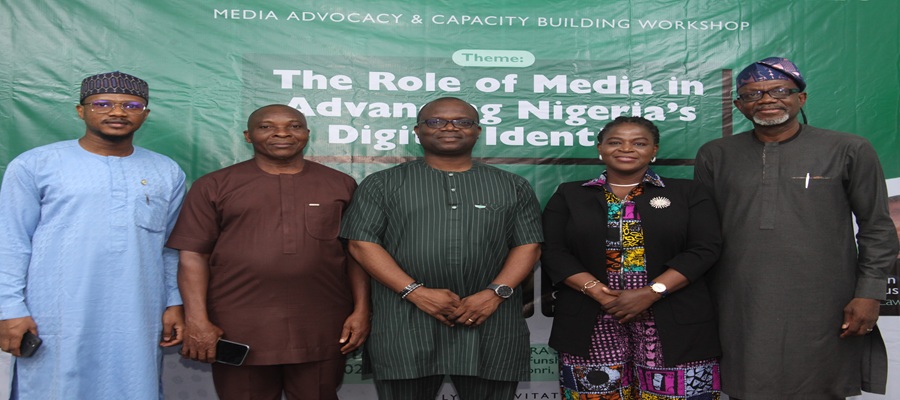
Nigeria Internet Registration Association (NiRA) has outlined five strategic pathways to accelerate the adoption of the .ng domain and position it as a critical driver of Nigeria’s digital economy.

NiRA
Oluwaseyi Onasanya, Chief Operating Officer of NiRA, presented the framework at a Media Advocacy and Capacity Building Workshop held on April 16.
Onasanya described the .ng domain as a key component of Nigeria’s digital sovereignty, noting that the country has about 65 per cent internet penetration and over 35.6 million Micro, Small and Medium Enterprises (MSMEs) contributing nearly 48 per cent to the Gross Domestic Product (GDP).
She said the first pathway involves mandating the use of .ng domains across all Ministries, Departments and Agencies (MDAs), as well as subnational entities, government vendors and tax remitters.
According to her, this would ensure that all official digital communications with government institutions are conducted through .ng platforms, while also linking domain usage to Corporate Affairs Commission (CAC) registration and procurement processes.
The second strategy focuses on a nationwide awareness campaign tagged “Own Your .ng, Own Your Future,” aimed at promoting the domain as a symbol of national identity, trust and economic value.
Onasanya said the third pathway calls for leadership from the private sector, urging banks, telecommunications companies, startups and SMEs to adopt .ng domains and integrate them into onboarding processes.
She added that the fourth strategy seeks to position .ng as a secure and regulated alternative to foreign domains, enhancing consumer confidence, improving local search visibility and strengthening jurisdictional control.
The fifth pathway centres on expanding the digital ecosystem by strengthening registrar networks, simplifying user experience and integrating .ng domains into internet service providers, digital platforms and national performance metrics.
Onasanya warned that Nigeria’s domain adoption rate remains low compared to global peers, noting that the country has approximately one domain per 855 citizens, far behind countries like Germany, the United Kingdom and China.
She cautioned that low adoption could lead to capital flight, as businesses continue to rely on foreign domain platforms in an increasingly digital global economy.
She also called on the media to drive awareness, shape public perception and promote adoption by highlighting the economic value of .ng domains across sectors.
“Without media, .ng stays technical. With media, it becomes economic,” he said.
NiRA said that over 240,000 .ng domains have been registered so far, with projections indicating continued growth as Nigeria targets a $1 trillion economy by 2030.

Nnaji, Former Minister Seeks Out-of-court Settlement over Certificate Forgery Allegations

Nigeria @ Risks Losing Digital Control- NiRA

CIBN Allegedly Hit by 250GB Data Breach

NUJ Accuses NBC of Attempting to Gag Media, Demands Dialogue

BOI, RMRDC Seal MoU to Address Agric Value Chain Challenges, Boost Nigeria’s GDP

NBC Boss Urges Content Ceators to Participate in DSO

NITDA Takes Over National Digital Architecture System

DLM SPV PLC Lists ₦9.00bn AAA-Rated Medium-Term Notes on FMDQ Exchange, Sets Benchmark in Corporate Bond Market

FG Shifting Focus to “Meaningful Connectivity” to Drive Inclusion – Minister

Jury Finds Meta, Google Liable for Woman’s Social Media Addiction




 E-Business1 day ago
Lagos Unveils Cybersecurity Guidelines to Tackle Rising Digital Threats

 Telecom1 day ago
NBC Warns Broadcasters Against Bullying Guests, Passing Opinions as Facts

 E-Financial1 day ago
CitiTrust Heads to Appeal Court over Alleged Ponzi Scheme

 Telecom1 day ago
Tech Shake-Up: Snap Cuts Hundreds as AI Drives Efficiency Push

 Telecom1 day ago
WATRA Secretary sees Resilience as a Critical Link in West Africa’s Digital Economy

 News1 day ago
FG Borrows N100Bn from Unclaimed Dividends, Dormant Bank Accounts

 Telecom1 day ago
Why Nigeria Must Embrace .ng Now – NiRA Reveals Five Critical Steps

 News1 day ago
FG Carpets W/Bank, Denies Alleged Diversion of Federation Revenue