

General News
Harrysong Thrills Fans At Legend’s Real Deal Experience Concert In Enugu

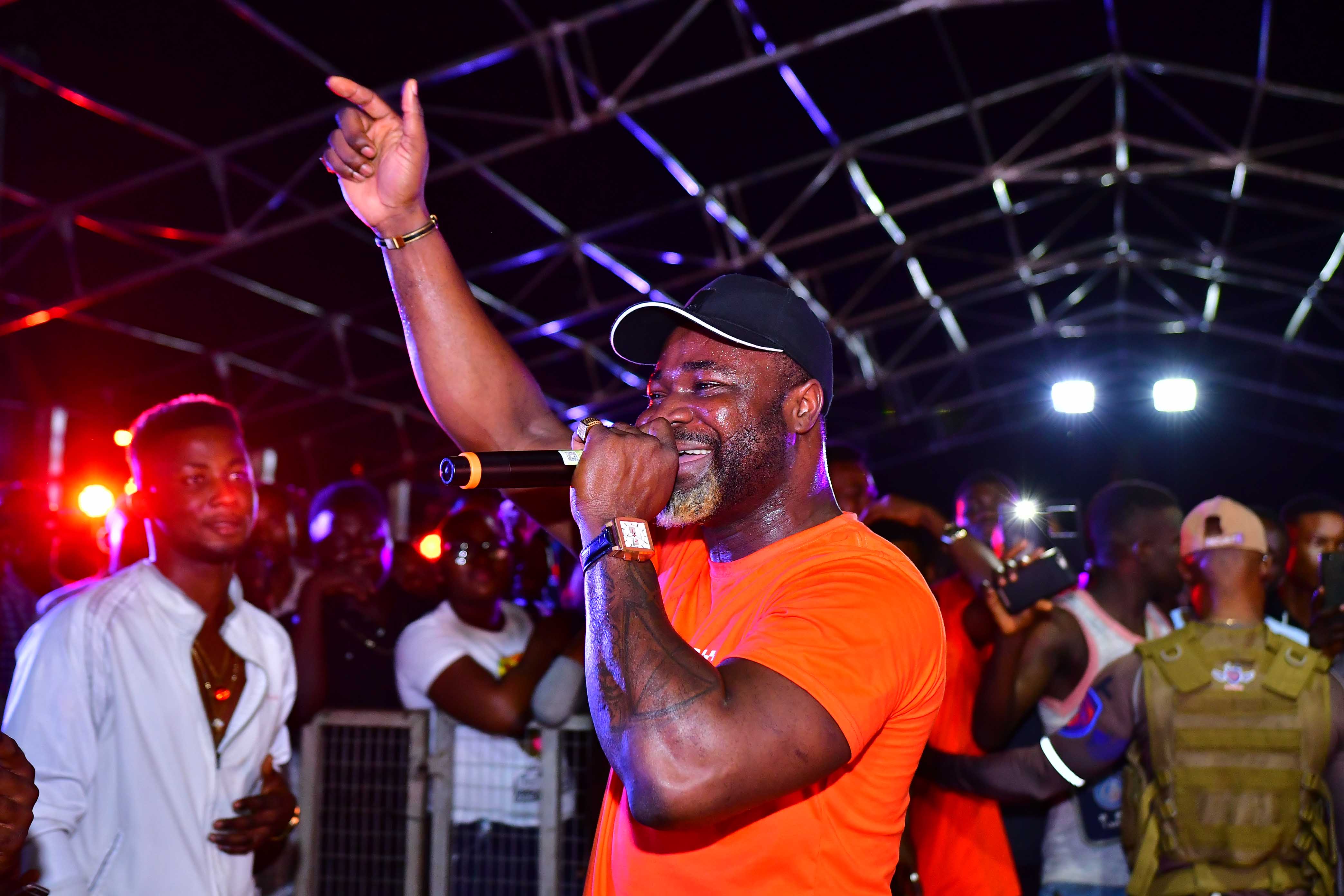
Enugu came alive on Sunday 11 February 2018 as Legend’s signatory music tour, the Real Deal Experience hit the beautiful coal city of Enugu.
Popular Afro pop and highlife singer, Harrysong was on hand to thrill the fun-loving partygoers as he delivered an electrifying performance that lit up the evening.
The Delta state born entertainer was at his superb best, switching up the tempo as he delivered many of his hit songs from “Arabanko” to “Samankwe” which kept the fans grooving all along.
The audience also not wanting to be outdone by the music star, took him on in an unending sing-along with some members of the audience even coming on stage to dance with the self-acclaimed Mr Songz.
Njideka, a resident of Enugu who attended the Real Deal Experience concert at the Polo Park, Enugu, said, “I would have been so pained if I had missed this concert. Like I’m so glad my boyfriend insisted we come.
“I really enjoyed Harrysong’s performance. It felt like he was singing to me. In all it was a great show and I can’t wait for the Real Deal Experience to be back in Enugu again. Thank you Legend.”
Harrysong, reacting the audience response said, “It’s one thing to sing and entertain your audience, but when they take you on in a sing-along, picking up the song from the first line and singing it all to the end, you feel proud.
“Trust me; it’s a unique connection and such a humbling experience. I will never take this love for granted.
“Thank you to my fans, the beautiful people of Enugu and Legend Extra Stout for making this possible. I can’t wait to be back here for another Real Deal Experience.”
The Real Deal Experience features Nigeria’s biggest music stars performing in various cities around the country.
The concert conceived and solely sponsored by premium stout brand, Legend, brings music artistes closer to their grassroots fans.
The practice is to bring the headline act to perform in the city wherein they have a massive base of loyal followers thereby creating an avenue for the fans in the local community to connect with their favourite celebs in ways almost impossible if the show had been held in Lagos or Abuja or any other major city as is usually the case.
There was also a live simulation event wherein members of the audience got to experience the unique elements of Legend Extra stout, while many loyal consumers of the brand also won exciting gifts like flat screen TVs, generators and refrigerators, among other household items on the night.
Valentine’s also came early as Legend Extra Stout celebrated the season of love with a special valentine’s cake at the concert. Also, 500 cupcakes were given out to couples that attended.
Emmanuel Agu, Portfolio Manager – Mainstream, Lager and Stout brands of the Nigerian Breweries, said, “As a consumer-focused brand, we go the extra mile to ensure our consumers are happy.
“That’s why we are always keen on creating multiple opportunities to ensure we delight them.”
“The Real Deal Experience is unique because it allows us as a brand to get closer to our local market and better understand the needs of our market while at the same time rewarding our loyal customers.” He added.
The Real Deal Experience is Nigeria’s biggest brand music tour and has held in cities including Lagos, Ibadan, Onitsha, Umuahia, Abuja, Port Harcourt, Abakaliki, and Owerri, has featured some of Nigeria’s biggest entertainers including MI, Timaya, 9ice, Kcee, Oritsefemi and Small Doctor among others.
Legend Extra Stout is a unique bitter tasting premium stout, fully brewed from the finest ingredients, and bottled under the highest quality standards.
The stout, which was launched into the Nigerian market in 1992, was named Legend because it suggests solid reputation and authenticity.


General News
MSMEs Paucity of Funds Receives Boost as Senate Backs Bill Seeking to Unlock Cash for them

Businesses across Nigeria, particularly micro, small and medium enterprises (MSMEs), may soon be able to convert unpaid invoices and credit sales into immediate cash without relying on conventional bank loans following the passage of the Factoring, Assignments and Receivables Financing Bill for second reading in the Senate.

The bill, which seeks to establish a legal framework for factoring and receivables financing, is expected to improve access to credit, boost liquidity for businesses and enhance domestic and international trade.
It also seeks to provide legal certainty for the assignment of receivables through factoring, promote transparency, modernise assignment laws and facilitate greater access to credit for businesses across the country.
Leading debate on the bill which was sent from the House of Representatives for concurrence, Senate Leader Opeyemi Bamidele said on Tuesday that the proposed legislation would create an enabling environment for debt factoring to thrive in Nigeria while defining the rights and obligations of creditors, factors and debtors involved in such transactions.
He explained that the bill provides for factoring contracts between sellers and factors and clarifies the legal relationship among parties in receivables financing arrangements.
According to Bamidele, the legislation has already passed all legislative stages in the House of Representatives and has complied with the Senate’s procedural requirements under Order 78(3) of the Senate Standing Orders.
He told lawmakers that the Senate Ad Hoc Committee on Compliance, chaired by Abdul Ningi, had scrutinised and cleared the bill for concurrence.
“The committee confirmed that all procedural requirements for consideration and concurrence by the Senate have been fully met,” he said.
Seconding the bill, Adetokunbo Abiru said the legislation would provide businesses with an alternative source of financing by enabling them to turn credit sales into cash and improve their working capital.
Abiru noted that factoring has become increasingly popular across Africa over the last decade, largely through initiatives supported by the African Export-Import Bank (Afreximbank).
He disclosed that the African factoring market is currently valued at over $50 billion, but Nigeria’s participation remains below one per cent.
According to him, countries such as Egypt and Morocco have benefited significantly from the financing model, adding that Nigeria risks missing out on the growing market without a clear regulatory framework.
“I think that passing this major legislation will help support our micro, small and medium enterprises in terms of converting most of their credit sales into cash without going through the normal borrowing arrangement,” Abiru said.
In his remarks, Ningi also assured lawmakers that the compliance committee had reviewed the bill and found no legal impediments to its passage.
Following a voice vote, the Senate approved the bill for second reading and subsequently referred it to the Committee of the Whole for clause-by-clause consideration.

The IMF on Tuesday warned of risks surrounding Nigeria’s plan to borrow up to $5 billion through a derivatives agreement with First Abu Dhabi Bank, saying such transactions are often opaque and complex.

Recall that the Senate in April gave its approval to the agreement, joining other Africa borrowers like Senegal and Angola who have tapped similar arrangements over the past year.
“Our view is that the transaction in these types of structures carry risks. Usually they are opaque so the terms are not always very transparent when we reviewed these instruments across countries,” Christian Ebeke, IMF resident representative in Nigeria, told reporters.
Ebeke said Nigeria could instead issue eurobonds to finance its deficits or other means to raise funding, including on concessional terms.
Nigeria intends to use proceeds from the total return swap, or TRS, to refinance expensive debt and pay for infrastructure.
In its latest Article IV review, the Fund praised Nigeria’s sweeping reforms, saying they had strengthened economic stability and investor confidence, but warned that the benefits had yet to reach millions of citizens and could be undermined by global shocks, including the Middle East conflict.
The reforms since 2023 under President Bola Tinubu – including fuel subsidy removal, tighter monetary policy and exchange rate liberalisation – had rebuilt buffers and improved macroeconomic management, the IMF said.
However, it cautioned that the reforms were also contributing to social strain, with poverty levels at 63% and millions facing food insecurity, underscoring a widening gap between macro gains and household realities.
The IMF said improved policy credibility and forex reforms had helped Nigeria regain access to international capital markets and attract portfolio inflows, while reducing risk premiums. The central bank says gross reserves are at $50 billion, the highest in 17 years.
But reliance on volatile foreign portfolio investment poses rollover risks, the IMF said, urging a shift towards more stable, long-term capital such as foreign direct investment.
Security Skills Development Company (SSDC) has released its 2026 Security Outlook, highlighting four major security challenges expected to shape Nigeria’s business and operating environment as the country moves closer to the 2027 general election.

The report, developed from a nationwide survey and expert contributions at the recently concluded Security Thought Leadership Roundtable, identifies internal security threats, protection of national assets, cyber risks and election-related instability as the most significant concerns facing organisations and institutions in the coming year.
According to SSDC, findings from the survey and stakeholder discussions reveal growing concern over the increasing complexity of security challenges and their potential impact on business continuity, economic stability and public confidence.
A substantial number of respondents identified internal threats within organisations as an emerging risk, pointing to the need for stronger corporate governance, workforce integrity measures and structured risk management systems.
Security experts at the roundtable noted that weaknesses in critical public infrastructure and national assets could have far-reaching consequences for the economy and national development if not adequately addressed.
The report also highlights cybercrime as a persistent and evolving threat to both public and private sector institutions.
Participants stressed the importance of strengthening cyber resilience through proactive monitoring, investment in technology-driven safeguards and improved security awareness.
Another key concern raised in the outlook is what SSDC described as the “2027 Election Shadow.” Many respondents expressed concerns about the possibility of heightened political tension as the election season approaches, warning that uncertainty and security disruptions could affect business operations, investment decisions and overall economic confidence.
Speaking on the report’s findings, Mike Igbodipe, managing director, SSDC, called for a more strategic approach to security management across both public and private sectors.
He said organisations must move beyond reactive security measures and integrate security considerations into their broader strategic planning and decision-making processes. He also advocated the development of a gold-standard, locally certified training programme for security professionals tailored to Nigeria’s unique security environment.
SSDC, a security training and consulting firm focused on advancing professional standards in Nigeria’s security sector and strengthening industrial resilience through capacity building and strategic expertise, said the Security Outlook forms part of its ongoing thought leadership initiative aimed at promoting informed dialogue on national security, institutional resilience and risk management.
The company reaffirmed its commitment to supporting stakeholders through research, training and strategic advisory services designed to improve preparedness and response to emerging security challenges.

Firm Discovered a New Corporate Phishing Technique using a Popular AI Web Development Platform

MSMEs Paucity of Funds Receives Boost as Senate Backs Bill Seeking to Unlock Cash for them

Airtel Nigeria Launches Web Data Calculator to Give Customers Greater Visibility into Data Usage

America Borrows Power, Nigeria Borrows Survival

NCC Board Reviews Telecom Sector, Notes Progress in Network Expansion, Consumer Compensation

CBN Extends PoS Geo-Fencing Enforcement Deadline to August 2026

FG to Launch Nationwide Free Digital TV Platform June 17

Jumia Nigeria Records Strong Q1 2026 Growth as Technology-Led Strategy Drives Market Expansion

NCC Drafts New Rules for Virtual Mobile Operators

FG to Balance Innovation with National Security with Stronger Drone Regulations




 E-Business2 days ago
Monnify Processed ₦25 Trillion Worth of Transactions in 2025, Stepping into the Spotlight

 Telecom2 days ago
QNET Breaks Silence After NSCDC Busts Alleged Human Trafficking Ring in Lagos

 E-Financial2 days ago
Report Faults Banks over N91.1 Trillion Sterilised at CBN

 E-Business2 days ago
NDPC, Meta Launch 2-Year M-SIDP after Regulatory Settlement

 E-Financial2 days ago
NRS Accredits Afri Invoice as Access Point Provider to Drive Nigeria’s Mandatory e-invoicing

 Telecom2 days ago
Telcos Fault Data of FDI Flow, Claim Investment of N1.86 Trillion on Service Expansion

 E-Financial2 days ago
CBN to Deploy AI in Fight Against Payment Fraud

 News2 days ago
Payaza Secures ‘A’ Credit Ratings from Moody’s, Agusto, DataPro, Intelligence Africa