

E-Business
Ekeh Urges FG to Grant Tax Concessions to Save Tech Sector


Leo Stan Ekeh, serial digital entrepreneur and chairman of Zinox Group has charged the Federal Government to seriously consider extending exceptional tax concessions to the technology sector as a means of encouraging the huge undoubted youthful potential in the sector to create a new economy.
According to Ekeh, the tech sector that is driving leading economies in the world, is struggling seriously in Nigeria.
And in spite of the great and sincere efforts of the present administration, the Nigerian economy is also fatigued as a result of its predominantly analogue nature.

In his opinion, millions of Nigerian youths nurse big dreams and have the capacity to thrive in a new and futuristic economy that is technology-driven, but urgently need government support in terms of structured capital and tax concession during their incubation period.
Ekeh affirmed that these young men and women have globally certified education and need the right environment to exhibit their capacity, noting that if the country cannot provide it, the situation will create unfortunate ones who would resort to scientific robbery, kidnapping and many other vices. He also warned that the nation may not experience all-inclusive peace until we provide for these brilliant kids.
The Zinox chairman made this call at the Silverbird Man of the Year Awards held at the prestigious Eko Hotel & Suites, Victoria Island, Lagos on Friday, February 23rd 2018.
In attendance at the event was a host of dignitaries from the public and private sectors including former Vice President, Atiku Abubakar; Deputy Senate President, Ike Ekweremadu, several serving Governors including Ekiti State Governor, Ayo Fayose; Rivers’ State Governor, Nyesom Wike; Governor of Kebbi state, Abubakar Bagudu and the Bayelsa State Governor, Seriake Dickson. Also present was the CBN Governor, Godwin Emefiele, Senators Dino Melaye and Ademola Adeleke as well as Hon. Femi Gbajabiamila. Others include Chief Abba Folawiyo, Senator Daisy Danjuma, Lady Maiden Ibru and Stella Chinyelu Okoli, among others.
Ekeh, who received the Extraordinary Business Achievement Award at the event, disclosed that globally, technology has become the driving force behind the fortunes of many nations.
According to him, the 10 richest men in the world and the biggest companies in the world today can all be found in the technology sector – a reality that shows how technology remains the only profession that can help Nigeria bridge the gap between it and other advanced countries in the world.
“Technology is the only profession in the world today that can make the son of the poorest man the richest man in the world. Though still struggling, I am a practical testimony of the possibilities in the sector, having led several technology teams that deployed in Iraq, Libya, Guinea Bissau, etc. However, I am still Nigeria-based. It is not just its lifestyle nature but technology is the only profession in world today in which you can experience miracle wealth. Our kids have read, seen and worked in tech companies or tech-driven companies in the world that became multi-billion dollar companies within five years and they are smarter than many of these foreign entrepreneurs but their only sin is that they are Nigerians and living in Nigeria.
“I have experienced this frustration for over 30 years and it is too late for me to complain. These kids are 21st Century youths and the majority of them are not interested in agriculture and will never be forced to adopt it because of its unstructured nature. Youths today are faith-driven and can anticipate the future better than their parents and leaders. My research shows that over 85% of them would rather prefer to make money only from tech-driven platforms which certifies them as global citizens or do nothing.”
Continuing, Ekeh disclosed that, “If the Federal Government of Nigeria can invest 20% of what she has invested in the Agricultural sector in the Tech sector, over 75% of present unemployed youths would become employed or self-employed in a profession that has a future. I am not against investment in the Agricultural sector, but it is a sector of extreme passion today due to its present analogue nature. Our leaders should ask their children who trained in quality institutions if any of them would want to do farming, for example. I’m sure the answer you will get is 100% NO. So, who do you expect his child to go into farming? Farming is good, but it is a profession of passion. You can’t force a young man or woman to farm,” he declared.
While commending the government and its agencies, especially the Federal Inland Revenue Service (FIRS) for improving the tax revenue base of the country, Ekeh pleaded with the Federal Government to encourage a new and prosperous economy by allowing entrepreneurs in the ICT sector a decent tax-free period of at least ten years – an incentive that will see Nigeria prosper immensely in the technology front.
“If this is granted, this country will experience, within the next five years, an army of tech billionaires whose one year tax payments shall significantly be more than our present ten years’ collections. We must see the bigger picture and prepare for tomorrow instead of frustrating people at incubation period. IT companies in today’s Nigeria are the poorest corporates and slowly disappearing – a situation which I find very unfortunate. Tech kids are restless and need time to develop, experiment and deliver products into the market successfully. Most times you succeed with one out of the thirty you invested money and time in. It takes time to stabilize in a country that is not digitally-driven. I am in a better position to tell this story because I have been in same sector for over 30 years. The sector is full of hype because it is a youth-dominated profession and when the FIRS personnel read, they come to the conclusion that you are a multi-billionaire and then go after your company.
“I plead with the Federal Government to grant tax concessions to the technology sector. Tech guys have the potential to create sustainable wealth and transform this country for good. I challenge the people in government, including the few present here such as the Deputy Senate President, distinguished senators and several Governors.”
Ekeh, who heaped praises on the Central Bank of Nigeria (CBN) Governor, Godwin Emefiele and his team for protecting the economy from failure during the recent economic recession, also called on him to intervene in the IT sector more than he has done in the Agricultural sector by extending support to millions of young Nigerians yearning for an opportunity to transform the fortunes of the country.
“I advise him to have a simple conversation with his kids during breakfast and see where their faith for decent future belongs.”
He rounded off by encouraging the younger generation to remain focused in a brighter future.
“Having done this for the past 35 years as a disruptive digital entrepreneur in Africa, I can only encourage the younger ones here. When I look at the global figures and the stock market, the biggest enterprises in the world are tech companies. It tells me there is a future for you, so do not be discouraged,” he concluded.
Arguably Africa’s biggest technology entrepreneur, Ekeh has built the Zinox Group into a foremost integrated ICT conglomerate with a 360-degree spectrum orientation and advanced competencies in manufacturing, software development, distribution, core and enterprise ICT solutions, retail and after-sales support, among others.
His recent acquisition of e-commerce giants, Konga – a development that is widely expected to raise the profile of e-commerce in the country – has further gone a long way to show the far-reaching ambitions of Ekeh who launched BuyRight Africa, Nigeria’s first e-commerce company about 10 years ago.


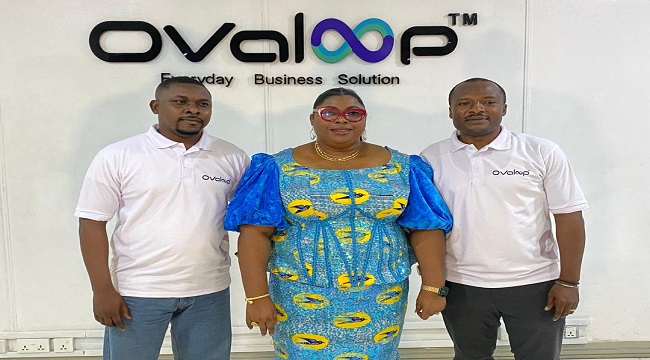
Against the backdrop of struggles by small and medium enterprises in Africa to scale their businesses because of lack of formal processes, Ovaloop Technologies has unveiled an inventory solution aimed at supporting retailers across Nigeria and Africa to formalise their businesses.

Combining inventory management, payment processing, accounting and business intelligence, the platform enables retailers to generate accurate financial records, improve operational efficiency, reduce internal fraud and strengthen their ability to access credit.
The company said the expansion of Nigeria’s digital payment ecosystem has created the need for solutions that go beyond processing transactions to helping small and medium-sized enterprises (SMEs) manage their day-to-day operations.
Speaking during the company’s launch event in Lagos on Monday, Princewill Mba, CEO and co-founder of Ovaloop Technologies described the platform as an indigenous technology designed to grow and formalize Africa’s retail economy
“Ovaloop is an inventory management system, but we like to always define it as a retail operating system, so think about it as your Microsoft Office. For us, the whole idea is to manage how businesses are being run. So Ovaloop manages your business operation end-to-end, from how you’re taking stock, to how you manage your stock, how you make sales, and how you collect payments,” Mba said.
Mba further noted that the company aims to change the conversation from building products that simply process payments to developing technology that helps retailers manage their entire business operations.
According to him, the formalisation of retail operations will also bring onboard unbanked SMEs, unlocking access to credit facilities which remain one of the major challenges facing SMEs in Nigeria and Africa.
“Most of these retailers are not bankable. They make a lot of money but when they come to collect loans from financial institutions, they struggle, because their cash flow statement is not very accurate, the data they provide to the banks or other financial institutions is not very accurate, and then they can’t work with that data.
“But with Ovaloop, we can generate useful data for them that they circulate to these institutions to help them access funding, and you can’t shy away from the fact that funding is very imperative for businesses to operate smoothly,” he said.
Acknowledging the gap in the inventory space, the CEO disclosed that the company took time to understand business operations across Africa and has built a solution that manages business operations end-to-end.
Mba said there is a huge gap in inventory management solutions across Africa, noting that many businesses still rely on manual record-keeping or disconnected software.
“What we’ve built and why we took this long was for us to understand how Africans operate business, because whether you would like it or not, most businesses are still taking inventory and stock using basic books while others use fragmented tools.
“So there’s a tool that collects your payment. There’s a tool that runs your business and another tool that runs your accounting. But when we talk about Ovaloop, it’s taking all these activities into cognisance. So, from end to end, we can manage your inventory.”
Daniel Kilanko, co-founder and CTO of Ovaloop Technologies commenting on the platform noted that it is easily accessible with strong security software that verifies payments and detects fraud.
“Our Ovaloop Pay Protect will tie every sales transaction to verified payments. So with that, you don’t have to deal with fragmented tools. The tools you are using for your inventory, payments and everything synchronise properly.
“So no transaction can be completed unless a verified payment is linked to that transaction. And with this, we also hope that we will be connecting with other local technology so that you just have one central system that does everything for you end-to-end.”
Kilanko said Ovaloop can be accessed through the web, Android and iOS mobile phones which gives users a complete business overview from anywhere in the world.
The platform will also be linked to various supply chains, enabling users to access products within and outside the country.
Also speaking, Titilope Ejimagwa, chairperson, Ovaloop Technologies, inventory losses and employee theft remain major operational challenges for many entrepreneurs
Ejimagwa recalled losing inventory to trusted employees despite maintaining close oversight of her business, citing nearly four decades of experience in marketing and entrepreneurship.
She noted that technology such as the Ovaloop platform, which can track inventory, verify payments and improve operational transparency, could significantly reduce such losses for SMEs.
“As entrepreneurs, one of our biggest challenges is fraud and inventory losses. Having one platform that helps monitor operations and reduce those risks is a major advantage for businesses,” she said.
Jumia Nigeria, the country’s e-commerce platform, has introduced a new instalment payment option on its marketplace through a partnership with Buy Now, Pay Later (BNPL) provider Klump, giving customers another way to pay for purchases without bearing the full cost upfront.

The new option allows eligible customers to spread payments for selected purchases over a period of up to 12 months after making an initial deposit of between 20 and 30 percent. The partnership is expected to widen access to products such as smartphones, electronics, home appliances, and other everyday essentials for consumers who may prefer structured repayment plans over one-time payments.
Customers selecting the option at checkout can compare financing offers from participating financial institutions, complete a digital credit assessment, and, once approved, begin repayment through fixed monthly instalments. The introduction of instalment payments comes as digital commerce continues to evolve in Nigeria, with retailers exploring payment options that respond to changing consumer spending patterns and the growing demand for financial flexibility.
Commenting on the partnership, Chief Executive Officer of Jumia Nigeria, Temidayo Ojo, said the initiative reflects the company’s commitment to making online shopping more accessible to a wider range of consumers.
“We are constantly looking at practical ways to remove barriers to online shopping. For many customers, affordability is not always about the price of a product but about having payment options that fit their financial reality. By introducing instalment payments with Klump, we are giving customers greater flexibility while making quality products more accessible.”
He added that expanding payment choices forms part of Jumia’s wider effort to improve the overall customer experience and support the company’s ambition of becoming Nigeria’s everyday retail destination.
“Whether we are strengthening our logistics network, expanding product selection, or introducing new payment solutions, the goal remains the same: to make shopping on Jumia simpler, more convenient, and more accessible for customers wherever they are,” Ojo said.
Founded to simplify access to goods across Africa, Jumia has continued to invest in technology, logistics, and payment solutions to make digital commerce easier for consumers in both major cities and emerging markets across Nigeria.
The addition of instalment payments complements the range of payment methods already available on the platform and comes at a time when consumer demand for flexible financing options is increasing across the retail sector.
Celestine Omin, Co-founder and Chief Executive Officer of Klump, said the partnership aligns with Klump’s objective of expanding access to responsible consumer credit.
“When we started Klump, our mission was simple: to give Nigerians access to affordable credit wherever they shop. Today, we’re pleased to partner with Jumia to bring flexible instalment payments to one of Africa’s largest e-commerce marketplaces, making it easier for more customers to access the products they need,” Omin said.
Under the arrangement, Klump will provide the financing infrastructure while customers complete the application process digitally during checkout. Financing offers are provided through participating financial institutions, subject to approval.
For Jumia, the partnership represents another step in expanding the range of services available on its marketplace while supporting broader efforts to deepen digital commerce and financial inclusion. As more Nigerians turn to online shopping, the availability of flexible payment options is expected to lower one of the barriers to e-commerce adoption, particularly for higher-value purchases.
Customers can access the instalment payment option by selecting Klump at checkout on eligible products available on the Jumia platform.
The Lagos State Government has launched a new financing initiative that will provide single-digit interest loans of up to N10 million to micro, small and medium enterprises (MSMEs), in a major push to improve access to affordable credit and stimulate business growth across the state.

The initiative, known as the Lagos State Access to Finance for SMEs through Cooperatives (LASMECO) programme, offers eligible businesses loans at a fixed 9 per cent annual interest rate, with repayment periods of up to 36 months for term loans and 24 months for working capital facilities. Beneficiaries will also enjoy moratoriums of six months and three months respectively.
The scheme was unveiled on Monday during the opening of a three-day LASMECO Accelerator Training Workshop organised by the Ministry of Commerce, Cooperatives, Trade and Investment, in Lagos.
In her keynote address, the Commissioner for Commerce, Cooperatives, Trade and Investment, Mrs Folashade Bada Ambrose-Medebem, said the programme was designed to bridge the financing gap facing thousands of Lagos businesses that have been priced out of conventional lending because of high interest rates and stringent collateral requirements.
Ambrose-Medebem, represented by the Director of Cooperative Services, Adeyinka Adeyemi, noted that MSMEs account for about 80 per cent of employment and contribute roughly 75 per cent of Lagos State’s Gross Domestic Product (GDP), yet many struggle to access affordable credit as commercial lending rates range between 35 and 40 per cent.
According to the commissioner, LASMECO addresses the challenge by using registered cooperative societies as financial intermediaries and guarantors, allowing entrepreneurs to obtain loans without relying solely on conventional collateral.
Under the financing framework, she said borrowers will provide 10 per cent cash collateral, while their cooperative societies will guarantee 25 per cent of the loan, adding that Sterling Bank Plc would provide a 50 per cent guarantee, creating a layered risk-sharing structure that makes lending more accessible and sustainable.
The programme targets businesses in agriculture, manufacturing, healthcare, the digital economy, creative industries, tourism, environmental sustainability and education.
The commissioner disclosed that the Lagos State Government has released its counterpart funding, while the Bank of Industry (BOI) has matched the state’s contribution, paving the way for loan disbursement, saying that BOI would serve as co-funder and final loan approver, while Sterling Bank would process applications, conduct credit assessments, disburse funds and recover repayments.
The commissioner reaffirmed the Lagos State Government’s commitment to ensuring the success of the initiative, expressing confidence that the programme would unlock affordable financing for thousands of entrepreneurs while boosting employment, productivity and economic development across the state.
Earlier, the Permanent Secretary in the ministry, Mr Babatunde Onigbanjo, said the workshop marked the transition of LASMECO from policy to implementation, stressing that the programme was fully funded and ready for rollout.
He said all necessary groundwork had been completed, including the release of counterpart funding, execution of memoranda of understanding and onboarding of accelerator organisations, adding that participants were now being equipped to begin recruiting and preparing loan beneficiaries.
According to him, the three-day workshop is designed to prepare accelerator organisations to identify eligible MSMEs, assess their credit readiness, compile loan applications and support borrowers from application through disbursement and repayment.
Onigbanjo urged participants to focus on quality rather than quantity in recruiting loan applicants, warning that poorly prepared businesses could increase loan defaults and undermine the programme.
He stressed that accelerator organizations would only be paid when the businesses they support successfully secure funding, saying the arrangement was intended to align their interests with the success of the programme.
The permanent secretary also emphasised that every loan applicant must belong to a registered cooperative society, describing the cooperative model as central to the programme because cooperatives provide a 25 per cent guarantee for every facility while helping to formalise informal businesses.
He disclosed that Lagos has more than 13,000 registered cooperative societies, although only about 1,900 to 2,200 are currently active, adding that reviving dormant cooperatives would significantly expand access to the financing scheme.
Onigbanjo warned accelerator organizations against charging applicants processing, training or evaluation fees, stressing that the only approved deductions are a N200,000 accelerator support fee and a one per cent BOI appraisal fee, both payable only after successful loan disbursement.
He said the state would closely monitor loan recovery, business growth, job creation, cooperative compliance and portfolio performance, adding that only accelerator organisations that deliver strong results would remain in the programme.
The permanent secretary described LASMECO as more than a loan scheme, saying it is also a strategy to formalise businesses, strengthen cooperatives, promote industrialization and drive inclusive economic growth across Lagos.
He urged participants to make full use of the workshop to prepare for immediate enrolment of qualified businesses, insisting that the programme had moved beyond planning and was now ready for implementation.

NPC Opens Nationwide Digital Birth, Death Registration Platform

FG Launches C.L.I.C.K.D., Consumer Credit Scheme for Tech Devices

Airtel Nigeria Expands Retail Footprint to Strengthen Customer Access Nationwide

Ovaloop Technologies Unveils Digital Tools to Formalize SMEs Operations Across Africa

Kaspersky Survey Highlights the Need for Smartphone Security

NRC, Ponzi Scheme Collapses Resulting Loss of Billions of Naira

NASENI Moves to Digitize CCB’s 5m Assets Declaration and Operations

Lebara Nigeria Launches Lebara Play, Africa’s First Telecom-Owned Micro-Drama Platform

CANAL+ Partners Samsung to Pre-Load DStv Stream on New Samsung TVs In Nigeria, Other African Countries

Tokenization, Blockchain Technology will Transform Financial Institutions – IMF




 News2 days ago
Adebutu, PDP Chieftain Accuses Nigerian Governors of Embezzling LG Allocations

 E-Financial2 days ago
NDIC Urges Youths to Shun Ponzi Schemes, Embrace Savings

 E-Financial2 days ago
Access Holdings Sells 7.44% Stake in Ghana Unit

 News2 days ago
NIMASA Unveils Accelerator Scheme to Drive Innovation, Sustainable Growth

 E-Business2 days ago
SERAP to Sue NASS over Bill Empowering NDPC to Regulate Social Media

 E-Financial2 days ago
NRS Issues July 31 Deadline for e-Invoicing Compliance

 News2 days ago
ICPC Secures Final Forfeiture of N941m Linked to IPPIS Fraud

 News2 days ago
eBusinessLife Advocates Greater Support for Girls in ICT as Students Showcase AI Innovations