

E-Business
Life is a Code


BY CHRIS UWAJE
Our life is a spider-web of Codes. Where is Software Nigeria? For all those countries – especially in Africa/Nigeria who are not aware or blatantly refused to acknowledge the power of Information Technology (especially the Software of Things) and are therefore significantly lagging behind the concept, challenges, complexities timely application and fatal consequences of the neglect of Information Technology development, the compelling and innovative truth is that “Life is a Code”.
Indeed, our entire life and the whole humanity is a crystal ball of code rapped in the mastery of software and related IT Ecosystem.
Only those who embrace and religiously master it will effectively manage sustainable development and prosper. And those who are currently blind, deaf and dumb to the amazing world of Code……..will perish. Did I say perish? Nay such nations will depart this life and be forever forgotten.
As the Institute of Software Practitioners of Nigeria (ISPON) prepares to celebrate her 20th anniversary, there is need to further explore the state of Software-Nigeria. Simply defined, a code is a system of imagination and interpretation of life patterns at all levels, by replacing the words in a message with other words or symbols, so that it conjures complexity and nobody can understand it unless he/she possesses the system knowhow.
Intricate secret codes are used in various forms eg: when the names of trees stood for letters. A code is also any system of signs or symbols such as our finger-prints and the genetic Codes used by living cells to translate encoded information (DNA) with magical meanings.
A typical example is the Enigma Machine. The Enigma machines were a series of electro-mechanical rotor cipher machines developed and used in the early-to mid-20th century to protect commercial, diplomatic and military communications.
Thanks to Alan Turing who cracked the Code and averted a major world catastrophe during the Second World War. Indeed, Turing’s skill and work during the Second World War were so decisive that Winston Churchill acknowledged his role as follows: “Turing made the single biggest contribution to Allied victory” Turing was a Code Warrior and brilliant Mathematician.
Going forward with life as a Code, “Never before in history has innovation offered promise of so much to so many in so short a time.” — Bill Gates. And according to David Landes (1998): “Indeed, the very notion of productivity is a by-product of the clock: once one can relate performance to uniform time units, work is never the same” (p. 49–50).
It was the invention of the mechanical clock which in turn led to one of Adam Smith’s seminal insights: wealth and prosperity depend directly—to use Smith’s language—on the “productive powers of labor.” (David Landes (1998 – modified)
Therefore Software Code is undoubtedly the backbone to 21st century economic development, national security and survivability.
Above all, it validates the maxim: “we cannot manage what we cannot measure (codify)”. Today, the quantum challenges, needs and response aspirations for our national leadership, security of life and survivability for a population of about 200 million people cannot be effectively determined, scaled, effectively managed and/or measured without a centralized and dynamic National Code in enigmatic Database and Security Intelligent System.
It is, however, pertinent to state that Nigeria’s survivability is to a larger degree, a shared inspiration, obligation and responsibility of the State and the citizenry.
According to Philip Zelikow Executive Director of 9/11 Commission and a Professor at the University of Virginia, USA, the most significant lessons learned from the 9/11 catastrophe is: “The United States of America would have done, before the 9/11 saga, most of the things (i.e: reactionary measures taken) that we did post 9/11!”
A valid example is the establishment of the Homeland Security Institutional framework with its complex, colossal, multi-dimensional and highly-critical information infrastructure with expansive Database systems on Cybersecurity and Terrorism. It is all for public safety. Indeed, it is all about life as a Code.
Nigeria is currently faced with a similar challenge of weaponized fire wrapped up in Code- ignorance and hate against self – informed by the magnitude our under-development and complexities of terror such as the United Nations suicide bomb blast and other deadly hits, such as the INEC bomb blast at Suleja, Niger State and the Abuja Police HQ, bomb blast, Chibok Girls, and now Dapchi saga to mention but a few. Would we have done some of the things we now intend to do – about 20 years ago?
Would we have mobilized the IT Professionals and created a National Coding Platforms and Institution, Security Intelligence Database, adequately prepared with disaster recovery plans and mastered the related operational complexities before they stuck? What about the monumental and heart breaking corruption and thief-thief figures slapping us in the face every nanosecond?
21st century Information clusters are dynamic knowledge architecture for developing Intelligent and security systems. Many centuries ago, great philosophers of knowledge like Aristotle, Francis Beckon, etc., have informed us that the character of a nation is dictated by the structure, knowledge modules, organizational ability and programmed processes of her information and Database systems. In other words, “As we lay our national information systems bed, so we sleep on it!
The role of Technology and in particular, e-Government and software systems in National Security Database Intelligence dynamics has therefore become a critical and significant component as well as a fundamental necessity for understanding e-security life-cycle.
Also, it amplifies the needs and accelerated urgency for deploying strategies capable of protecting Critical National Information Infrastructure (CNII) with result-oriented and sustainable implementation process. Software-Nigeria is the key and the secure Roadmap to our future and Indigenous skill-sets must be called to national duty.
Empowering the Institute of Software Practitioners of Nigeria (ISPON) therefore becomes an urgent imperative to provide and deliver the required solutions. The reason is not far-fetched, the task is a very sensitive initiative which represents and is indeed, the knowledge laboratory for national survivability. India is a good example of this process.
For so long, our Information and Data attributes seems to have been sentenced by ignorance to the death-roll of our nation-building agenda and development mission.
This artificially conceived anti-Code mindset (the Nigerian factor?) has indeed subverted and corrupted the conscious layers of our intellectual and merit-mechanisms. Furthermore, it has aided and abetted the migration of our patriotic ability, from a community of “what-you-know” to a society of “who-you know” and where you come from! A robust national database can be designed and built by IT professionals to resolve the crisis of Nigeria’s under-development.
Above all, it has created a society that is entangled in techno-phobia and estranged by technology. A society that abhors critical information process; shuns, hunts and crucifies rigorous database generation and myopically subdues professional IT knowledge acquisition project implementation processes as insignificant or unnecessary for national intelligence and people development.
The consequence is that what we now have is a capital merchandising environment – otherwise known as ‘Okada economy’! This has led us to pursue and glorify 4-megawatts of power generation, when indeed we require a minimum of 50-megawatts to jump-start a globally meaningful and competitive vision as the single largest concentration of people of African descent under the universe. It is all about Software.
It is about Database! Information Technology professionals can significantly contribute to the national mission of providing constant power generation and distribution for Nigeria.
The reality today translates to the fact that it should be abundantly clear to us, that the era and long-addicted habit of physically and blindly chasing the containers and cargo packages at all our import terminals and air/land boarders and throwing away the content of the manifest documents that represent the knowledge-base and real world inside the containers, must be over by now.
The fact that ‘Kid Google’ utilizes over 2.3million Megawatts to run its global knowledge business compared to Nigeria’s dream for generating 10,000 Megawatts by 2020, or a reality that Microsoft has earned more money in 25years of its operation – than what General Motors has netted in 100years, should be a wakeup call to Nigeria! Waking up here implies that Code Dreamers, Design-Thinking Innovators and IT Professionals in Nigeria must be accorded their rightful place in the task if Nation building and sustainable development and national security.
The life we live today is made-up of and wrapped in Codes. Information Technology (IT) is undoubtedly the world’s fastest-growing body of knowledge for sustainable development and national survivability.
At the centre of these very complex processes is Software Infrastructure. On a thumb rule, Nigeria needs to case a serious look into Code development and aim to spin out 500,000 Code Warriors within the next 36 months. Life is a Code. No Code, No life!



National Office for Technology Acquisition and Transfer (NOTAP), has commenced the process of patenting and commercialisation of research works by universities and other research institutions in the country.

Dr. Obiageli Amadiobi, director general of NOTAP
Dr. Obiageli Amadiobi, director general of NOTAP, stated this in Abuja, during an interaction with journalists on her achievements since assuming office.
Speaking on the theme, “Strengthening Indigenous Capacity: NOTAP’s Drive for Technology Transfer, Local Content Development, and Innovative activities,” Amadiobi said the agency had involved both the academia and industry so that researchers can work on topics brought forward for commercialisation purpose.
“My minister is very intentional about this– very intentional about commercialisation of research results, which we have already submitted to him. They are meaningful researches, which we need to commercialise.
“We have established 69 intellectual property technology transfer offices in 69 universities that we are still counting. We have informed the vice chancellors of Nigerian universities to set up such offices and we will come and educate them on intellectual property and technology transfers.
“As we are doing this, we are also taking record of all the researchers of these universities and research centres and documenting them in a compendium.
“So, we have compendiums from the universities to us and we put them in a database. If you will recall, recently, the ministry, our supervising ministry, which is the Federal Ministry of Innovation, Science, and Technology, launched a programme titled Energise Commercialisation. This entirely was for commercialisation of all R&Ds,” she said.
On research Institutions carrying out research on areas of industry needs, she said, “NOTAP is bridging the gap between research and development with industry needs, “it is on our programme called the NITDF, NOTAP Industry Technology Transfer Fellowship. By this programme, we engage the universities and the industries, in what we call the triple helix. We liaise with the universities and the industries to sponsor, the industries will sponsor a Ph.D candidate in a Nigerian university to conduct relevant researches.
“They will provide the topics that they want researches for and such students will research on that with the assistance of the industries, because they wear the shoes, so they know where it pinches them. But usually, there are Ph.D candidates already established. This year alone, we certified about 15 of them to enter into this programme and they have gone into the various universities.
“And we are still looking for people to update some of the projects; the research topics we already have. But we are not getting enough persons to do the researches. So, we are going to do further advertisement to see if other candidates will come up.
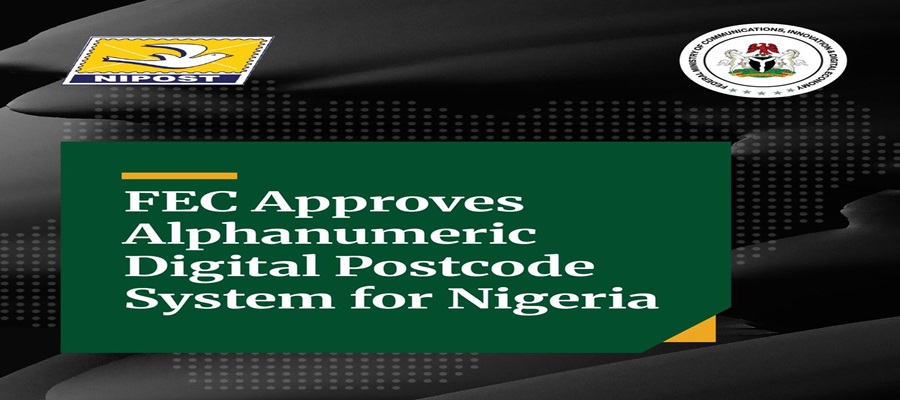
Federal government has launched a drive to standardise operations across all Ministries, Departments, and Agencies (MDAs) through the nationwide adoption of the new National Digital Alphanumeric Postcode System.

Dr Bosun Tijani, minister of Communications, Innovation and Digital Economy, launched the initiative at a high-level stakeholder workshop on Thursday in Abuja.
The conference, themed “Embedding the Nigerian Digital Postcode in Public Service Delivery,” brought together key stakeholders to discuss the adoption of the system across government institutions.
Represented by Nadungu Gagare, permanent secretary of the Ministry, declared that the initiative was a critical pillar for the country’s economic and security framework.
“The Nigerian Digital Postcode represents far more than an improvement to postal services. It is a strategic national asset. Without accurate location intelligence, governments struggle to plan effectively, emergency responders lose valuable time, and financial institutions face verification challenges,” he said.
Tijani said the Alphanumeric digital postcode system was a pathway and a defining moment for Nigeria’s digital transformation under the Renewed Hope Agenda of President Bola Tinubu.
He said an accurate national addressing system would enable government agencies to plan better, improve emergency response, support credible census and elections, expand financial inclusion and ensure citizens were not excluded from essential services because of poor location data.
The Minister commended NIPOST for leading the initiative and urged MDAs and state governments to integrate the system into their operations, stressing that its success would depend on collaboration, interoperability, and nationwide adoption.
Omotola Odeyemi, postmaster general and chief executive officer, Nigerian Postal Service (NIPOST), explained that the digital postcode system creates a “common language of location” for the entire government.
She urged federal and subnational entities to integrate the infrastructure into their daily operations to maximise its value.
“Just as digital identity has helped to establish who a citizen is, this National Digital Postcode helps us to determine where services, opportunities, and interventions should be delivered. Its success will not be measured by the number of postcodes that we generate but by the lives that we improve,” the NIPOST boss explained.
Mrs Didi Esther Walson-Jack, head of the Civil Service of the Federation, represented by Dr Abdul Sule Garba, permanent Secretary of the Service Welfare Office, pledged full administrative backing for the rollout.
She noted that the civil service would be properly equipped to adapt to the data-driven system.
“The operationalisation of the Nigerian digital postcode is a strategic initiative that has the potential to significantly improve public administration, service delivery, and digital governance across the country,” Mrs Walson-Jack added.
The workshop featured live demonstrations and technical panel sessions focused on linking the new digital postcode system directly into national healthcare, social protection, education, and electoral planning.
E-Business
Kaspersky Warns of a Large-scale Campaign using Fake Free Software to Deploy a RAT via ScreenConnect

A remote admin tool ScreenConnect is being distributed through fake websites designed to mimic the official pages of well-known software products.

In total, researchers identified more than 90 domains spanning 10 languages, including English, Arabic, Spanish, Chinese, German, Portuguese, and Russian, enabling the attackers to reach a wide range of victims worldwide. The campaign targets both individual users and organisations using Windows.
After detecting an incident through its Managed Detection and Response, Kaspersky uncovered a large-scale campaign in which attackers used fake websites to spread installer archives disguised as popular software, including OBS Studio, DNS Jumper, DS4Windows, Glary Utilities and Bandicam.
To drive traffic to these pages, the threat actor also used search engine optimisation techniques to place them high in search results.
Across more than 90 identified fraudulent software sites, the same tactic was observed: victims who downloaded what appeared to be legitimate software instead received a hidden ScreenConnect remote administration tool, which gave the attackers persistent access to compromised devices and allowed them to deploy AsyncRAT, an open-source trojan capable of giving them full control over infected systems.
Domain registrations linked to this campaign peaked in February 2026; in 2025, the same attacker had used fake websites to disguise malicious installers as games.
Infection occurs through malicious archives containing a legitimate, signed Microsoft file, install.exe, alongside the install.res.1033.dll library. The DLL is loaded onto the device via a DLL sideloading technique and deploys a ScreenConnect service that awaits further instructions from the attackers.
“The campaign targets both users downloading free utilities from the Internet and corporate networks, where remote access tools are often allowlisted and granted elevated privileges.
“Its danger lies in its potential to facilitate large-scale credential theft and unauthorised access to systems, with the stolen data typically later resold on dark web forums,” says Denis Kulik, lead SOC Analyst at Kaspersky.

World Bank Okays New $1.25Bn Loan for Nigeria

Xenophobia: MTN Nigeria Belongs to Nigerians, Not Only South Africans — Toriola

SEC Grants Approval to Luno, Other Crypto Firms under Regulatory Sandbox

MTN Nigeria Celebrates Volunteers at Y’ello Care Impact Showcase

Listicle: 10 Essential Meta Safety Tools Every Parent and Teen Should Know

Mobile Internet Gender Gap Widest in Africa – GSMA

FG Targets Alleged N3tn Capital Flight, Opens Airtime Credit Market to Nigerian Fintechs

Nigeria Launches FreeTV Nationwide

UK, Nigeria Launch £15m Growth Programme to Accelerate Economic Transformation

NASENI Moves to Digitize CCB’s 5m Assets Declaration and Operations




 News2 days ago
Court Declares Keystone Bank Staff Wanted over Alleged N35m Fraud

 Telecom2 days ago
OpenAI in Talks to Offer U.S. Government 5% Stake Amid AI Scrutiny

 E-Financial2 days ago
IMF Raises Concerns over N8.83 Trillion Unreported Spending in Nigeria’s Budgets

 E-Business2 days ago
Kaspersky Warns of a Large-scale Campaign using Fake Free Software to Deploy a RAT via ScreenConnect

 E-Business2 days ago
NOTAP to Commercialise University Research, Expands Patent Drive

 E-Business2 days ago
FG Unveils Digital Postcode System for MDAs

 News2 days ago
UK Deepens Digital Partnership with Nigeria to Drive Inclusive Growth

 E-Financial2 days ago
NDIC Warns Against Transactions with 46 Closed Microfinance Banks