

Telecom
Nokia 1 Arrives in Nigeria

HMD Global, the home of Nokia phones, has announced that the Nokia 1 is now available to buy from accredited dealers for N27, 000 from 16th April, 2018.
A breakthrough in accessible technology, the Nokia 1 delivers smartphone essentials, refreshingly familiar design and the reassuring quality of a Nokia phone to fans around the world. Running the latest Android Oreo™ (Go edition), a version of Android for devices with 1GB RAM or less, the Nokia 1 delivers extraordinary value with an exceptional experience encompassing all the features you’d expect from a quality smartphone.
On the uniqueness of the Nokia 1, Joseph Umunakwe, General Manager at HMD Global, West, East and Central Africa commented that “There are more than 1.3 billion feature phone users around the world, many from markets in Asia and Africa.
As the value market in feature phones, we understand the barrier and challenges people face when it comes to the step up to a smartphone which is why we’ve made our most accessible smartphone ever.”
“With the Nokia 1, we have combined the reassuring quality and design of a Nokia smartphone with the latest Android OreoTM (Go edition) software to deliver exceptional value and realise our dream of creating a complete smartphone experience, accessible to everyone,” he added.

Quality of Nokia smartphones for everyone
The Nokia 1 is the champion of giving more people access to technology. With the reassuring quality and design expected of a Nokia smartphone, it keeps you connected with all your smartphone essentials and apps.
With a quad-core processor, front and rear cameras, 4G connectivity and dual SIM, the Nokia 1 elevates everything you love about feature phones in an accessible smartphone package.
Combining a removable 2150 mAh battery and power-efficient IPS display, its hardware works with the optimised apps so you can make the most out of each charge.
Tailored to devices with 1GB RAM or less, Android Oreo™ (Go edition) comes with a new range of apps from Google designed to run faster while consuming less data.
Optimised to be smooth and fast, these include Google Go – a web search app, Google Maps™ Go, YouTube™ Go and Google Assistant for Android (Go edition), to quickly send messages, make calls, set alarms and do more, simply by using your voice.
With fewer pre-installed and much lighter apps on Android Oreo™ (Go edition), you get 2x more available storage out of the box compared with Android Nougat.
All Nokia smartphones come with no bloatware, skins, UI changes or unnecessary apps pre-loaded onto your phone, giving you a pure Android experience.
Android Oreo™ (Go edition) offers a smooth and responsive experience, while making sure your device gets the latest security updates and features, including Google Play Protect, which continuously works to keep your device, data and apps safe.



Nigeria is partnering with Burkina Faso on Project Building Resilient Digital Infrastructure for Growth (BRIDGE), to extend terrestrial fiber-optic routes through Niger and Benin, aiming to cut Burkina Faso’s internet transit costs by up to 50 percent.

Dr. ‘Bosun Tijani, minister of Communications, Innovation and Digital Economy and Dr. Aminata Zerbo-Sabané, his Burkinabe counterpart, have sealed a deal to establish a joint technical committee for regional digital integration at a meeting in Ouagadougou, Burkina Faso’s capital.
At the centre of the discussions was BRIDGE, Nigeria’s connectivity initiative aimed at expanding access to faster, more affordable and resilient internet infrastructure.
Under the proposed collaboration, technical teams from both countries will assess connectivity routes linking Nigeria to Burkina Faso through Nigeria-Niger-Burkina Faso and Nigeria-Benin-Burkina Faso corridors.
The assessment is expected to identify a viable pathway for lowering Burkina Faso’s internet connectivity costs by up to half.
The two countries also agreed to establish a Technical Working Committee to develop an implementation framework for the partnership.
The cooperation will extend beyond fibre infrastructure to other areas of the digital economy.
Nigeria and Burkina Faso plan to explore collaboration on digital skills and talent development, including the potential sharing of Nigeria’s 3 Million Technical Talent (3MTT) model.
The countries will also seek to strengthen ties between their startup ecosystems, support Burkina Faso’s Innovation Campus and collaborate on artificial intelligence, local-language technologies, shared computing infrastructure, cybersecurity and research.
Tijani said the engagement forms part of Nigeria’s broader outreach to neighbouring countries, following a recent visit to Benin Republic, with planned engagements in Niger and Chad.
Federal government said the broader objective is to leverage the country’s expanding digital infrastructure and capabilities to support shared economic opportunities across borders, strengthen regional digital integration and position Nigeria as a digital gateway connecting West Africa and the Sahel.
As the federal government is thinking os helping Burkina Faso, Nigeria’s internet cost is too high.
The cost of internet in Nigeria is driven by a 50% tariff floor increase approved by the Nigerian Communications Commission (NCC), pushing average mobile data to over ₦431 per GB.
Major telecom networks, fiber providers, and satellite services like Starlink have raised prices due to severe inflation, local currency devaluation, and expensive diesel maintenance for cell towers.

Airtel Nigeria is approaching the 18,000-cell-site mark as the telecommunications operator accelerates network deployment across the country, adding more than 1,000 new sites annually and extending high-speed mobile connectivity deeper into rural communities.

The expansion places Airtel as an operator making one of the largest sustained infrastructure commitments to Nigeria’s digital economy, with the company’s network now spanning all 774 Local Government Areas in the country.
More than 99 percent of Airtel Nigeria’s sites are 4G-enabled, with the company continuing to add new capacity and upgrade existing infrastructure as demand for mobile connectivity rises. Airtel Africa’s latest annual report said the Nigerian operation added more than 1,050 new sites during its 2025-26 financial year.
The pace represents a significant increase from the approximately 15,000 sites Airtel operated two years ago. By early 2026, the operator had crossed 17,000 sites, after adding about 2,000 sites in two years.
The current expansion has also taken the network further into locations that have historically been underserved by telecommunications infrastructure. These communities include Kukawa, Borno State; Okomu-Udo, Edo State; Chimbi, Niger State; Orile Ijaiye, Oyo State; Kopii, Benue State; and Aran-Orin, Kwara; among others.
Airtel has previously said a significant portion of its network investments is targeted at deep rural communities, small towns and the fringes of major cities. At a media roundtable in February, Chief Executive Officer, Dinesh Balsingh, said the company intended to maintain the large scale of network expansion during 2026.
“Everyone has the right to digital connectivity, including people in deep rural markets and small communities,” Balsingh said.
The impact of the growth extends beyond the ability to make calls or browse the internet. Wider network availability gives families more reliable access to one another, enables businesses to communicate with customers and suppliers, and supports access to digital banking, education, healthcare and government services.
For farmers in remote areas, mobile connectivity can provide access to current crop prices, weather information, market information and agricultural advisory services. For small businesses, reliable mobile data supports payments, customer acquisition, logistics and digital commerce. For communities, connectivity can improve access to health and social services and help residents participate more fully in the digital economy.
Airtel’s network strategy is also increasingly focused on improving the experience delivered through the infrastructure already in place. In 2025, the company upgraded capacity on about a quarter of its existing sites, deploying higher-capacity radios and moving portions of its backhaul from microwave to fibre.
The operator has also reported a continued addition of spectrum to strengthen its spectrum position. Since November 2025, it has added 20MHz spectrum, which is on track for full integration on all sites this quarter.
Balsingh said the company’s investment programme was designed to improve coverage, capacity and resilience, with the benefits ultimately reflected in the quality of service experienced by customers.
“We have invested with discipline and clarity to strengthen our network nationwide. Those investments are now translating into measurable improvements in performance, customer experience and reach, including in underserved communities,” he said.
Third-party measurements have also continued to provide evidence of changing network performance in Nigeria. Ookla’s Speedtest Global Index, for example, reported a median mobile download speed of 97.74 Mbps for Nigeria in June 2026.
For Airtel, the network expansion not only extends the geographical footprint; but also increases the speed, capacity and stability available to existing customers.
Director of Marketing, Ismail Adeshina, said the company’s network investments were ultimately aimed at making connectivity more useful in the everyday lives of Nigerians, as increasing numbers of consumers, families and businesses depend on mobile services for communication, commerce and access to essential services.
Airtel’s infrastructure programme is also contributing to the wider development of Nigeria’s digital economy.
“With mobile connectivity increasingly serving as the platform for financial services, commerce, education, healthcare, agriculture and enterprise, expanding the physical network effectively increases the number of Nigerians able to participate in those activities,” Adeshina said.

National Information Technology Development Agency (NITDA) is calling for a unified, cross-sector push to translate the framework of the Nigerian Startup Act (NSA) into practical benefits for local entrepreneurs and investors.

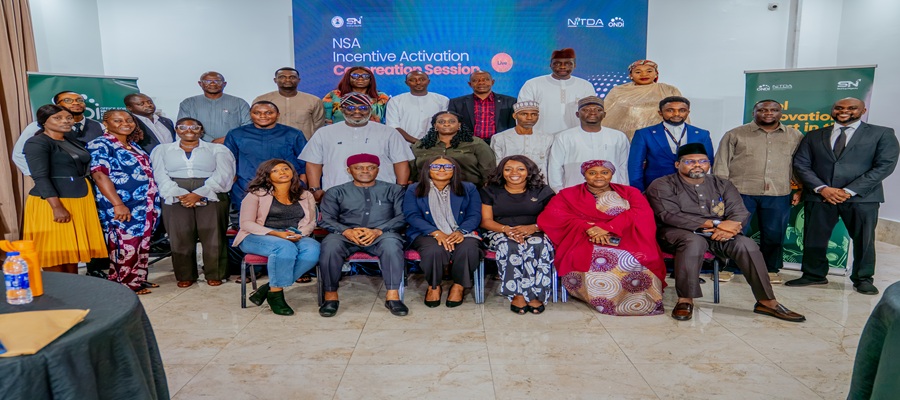
The Director-General of the National Information Technology Development Agency (NITDA), Kashifu Inuwa, CCIE, represented by the National Coordinator, Office for Nigerian Digital Innovation (ONDI), Ms Victoria Fabunmi, in a group photograph with participants from various Ministries, Departments and Agencies (MDAs) at the Nigerian Startup Act (NSA) Incentives Activation Co-Creation Workshop in Abuja.
Speaking at the NSA Incentives Activation Co-Creation Session in Abuja, organised by NITDA’s subsidiary, the Office for Nigerian Digital Innovation (ONDI), the NITDA boss stressed that while enacting the legislation was a historic milestone, its ultimate success will be measured by its tangible impact on everyday tech ventures.
Delivering remarks on behalf of NITDA Director-General Kashifu Inuwa, ONDI National Coordinator Victoria Fabunmi emphasised that Nigeria must now transition from policy design to operational delivery.
Inuwa noted that while early structural achievements such as setting up the Startup Consultative Forum and launching the digital startup portal have established vital channels for dialogue, the true test of the law lies in whether founders can easily access the relief and resources promised to them.
He said the establishment of the Startup Consultative Forum and its governance structures had created an important platform for sustained engagement among stakeholders, but stressed that the real test of the legislation would be its impact on businesses operating within the innovation ecosystem.
According to him, government agencies, private-sector actors and other ecosystem stakeholders must work collectively to remove institutional bottlenecks and ensure that startups can access the opportunities created by the Act.
Inuwa said the participating institutions possessed different mandates, resources and policy instruments that, if properly coordinated, could significantly improve the operating environment for Nigerian startups.
“We want to go to the next level. We want to be able to say that the actors in our ecosystem have been able to benefit significantly from the legislation that has been passed, and it wouldn’t happen without everyone sitting in this room,” he said.
He urged stakeholders to shift attention from the mere existence of the legislation to its practical implementation, particularly the activation of incentives designed to promote investment, innovation and enterprise growth.
The DG noted that the implementation of the NSA involved institutions across several sectors, including trade, finance, communications, innovation, digital economy, science and technology.
He said bringing these institutions together was necessary to identify gaps, clarify responsibilities and develop workable mechanisms for delivering the incentives to intended beneficiaries.
Inuwa also urged stakeholders to embrace continuous engagement and feedback, noting that the success of the Act would depend largely on the ability of implementing institutions to work together and respond to the evolving needs of the startup ecosystem.
He said recommendations from the session would contribute to ongoing efforts to strengthen the implementation framework and create an environment where Nigerian startups could scale, attract investment and compete effectively in global markets.
In a context-setting presentation, “Operationalising the Incentive Provisions of the Nigerian Startup Act,” Ms Elma Andah, Acting Lead, Strategy, Research and Analytics at ONDI, said the Act provides more than 31 incentives distributed across six major categories.
She identified the categories as tax and fiscal incentives, regulatory support, funding access, exports and trade, ecosystem enablers, and training and capacity building.
Andah explained that implementing the incentives required the participation of more than 15 government institutions, making inter-agency coordination central to the success of the legislation.
She said the Nigerian Startup Act, signed into law on October 19, 2022, was designed to promote innovation, improve access to funding, strengthen collaboration and position Nigeria as a leading technology and innovation-driven economy in Africa.
According to her, Nigeria’s startup ecosystem has continued to demonstrate significant potential, with more than 3,000 startups and several globally recognised technology companies.
She added that Nigerian startups attracted about $410 million in funding in 2024, despite the challenging economic environment.
Andah highlighted several areas of progress under the Act, including engagements with states on adoption, the operational startup support engagement portal, improved startup labelling timelines, the Startup Consultative governance framework, the Startup Investment Seed Fund framework and ongoing efforts to operationalise the regulatory sandbox framework.
She, however, stressed that the interconnected nature of the incentives meant that no single institution could deliver them independently.
“No single institution can deliver all these incentives alone. Implementation requires coordination across more than 15 MDAs,” she said.
Using practical examples, Andah explained that a startup seeking funding could simultaneously require tax incentives, while an enterprise seeking to export its products might need regulatory approvals. Investors seeking tax credits could also depend on access to the startup labelling system.
She consequently challenged participating institutions to clearly establish ownership of the incentives assigned to them, strengthen coordination, simplify access procedures and introduce effective monitoring and accountability mechanisms.
The session therefore provided stakeholders with an opportunity to identify implementation gaps and develop practical approaches for ensuring that the incentives contained in the Startup Act are accessible to startups, investors, innovation hubs and other beneficiaries.
The outcome, stakeholders noted, is expected to support a more coordinated implementation of the NSA and strengthen its contribution to Nigeria’s innovation, investment and economic development objectives.

FG Seeks to Half Burkina Faso’s Internet Cost while Nigerians Pay more

Cyberthreat: New Malware, Turns Phones into Tools for Card Fraud- Report

SEC Clears Blockchain for Accelerated Regulatory Incubation Programme

Union Bank Secures Global Payment Data Security Certification

NLNG, NCDMB Boost Engineering Research with Innovation Centre

Fact-Check: Elon Musk’s “Tesla Pi Phone” is Internet Rumor

EFCC Busts NIS Visa Overstay Racket, Uncovers N700m in an Account

NBC Tasks Broadcasting Stations over 2028 DSO Global Deadline

Glo Sponsored African Voices to Feature Netflix’s “The Polygamist” Stars

Access Bank Debunks Shutdown Report, Vows Action against Perpetrators




 Telecom3 days ago
Airtel Nigeria Adds Over 1,000Cell Sites in Nationwide Expansion to Surpasses 17,000

 E-Financial3 days ago
Mastercard, TeamApt Collaborate to Expand Digital Payments Across Africa

 E-Business3 days ago
MacOS Users Report More Cyber Threats than Windows Users – Survey Reveals

 News3 days ago
Access Holdings Sets New Benchmark in Nigeria’s Finance Talent Pipeline

 Telecom3 days ago
Nigerian Startup Act: NITDA Calls for Stronger Inter-Agency Collaboration

 E-Financial3 days ago
SEC Orders Immediate Freeze of Assets Linked to Six Terrorism Financiers, Three Entities

 E-Business2 days ago
World Cup, AFCON, Blord saga top Nigeria’s Google searches in 2026

 General News2 days ago
NITDA Seals Strategic Deals with Goose FL and Fireflies AI to Power $1 Trillion Digital Economy Vision