

E-Financial
AfDB Assists TCN to Modernise Transmission Equipment


The African Development Bank (AfDB), said yesterday in Busan, South Korea, that it was assisting the Transmission Company of Nigeria (TCN) to invest in modernisation of its transmission network to improve the energy sector of the country.
The AfDB President, Dr Akinwumi Adesina, told Newsmen on the sideline of the bank’s Annual Meetings that it was also investing in the private sector of the country by providing the commercial banks with significant lines of credit to drive economic development.
He said this was necessary because many of the African countries faced insufficient foreign exchange challenges.
“We are investing in renewable energy, especially in Jigawa and many other areas of Nigeria’s economy”, to assist in advancing the gains of its post-recession period.
“In the case of many African countries, as commodity prices were declining, the AfDB and World Bank have been assisting because many of them have a lot of fiscal and current account deficit,” he said.

He said the bank had disbursed 600 million dollars to Nigeria to help it to exit recession, adding that the government acknowledged that it would have been difficult for the country to come out of the situation without the support.
“We are happy Nigeria came out of it and the issue now is the way forward.”
He reiterated that one of the critical projects of the bank was its assistance for countries through counter technical budget support operations during difficult situations.
Akinwumi had earlier at a news conference, announced that Korea would provide 600 million dollars to finance renewable energy and also deploy young engineers to Africa under its partnership.
He called on African countries to increase their budgetary allocations to finance infrastructure development because many countries under-invested in the sector.
The president said participants and stakeholders at the annual meeting had learnt that industrialisation and accelerated investment in critical areas of economy were catalysts for the advancement of nations.
Akinwumi also announced that the next meeting of the bank had been scheduled for Malabo, Equitorial Guinea in 2019.


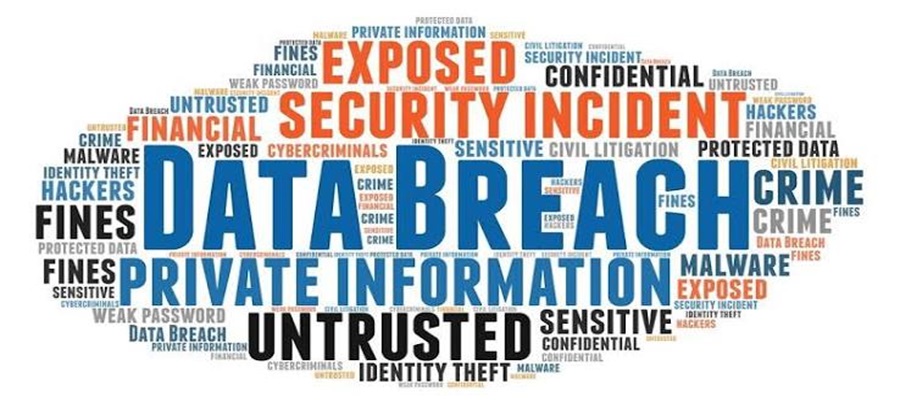
Federal Capital Territory High Court has ordered Stanbic IBTC Bank Limited to pay N15 million in damages to two former customers after finding that the bank unlawfully retained and processed their personal information after they had terminated their banking relationship.

In a judgment delivered on July 29, Justice Kayode Agunloye also directed the bank to erase all personal data belonging to the claimants that it is not legally required to retain and restrained it from further processing or using such information without lawful authority or the customers’ consent.
The court held that the bank breached the Nigeria Data Protection Act (NDPA) 2023, the claimants’ constitutional right to privacy under Section 37 of the 1999 Constitution (as amended), and provisions of the Federal Competition and Consumer Protection Act (FCCPA).
The suit, marked CV/2190/25, was filed by David Ogundipe and Salami Tolulope Ibrahim, who argued that Stanbic IBTC continued to process their personal data for marketing purposes even after they had closed their corporate account with the bank.
According to the claimants, the account was shut following unresolved issues with the bank.
Despite the closure, they alleged that Stanbic IBTC continued sending promotional emails and text messages to their personal and corporate email addresses as well as their telephone numbers.
The customers said their solicitors later wrote to the bank demanding that all marketing communications cease and that their personal data should no longer be processed for promotional purposes.
Although the bank reportedly acknowledged the request and assured them that the messages would stop, the unsolicited communications allegedly continued, prompting them to seek judicial intervention.
In his ruling, Justice Agunloye held that once the banking relationship had ended and the customers had withdrawn their consent, the bank no longer had any lawful basis to process their personal data for marketing activities.
The judge ruled that the continued use of the claimants’ information amounted to an infringement of their constitutional right to privacy and constituted an unfair trade practice under the FCCPA.
The court consequently ordered Stanbic IBTC to delete all personal information relating to the claimants that it is not legally required to retain and to cease every form of data processing except where permitted by law or regulatory obligations.
Justice Agunloye also granted a perpetual injunction restraining the bank, its officers and agents from retaining, processing, transmitting or using the claimants’ personal data for marketing, promotional or any other unauthorised purpose.
While the claimants sought N250 million as damages, the court awarded N15 million as general damages, describing the amount as adequate compensation for the persistent unsolicited communications, the bank’s failure to honour requests for data erasure and the violation of the customers’ privacy rights.
The bank was further ordered to pay N500,000 as the cost of the suit, while the claim for N7 million as litigation expenses was dismissed for lack of sufficient proof.
Justice Agunloye directed that all monetary awards would attract 10 per cent post-judgment interest annually until fully settled.
However, the court declined to order the complete deletion of every record relating to the claimants, holding that banks remain under statutory obligations to retain certain customer records in compliance with financial regulations and anti-money laundering laws.
Reacting to the verdict, counsel to the claimants, O.E. Oluwadamisi of Earnest Attorneys LP, described the decision as a landmark judgment for data protection in Nigeria.
He said the ruling reinforces the mandatory nature of compliance with the Nigeria Data Protection Act and makes it clear that organisations cannot continue processing customers’ personal information after consent has been withdrawn unless authorised by law.
One of the successful claimants, David Ogundipe, welcomed the judgment, saying it represented a victory not only for the litigants but also for millions of Nigerians whose personal information is held by corporate organisations.
He expressed hope that the ruling would encourage institutions across the country to strengthen compliance with data protection laws and place greater respect on customers’ privacy rights.

The number of Bank Verification Numbers (BVNs) on the Nigerian banking industry’s fraud watchlist reached 13,117, according to the Central Bank of Nigeria (CBN).

This is coming as banks strengthen efforts to detect and prevent financial crimes.
According to the CBN’s 2025 Annual Report and Statement of Accounts, the number of BVNs on the banking industry’s fraud watchlist increased from 9,476 in 2024 to 13,117 in 2025. This represents a 38.4 per cent increase.
The apex bank explained that commercial banks, including Access Bank, Zenith Bank, United Bank for Africa (UBA), and other financial institutions, added 3,641 new BVNs to the watchlist during the year.
The report said the increase reflects stronger fraud monitoring, improved compliance, better risk management, and enhanced systems for detecting suspicious transactions.
It added that the higher number does not necessarily mean fraud has increased, but shows banks are becoming more active in identifying and blocking suspicious activities.
The report also revealed that consumer lending declined for the first time since 2019.
Outstanding consumer credit dropped by 19.89 per cent, falling from N4.72 trillion in 2024 to N3.78 trillion in 2025.
The CBN attributed the decline to high interest rates, which made borrowing more expensive for many Nigerians.
Personal loans recorded the biggest drop, falling to N1.85 trillion.
However, retail loans rose by 63.77 per cent to N1.94 trillion, making them the largest category of consumer credit for the first time in several years.

Central Bank of Nigeria (CBN), has ordered banks to refund a total N19.12 billion to customers for illegal deductions and poor complaint handling.

This is coming as bank customers lodged 23,129 complaints against financial institutions in 2025, representing 11 per cent increase over the previous year.
The apex bank also imposed N1.69 billion in penalties on financial institutions for regulatory breaches, poor complaint handling and failure to comply with its directives, according to its 2025 Annual Report.
The CBN attributed the increase in complaints to growing public confidence in its consumer protection framework rather than a deterioration in banking services.
The report stated: “The Bank received a total of 23,129 complaints from consumers of financial services in 2025, a rise of 10.53 per cent above the 20,925 in 2024. The trend reflected increased awareness and improved confidence in the Bank’s consumer complaint resolution process.”
The apex bank added: “A total of 18,824 complaints were resolved, indicating a 9.36 per cent increase over the 17,213 complaints resolved in 2024.”
On the value of disputed transactions, the CBN said: “Total claims in local currency increased to N40.61 billion from N17.13 billion in 2024. Foreign currency claims also rose, reaching $344.2 million compared with $1.06 million in the preceding year.”
According to the report, “Based on the resolved complaints, the sums of N19.12 billion and $329.3 million were refunded in 2025, compared with N9.66 billion and $0.67 million in 2024.”
The CBN said it strengthened enforcement against erring financial institutions during the year.
It stated: “During the review period, the Bank imposed 11 penalties on financial institutions totalling N1.26 billion for infractions ranging from regulatory breaches and failure to respond to regulatory queries.”
The report further disclosed: “In addition, the Bank imposed 21 penalties on financial institutions to the tune of N430 million for infractions ranging from delays in resolving customer complaints to failure to comply with the Bank’s directives.”

SERAP Asks Tinubu to Probe Alleged N6.79Bn Missing Police Funds, Firearms

FCT Court Awards Ex-Customers N15m against Stanbic IBTC over Data Privacy Breach

CBN Exposes over 13,000 BVNs Tied to Fraud as Banks Tighten Security

Atte, Nigerian Develops AI Algorithm for Hair Transplants

Dare Tackles Onaiyekan over Criticism of Tinubu, Says Economic is Working

NRC, Ponzi Scheme Collapses Resulting Loss of Billions of Naira

EFCC Busts NIS Visa Overstay Racket, Uncovers N700m in an Account

From Scarcity to Scale: What Africa Can Learn from India’s Agricultural Transformation

BON Establishes Six Ad Hoc Committees to Modernize Broadcasting

Tokenization, Blockchain Technology will Transform Financial Institutions – IMF




 Broadcasting3 days ago
Davido Shares Past Suicidal Thoughts, Drops Oriadé Album

 E-Business3 days ago
How Temu Helped a Madagascan Vanilla Family Business Sell Direct to Consumers Across Europe

 News3 days ago
Cisco Explores AI for Nigeria Farmers

 News3 days ago
AfCFTA Urges Africa to Stop Exporting Raw Materials

 General News3 days ago
MTN Nigeria Posts N707.5bn H1 Profit, Declares N26 Interim Dividend

 E-Business3 days ago
82% of Organizations Concerned about AI Risks Even as Adoption Accelerates – Survey Reveals

 General News3 days ago
Gavi Okays $500m for Vaccines, PHCs in Nigeria

 E-Business3 days ago
FG Must Consider Data Security, Sovereignty in 3MTT Initiative – Stakeholders