

Telecom
Illegal Call Masking Persist as Telcos Avoid Int’l Charges


Call masking, a technique used to hide numbers when making calls or sending messages; especially international calls, in order to evade the international call rates has continued unabated, and the Nigerian Communications Commission (NCC) is waxing worriedly.
NCC said the act posed a threat to national security.
In some cases, international numbers are masked with local numbers which are not charged, because the caller’s identity is completely hidden on the network.

The commission in a recent survey, asked some respondents: ‘Have you received an international call from a local number of recent?’ on all its social media platforms.
Responses from the subscribers with the evidences of local numbers used by their international callers indicated that the criminal practice is still rife.
Apart from its national security implications, call masking affects the licensed telecom operators in the country as they lose revenue from international calls, since such are being disguised as local calls.
NCC had earlier in the year sanctioned some telecoms companies found to be indulging in call-masking.
Mr. Tony Ojobo, director, Public Affairs of the Commission, said, then that the commission, has imposed a range of sanctions on licensees involved in the fraudulent practice of call-masking, callrefiling and SIM-boxing.

Recently also, the NCC and the Consumer Protection Council have held a meeting to investigate call masking in Nigeria on the directive of the National Assembly.
The meeting was also to review the existing memorandum of understanding between the two government organizations and discuss how to work together to improve complaints resolution of telecommunications consumers.
Umar Garba Danbatta, EVC at the NCC, said masking of calls with another number, especially international calls, is a growing trend and the NCC has been directed to address the problem due to the security implications.
Danbatta said the office of the National Security Adviser had directed the NCC to put in place measures that will contain this menace, even before the directive from the National Assembly to the NCC and the CPC.


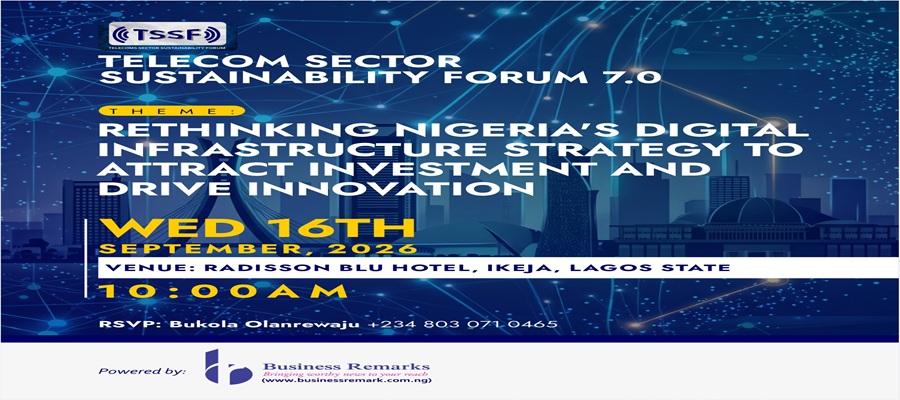
Nigerian Communications Commission (NCC) has thrown its weight behind the upcoming Telecom Sector Sustainability Forum (TSSF 7.0), confirming its role as the headline keynote speaker for the Lagos event.

Over the years, the Telecoms Sector Sustainability Forum (TSSF) has evolved into a landmark industry convergence platform and an actionable catalyst for policy alignment, driving critical dialogue around the regulatory, economic, and infrastructural frameworks required to sustain Nigeria’s digital economy.
Taking place on 16th September, 2026, at the Radisson Blu Hotel, Ikeja, Lagos State, the seventh edition of the Telecoms Sector Sustainability Forum (TSSF 7.0), organised under the aegis of Business Remarks, will bring together key stakeholders driving the next phase of Nigeria’s telecommunications and digital growth.
Themed “Rethinking Nigeria’s Digital Infrastructure Strategy to Attract Investment and Drive Innovation”, TSSF 7.0 will address some of the sector’s most pressing priorities, such as policies, digital infrastructure expansion, digital inclusion, good connectivity, partnerships and investments needed to accelerate Nigeria’s next wave of innovations, digital transformation and economic growth.
Organised by Business Remarks, the forum has consistently brought together policymakers, mobile network operators (MNOs), infrastructure providers, data centre operators, policy advocates and financial technology stakeholders to dissect the pressing challenges facing the telecommunications ecosystem and chart a sustainable path forward.
Past editions have successfully addressed pivotal industry shifts, ranging from broadband penetration strategies, human capital flight, mobile virtual network operators (MVNOs) sustainability and infrastructure deficit funding to the operational integration of emerging technologies. By providing a neutral, high-level platform where regulators like the Nigerian Communications Commission (NCC) can interface directly with private sector players, the forum plays a vital role in ensuring that regulatory frameworks evolve in tandem with market realities.
Speaking about the event, the Convener, Bukola Olanrewaju, said the Nigerian telecoms sector investment has grown to $75.6 billion as of 2025, with a planned investment of over $1.38 billion in network capacity upgrades in 2026 targeted to enhance infrastructure resilience, boost coverage and improve quality of service for subscribers nationwide.
“As the industry faces a new frontier defined by deepening 5G and 4G penetration, expanding fibre optic networks, and complex macroeconomic pressures, the need to meet the growing demands for digital services while remaining profitable has become the defining challenge of the modern telecommunications landscape.”
At a time when investment in connectivity, subsea cables, fibre networks, data centres, cloud infrastructure and cybersecurity is reshaping the country’s digital landscape, TSSF remains a vanguard of thought leadership and industry engagement, fostering the public-private collaborations necessary to safeguard the backbone of Nigeria’s digital transformation.


MTN Nigeria is accelerating investments in network expansion and modernization to address rising demand for mobile and data services across the country.

The operator is deploying additional base stations, upgrading existing infrastructure, and expanding fiber connectivity to improve network capacity, coverage, and service quality.
The investments are designed to support increasing smartphone adoption, higher data consumption, and the growing use of digital services by consumers and businesses.
MTN said the expansion aligns with its long-term strategy to enhance customer experience while strengthening Nigeria’s digital infrastructure.
The company expects the ongoing upgrades to improve connectivity, support economic growth, and enable broader access to reliable telecommunications services as demand for high-speed broadband continues to increase.

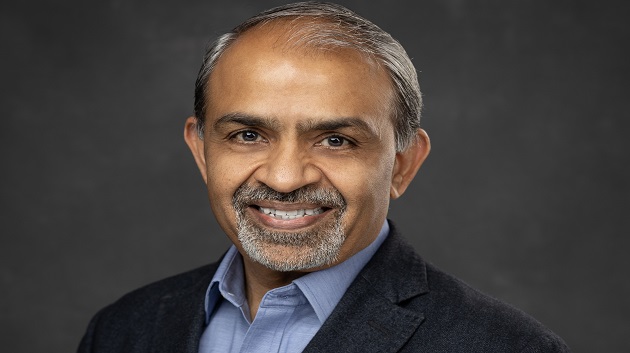
Airtel Africa’s CEO, Sunil Taldar, has announced the telco’s commitment to connecting 5,000 schools across its operating countries in Africa to the internet by 2027 through its philanthropic arm, Airtel Africa Foundation, in partnership with the United Nations Children’s Fund (UNICEF).

So far, the $57m partnership, which was launched in 2021, has cumulatively connected 3,296 schools and provided access to over 2 million learners and about 40,000 teachers. 64 digital learning platforms have been zero-rated thereby enabling more than 11m users to access educational content at no cost.
Speaking during a visit to St. Monica’s Girls School in Lusaka, which is one of the 300 schools already connected to the internet in Zambia, the Airtel Africa CEO stated that the initiative is having a profound impact on the quality of education by expanding access to digital learning resources for African children, in collaboration with governments.
Mr Taldar added: “Students are accessing best-in-class education from the curriculum developed by UNICEF in partnership with various Ministries of Education and provided through Airtel’s connectivity.
“We are also training teachers, so that they deliver digital education effectively. We aim to continue deepening meaningful connectivity in schools by providing free internet access, zero‑rated platforms and training teachers across the continent”.
Expressing her appreciation, the Headmistress of St. Monica’s Girls’ School, Sr Matilda Soloko said: “Being among the first schools connected in the initial stage, our learners have been able to study using the learning portal and their studies have been intensified. We remain grateful to Airtel and UNICEF.”
UNICEF’s Country Representative for Zambia, Dr Saja Farooq Abdullah said: “What this partnership has brought is really bridging the equality gap and the digital divide. It is making sure that every child learns wherever they are. It was exciting and interesting to see and hear from the girls how they can learn at their own pace, how they can review the materials, and how they do their homework with comfort.
The Director of Secondary Education in Zambia’s Ministry of Education, Yvonne Mwemba Chuulu lauded UNICEF and Airtel for the partnership saying: “At the Ministry of Education, we cannot do it alone, and we are grateful for the partnership that we have today.
“Our children are able to learn in a blended fashion, where we have a teacher who is also employing digital devices. We have also heard from the learners that they are able to access the portal when they are at home, which is a good thing because our learners continue to learn in the comfort of their homes”.
The School Connection programme is expanding digital learning to learners in 13 countries: Chad, Congo, Democratic Republic of Congo, Gabon, Kenya, Madagascar, Malawi, Niger, Nigeria, Rwanda, Tanzania, Uganda, and Zambia. By equipping these schools with internet connectivity and training teachers on using the digital tools, it is providing children, particularly in underserved and remote regions, with the digital tools and skills they need to thrive.
Airtel Africa Foundation is advancing inclusive development across four strategic pillars, Financial Inclusion, Education, Environmental Sustainability and Digital Inclusion.

Xora Finance, Fintech Firm Refuses to Hire Nigerians over Alleged Dishonesty

FG Secures Fresh $208.3m World Bank Loan for Cash Transfer

How Ponzi Scheme Victims can Seek Legal Remedies — Lawyers

SERAP Sues INEC over Alleged N800Bn 2027 Tinubu Campaign Fund

Kaigama,Catholic Archbishop of Abuja Warns against Misuse of AI

Nigeria Launches FreeTV Nationwide

NASENI Moves to Digitize CCB’s 5m Assets Declaration and Operations
NRC, Ponzi Scheme Collapses Resulting Loss of Billions of Naira

Lebara Nigeria Launches Lebara Play, Africa’s First Telecom-Owned Micro-Drama Platform

CANAL+ Partners Samsung to Pre-Load DStv Stream on New Samsung TVs In Nigeria, Other African Countries




 Telecom2 days ago
DStv, GOtv Owner MultiChoice Officially Joins Canal+ Group

 News2 days ago
Police Busts Syndicate Who Allegedly Stole N3Bn from Financial Institution

 E-Financial2 days ago
SEC Unveils Plans to Enforce Mandatory ESG Reporting for Large Firms Next Year

 Telecom2 days ago
MTN Accelerates Network Expansion to Meet Surging Telecom Demand

 Telecom2 days ago
Airtel Africa to Connect 5,000 Schools to Free Internet by 2027

 Broadcasting2 days ago
From Scarcity to Scale: What Africa Can Learn from India’s Agricultural Transformation

 E-Business2 days ago
TeKnowledge, Equinix Partner to Advance Nigerian Digital Infrastructure

 General News2 days ago
NSIB Faults Runway Identification, Reveals Cockpit Disagreement in Asaba Jet Incident