

Telecom
Broadband Service Providers Chart Way Forward to Increasing Broadband Penetration

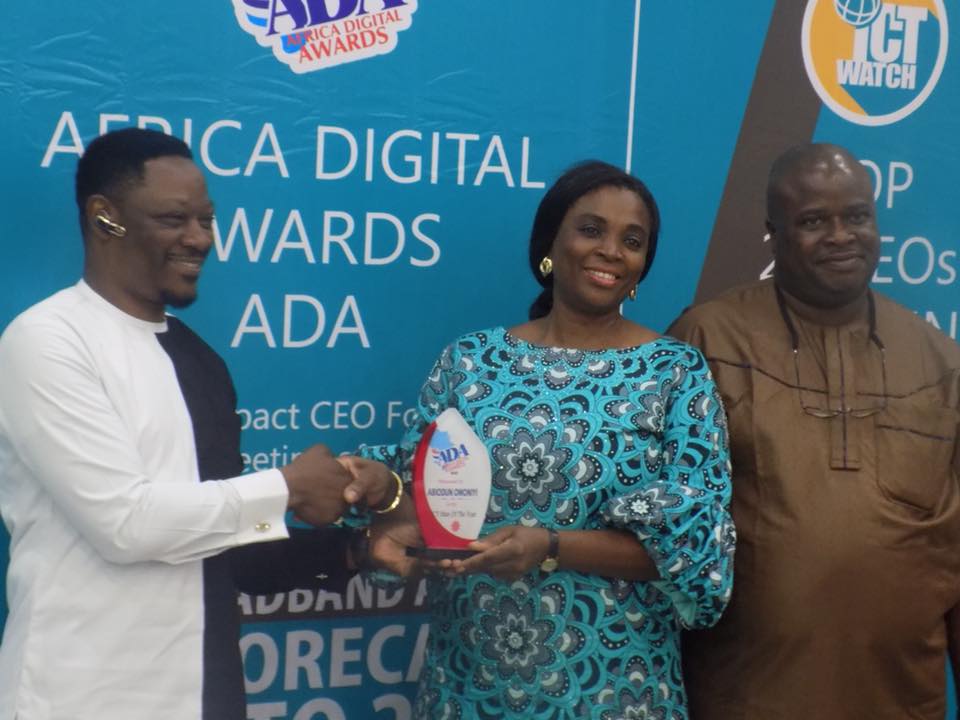
Broadband service providers have identified ways through which Nigeria can increase broadband penetration by 2020.
They spoke at the Nigeria ICT Impact CEO Forum with the theme: “Broadband Access: National Scorecards and RoadMap to 2020” held in Lagos recently.
Engr.Abiodun Omoniyi, Managing Director/CEO, VDT Communications Limited, speaking on the topic, “Chances and Challenges of Broadband Development in the Rural Areas” emphasized the Importance of Broadband in National Growth and Development.

According to him, “A World Bank (Qiang et al. 2009) study involving120 developing and developed countries, shows that 10% increase in fixed broadband penetration would increase GDP growth by 1.21% in developed economies and 1.38% in developing ones.”
He said that the extent of urbanization in the country is still abysmally low, adding that about 51.4% or 99million of Nigeria’s population live in rural areas.
He noted that Nigeria is the 8th country in the world with highest number of internet users, 98 million from 93.6 achieved in 2017 with penetration level of 48.8% (in view the population of 191.8million). No other country in Africa can boast of this growth nor is among the top 20 globally.
He stated also that the current level of broadband penetration as put out by NCC in March 2018, was put at 22%, noting that with this level of growth being witnessed the 30% penetration target by 2018 may be a mirage.
In his words, “NCC has made renewed efforts towards meeting the 30% broadband penetration target set for this year.
“However, based on 4year [2015-2017] average growth rate of about 3%, achieving this target will be very difficult or impossible, increased licensing of MNO’s and infracos, notwithstanding.”
Engr. Ike Nnamani, CEO, Medallion Limited, speaking on the topic “the importance of interconnection in the telecom value chain”, said that Interconnection is the establishment of a physical communication link between two or more operators that allows subscribers on one network to have access to subscribers on the other networks.
He stated that interconnection is ideal for a multi-operator telecom market, to Promote Competition, makes future regulatory regime like number portability possible.
Leads to expansion of services to remote locations and ultimately leads to higher subscriber base, better quality Of life to citizens.
He added that Interconnection involves review of operating licenses and agreement to interconnect.
The establishment of physical links between switching centers – Microwave Radio, Fiber Optics, or Copper Cable. Testing of links and commercial operation.
He enumerated the Peer-to-Peer interconnect scheme advantages and disadvantages.
He said, “Originating networks in Nigeria see direct peer-to-peer connection as their least cost route.
“Instead of peer-to-peer being a premium route that attracts more charges, in Nigeria it is currently the least cost route hence operators prefer to use it instead of the Clearinghouses.
“Originating network see Clearinghouse as additional cost that should be avoided hence no economic incentive to pass calls through the Clearinghouses.
Funke Opeke, CEO, MainOne, represented by Temitope Osunrinde, Head of Communications, MainOne said that National Broadband Plan (2013-2018) has set a target of a five-fold increase (30% fixed broadband penetration) in broadband penetration by 2017.
She noted that the objectives of Plan were to promote pervasive broadband deployment; increase broadband adoption and usage. and ensure availability of broadband services at affordable prices.
She added that the new Nigerian ICT Roadmap seeks to develop Nigeria via focus on four pillars: Governance; Policy, Legal and regulatory Framework, Industry and Infrastructure and Capacity Building
She emphasized that broadband in Nigeria has come a long way from the 340 GB total capacity of SAT 3 single international submarine cable system in 2001, to about 11TB (with capacity for 19TB), provided by 5 subsea operators today.
Competition and regulatory initiatives have also further increased penetration, Opeke, stated.
According to her, broadband and internet have been globally acknowledged and inextricably linked as the foundation for a sustainable economy and an enabler for sustainable development for wealth optimization, Job Creation and revenue increase.
Mr. Tayo Adewusi, founder, ICT Watch Network, the organiser’s the ICT Watch forum said that ICT Infrastructure, especially connectivity, plays critical role in driving sustainable growth and prosperity.
He noted that ICT infrastructure investments in the areas of broadband, datacenters, cloud, Big data and Internet of things (IOT), adding that this critical infrastructural facility takes the greatest percentage of investment and that its part of the inhibitions to having a good broadband access which must be reliable, accessible, affordable and available.
He added that ICT Infrastructure can positively reinforce chain reaction that will lead to digital transformation, with cloud as a catalyst for that reaction.
According to him, “a large and growing proportion of internet usage takes place via mobile devices (on average, an estimated half of all web traffic) with many people now accessing the internet exclusively via a mobile device.
He emphasized that mobile network have brought voice and internet services to billions of people around the globe over the last 25 years and that technology is now accessible to nearly 50% of the world’s population and100 million people in Nigeria, adding that the most cost efficient way to bring more people online is to leverage existing mobile network infrastructure.
Speaking earlier, Bayo Adekanmbi, MTN Transformation Officer, Representing Mr. Ferdinand Moolman, CEO, MTN Nigeria said that the world has moved from using telephones for simple voice calls to include data transfer, video conferencing, e-mail, instant messaging and internet browsing, amongst others.
Adekanmbi, who spoke on the topic: “5G: Delivering high quality voice and data services for 2020 and beyond” said that beyond the primary role of communication, mobile networks give people access to support and connections that has transformed every area of their lives, from health to financial services and transportation.
He stated that while the telecommunications sector has grown significantly in Nigeria, it is inhibited by a number of factors.
“Like funding, inadequate infrastructure and some bureaucracy in the approval of right of way.
“The vandalism of existing facilities, theft and multiple taxation by government agencies.
“Lack of infrastructure especially electricity, increases the cost of doing business, which in turn limits the availability of funds for expansion efforts.”
He noted that 5G network infrastructure will be a key asset that would support societal transformation, leading to the fourth industrial revolution impacting multiple sectors.
According to him, “recent estimates posit that the 5G value chain itself could support as many as 22 million jobs worldwide.
“The total contribution of 5G to real global GDP from 2020 to 2035 is expected to be around $3 trillion: equivalent to an economy the size of India.
“5G is not just another network. It will form the basis of an ecosystem of financial and socio-economic sensors; blurring geographic and operational borders beyond anything we have ever seen. The possibilities are endless,” he said.
Mr. Olusola Teniola, President, Association of Telecommunications Companies of Nigeria (ATCON) speaking at the event urged Nigerian Communications Commission (NCC) to fill the gap in the regulation of data-centric digitalization of the telecommunications landscape as well as various interpretations of control and monitoring of telecoms infrastructure viz-a-vie states’ created agencies.
He said that the road to 2020 in respect of Regulation, Standards and Open Source in the Nigerian Telecomm ICT Industry depends principally on the Nigeria Communications Commission (NCC) and Nigeria Information Technology Development Agency (NITDA) and the key stakeholders that operate within that space.
He added that Nigerian Communications Commission (NCC) has done a lot of developmental works in the area of regulation and standards but noted that there are still gaps that NCC needs to fill.
Teniola noted that National Information Technology Development Agency (NITDA) is doing its best to ensure that standards are kept in specific segments that relates to IT and software development and procurement.
He stated that resultant effects of good regulations and standards would lead to further investments in the ICT sector, improve local content as per youths’ contribution to our national growth, increase in FDI in a structured manner.
“If both the regulators and the industry players can work-out standards and regulations that are not detrimental to growth, the Nigerian Telecom and ICT Sector would become a friendly destination for huge further investment and this would lead to more revenue for government and job creation for the teeming Nigerian youths.
“There is a definite need for Nigeria to adopt an Open Data Access (ODA) standards to facilitate interoperability across different sectors addressing financial inclusion, Health, Smart State initiatives, e-Governance and the 4th Industry revolution (Industry 4.0.).
“The importance of good regulations and improved standards is a critical factor in growing and sustaining the success of ODA and other emerging technologies such as Big Data, AI, Machine Learning and Robotics that the industry needs to prepare for as it is subjected to the natural forces of demand and supply,” he said.
Femi Adeoti, Managing Director/CEO Africa Operations, Inlaks Limited, represented by Oladimeji Koyejo, Director, Innovations and Managed Services, speaking on the topic, “Financial Inclusion in Nigeria: Prospects, Players and Challenges” said that Just about 40% of Nigerian Adults have bank accounts.
He stated that with an adult Population of 96.4million, about 40.1million adults are financially excluded.
According to him, Enhancing Financial Innovation and Access (EFInA) defined Financial Inclusion as, “the provision of a broad range of high quality financial products, such as savings, credit, insurance, payments and pensions.
“These solutions must be relevant, appropriate and affordable for the entire adult population, especially the low income segment”
He noted that financial exclusion has manifested prominently in Nigeria with the bulk of the money in the economy staying outside the banking system.
He said “financial institutions (Including the mobile money operators) do not have sufficient market intelligence that can create access to the underbanked and unbanked population.
“For instance In Lagos, many of them do not know that there are 442 registered markets with potential of mobilising over #30 Billion deposit (Turnover0 within 9 months).
“The most appropriate channel for the underbanked and unbanked population is the combination of their trusted traditional method.
“Financial inclusion therefore is about getting more People included and it is something that i am committed to, My Organisation is committed to and I hope you are too,” he added.


MTN Nigeria is accelerating investments in network expansion and modernization to address rising demand for mobile and data services across the country.

The operator is deploying additional base stations, upgrading existing infrastructure, and expanding fiber connectivity to improve network capacity, coverage, and service quality.
The investments are designed to support increasing smartphone adoption, higher data consumption, and the growing use of digital services by consumers and businesses.
MTN said the expansion aligns with its long-term strategy to enhance customer experience while strengthening Nigeria’s digital infrastructure.
The company expects the ongoing upgrades to improve connectivity, support economic growth, and enable broader access to reliable telecommunications services as demand for high-speed broadband continues to increase.

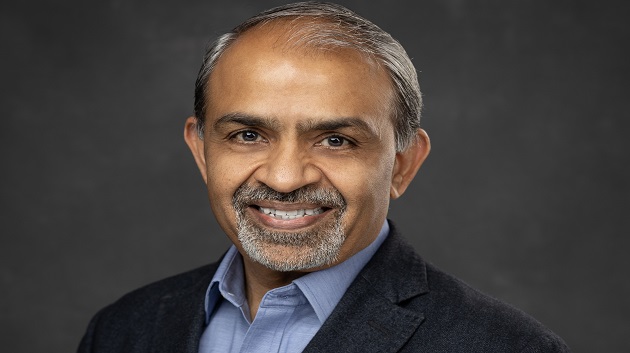
Airtel Africa’s CEO, Sunil Taldar, has announced the telco’s commitment to connecting 5,000 schools across its operating countries in Africa to the internet by 2027 through its philanthropic arm, Airtel Africa Foundation, in partnership with the United Nations Children’s Fund (UNICEF).

So far, the $57m partnership, which was launched in 2021, has cumulatively connected 3,296 schools and provided access to over 2 million learners and about 40,000 teachers. 64 digital learning platforms have been zero-rated thereby enabling more than 11m users to access educational content at no cost.
Speaking during a visit to St. Monica’s Girls School in Lusaka, which is one of the 300 schools already connected to the internet in Zambia, the Airtel Africa CEO stated that the initiative is having a profound impact on the quality of education by expanding access to digital learning resources for African children, in collaboration with governments.
Mr Taldar added: “Students are accessing best-in-class education from the curriculum developed by UNICEF in partnership with various Ministries of Education and provided through Airtel’s connectivity.
“We are also training teachers, so that they deliver digital education effectively. We aim to continue deepening meaningful connectivity in schools by providing free internet access, zero‑rated platforms and training teachers across the continent”.
Expressing her appreciation, the Headmistress of St. Monica’s Girls’ School, Sr Matilda Soloko said: “Being among the first schools connected in the initial stage, our learners have been able to study using the learning portal and their studies have been intensified. We remain grateful to Airtel and UNICEF.”
UNICEF’s Country Representative for Zambia, Dr Saja Farooq Abdullah said: “What this partnership has brought is really bridging the equality gap and the digital divide. It is making sure that every child learns wherever they are. It was exciting and interesting to see and hear from the girls how they can learn at their own pace, how they can review the materials, and how they do their homework with comfort.
The Director of Secondary Education in Zambia’s Ministry of Education, Yvonne Mwemba Chuulu lauded UNICEF and Airtel for the partnership saying: “At the Ministry of Education, we cannot do it alone, and we are grateful for the partnership that we have today.
“Our children are able to learn in a blended fashion, where we have a teacher who is also employing digital devices. We have also heard from the learners that they are able to access the portal when they are at home, which is a good thing because our learners continue to learn in the comfort of their homes”.
The School Connection programme is expanding digital learning to learners in 13 countries: Chad, Congo, Democratic Republic of Congo, Gabon, Kenya, Madagascar, Malawi, Niger, Nigeria, Rwanda, Tanzania, Uganda, and Zambia. By equipping these schools with internet connectivity and training teachers on using the digital tools, it is providing children, particularly in underserved and remote regions, with the digital tools and skills they need to thrive.
Airtel Africa Foundation is advancing inclusive development across four strategic pillars, Financial Inclusion, Education, Environmental Sustainability and Digital Inclusion.
MultiChoice has officially become a wholly owned subsidiary of French media company Canal+, marking the completion of one of the largest acquisitions in Africa’s media and entertainment industry.

The integration brings the South Africa-based pay television operator under the full ownership of Canal+, a global media group with operations in 70 countries.
Announcing the completion of the transaction on Thursday, Chief Executive Officer of Canal+ Africa and MultiChoice, David Mignot, described the development as the beginning of a new phase of growth for the broadcaster.
“MultiChoice is now a full subsidiary of a truly international media group operating in 70 countries.
“The group was founded in France, is listed in London and Johannesburg, and has a strong African presence with operations in more than 45 countries,” Mignot said.
The acquisition combines Canal+’s international operations with MultiChoice’s extensive footprint across sub-Saharan Africa, where it serves millions of households through its DStv and GOtv platforms, as well as the Showmax streaming service.
According to Canal+, the integration will strengthen MultiChoice’s competitive position by giving it access to broader financial resources, technology, content partnerships and operational expertise.
The company said the combined business would increase investment in local content production, sports broadcasting and streaming services as competition intensifies from global platforms such as Netflix, Amazon Prime Video and Disney+.
The transaction is also expected to provide MultiChoice with greater access to international markets at a time when traditional pay television operators are adapting to changing consumer viewing habits and the rapid growth of digital streaming platforms.
Canal+ has expanded steadily across Africa over the past decade and now assumes full control of a business operating in more than 45 African countries, further strengthening its position in the continent’s media and entertainment sector.
The acquisition followed Canal+’s gradual increase in its shareholding in MultiChoice, which began in 2024.
After exceeding the regulatory threshold, the company launched a mandatory offer in April 2024 to acquire the remaining shares of the Johannesburg-listed broadcaster.
Following regulatory approvals and shareholder acceptance, Canal+ secured control of MultiChoice in 2025 before completing the process that has now made the company a wholly owned subsidiary.
Industry observers describe the acquisition as one of the most significant media transactions involving an African company, reflecting a broader trend of consolidation as global entertainment firms seek greater scale to compete in the streaming era.

Police Busts Syndicate Who Allegedly Stole N3Bn from Financial Institution

MTN Accelerates Network Expansion to Meet Surging Telecom Demand

Court Remands Akujobi, Ex Access over alleged Theft of N294.5m

TeKnowledge, Equinix Partner to Advance Nigerian Digital Infrastructure

NSIB Faults Runway Identification, Reveals Cockpit Disagreement in Asaba Jet Incident

NASENI Moves to Digitize CCB’s 5m Assets Declaration and Operations

Mobile Internet Gender Gap Widest in Africa – GSMA

Nigeria Launches FreeTV Nationwide

CANAL+ Partners Samsung to Pre-Load DStv Stream on New Samsung TVs In Nigeria, Other African Countries

Lebara Nigeria Launches Lebara Play, Africa’s First Telecom-Owned Micro-Drama Platform




 Telecom2 days ago
NCC Seeks Cost-Based Pricing Framework for Ducts

 E-Financial2 days ago
CBN Warns against Rejection of N100 Banknotes

 News2 days ago
Flutterwave Secures Circle Ventures Investment to Deepen USDC Payment

 Telecom1 day ago
Fixed Wired Internet Market Lags as Mobile Gains Ground

 Telecom2 days ago
Meta Introduces Muse Image With Advanced AI Image Editing Across WhatsApp and Instagram

 E-Financial2 days ago
BVN Enrollments Hit 69.55m- NIBSS

 News2 days ago
How EFCC Turned Recovered Loot Into School Supplies for Thousands of Nigerian Students

 News2 days ago
CJN Warns Judges: Reject Gifts or Risk Petitions and Ruined Careers