

News
Professor Okogun Calls for Review Process to Boost Homegrown Drug Production

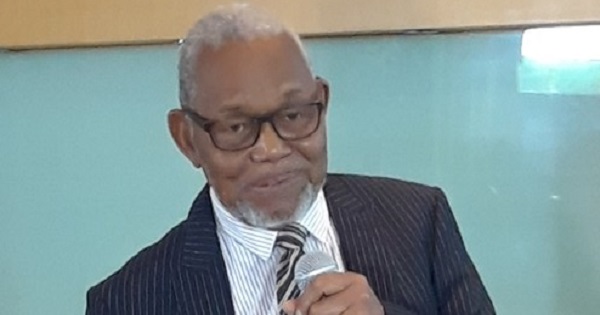
Stakeholders at every level of intervention have been advised to collaborate and review administrative processes and the approach leading to the identification of plants, scientific research, development and approval of remedies and drug production from Nigerian herbs and plants.
This call was made by Emeritus Prof. Joseph Okogun, professor emeritus at the Department of Chemistry, University of Ibadan at a Public Lecture as part of activities to mark his 80th birthday by Bevekt Gedu Chemical Company.
The lecture was titled, Active, Bitter and Sweet – A lifetime of Research on Plants, Anti-Cancer Remedies and Drug Discovery.

In it, Prof. Okogun discussed plants as unrivaled organic chemical factories producing useful chemicals that man exploits for various purposes, and the reasons why the natural chemistry of plants is important to healthy living. He also spoke on a variety of active ingredients that have been discovered from everyday leaves and fruits found in Nigeria and West Africa that can either treat or manage a lot of common ailments in Nigeria and elsewhere at affordable cost.
“There are organic and natural remedies for the management of various diseases including cancer and HIV/AIDS using several decades of data from scientific research on plants by Bevekt Gedu. Out of Bevekt Gedu’s work a pure compound initially obtained from a Nigerian plant which has been adopted and about to be finalized for drug development as a blockbuster drug by IMI of USA. This is an indication that opportunities for long lasting and sustainable investments are abundant locally” sais Prof. Okogun.
The event was chaired by Engr. Adama Okoene, former MD Midwestern Oil. It was attended by healthcare professionals, academicians and other professionals from public and private sectors.
Prof. Okogun further explained the extraction, isolation, analysis and modification of active natural products for potential drug leads or drugs and molecular probes; and the role of different professionals in the process of drug discovery.
Plant materials are usually processed and powdered for extraction with solvents of various polarities so that different types of compounds are extracted by the different solvents. The solvents range from gases (carbon dioxide and hydrocarbon) in supercritical fluid states, petroleum ether through ethanol to water. For instance, the removal of solvent, the usually dark brown gum is separated into the component compounds in the mixture using various chromatographic methods with or without bioactivity screening depending on the nature of the targeted compounds.
He explained that Biological activity screening is done by pharmacognosists, pharmaceutical chemists, pharmacologists, biochemists and microbiologists to identify potential drugs and other biologically active compounds including pesticides. Toxicologists determine the toxicity including teratogenicity of identified potential drugs.
When biologically active compounds are identified, there may need to improve on the activity and or toxicity by modifying the structures using chemistry linked with biology. Identified potential drugs with known mechanism of actions are used as molecular probes in diagnosis and disease research.
Generally, drug discovery and production are result of a multi-disciplinary enterprise and require input from most human disciplines of study which Prof. Okogun gave as follows; botanists as taxonomists, chemists for isolation and chemistry/identification of active principles, zoologists and Animal breeders produce animals needed in in vitro and in vivo studies; while biochemists, pharmacognosist, pharmacologists and microbiologists conduct biological activity studies.
In addition, toxicologists do toxicity studies, clinician (human and veterinary) and pharmacist will do clinical studies and use-as medicines, while lawyers and entrepreneurs for patenting and marketing respectively.
All of these activities by different stakeholders will create a local value chain and lead to the multiplier effect of saving foreign exchange and thousands of jobs in the rural and urban areas.



Oladipupo Adebutu, Peoples Democratic Party (PDP) governorship candidate in Ogun State, has alleged that all state governors in Nigeria are benefiting from and misappropriating local government allocations.

Oladipupo Adebutu
Adebutu made the remarks at the Ake Palace in Abeokuta during a meeting with the Egba Traditional Council, where he sought the support and blessings of traditional rulers for his governorship ambition.
He was accompanied by his running mate, Lateefat Sowunmi-Kolapo; the PDP senatorial candidate for Ogun Central, Iyabo Obasanjo; the Ogun State PDP Chairman, Abayomi Tella; and other party leaders and candidates.
Addressing the traditional rulers, Adebutu declared that granting full financial autonomy to local governments would be one of the defining policies of his administration.
“I will do something that will stun this nation and put us in the right direction. Local governments shall get their own money,” he said.
He added: “We must make sure we get local government autonomy. I have been reiterating to you that I, Oladipupo Olatunde, son of Adebutu, was at the National Assembly twice, and I can boast that I didn’t embezzle public funds. How many politicians can say this?”
Adebutu accused governors across party lines of diverting local government funds.
“It’s not a party thing. Both APC and PDP, all the governors are embezzling local government allocations. It’s not a secret,” he said.
He argued that local councils were able to deliver more development when they had greater control over their finances.
On infrastructure financing, Adebutu said governments must adopt new approaches rather than relying on borrowing.
“You don’t borrow money for infrastructure anymore,” he said, while promising to construct roads that would improve connectivity between Ogun State and Lagos.
In his remarks, Abayomi Tella, State Chairman of the PDP, lamented that the local government system in the state is in a state of collapse, recalling that as a former council chairman, he received N200 million as an allocation and used it to construct four roads within his local government.
He expressed concern that the current local government chairmen cannot point to any project of similar impact, attributing the situation to a lack of financial autonomy.
The PDP chairman said he strongly believes in Adebutu’s advocacy for local government autonomy, stressing that Adebutu is prepared and ready to lead the development of Ogun State.
Sowunmi-Kolapo, deputy governorship candidate, called on her kinsmen to support her political aspiration, noting that she has continued to support the development of Egbaland.
Also speaking, Iyabo Obasanjo, PDP candidate for Ogun Central Senatorial District, said that after leaving the APC following her unsuccessful governorship bid, she came to believe that Adebutu has the vision and political will to actualise her aspirations and manifesto for the people.
Obasanjo further noted that no political party has a more formidable team in Egbaland than the PDP, urging Egba monarchs to throw their weight behind the party in the interest of the people.
In his welcome address, the Alake and Paramount Ruler of Egbaland, Oba Adedotun Aremu Gbadebo, described Adebutu as “trustworthy and reliable,” declaring his support for the party’s flag bearer ahead of the 2027 governorship election.
The Alake recalled his long-standing relationship with Adebutu’s father and expressed confidence in Adebutu’s character and leadership qualities.
“The son of a lion must resemble the lion. In fact, he is an even better version of his father,” Oba Gbadebo said.
Federal high court in Abuja has ordered the final forfeiture of N941,994,079.86 linked to suspected ghost workers uncovered in the integrated payroll and personnel information system (IPPIS) to the federal government.

IPPIS is a centralised payroll system the federal government introduced to manage the salaries of federal public sector employees.
Binta Nyako, presiding judge, gave the order following an application filed by the Independent Corrupt Practices and Other Related Offences Commission (ICPC).
“That an Order is hereby made for the Final Forfeiture to the Federal Republic of Nigeria the Sum of N941,994,079.86 seized during investigation into the IPPIS Payroll scam in the year 2024,” Nyako ruled.
Okor Odey, ICPC spokesperson, announced the forfeiture in a statement issued at the weekend.
The ICPC spokesperson said investigations by the commission uncovered “large-scale payroll fraud involving hundreds of non-existent public servants, with a total sum of N941,994,079.86 traced to accounts linked to the scheme”.
Odey said a review of the IPPIS conducted in 2023 revealed the “existence of numerous “ghost workers” embedded within the payrolls of several Ministries, Departments and Agencies (MDAs)”.
According to him, following the findings, President Bola Tinubu approved a “comprehensive audit” of the IPPIS.
He added that a joint investigation between the ICPC and the office of the accountant-general of the federation in April 2025 led to the discovery of 587 suspected ghost workers on the IPPIS platform.
“Investigations revealed that fictitious IPPIS identities had been created for non-existent personnel across multiple MDAs, with salaries paid over extended periods into accounts belonging to individuals and companies,” Odey said.
“In many cases, the account names did not correspond with those of the purported employees, while some accounts received multiple salary payments simultaneously.”
The ICPC spokesperson said the agency placed post no debit (PND) restrictions on all identified accounts to freeze the funds suspected to be proceeds of fraud.
He said the affected MDAs include the Nigeria Police Force (NPF), federal ministries of defence, education, agriculture and rural development, works, water resources, and interior.
Others are National Board for Arabic and Islamic Studies, University of Benin, University of Calabar, University of Nigeria, Nsukka, University of Maiduguri, Ahmadu Bello University, Zaria, and the office of the accountant-general of the federation.
The ICPC spokesperson said 120 civil servants were cleared after their identities and employment status were confirmed following a verification exercise in 2025.
He added that 467 bank accounts remain linked to unverified individuals with holders yet to be identified.
He noted that the N941.9 million currently frozen in the 467 bank accounts has been forfeited to the federal government.
He disclosed that the agency published the names of the 910 individuals suspected to have benefited from the purported fraud in two national dailies on March 18, 2026.


The Nigerian Maritime Administration and Safety Agency (NIMASA) has introduced the Blue Economy Accelerator Programme, a strategic initiative designed to identify, nurture, and accelerate innovative startups that will contribute to the sustainable growth of Nigeria’s marine and blue economy.

The Blue Economy Accelerator Programme is aimed at attracting young, vibrant minds with innovative ideas capable of transforming Nigeria’s maritime ecosystem.
Dr. Dayo Mobereola, Director-General of NIMASA, said that through the initiative, participants will receive structured business development support, industry mentorship, and technical guidance to convert promising concepts into viable ventures that address critical challenges and opportunities within the blue economy.
“The programme reflects NIMASA’s commitment to supporting the implementation of the vision of the Federal Ministry of Marine and Blue Economy in unlocking the immense potential of the blue economy by empowering young innovators, entrepreneurs, and technology-driven enterprises. We at NIMASA want to provide a platform for investors to identify young talents and invest in them”.
Mobereola, who commended the Minister of Marine and Blue Economy, Adegboyega Oyetola for codifying the Marine and Blue Economy Policy as a clear roadmap for the sector’s development, urged young Nigerians to embrace the programme which has the potential to transform raw talents into big investments in the maritime sector.
Applications are open to startups and innovators developing solutions across several strategic sectors, including marine waste management and the blue circular economy; aquaculture and sustainable fisheries; maritime technology and logistics innovation; ocean energy including wave, tidal, and offshore renewable energy; marine tourism and coastal recreation; marine biotechnology such as, ocean data and analytics; green shipping, including vessel decarbonization; smart port solutions; autonomous marine vehicles; biofouling prevention technologies; and coastal resilience through nature-based coastal defencesolutions.
The first phase of the programme is expected to attract a minimum of 150 high-quality applications from within and outside the country provided they are Nigerian citizens.

Adebutu, PDP Chieftain Accuses Nigerian Governors of Embezzling LG Allocations

ICPC Secures Final Forfeiture of N941m Linked to IPPIS Fraud

NDIC Urges Youths to Shun Ponzi Schemes, Embrace Savings

NRS Issues July 31 Deadline for e-Invoicing Compliance

SERAP to Sue NASS over Bill Empowering NDPC to Regulate Social Media

NRC, Ponzi Scheme Collapses Resulting Loss of Billions of Naira

NASENI Moves to Digitize CCB’s 5m Assets Declaration and Operations

Lebara Nigeria Launches Lebara Play, Africa’s First Telecom-Owned Micro-Drama Platform

CANAL+ Partners Samsung to Pre-Load DStv Stream on New Samsung TVs In Nigeria, Other African Countries

Tokenization, Blockchain Technology will Transform Financial Institutions – IMF




 News3 days ago
EFCC Busts NIS Visa Overstay Racket, Uncovers N700m in an Account

 News3 days ago
NCC, NDLEA Partner to Fight Piracy and Drug Trafficking

 General News3 days ago
Dangote Refinery’s Private Placement Reportedly Hits $2.5Bn

 Telecom3 days ago
Tinubu Moves to Protect Nigerians From Crypto Scams With New Executive Order

 Telecom3 days ago
NCC Leads Tecno, Hyperspace, Digital Realty To NITRA Forum On Scientific Innovation

 E-Financial3 days ago
CBN to Monitor Every Dollar with FXBT, Forex Tracker

 Telecom3 days ago
PayPal Rejects $53bn Stripe-Advent Takeover Bid, Says Offer Undervalues Company

 E-Financial3 days ago
FG Moves to Crack Down on Crypto Fraud with Virtual Assets Executive Order