

E-Business
IGF Seeks Women Participation in Internet Governance for Development


Mrs Mary Uduma, the Chairperson, Internet Governance Forum (IGF) says active participation of women in the internet process is key to the development of any nation.
Uduma made this known on Tuesday in Abuja at the first Women Internet Governance Forum in Nigeria organised by the Centre for Information and Technology Development (CITAD).
The programme is supported by Association for Progressive Communication (APC).
She said that inclusiveness of women and acquisition of the knowledge of the Internet was key to their development.
“And these are the things the forum wants the women to be part of in the internet governance process.’’

She said that to bridge the gap, the forum drew up women focus programmes to enable them express themselves, participate fully and voice up their opinions.
“The essence of this meeting is for capacity building and for bringing information to the women and showing them the areas they have right and authority to speak out.
“And for them to participate in the development process, the internet is the platform as this is the enabler for everybody to be inclusive.
“This programme is the first step of involving women in internet governance.
“We have brought women together, spoken to them, stimulated them and educated them to know they have a platform to voice out their minds,’’ she said.
Prof. Amina Kaidal, a board member of CITAD said that the focus for the programme was to bring women together to identify problems hindering them from the internet process.
Kaidal, who is also a lecturer at University of Maiduguri said that the forum would strategise on how to improve internet accessibility for women.
Maryam Haruna Programme Officer, Gender and Internet CITAD said the over the years the organisation had been struggling for gender inclusion in Nigeria, especially in the northern part.
Haruna said that CITAD discovered that women participation in IGF was very low and this was what prompted the organization to organize the forum to bring up issues concerning gender challenges in internet and online.
“The forum aimed at bridging gender gaps in accessing information and Internet policies, especially as it affects Nigerian women.
“So that is why we brought women from government, Civil Society Organisations (CSO), Academia, private sector to discuss the challenges and proffer solutions,’’ she said.
Ms Ene Ede, the Gender and Social Inclusion Adviser, Search for Common Ground, an NGO, a participant said that access to internet was like “having the world on your palm’’. “If the women have the world on their palms, it would be a better place as internet is virtually everything and huge platform of engagement.
“If women are left out of this engagement, the world will not be good for development to take place and for everybody to participate equally, women need to be in the cyberspace.
“Another participant, Miss Hassana Ibrahim of Women Will, an initiative of Google for Women said that the programme was apt as CITAD was trying to involve more women in decision-making of how the internet should be used.
“You notice that decision-making is about male and women are excluded so, bringing more women to participate in Internet is a very good idea,’’ she said.


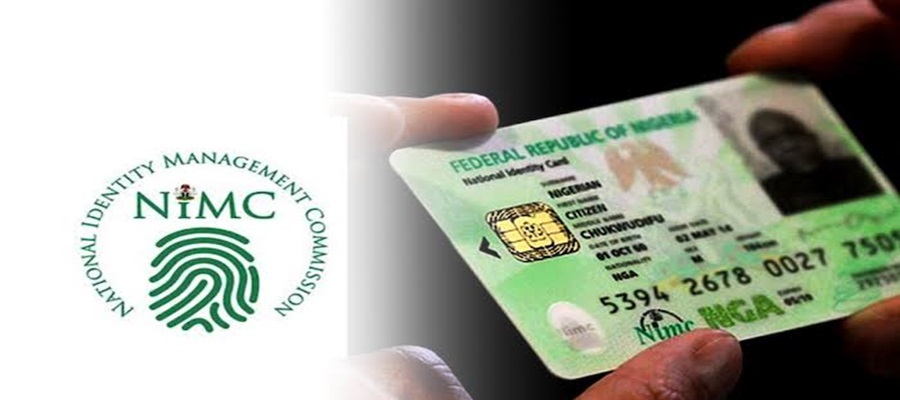
Uche Chigbo, coordinating director of Operations, National Identity Management Commission, (NIMC), has said the newly enacted NIMC Act strengthens data protection and privacy, expands identity coverage to include everyone in Nigeria and Nigerians in the diaspora, and provides the legal framework for a secure and trusted digital identity ecosystem.

She said the new law replaces the 2007 NIMC Act, which had become outdated due to rapid technological advancements, evolving cybersecurity threats, the growth of the digital economy, and the enactment of the Nigeria Data Protection Act.
According to her, the updated legislation better positions the Commission to deliver Nigeria’s digital identity agenda and improve access to government and private sector services.
“The Act itself has taken in a whole lot of things to make sure that NIMC is well-positioned to be able to deliver on the identity agenda and program of Nigeria. The area of universal coverage was expanded within the Act so that NIMC can enroll everybody that is within the soil of Nigeria—male, female, children, whether they are IDPs or orphans or whatever it is, and even Nigerians in diaspora.
“There is quite a lot within the Act that over the few days and weeks, even with my Director-General’s courtesy visit, we are trying to sensitize and educate the general public, and also bring awareness to this new Act so that people will know what are the rights that exist within it, what are the obligations, what are the stronger enforcement and penalties that has also been expanded within the Act, and then what are also the regulatory autonomy that has been given to NIMC to make sure that they drive the digital identity ecosystem in Nigeria,” she explained.
“There’s a lot of provisions and changes with the new Act. Um, the NIMC 2007 Act has been operating for close to 19 years now. So, we can see that, um, you can actually say it’s almost obsolete. And then with a lot of technological advancements in the world now, with the enactment of the Nigeria Data Protection Act, and then with also a lot of evolving security challenges, cybersecurity challenges, as well as the ever-growing digital economy, it became very necessary that a comprehensive review of the NIMC Act should be done.
So, that 2007 Act has been repealed and a new NIMC 2026 Act is in place,” she explained.
Chigbo clarified that the National Identification Number (NIN) is Nigeria’s unique identifier and the only valid means of identification for accessing government services.
She added that it enables secure identity verification and improves access to services.
“NIN has been designated as the unique identifier in Nigeria and then by the government of Nigeria establishing it as the only valid means of identification for assessing government services. So, NIN, it’s positioned to be a valuable tool for empowering citizens and legal residents to facilitate access to service delivery in Nigeria. And it’s also a tool for people to be able to prove their identity as they go about their daily businesses,” she said.
Speaking on identity harmonisation across government agencies, Chigbo said NIMC is integrating identity databases to enable Nigerians to access services seamlessly using the National Identification Number (NIN), while other agencies continue to issue functional identities for specific purposes.
“There’s a distinction between a foundational identity and a functional identity. NIMC provides the foundational identity, which answers the question, ‘Who are you?’ Are you a Nigerian or a legal resident? Who are you? That’s what NIMC is providing. All these other agencies that you have mentioned, they provide functional ID, which is an ID that relies on the foundational ID, where they have established who you are and then they are now trying to answer the question, ‘Are you now eligible to have these services? Are you now eligible to benefit from this transaction or scheme?’ So, those are two different distinctions.”
However, Chigbo said NIMC’s mandate is to harmonise and integrate identity systems across government, with the amended Act designating the Commission as the sole repository for biometric data.
“However, NIMC mandate is to make sure that we harmonize and integrate with all these agencies so that you’re one and the same person in any of the databases or registries that you have. The Act that has been expanded and amended also positions NIMC as the only repository for biometric data capture so that we can have effective identity management and coordination in Nigeria.
“So, that harmonization is already happening, the integration is already happening,” she stated.
She also disclosed that NIMC has introduced an online modification portal that allows Nigerians to begin the process of correcting or updating their personal information from the comfort of their homes or offices.
“But also, NIMC we have a modification portal that enables you to sit in the comfort of your home or office to be able to start the process of correction or updates of your data. We already have a self-service modification portal that allows you to make corrections,” she disclosed.
On the cost of obtaining a NIN, Chigbo clarified that enrolment and issuance of the National Identification Number are free.
She, however, noted that some other identity-related services attract approved fees, which are published on the NIMC website and paid electronically through the government Remita platform.
“Enrollment for the issuance of the National Identification Number, NIN, is free. There are other services, identity services that NIMC provide. Those ones have their charges, and those fees and charges are publicized on the NIMC website so that people can see what those charges are. And NIMC does not collect cash. Our transactions and the charges are paid electronically through the government Remita platform,” she said.

International Monetary Fund (IMF) has retained Nigeria’s economic growth forecast at 4.1 per cent for 2026, while warning that rising prices of essential goods could worsen poverty and food insecurity in the country.

IMF
The IMF made the projection in its July 2026 World Economic Outlook (WEO) Update, released on Wednesday.
According to the report, Nigeria’s Gross Domestic Product (GDP) is projected to grow by 4.1 per cent in 2026 and improve to 4.3 per cent in 2027, with both forecasts unchanged from the Fund’s April outlook.
The IMF also maintained its growth projections for sub-Saharan Africa at 4.3 per cent in 2026 and 4.5 per cent in 2027.
The Fund said Nigeria’s economic outlook continued to benefit from improved macroeconomic stability and favourable terms of trade but cautioned that the rising cost of essential commodities remained a major concern.
“Nigeria is supported by improved macroeconomic stability and favourable terms-of-trade effects, though higher prices for essentials are expected to further aggravate poverty and food insecurity,” the report stated.
The IMF noted that economic performance across sub-Saharan Africa would remain uneven, reflecting differences in policy implementation, reform progress and countries’ exposure to external shocks.
It added that oil-importing and non-resource-intensive economies would likely face increased pressure from rising food and energy prices, while some larger economies continued to benefit from earlier macroeconomic reforms.
Globally, the IMF revised its 2026 growth forecast downward to 3.0 per cent from the 3.1 per cent projected in April but raised its 2027 forecast to 3.4 per cent.
According to the Fund, the downgrade for 2026 reflects the impact of the ongoing conflict in the Middle East, although stronger demand driven by advances in artificial intelligence and technology adoption has helped cushion some of the adverse effects.
Despite the resilience of the global economy, the IMF warned that risks remained tilted to the downside.
It identified renewed trade tensions, geopolitical conflicts and tighter global financial conditions as key threats to economic growth.
The Fund urged governments to rebuild fiscal buffers through credible fiscal consolidation, improved revenue mobilisation, stronger tax administration, efficient public spending and increased investment in infrastructure, skills development and targeted social protection programmes.
It also advised commodity-exporting countries to avoid excessive public spending during periods of high commodity prices.
“Economies benefiting from commodity windfalls and the upturn in the global technology cycle should avoid procyclical spending and save or redeploy gains within a credible medium-term fiscal framework anchored in debt sustainability,” the report stated.
The IMF further called on policymakers to accelerate structural reforms aimed at boosting productivity, strengthening labour markets, expanding digital and physical infrastructure, promoting predictable trade policies and enhancing international cooperation to support sustainable economic growth.
Nigeria’s data protection industry has grown into a N16.3 billion ecosystem within three years of formal regulation, according to the Nigeria Data Protection Commission (NDPC).

Olufemi Ibitayo, head of Finance Management and Control, NDPC, announced the milestone at the Regional Data Governance Exchange in Nairobi, Kenya, where he represented Dr Vincent Olatunji, national commissioner and chief executive officer, NDPC.
Presenting Nigeria’s progress, Ibitayo said the country’s strong regulatory framework and the establishment of an independent data protection authority have strengthened confidence in the digital economy and enhanced Nigeria’s reputation as a destination for foreign investment.
The Regional Data Governance Exchange, organised by the Data Governance in Africa Initiative and hosted by the Office of the Data Protection Commissioner in Nairobi, brought together African data protection authorities to strengthen institutional capacity, deepen collaboration and promote peer learning on data governance. Photo: NDPC
He said the Commission’s “Compliance First, Not Punishment” approach encourages organisations to meet their obligations through dialogue and voluntary compliance, while ensuring effective regulatory oversight.
Ibitayo added that the NDPC is developing regulatory technology solutions, a regulatory sandbox and a data privacy innovation laboratory to further strengthen Nigeria’s data governance ecosystem and support future growth.
United Nations Commission on International Trade Law (UNCITRAL)
The ongoing UNCITRAL session has brought together delegates from Nigeria, Australia, China, Ghana, France, the United States and other member states to develop harmonised legal frameworks aimed at facilitating secure, trusted and efficient cross-border digital commerce. Photo: NDPC
Meanwhile, Olatunji reaffirmed Nigeria’s commitment to global data governance during a meeting with Nigeria’s Permanent Representative to the United Nations, Ambassador Jimoh Ibrahim.
He made the remark on the sidelines of the ongoing United Nations Commission on International Trade Law (UNCITRAL), where Nigeria is participating alongside delegates from several member states to advance harmonised legal frameworks for secure and trusted cross-border digital commerce.
The NDPC boss highlighted the Commission’s achievements since its establishment, noting that strategic institutional reforms have positioned Nigeria as a leading voice in the global data protection ecosystem.
He said the country’s data protection framework has continued to earn international recognition, adding that the Commission remains committed to promoting trusted data governance as a driver of digital transformation, economic growth, innovation and sustainable development in line with the Renewed Hope Agenda of President Bola Ahmed Tinubu.
During the meeting, Ambassador Ibrahim commended the Commission’s progress since the enactment of the Nigeria Data Protection Act 2023 and called for the establishment of a comprehensive national data bank to support evidence-based policymaking, research and national development.

Court Adjourns Alleged Binance Tax Evasion Case over Settlement Talks

Fixed Wired Internet Market Lags as Mobile Gains Ground

Xenophobic Attacks: OYC Threatens to Picket MTN Nigeria Offices

New NIMC Act Strengthens Data Protection, Privacy – Director

BON Establishes Six Ad Hoc Committees to Modernize Broadcasting

NASENI Moves to Digitize CCB’s 5m Assets Declaration and Operations

Mobile Internet Gender Gap Widest in Africa – GSMA

Nigeria Launches FreeTV Nationwide

CANAL+ Partners Samsung to Pre-Load DStv Stream on New Samsung TVs In Nigeria, Other African Countries

Lebara Nigeria Launches Lebara Play, Africa’s First Telecom-Owned Micro-Drama Platform




 News3 days ago
NRC, Ponzi Scheme Collapses Resulting Loss of Billions of Naira

 News3 days ago
NSITF Partners South African Insurer on Digital Transformation

 E-Financial3 days ago
FCT-IRS Unveils New Digital Platform, Taxporta

 General News3 days ago
KPMG Urges Africa’s Most Innovative Tech Entrepreneurs to Enter the Global Tech Innovator 2026 Competition

 E-Business3 days ago
FG Suspends New Internet Regulations to Prevent Overlapping Rules
 E-Business3 days ago
NIN Enrollment Hits over 136m as New ID Law Takes Effect

 E-Business3 days ago
Plateau PCC Collects Nigerians’ Data without Privacy Policy – FIJ

 Telecom2 days ago
NCC Seeks Cost-Based Pricing Framework for Ducts