

Telecom
Broadband: Danbatta Reaffirms Commitment to Infrastructure for last-mile connectivity

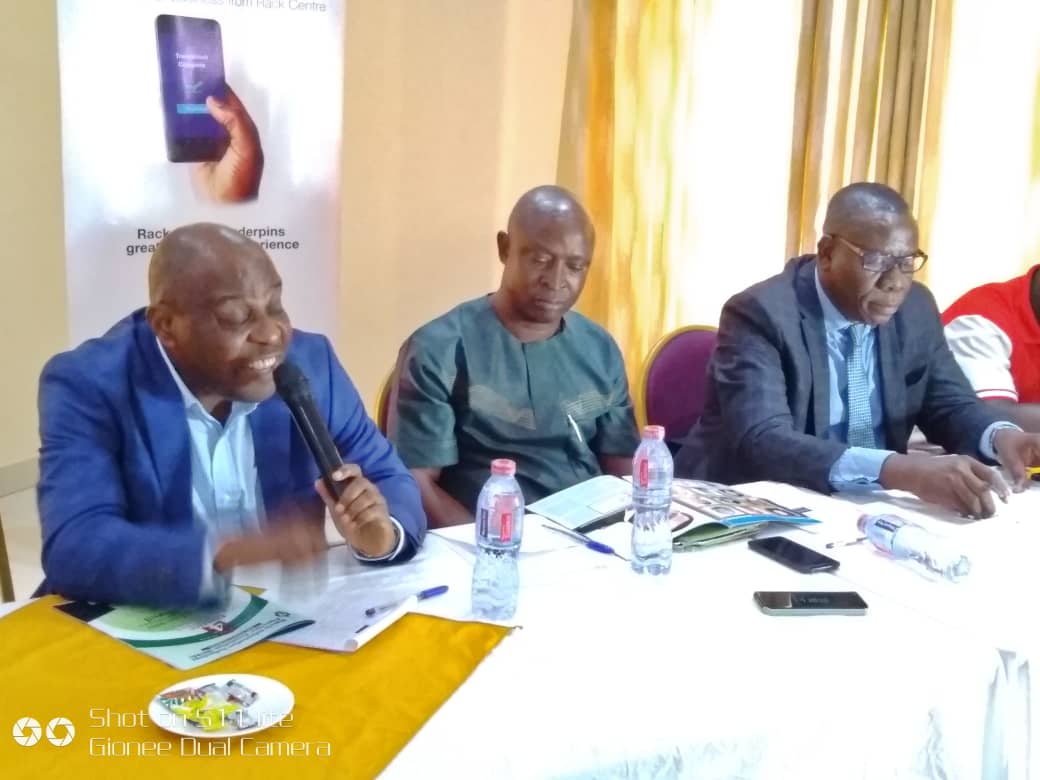
Prof. Umar Garba Danbatta, Executive Vice Chairman/Chief Executive Officer, Nigerian Communications Commission on Friday reemphasized the commissions’ commitment in ensuring the provision of broadband infrastructure across the country to achieve last-mile connectivity.
He stated this at the 4th Quarter Seminar/Induction Ceremony of the Nigerian Information Technology Reporter’s Association (NITRA) held in Lagos.
The theme of the events was: ‘Achieving Last-Mile Connectivity through Affordable Broadband’.
Danbatta, who was represented by Dr. Henry Nkemadu, Deputy Director./ Head, Special Intervention Projects, NCC noted that Nigerian Communications Commission will ensure the provision of broadband infrastructure across the country to achieve last-mile connectivity.
He added that Communications Sector is a catalyst that would provide the needed infrastructure that will enable other sectors of Business, Education, Health, Agriculture, Governance, Finance to thrive.
According to him, “the Communications Sector provides the infrastructure to enable other infrastructures in the different sectors of Business, Education, Health, Agriculture, Governance, Finance and so on.
“The importance of this sector has continued to enhance human capabilities such as healthy life, knowledge, creativity, collaboration, innovation, self-organization and participation in the social, economic and political life of the country as well as impact on economic growth through productivity gains.”
He also revealed that the commission’s activities have impacted on efficient improvements in service delivery that enable national development.
Danbatta explained that telecommunication acts as an enabler to drive socio-economic growth, developments and modernization across all sectors of the economy.
He added that robust and reliable telecoms service lies on adequate broadband infrastructure which will provide the needed impetus to achieve last mile connectivity.
He further stated that the Commission has made plans for massive deployment of 5G infrastructure in the country.
He said, “At the Stakeholders Consultative Forum on 5G Readiness and High Altitude Platform Station Technologies in Abuja recently, the Commission announced its plans for massive deployment of infrastructure for the new technology.
“5G has the potential to be transformational for communities in Nigeria because of the set high requirements for 5G networks: fast, ubiquitously available services provided by infrastructure deployed across all regions.
“The 5G technology has significantly faster speeds and more reliable connections on smartphones and other devices.”
Mr Emma Okonji, Chairman, Nigeria Information and Communications Technology Reporters Association (NITRA) while delivering it opening speech said that broadband infrastructure is an enabler for economic and social growth in a digital economy.
He commended the 15 member committee inaugurated by former president Goodluck Ebele Jonathan to draw up national broadband strategy for a work well done.
He further commended NCC for achieving the 30 percent broadband penetration target that was set from 2013 to 2018.
Okonji extolled Danbatta’s passion for broadband development in the country, adding that it has further deepened broadband penetration and grew it to the 30.9 percent that we currently achieved.
Engr Gbenga Adebayo, Chairman of the Association of Licensed Telecom Operators of Nigeria (ALTON) decried the hostile business environment in the country, noting that it’s the reason why CDMA Company’s died.
He therefore called on the media to help in sustaining the environment by ensuring accurate reportage of the sector.
Adebayo, who was represented by Engr Aremu Olajide, chairman, Technical Committee, appealed on the media to always research on some of the laws being implemented by the state governments and ask questions on the areas of irregularities, citing the tax disputes between the Kogi government and mobile network operators as an example.
He condemned the multiple taxation Telco operators are being subjected to in the industry.
He further called on the support of the association in sustaining the industry through effective reportage.
Also speaking at the event, Dr. Ayotunde Coker, Managing Director of Rack Centre, said that cloud technology will transform Nigeria and Africa if we deploy it in sachet format.
He added that Nigeria run what he called a sachet economy, where we buy things in sachet form, stressing that deploying cloud in sachet format will ensure that it gets to the citizenry easy and faster.


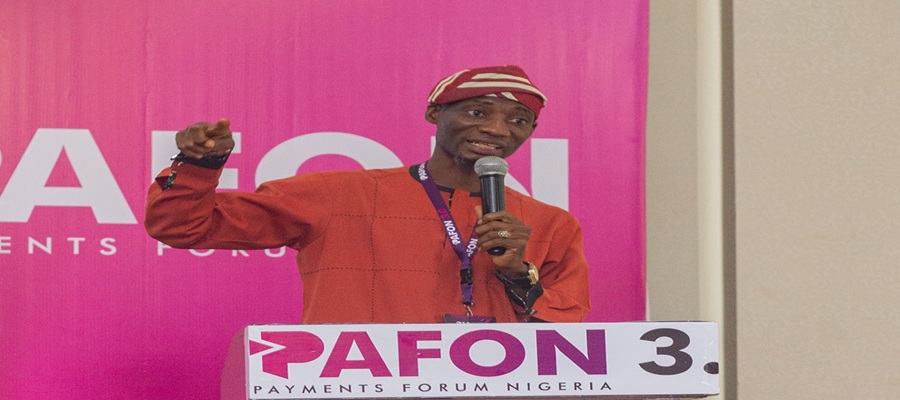
Dr. Obioha Oti, National President of the Association of Mobile Money and Bank Agents in Nigeria (AMMBAN), has described agency banking as Nigeria’s most critical last-mile channel for achieving meaningful financial inclusion, stressing that millions of Nigerians, particularly in rural and underserved communities, remain financially excluded despite notable progress in the sector.

PAFON 3.0
Speaking at the third edition of the Payments Forum Nigeria (PAFON 3.0), themed “Fair Digital Payments as a Catalyst for Deepening Financial Inclusion in Nigeria,” Oti, represented by Alhaji Yusuf Adeyemo, vice president of the Association of Mobile Money and Bank Agents in Nigeria (AMMBAN), said agency banking has become Nigeria’s most practical and scalable solution for bridging the persistent financial access gap caused by poor infrastructure, low financial literacy, trust deficits, and high service delivery costs.
According to him, without effective last-mile financial access, Nigeria’s financial inclusion ambitions may remain unattainable.
Oti noted that through extensive agent networks, Nigerians now enjoy convenient access to critical financial services including cash deposits, withdrawals, transfers, bill payments, account opening, and other essential banking products, adding that beyond transactional services, agency banking offers trust, human interaction, and proximity-factors that purely digital channels cannot fully replicate.
“Agency banking has emerged as the most practical, scalable, and human-centred solution,” he stated, adding that agents serve as trusted financial intermediaries within local communities.
Highlighting AMMBAN’s contributions, Oti said the association has played a central role in strengthening Nigeria’s financial inclusion ecosystem through policy advocacy, professional training, rural agent expansion, fraud awareness campaigns, consumer protection initiatives, and strategic collaborations involving banks, fintechs, telecom operators, and mobile money providers.
He further noted that the agency banking sector has created millions of jobs and unlocked significant economic opportunities nationwide.
Oti acknowledged the contributions of major ecosystem drivers, including the Central Bank of Nigeria (CBN), which he said continues to provide regulatory support through financial inclusion frameworks, consumer protection policies, and interoperability initiatives.
He also credited the Shared Agent Network Expansion Facilities (SANEF) for accelerating agent expansion across the country, while Enhancing Financial Innovation and Access (EFInA) was recognized for its support through research, innovation funding, and data-driven insights.
Despite these achievements, Oti warned that the sector continues to grapple with significant obstacles such as liquidity shortages, network instability, fraud risks, poor agent profitability, infrastructure deficits, and overlapping regulations.
He stressed that these challenges must be urgently addressed to sustain growth and deepen inclusion. “For inclusion to truly deepen, digital payments must be affordable, reliable, transparent, and accessible to all Nigerians,” he said, insisting that fairness in digital payments is essential to closing the financial inclusion gap.
He warned that unfair pricing structures, unstable systems, and exclusionary payment models could further marginalize vulnerable populations.
Looking ahead, Oti urged stakeholders across the financial ecosystem to prioritize stronger collaboration, improved agent profitability, infrastructure development, enhanced financial literacy, increased financing access for agents, and supportive regulatory frameworks.
He projected that Nigeria’s financial inclusion future will be “phygital,” combining physical agent networks with digital platforms to create seamless financial access.
According to him, agents are rapidly evolving beyond transaction points into community-based financial service hubs capable of driving grassroots economic development. “Agency banking is no longer just a distribution channel; it is the backbone of financial inclusion in Nigeria,” Oti declared.
He reaffirmed AMMBAN’s commitment to working with regulators, financial institutions, and technology providers to strengthen the ecosystem, empower underserved populations, and build a more inclusive national financial system.


Association of Telecommunications Companies of Nigeria (ATCON) has warned that weak penalties under Nigeria’s Critical National Information Infrastructure (CNII) policy are undermining efforts to protect telecoms assets.

Tony Emoekpere, president, ATCON, made this known in an interview with the News Agency of Nigeria (NAN) in Lagos while calling for urgent legal reforms to strengthen enforcement.
Emoekpere said that although offenders are being apprehended and prosecuted, the current framework was failing to serve as a deterrent.
NAN reports that Nigeria’s Designation and Protection of Critical National Information Infrastructure (CNII) Order 2024, signed by President Bola Ahmed Tinubu, provides the country’s main legal framework for safeguarding critical Information and Communication Technology (ICT) infrastructure against vandalism, sabotage and theft.
The Order, anchored on the Cybercrimes (Prohibition, Prevention, etc.) Act 2015, classifies assets such as telecom towers, fibre-optic cables and data centres as critical national infrastructure requiring enhanced protection.
“People are being caught, but the offences are still treated as petty crimes.
“That limits the impact. CNII needs stronger legal backing such as an Act or executive order to give it more teeth,” the ATCON president said.
He said that the group was actively supporting the implementation of the CNII policy in collaboration with security agencies, stressing that telecom infrastructure remained critical to national security and economic growth.
The ATCON president also reaffirmed support for the Federal Government’s “Project Bridge,” aimed at expanding connectivity across the country, but identified right-of-way approvals across states as a major bottleneck.
According to him, because telcos have to engage multiple states, it is slowing things down but efforts are ongoing to address it.
On service quality, he said operators are struggling to keep pace with rising subscriber numbers and increasing data demand, despite recent tariff adjustments.
“The challenge is not that nothing is being done—investments are ongoing. But demand is growing even faster, and operators are constantly trying to catch up,” he said.
Emoekpere added that subscriber migration between networks and shifting usage patterns are placing additional pressure on certain operators, contributing to service fluctuations.
He, however, assured customers that efforts are ongoing to improve network performance.
“We value our subscribers, and everything is being done not just to maintain, but to improve service delivery,” he said.
The telecommunications sector has consistently identified infrastructure vandalism as a major challenge affecting service delivery and operational costs.
Industry stakeholders say the CNII Order is expected to strengthen the protection of telecom assets and improve quality of service for consumers, following years of rising attacks on infrastructure across the country.
Data from operators show that fibre-optic cable cuts remain one of the biggest threats to telecom operations.
However, in spite of the Order, Nigeria recorded 1,883 fibre cuts in the first quarter of 2026, while between January and August 2025, about 19,384 incidents were reported nationwide, averaging more than 2,400 monthly cases.
MTN Nigeria alone reported 9,218 fibre cuts in 2025, compared with 9,000 in 2024 and 6,000 in 2023, highlighting the increasing scale of the problem.
The sector has also faced widespread theft of generators, batteries and other power assets used to keep telecoms sites operational.
In 2025, criminals reportedly stole 656 critical power assets, including 152 generators and 504 batteries, while telecom operators lost an estimated ₦27 billion nationwide within a 12-month period due to infrastructure damage.
Industry reports further indicated that 577 network outages recorded in the first quarter of 2026 were directly linked to vandalism of telecoms infrastructure.
(NAN)


Airtel Africa has delivered a landmark financial performance for the 2026 fiscal year, characterized by record-breaking customer acquisitions, a massive leap in profitability, and a definitive shift toward a data-centric business model.

Driven by disciplined execution, and a robust digital strategy, the Group saw its Profit After Tax skyrocket to $813 million, up from $328 million in the previous year. This surge was underpinned by a 29.5 per cent increase in reported revenue to $6.4 billion, fueled largely by a 47.5 per cent growth explosion in the Nigerian market following strategic tariff adjustments.
Airtel Africa in its financial result for the year March 31, 2026, noted that the year was defined by a shift in how consumers interact with the network. Expectedly, data revenues have become the largest component of Group revenue, growing by 35.2 per cent in constant currency, which further lifted the firm’s performance. The customer base grew by 10.5 per cent to 183.5 million, the highest net additions in the company’s history.
On the network, smartphone penetration hit nearly 50 per cent, with 91 million users now utilizing high-speed data.
The mobile money ecosystem handled an annualised transaction value of over $215 billion in Q4’26. Customer engagement surged as the platform evolved into a primary financial hub for 54 million users.
Despite global inflationary pressures, Airtel’s cost-efficiency programmes pushed EBITDA margins to an all-time high of 50.3 per cent in the final quarter. This operational strength allowed the company to accelerate its infrastructure rollout, adding over 3,250 new sites and expanding its fiber network to nearly 82,000 km.
“This year delivered a very strong performance across both operating and financial metrics,” said Chief Executive Officer, Sunil Taldar, adding, “Adoption of new digital technologies and AI has been pivotal in unlocking growth opportunities and driving efficiencies, enhancing customer experience through site-level network optimization and streamlined onboarding.”
Airtel’s balance sheet has significantly de-leveraged, with leverage improving to 1.8x. This financial health has translated directly into shareholder value. The Board recommended a final dividend of 4.26 cents, bringing the full-year total to 7.1 cents, a 9.2 per cent increase.
While geopolitical developments have shifted the timeline, the company remains committed to an IPO for Airtel Money in the second half of 2026.
On future investment, the firm’s Capex guidance for FY’27 has been raised to $1.1 billion, focusing on 5G readiness, home broadband, and data centers.
While the outlook remains bullish, Taldar noted that rising energy costs due to geopolitical events may create near-term margin pressure. However, the Group intends to offset these through intensified cost-management and the continued scaling of its digital infrastructure.

Africa Prudential Launches Sabivest to Boost Digital Investment Access

Interswitch Inducts 3rd Interns into Its Developer Academy

PAFON 3.0: Agency Banking Key to Reaching Millions of Unbanked Nigerians – AMMBAN

CPN Begins Crackdown on Quack IT Professionals, Vows Tougher Action against Cybercrime

IMF Fears AI-Powered Cyberattack Could Spark Global Financial Crisis

Kaspersky Discovers Vulnerability in Qualcomm Snapdragon Chips that can Lead to Data Loss & Device Compromise

MTN Suspends Data, Airtime Borrowing Service over New FCCPC Lending Rules

Bank Customers to Pay N1,500 for ATM Card Issuance, Replacement – CBN

FCCPC Licenses 5 Firms for Airtime, Data Lending as Telcos Step Aside

ATM Card Fees Jump to ₦1,500 as CBN Scraps Maintenance Charges




 Telecom2 days ago
Unity Bank Disburses N500m Loan Facility to Support Small Traders

 Telecom2 days ago
Airtel Africa Profits Hit $813m on Strong Nigerian Operations Performance

 E-Financial2 days ago
MasterCard, BMONI Partner to Improve Digital Payments
 E-Financial2 days ago
IMF Fears AI-Powered Cyberattack Could Spark Global Financial Crisis

 E-Financial2 days ago
Fidelity Bank Provides Critical Funding Support to Abuja Special Needs Orphanage

 Telecom2 days ago
ATCON Seeks Stiffer Penalities to Deter Infrastructure Attacks, Vandalism
 E-Business2 days ago
CPN Begins Crackdown on Quack IT Professionals, Vows Tougher Action against Cybercrime

 News2 days ago
Joshua Ichor, Nigerian Innovator Bags Europe’s €60m Fellowship