

Telecom
Nigeria Pushes MEA’s Mobile Subscribers to 1Bn


Nigeria will be at the driver’s seat with its over 113 million subscribers, when the Middle East and Africa (MEA) telecom market hits its first one-billionth in March, according to a new research released in the Pyramid Perspective 2013.
The report indicates the milestone will make the MEA region on the second after Asia-Pacific to attain a one-billion mobile subscriber mark. “Four countries – Nigeria, Egypt, South Africa and Turkey- account for 35% of the region’s total subscriptions,” the report stated.
The MEA region is also projected to be home to more mobile subscriptions than all developed regions combined by 2022.
Two leading mobile operators in the region, South Africa’s MTN Group and Etisalat of Abu Dhabi are expected to gain significantly from the market milestone, as their success in the region would draw other global players into the market.
“This projected growth will help raise the global profile of the region’s largest players on the global stage, specifically MTN and Etisalat, and help Western European players heavily invested in the region, such as Vodafone and France Telecom.”

Daniel Amparan, managing director at Pyramid Research noted that “2013 will also accelerate the rate at which emerging market-based players take advantage of financially challenged developed market assets to bring much needed capital, but also commercial innovation and expertise. It will also be a year of important milestones. By year’s end, mobile subscriptions will reach 7 Billion, on par with the global population.”
Significantly also, the report shows that the MEA region still holds enough space for further investment as it currently has a market penetration of only 65 per cent. It is only one of two regions with less than a 100 per cent penetration. The other is Asia-Pacific with 85 per cent.
“User penetration stood at 64 per cent at year-end 2012, suggesting that there is still room for organic growth, particularly in Africa & the Middle East (user penetration of 50 per cent) and in Asia-Pacific (user penetration of 63per cent). Pyramid Research expects 2 Billion new mobile subscriptions to come online worldwide by 2017, of which 89per cent will be in emerging markets.”
The report also indicates that competition will force a market consolidation among leading players, especially in developing markets like Nigeria where there are five GSM mobile operators (MTN, Glo, Airtel, Etisalat & Mtel), with a plethora of CDMA operators, most of which are at the brink of collapse.
“Consolidation has progressed most quickly in recent years in markets where subscriber growth has slowed, competitive pressures are squeezing margins and upcoming capital requirements are high. We believe that the same forces driving consolidation in developed markets will now force the hand of players in emerging markets. In Africa we see potential for consolidation in markets such as Cote d’Ivoire, Ghana, Nigeria, Tanzania and Uganda, each of which is home to five operators or more.”
Forecast for the region are not all happy ending affairs. It stated that with growth already decelerating in the developed markets, and “business models shifting toward data services and the commoditization of voice. The cost of acquiring and maintaining customers is climbing fast as operators expand into underserved areas.”
Consequently, operators like “MTN and Airtel, for example, will seriously consider rationalizing their current footprint and potential for partnerships.” It is also expected that 2013 will witness a possible rapid consolidation via mergers and acquisitions in Nigeria’s troubled CDMA segment.


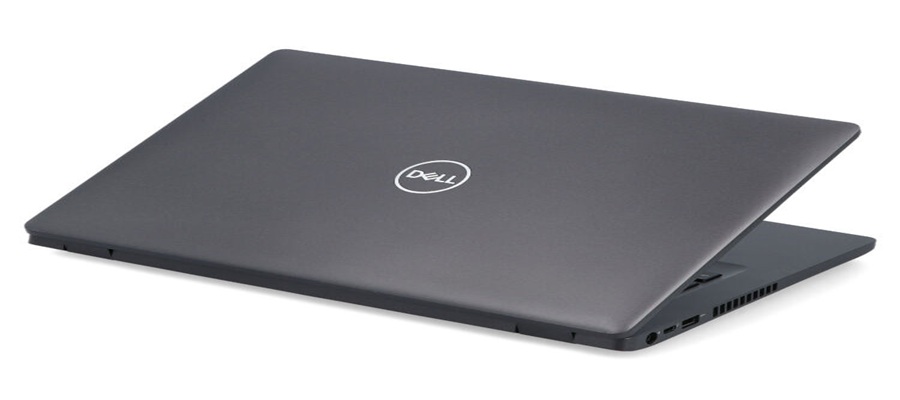
MENXTT TECH NG, a Lagos-based technology company, has launched an initiative to make quality Dell laptops more affordable for Nigerians through flexible payment plans and extended warranty support.

The company said the initiative was aimed at helping students, entrepreneurs, professionals and small businesses acquire reliable computing devices despite rising technology costs.
According to the company, customers can now purchase premium pre-owned Dell Latitude, Dell Precision and Dell Inspiron laptops at competitive prices, with selected models available under staggered payment arrangements.
The laptops, it said, are designed to meet the needs of users ranging from students and office workers to architects, engineers, software developers, graphic designers and video editors.
Speaking on the initiative, the Co-Founder of MENXTT TECH NG, Mr Anthony Emeka Nwosu, said access to quality technology should not be limited by financial constraints.
“A laptop is no longer a luxury; it is an essential tool for education, business and career development.
“Unfortunately, many people are forced to settle for unreliable devices because of the high cost of new laptops.
“At MENXTT TECH NG, we want to bridge that gap by providing durable Dell business laptops at affordable prices, backed by a full one-year warranty and flexible payment plans.
“We want every student, entrepreneur, freelancer and business owner to have access to technology that helps them succeed,” he said.
Nwosu explained that every laptop undergoes comprehensive testing before delivery and comes with a one-year warranty, an original charger, a complimentary laptop bag, Windows 11 operating system and Microsoft Office Suite pre-installed.
He added that the company, an authorised Bitdefender Antivirus reseller in Nigeria, also installs genuine Bitdefender security software on every system to protect customers against cyber threats.
According to him, customers requiring additional productivity tools can also have licensed Foxit PDF software installed on their devices.
Nwosu said the flexible payment option was introduced in response to prevailing economic realities, enabling customers to spread payments over an agreed period.
He noted that the arrangement would make it easier for students, startups and growing businesses to acquire quality computers without placing excessive pressure on their finances.
Beyond laptop sales, the company provides information technology consultancy, computer repairs, software licensing, cybersecurity solutions and digital transformation services to organisations across Nigeria.
He reaffirmed the company’s commitment to supporting Nigeria’s digital economy by making dependable computing devices and enterprise technology solutions more accessible to individuals and businesses.
According to him, the initiative reflects MENXTT TECH NG’s vision of combining affordability, quality products and professional after-sales support to help more Nigerians participate in the country’s expanding digital ecosystem. (NAN)

National Information Technology Development Agency (NITDA) has called for stronger collaboration among government, industry, academia and technology professionals to accelerate digital innovation and drive inclusive economic growth in Nigeria.

Dr. Aristotle Onumo, Director, Stakeholder Management and Partnerships, representing the Director General of NITDA, delivers a goodwill message at the 20th International Conference on Technology and Computing (RISE 2026) in Jos, reaffirming the Agency’s commitment to fostering digital innovation, strategic collaboration, and a technology-driven future for Nigeria.
The agency made the call at the 20th Nigeria Computer Society (NCS) International Conference 2026, held in Jos, Plateau State, where stakeholders examined strategies for leveraging emerging technologies to strengthen national development.
Speaking on behalf of the Director-General of NITDA, Mr Kashifu Inuwa, the agency’s Director of Stakeholders Management and Partnerships, Dr Aristotle Onumo, said Nigeria’s digital transformation would depend on sustained investment in innovation, digital skills, research and strategic partnerships.
According to him, collaboration across the public and private sectors is essential to translate emerging technologies into practical solutions capable of improving governance, creating jobs and enhancing the country’s global competitiveness.
Onumo said NITDA remained committed to implementing its Strategic Roadmap and Action Plan through initiatives that promote digital literacy, research and development, innovation ecosystems, cyber sovereignty and emerging technologies.
He added that the agency was expanding opportunities for innovators, entrepreneurs and startups through platforms designed to encourage collaboration, investment and technology-driven enterprise.
“We are transforming Digital Nigeria into the nation’s foremost innovation platform where policymakers, investors, startups, researchers and technology companies can collaborate to accelerate economic growth and digital transformation,” he said.
He urged innovators, startup founders and technology professionals to participate actively in the forthcoming Builders Summit by showcasing indigenous solutions capable of addressing Nigeria’s development challenges.
Declaring the conference open, the Governor of Plateau State, Mr Caleb Mutfwang, described digital technology as a critical driver of governance and economic development.
Mutfwang said his administration had adopted digital solutions to improve public service delivery, modernise government operations and enhance internally generated revenue.
He also identified technology as a key enabler for agricultural transformation, increased productivity and improved food security, urging participants to ensure that deliberations at the conference translate into practical outcomes for national development.
Earlier, the President of the Nigeria Computer Society (NCS), Prof. Muhammad Sirajo, said the conference was organised to strengthen collaboration among policymakers, researchers, regulators, technology professionals and industry leaders.
Sirajo said the conference, with the theme “Harnessing Digital Innovation and Emerging Technologies for Inclusive Growth and Economic Renaissance (RISE 2026),” focused on exploring how innovation could accelerate Nigeria’s socio-economic development.
He identified artificial intelligence, blockchain, cloud computing, cybersecurity and robotics as among the technologies shaping the future of economies across the world.
According to him, Nigeria’s youthful population and expanding digital ecosystem provide a strong foundation for building a globally competitive economy through sustained investment in digital infrastructure, innovation and skills development.
The conference attracted government officials, regulators, academics, development partners, technology professionals and private-sector stakeholders to deliberate on policies and innovations aimed at accelerating Nigeria’s digital transformation and inclusive economic renaissance.
Telecom
Hon. Minister Dr. Kingsley T. Udeh and ASUS To Unveil First of a Kind Flagship Store in West Africa


In a landmark moment for Nigeria’s technology retail sector, the Honourable Minister of Innovation, Science and Technology, Dr Kingsley Tochukwu Udeh SAN, will on Monday, August 3rd, commission a landmark ASUS Flagship Store in partnership with Nigeria’s leading e-commerce group Konga. The state-of-the-art facility is widely regarded as the first initiative of its kind in West Africa.

The commissioning will witness the visit of senior executives from the world-renowned technology brand to Nigeria, including EMEA General Manager, Mr. Aaron Tsai, alongside other. One of the purposes of their visit is to reinforce the strategic partnership with Konga and solidify the collaboration between both organisations, further demonstrating ASUS’ commitment to the Nigerian market.
The event is expected to also bring together key stakeholders from government, the technology industry, business community, and the media for what promises to be a defining moment in the evolution of technology retail in the region.
The development comes as Konga continues to accelerate its strategic partnerships with some of the world’s leading technology brands.
For years, Nigerian consumers have demanded more than just access to genuine technology products. They have increasingly sought immersive experiences, expert guidance, after-sales support, and greater confidence when making technology investments. The next chapter in this journey appears to address many of these expectations in a bold and innovative way.
The forthcoming announcement is expected to bring together global innovation in a manner that reflects the changing realities of today’s technology consumer. It also reinforces the growing confidence that leading international technology companies continue to place in Nigeria as one of Africa’s most strategic digital markets.
Industry analysts note that partnerships of this nature are becoming increasingly important as consumers place greater emphasis on authenticity, hands-on product experiences, technical support, and trusted purchase channels. Beyond selling devices, the future of technology retail lies in building complete customer experiences.
As anticipation builds for Monday, one thing is certain: the ASUS-Konga partnership promises to set new standards for tech retail in West Africa, elevating customer experience and reinforcing Nigeria’s digital transformation narrative.

Police Uncover Fake Diplomatic Number Plate Syndicate in Abuja

Davido Shares Past Suicidal Thoughts, Drops Oriadé Album

Gavi Okays $500m for Vaccines, PHCs in Nigeria

82% of Organizations Concerned about AI Risks Even as Adoption Accelerates – Survey Reveals

The Journey to Financial Freedom: Priscilla, a PalmPay Agent Now Owns a Store

NRC, Ponzi Scheme Collapses Resulting Loss of Billions of Naira

EFCC Busts NIS Visa Overstay Racket, Uncovers N700m in an Account

From Scarcity to Scale: What Africa Can Learn from India’s Agricultural Transformation

Tokenization, Blockchain Technology will Transform Financial Institutions – IMF

BON Establishes Six Ad Hoc Committees to Modernize Broadcasting




 Telecom3 days ago
Clydestone Ghana Sues MTN Over Mobile Money

 News3 days ago
IHS Nigeria Donates Business-Support Equipment to Empower People with Disabilities in Abuja Community

 News3 days ago
Africa Prudential Unveils Digital Growth Strategy

 E-Business3 days ago
Kaspersky Uncovers New Mirage Kitten Malware Used in Cyber-espionage Campaign Across Africa, Others

 E-Financial3 days ago
CBN Fines Banks N430m for Ignoring Customers’ Complaints

 E-Financial3 days ago
Afreximbank Raises $1.5b in Largest-ever Bond Issuance

 E-Financial3 days ago
SEC Begins Full e-Registration for Capital Market Operators

 E-Financial3 days ago
Elon Musk Launches Invite-only X Money with Visa Debit Card