

News
Glo Seals Partnership with Africa CEO Forum to Grow Continent’s Economy


In continuation of its desire to promote Africa’s economic development, digital transformation leader, Globacom, has announced its support for the 2019 Africa CEO Forum.
Globacom’s support for the continental initiative was made known by its Executive Vice Chairman, Mrs. Bella Disu, who has held consultations with the Forum organisers.
Mrs. Disu said that Globacom was pleased to partner with the organisers to provide a networking platform for decision makers to identify ways to improve intra-African trade and investments. Globacom is the 2019 apex Diamond Partner of the gathering.
She disclosed that Globacom was backing the forum as a testimony to its desire to support initiatives that nurture Africa’s economic potential.
“Africa is rich in business diversity and, when properly connected, African businesses can make greater contributions to economic expansion and human development,” Globacom’s EVC stated.
“Globacom is intentional about fostering an environment for African businesses to thrive,” she added.
The foremost annual international meeting for executives and investors in Africa brings together Chief Executive Officers (CEOs), international investors, experts and high-level policy makers, and features discussions that mobilise African businesses to champion private sector-led growth while building sustainable organisations.
The 2019 edition of the Forum is billed to hold in Kigali, Rwanda, from March 25 to 26. Themed ‘Open Africa: from continental treaties to business realities’, and will feature over 40 panels, private-public workshops, and case studies.
Mrs. Disu, who will participate in this year’s forum and chair the Women in Business Initiative, added that in today’s global world and with tech-enabled access to knowledge and opportunities, there has never been a better time for women to look around and see other women who influence them.
According to Jeune Afrique Media Group and Rainbow Unlimited, the forum will “unite its 2000 participants around a transformation agenda… What priorities must be identified to boost the level of intra-African trade and investment? What must a united Africa do to better protect its interests and industries? How can we mobilise the private sector around cross-border infrastructure and logistical projects?”
The 2018 edition had 70 countries represented by heads of governments, 1500 participants, and 700 CEOs. Guests included former Nigerian President, Chief Olusegun Obasanjo; President Alassane Ouattara of Côte d’Ivoire; President Nana Akufo-Addo of Ghana; Mr. Wale Tinubu, Group Chief Executive Officer of Oando PLC; Mrs. Folorunsho Alakija, Vice Chairman of Famfa Oil; and Nadia Fettah, Managing Director of Saham Finances.



Flutterwave has secured a strategic investment from Circle Ventures, the venture capital arm of Circle Internet Group, to accelerate the expansion of its USDC payments and settlement infrastructure across Africa.

This comes as demand for faster and more efficient cross-border transactions grows.
The investment strengthens Flutterwave’s ambition to integrate USDC settlement into its existing payment ecosystem, allowing businesses to receive payments in local currencies while settling in the dollar-backed stablecoin.
The company said the move would reduce settlement delays and transaction costs while enabling near-instant settlements beyond traditional banking hours.
The announcement comes after Flutterwave participated in the launch of the Circle Payments Network in 2025, marking a deeper collaboration between the two companies in advancing digital payment infrastructure across the continent.
Flutterwave said the investment aligns with its strategy of positioning stablecoins as a key component of Africa’s financial infrastructure, while ensuring blockchain-based payment services operate within existing regulatory and compliance frameworks.
Commenting on the development, Flutterwave Founder and Chief Executive Officer, Olugbenga Agboola, said the investment would help build the infrastructure required for the next phase of global money movement from Africa.
According to him, stablecoins have evolved beyond experimentation into core financial infrastructure capable of transforming how businesses move money across borders.
“This support from Circle Ventures is about backing the rails that will power the next era of global money movement from Africa. Stablecoins like USDC are no longer an experiment; they are becoming core financial infrastructure.
“By embedding USDC settlement into our current payments infrastructure, we are building a system that lets businesses move money at the speed of the internet. This fundamentally changes how payments from Africa connect to the world, and it positions Flutterwave as the default stablecoin gateway for the continent,” Agboola said.

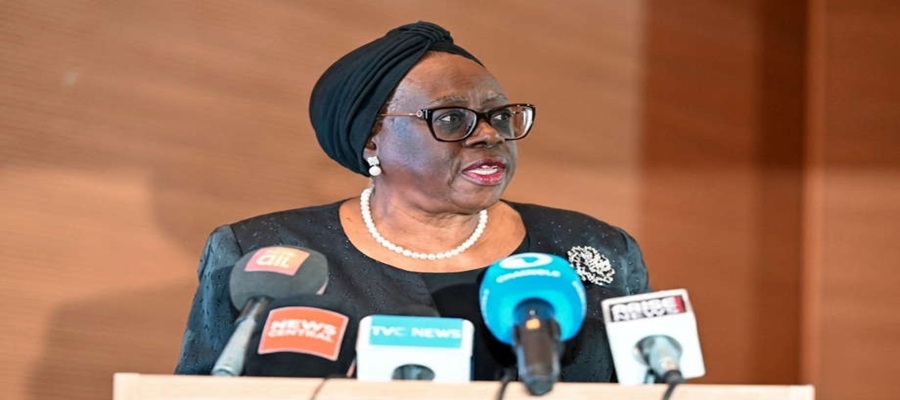
Justice Kudirat Kekere-Ekun, Chief Justice of Nigeria (CJN), has cautioned newly appointed judges of the lower courts against accepting unsolicited gifts, warning that such actions could expose them to petitions and erode public confidence in the judiciary.

The CJN gave the warning at the opening of an induction course for newly appointed judges in Abuja on Tuesday.
Represented by the Administrator of the National Judicial Institute (NJI), Justice Babatunde Adejumo, Kekere-Ekun urged the judges to uphold the highest standards of integrity and ensure the speedy and fair dispensation of justice.
She said judicial officers must remain above reproach in both their official and personal conduct.
“Most importantly, do not allow unsolicited gifts. You must equally avoid throwing unnecessary birthday parties. People will seize the opportunity to bring unsolicited gifts that can lead to petitions,” she said.
The CJN also advised the judges to work harmoniously with court officials, including registrars and exhibit keepers, while maintaining professionalism in the discharge of their duties.
She urged them to familiarise themselves with court rules to avoid being misled by legal practitioners and cautioned against the excessive use of contempt powers.
“You must work harmoniously with all the officials under you and ensure that you manage them diplomatically and technically. Read the rules of court so that lawyers will not take you for a ride,” she said.
Kekere-Ekun stressed that prompt and fair determination of cases was essential to sustaining public trust in the nation’s judicial system.
In his remarks, Justice Adejumo congratulated the new judges on their appointments, describing their elevation to the Bench as a significant responsibility in upholding constitutional supremacy, the rule of law and access to justice.
He said the induction programme was designed to equip participants with knowledge of judicial ethics, courtroom management, substantive and procedural law, and the practical skills required for effective adjudication.
Adejumo noted that the lower courts remain the first point of contact for most Nigerians seeking justice and play a critical role in the effective administration of the country’s judicial system.
He urged the judges to make the most of the training as they prepare to assume their responsibilities on the Bench.
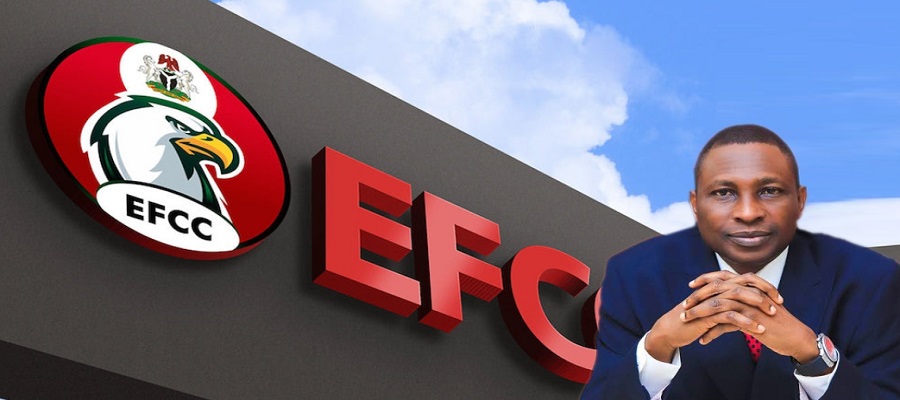
Economic and Financial Crimes Commission (EFCC), on Tuesday, July 7, handed over 1,452 items recovered from proceeds of crime to the Federal Ministry of Education to support schools across the country.

The recovered items, comprising 501 double-step bunk beds, 939 mattresses and 12 wooden beds with mattresses, were formally presented to the Minister of Education, Tunji Alausa, at a ceremony in Abuja by the Chairman of the EFCC, Ola Olukoyede.
Speaking at the event, Olukoyede said the items were recovered during the commission’s “Operation Eagle Flush,” a nationwide operation conducted in late 2024 against cybercrime and other financial offences.
He described the operation as the largest single operation ever undertaken by the commission.
According to him, the operation led to the arrest of 792 suspects, including 193 foreign nationals, all of whom were investigated, prosecuted and convicted before the foreign nationals were deported after serving their jail terms.
Olukoyede said the decision to transfer the recovered items to the education ministry was in line with the Federal Government’s resolve to channel recovered assets into projects that directly benefit Nigerians.
The EFCC chairman noted that the handover was not the first intervention from recovered assets directed at the education sector.
He recalled that a forfeited university was previously transferred to the Federal Government and converted into the Federal University of Applied Sciences, Kachia.
Olukoyede also said recovered proceeds of crime had supported the establishment of the student loan scheme through the Nigerian Education Loan Fund.
He stated that more than 1.4 million students had benefited from the initiative, arguing that improved access to education would help reduce the attraction of cybercrime among young Nigerians.
He added that the commission would continue to recover proceeds of crime and ensure they were deployed transparently.
Receiving the items, Alausa commended the EFCC chairman for adopting a proactive approach to tackling corruption, particularly procurement-related offences and cybercrime.
He described education as central to the Federal Government’s economic agenda and said President Bola Ahmed Tinubu had deliberately directed recovered assets towards strengthening the sector.
The minister disclosed that the Federal University of Applied Sciences, Kachia, admitted about 3,000 students in its first academic session and is expected to increase its intake to over 5,000 students in its second year.
He also revealed that the initial N50 billion seed funding for the Nigerian Education Loan Fund came from recovered proceeds of crime.

CAC to Sanction Companies with Incomplete Business Letters From August 1

BVN Enrollments Hit 69.55m- NIBSS

CBN Warns against Rejection of N100 Banknotes

Data Protection Industry Hits N16.3Bn in 3 Years- NDPC

NCC Seeks Cost-Based Pricing Framework for Ducts

NASENI Moves to Digitize CCB’s 5m Assets Declaration and Operations

Mobile Internet Gender Gap Widest in Africa – GSMA

Nigeria Launches FreeTV Nationwide

CANAL+ Partners Samsung to Pre-Load DStv Stream on New Samsung TVs In Nigeria, Other African Countries

CredibleVoteNG Opens Free Access to all Polling Units in Nigeria after INEC Demanded N1.Bn for Register




 News1 day ago
NRC, Ponzi Scheme Collapses Resulting Loss of Billions of Naira

 General News2 days ago
IHS Nigeria, FCT-HSES Concludes Clean Cooking Energy Campaign “Project Breathe Clean Air” in Abuja

 E-Business2 days ago
Kaspersky Transforms Threat Intelligence Reporting into an Interactive Content Hub

 News2 days ago
Microsoft to Lay Off 4,800 Workers

 Broadcasting2 days ago
NELFUND Investigates 34 Universities Over Students’ Missing Tuition Refunds

 Telecom2 days ago
Airtel Africa Cuts Diesel Dependence by 9.1m Litres

 Telecom2 days ago
A New Blueprint – How Strategic Collaboration is Rewriting the Narrative on Youth Drug Abuse

 News2 days ago
Access Bank, Fifth Chukker and UNICEF Renew Commitment to Expanding Educational Opportunities for Nigeria’s Most Vulnerable Children