

Broadcasting
Iredia Calls for Law on Digitisation

Dr. Tonnie Iredia, former DG, Nigeria Television Authority (NTA), has stated that a law that addresses digital broadcasting is very important in the ditigised arena.
In a paper titled: Transition from Analogue to Digital Broadcasting – Legal and Regulatory Challenges; presented at the recently concluded 2008 Africast Conference and Exhibitions in Abuja, Iredia said digitisation provides more options through multiple channeling and is no doubt, a good policy.
He said: "In virtually every matter, each nation takes into account, the peculiarities of its own environment to formulate a policy that would set the stage and give clear and focused direction to the successful implementation of that matter. In the case of digitisation, what we have is a complex process with socio-economic implications that go beyond the obvious technical dimension."
"Issues such as an exact switchover date as well as other inevitable background matters must first of all be appropriately settled. The policy must cover the entire ground which must take into consideration that new demands are thrown up by new technologies. It is thus necessary to evolve a policy frame-work that would in the case of digital broadcasting specifically address the phenomenon because how a policy is formulated has a major effect on its outcome."
He said: "The nature of digitisation which is premised on advanced technology compels a proper legal and regulatory handling. What this implies is that even where laws have been in place, the new demands arising from the development of new technologies require legislation change. These include but are not limited to spectrum use, licencing, switching from analogue to digital, replacing analogue receivers, transmitters or upgrading the analogue infrastructure."
According to him, there is the need to institute a well articulated statute or an amendment to the relevant existing law to meet current realities; it has been done in the U.S, where a new law – the ‘Digital Television Transition and Public Safety Act of 2005’ was enacted for that purpose, and same is in the offing in Tanzania and Kenya.
Iredia identified possible challenges in the digitized arena to include such physical constraints as obsolete facilities and poor infrastructural base while decrying the poor maintenance culture in this part of the world.
"In Nigeria for example, the emphasis has been on how to ‘replace’ and not how to ‘repair.’ There has also been the unfortunate trend whereby technical facilities are imported without the requisite spares procured along with them."
He stated that human capacity development is also a challenge in Nigeria because it has not been given the attention it deserves, adding that if the situation is not arrested, the country would be managing a skilled-operation run by unskilled personnel; and with little or no emphasis on the rules of the business, the industry and indeed, the regulator will be overcome by a high degree of unethical practices in the business.
"Has the nation budgeted for digitisation? How much has been budgeted for digitisation? If yes, who has it been allocated to? How well funded is the NBC for the business of regulation?" the broadcast guru mused.
"We cannot over emphasize the fact that digital broadcasting is capital intensive and requires the active support of Government. This explains why the British Government decided to bear the entire cost of the first roll out of the implementation of the switch-over from analogue to digital in the United Kingdom in October 2007."
Iredia recommended that Government should carry out some test transmissions to have a first-hand experience of digital broadcasting before throwing it out to the public while also calling for an aggressive public enlightenment to make people aware of what it entails.
He concluded by saying that Government should ensure that the laws are clear and use the societal institutions set up for the business to govern that sector in all respect; warning: "All these efforts should not be subjected to bureaucracy so that they do not fail."


MTN Group has begun rolling out MTN One TV, a new entertainment proposition designed to make digital video content more accessible, relevant, and flexible for customers across African markets.

Introduced in line with MTN’s Ambition 2030 strategy, MTN One TV brings together local storytelling, live channels, international programming, and market-specific viewing options tailored to how customers across the continent access and pay for digital entertainment.
The proposition is designed to give customers greater choice in how they watch content, with viewing models that may vary by market and can include free-to-view content, advertising-funded experiences, pay-as-you-watch access, and subscription offerings.
Depending on local availability, customers may also be able to pay through airtime, Mobile Money, and other locally supported payment methods, helping to reduce common barriers to streaming access.
Beyond enhancing customer experiences, MTN One TV creates new opportunities for African creators, broadcasters, advertisers, and ecosystem partners by helping connect content to wider audiences through MTN’s scale across connectivity, payments, and digital services.
By bringing together a broad mix of content experiences under a single proposition, MTN aims to support greater content discovery, broader audience reach, and sustainable growth across Africa’s digital entertainment ecosystem.
Anchored in MTN’s strategic platforms of Connectivity, Fintech, and Digital Infrastructure, MTN One TV forms part of the Group’s broader ambition to build digital experiences that create value for customers while enabling participation and growth across Africa’s digital economy.
“Entertainment is increasingly becoming an important gateway to digital participation,” said Selorm Adadevoh, MTN group chief commercial, strategy and transformation officer.
“Through MTN One TV, we are leveraging the scale of our connectivity, fintech, and digital capabilities to make relevant content more accessible while creating new opportunities for Africa’s creative and digital economies. This is aligned with our ambition to deliver digital solutions for Africa’s progress.”
MTN One TV is being introduced progressively across MTN markets through a phased rollout approach that reflects local market needs, existing services, and partnership opportunities.
Over time, MTN will bring together a combination of video capabilities, content partnerships, and customer experiences under the MTN One TV brand to create a more consistent and scalable entertainment proposition across its footprint.
Through MTN One TV, MTN continues to extend its role beyond connectivity by combining entertainment, payments, and digital services to deliver experiences tailored to the needs of African consumers.
The rollout supports MTN’s Ambition 2030 vision of leading digital solutions for Africa’s progress while expanding access to digital entertainment across the continent.
International Air Transport Association (IATA) has identified Nigeria as one of the most expensive countries in the world for airline operations, citing high taxes, charges and operational costs that continue to weigh heavily on local carriers.

IATA’s Regional Vice President for Africa and the Middle East, Kamil Al-Awadhi, disclosed this during the association’s Annual General Meeting held in Rio de Janeiro.
Al-Awadhi said that although Nigeria’s Minister of Aviation and Aerospace Development, Festus Keyamo, had been pursuing reforms aimed at improving the aviation sector, airlines operating in the country still faced enormous cost pressures.
According to him, the high-cost operating environment has continued to affect the profitability and competitiveness of Nigerian airlines, making it difficult for the industry to realise its full potential.
He noted that excessive taxes, regulatory charges and other operating expenses remained major obstacles to airline growth across the region, with Nigeria ranking among the most challenging markets from a cost perspective.
Al-Awadhi urged member states of the Economic Community of West African States to adopt a proposed 25 per cent reduction in aviation taxes and charges to ease the burden on airlines and passengers.
According to him, lowering taxes and charges would reduce airfares, stimulate passenger traffic and strengthen the competitiveness of carriers operating within West Africa.
He stressed that a more supportive policy environment was critical to unlocking the economic benefits of aviation, including increased trade, tourism and regional integration.
Industry stakeholders have consistently advocated lower taxes and regulatory fees, arguing that the current cost structure makes air travel less affordable and limits the growth of the sector.
IATA’s latest remarks add to calls for governments in West Africa to implement policies that will promote a more sustainable and competitive aviation industry across the region.
Broadcasting
NASENI Trains 50 Women in Kano on Renewable Energy Technologies Under She-Powers Initiative

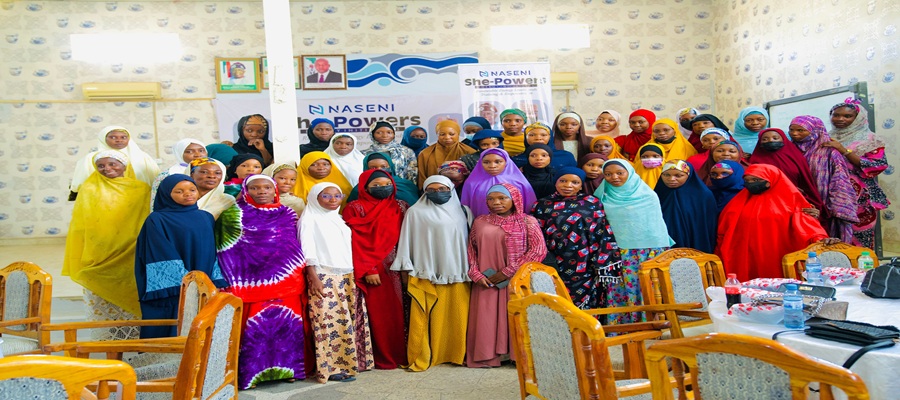
The National Agency for Science and Engineering Infrastructure (NASENI), under the leadership of its Executive Vice Chairman/CEO, Khalil Suleiman Halilu, has trained 50 women in Kano State on inverter and battery technologies through its She-Powers Energy Initiative.

The three-day programme, held at the Technology Incubation Centre, Farm Centre, Kano which ended yesterday, was designed to equip participants with practical renewable energy skills, promote women-led enterprises, and enhance sustainable livelihoods.
The initiative forms part of NASENI’s broader commitment to empowering women, creating economic opportunities, and expanding participation in Nigeria’s growing clean energy sector. It also aligns with the Renewed Hope Agenda of President Bola Ahmed Tinubu by supporting job creation, entrepreneurship, and inclusive economic development.
Through targeted interventions such as the She-Powers Energy Initiative, NASENI continues to demonstrate its commitment to leveraging technology and innovation to improve lives and drive sustainable development across the country.
Photos: Participants at the She-Powers Energy Initiative training organised by the National Agency for Science and Engineering Infrastructure (NASENI) held at the the Technology Incubation Centre, Farm Centre, Kano yesterday.

UK, Nigeria Launch £15m Growth Programme to Accelerate Economic Transformation

Haleon Introduces New Corporate Identity in Nigeria

Elon Musk Makes History as the World’s First Trillionaire

NITDA Unveils Ambitious Strategy to Turn Southwest into Nigeria’s Next Innovation Powerhouse

Airtel Africa Foundation Publishes Inaugural Annual Report

CBN Extends PoS Geo-Fencing Enforcement Deadline to August 2026

Jumia Nigeria Records Strong Q1 2026 Growth as Technology-Led Strategy Drives Market Expansion

NCC Drafts New Rules for Virtual Mobile Operators

TD Africa, HPE Drive Conversations on the Future of Intelligent Networking

Anthropic Raises $65 Bn to Expand AI Research, Innovation




 E-Business3 days ago
Firm Discovered a New Corporate Phishing Technique using a Popular AI Web Development Platform

 Telecom3 days ago
No More Deleting and Reposting: Instagram Unveils Long-Awaited Profile Update

 Telecom3 days ago
Airtel Nigeria Launches Web Data Calculator to Give Customers Greater Visibility into Data Usage

 Telecom2 days ago
NDSF 2026: Teniola, Ebeledike Inducted into Hall of Fame as NiRA, MTN, Digital Realty sweep top honors
 Telecom2 days ago
Airtel Africa Foundation Publishes Inaugural Annual Report

 Telecom3 days ago
NCC Board Reviews Telecom Sector, Notes Progress in Network Expansion, Consumer Compensation

 News2 days ago
Mobile Internet Gender Gap Widest in Africa – GSMA

 Telecom3 days ago
All Set for 2026 Nigeria DigitalSENSE Forum and Awards: NLNG, IHS, and others rally support