

Telecom
NCC Mulls CERT to Tackle Cybercrime


Nigerian Communications Commission (NCC) has said that the National Computer Emergency Response Team (CERT) will soon be established, to curb cybercrime.
Prof. Umar Danbatta, executive vice chairman, NCC, made this known during the 87th Edition of the Telecom Consumer Parliament (TCP) in Lagos, adding that the provision of CERT was to ensure efficient response to security incidents within the cyberspace.
He said that CERT was essential to monitor and deter threats that could exploit information system vulnerabilities.

According to him, NCC must be in the forefront in ensuring that telecommunications networks are secure enough to ensure Nigerians who want to subscribe to the telecommunication services do so without any fear of their security or privacy being violated.
”CERT is not a team of human beings. It is a team of computers networked together, designed to checkmate incidences of cybersecurity on the telecommunications network.
”The lab that is going to be doing this is already set up, the equipment have been supplied, so what remains is just the configuration.
”The intention is to ensure that telecommunications network is secure, because in addition to all the benefits of the digital revolution, the post-Industrial Revolution we so much talk about, there is a risk dimension that results in the erosion of privacy and security,” he said.
Danbatta said that there was the need for CERT, as the demand for high-speed internet in Nigeria, Africa and across the globe by telecommunications consumers was rapidly growing.
He said that in today’s digital economy, the internet, and by extension broadband, was enabling people to carry out their personal and official activities in a more efficient and effective manner.
The EVC said that there were benefits and risks of the use of cyberspace and both had to be properly managed.
He said that the telecommunications service providers operating in Nigeria would be expected, more than ever before, to strengthen their cyber-risk protection systems and architecture.
According to him, the time has come for organisations and telecommunications service providers alike, to begin to use next-generation authentication as against the hitherto username-password authentication system.
”The International Telecommunication Union (ITU), in a report, says the latter is vulnerable to hacking and all forms of cyber attacks.
”It is our belief that implementing these suggestions and more, will help telecommunications service providers and other Internet-dependent organisations in sustaining their activities in an increasingly-connected world.
”The suggestions will help in containing the menace of cybercrimes on their finances and reputation, on their employees and customers.
”The Mobile Network Operators also need to educate their consumers, regardless of their sizes and scopes of operations, and equip them with tips they need to get protected while using the internet on their networks,” he said.
Mrs Felicia Onwuegbuchulam, director, Consumer Affairs Bureau, NCC, said that the TCP provided high-level engagement and interactions with consumers, service provider, the regulator and other stakeholders in the telecommunications industry.
Onwuegbuchulam said that the programme has become a veritable platform for addressing critical industry challenges affecting consumers and other stakeholders in the telecommunications value-chain in Nigeria.
She said that the day’s Telecom Consumer Parliament brought to the front burner the problem of cybercrime, which was bedeviling the industry at the moment.
According to her, it is common knowledge that access to high-speed internet or broadband is getting more pervasive and available to Nigerians to enable them achieve more efficiency in their daily activities.
”However, there are individuals called cyber criminals, cyber hackers or cyber fraudsters whose stock in trade is to deploy the internet, using all manner of decoys, to defraud genuine and unsuspecting internet users.
”The issue of cybercrime is a global phenomenon with levels of pervasiveness differing from country to country, and from region to region.
”It is also more pronounced in Nigeria, as it costs individuals and organisations financial losses, among other dangers it poses to victims.
”It is, therefore, our concern in NCC, to see that risks associated with the usage of internet by Nigerians are addressed and mitigated too,” she said.



MTN Group has moved a step closer to taking full ownership of telecommunications tower operator IHS Towers, after shareholders of the infrastructure company approved the proposed acquisition at an extraordinary general meeting (EGM).

The telecommunications group announced that IHS shareholders voted in favour of the transaction by the required two-thirds majority at the EGM held on 4 August, satisfying one of the key conditions precedent to the deal.
MTN first announced in February that it had entered into an agreement to acquire the remaining shares in IHS, a move that would give the mobile operator full ownership of one of Africa’s largest independent tower companies.
The acquisition forms part of MTN’s Ambition 2030 strategy, which aims to strengthen the group’s digital infrastructure capabilities and diversify revenue streams as demand for connectivity, cloud services and artificial intelligence (AI) continues to grow across the continent.
“The approval by IHS shareholders is an important step toward completion of the transaction,” says Ralph Mupita, MTN Group president and CEO.
“Within our Ambition 2030, the three-platform strategy, towers are a critical value-creation driver that will strengthen MTN’s strategic and financial position for the future, in a world where digital infrastructure and AI are becoming increasingly essential to Africa’s growth and development.”
Tower infrastructure has become increasingly strategic for mobile network operators as demand for high-speed mobile broadband, cloud computing and AI-powered services drives the need for expanded and more efficient network capacity.
The proposed acquisition is expected to strengthen MTN’s position as it continues expanding its digital ecosystem across Africa, where it serves more than 300 million subscribers.
IHS is one of the world’s largest tower companies, with nearly 29 000 towers in Africa serving various mobile network operators in five key MTN markets.
According to the mobile operator, the proposed transaction, which follows discussions noted in February, marks an important step to unlock compelling value for MTN, and strengthen and reintegrate its ownership of critical digital infrastructure across Africa.
For IHS shareholders, MTN notes, it provides an attractive opportunity to crystalise value.
The funding for the proposed transaction of the remaining shares MTN does not already own, for a consideration of $2.2 billion (R35 billion), will be through cash of approximately $1.1 billion on IHS’s balance sheet, along with available liquidity and debt from MTN.
MTN has approximately 24.7% shareholding in IHS, and as part of the transaction, it intends to take the company private through the acquisition of all outstanding shares it does not own, pursuant to a cash merger.
By reintegrating the tower assets, MTN says it will be able to internalise the margin currently paid to IHS, benefit from current and future incremental third-party revenues, improve cost predictability and unlock significant long-term value embedded in its existing investment.
The transaction remains subject to the receipt of the necessary regulatory approvals, which MTN says are still in progress. No timeline has been provided for the completion of the acquisition.

Telecommunications services provider Airtel Nigeria has further extended its national retail footprint with the rollout of 350 out of a planned 500 premium experience centres, which are designed to bring faster, more convenient service closer to millions of Nigerians.

The new retail shops, officially unveiled at a symbolic launch at City Mall, Onikan, Lagos, mark the latest phase in Airtel Nigeria’s grand retail strategy. They significantly expand the company’s extensive network of over 9,000 exclusive shops across every local government area, more than 350 premium experience centres, and over 73,000 retailers in all top towns and cities nationwide.
Built as compact, high-efficiency touchpoints, the newly launched shops are designed to enable subscribers complete all transactions such as Home Broadband, Fiber and Outdoor Units Subscription, Postpaid Plan Subscription, Enterprise Applications Enquiry and Subscription, as well as Prepaid Product services such as SIM registration and Data Plan purchase, other enquiries and comprehensive account support.
Simultaneously, several shops commenced operations at Purple Mall, Lekki; Marina, Lagos Island; Magodo, Lagos; Oke-Ilewo, Abeokuta; Trend Setter Mall, Benin; Abakaliki, Ebonyi State; Kano City Mall, Kano; Carpenters Mall, Gwarinpa, Abuja; and other parts of the country.
The rollout emphasises the company’s continued investment in customer experience and responds directly to feedback from customers seeking quicker access to everyday services without the longer waiting times that may be associated with larger retail centres.
Speaking on the company retail objectives, Joypratip Sengupta, Director, Sales and Distribution, Airtel Nigeria, explained that quality retail experience ultimately drives customer satisfaction. “Our goal is to demonstrate our dedication to exceptional quality of service, and these new shops, by their design, location, and equipment fit right within our goal to deliver superior service to every one of our customers,” he said.
He added that the expansion reflects Airtel Nigeria’s belief that excellent customer experience goes beyond technology to ensuring customers can receive support whenever and wherever they need it.
“Our business at Airtel is to ensure that we bring our services closer to our customers, and everything we do is centred on putting the customer first. These experience centres are open to help customers carry out their transactions faster and with greater ease. Whether you want to replace a SIM, purchase one of our routers, recharge airtime or data, or resolve any service issue, you can now do so more conveniently and closer to where you are,” he said.
He explained that the initiative represents a significant update to Airtel’s retail strategy, placing greater emphasis on accessibility, speed, and convenience.
“These express shops are designed to reduce traffic at our larger shops while giving customers faster access to the services they need. More importantly, they reinforce our vision of building the most accessible customer service network in Nigeria. As the telecom operator with the country’s largest retail footprint, we will continue expanding into more neighbourhoods, making it easier for customers to connect with Airtel wherever they are,” Sengupta noted.
In her remarks at the launch, Lynda Amechi, Head, Shops and Retail Postpaid Business, revealed that the new retail model was born from listening to customers and reimagining how Airtel delivers its services.
She said, “At Airtel, some of our best ideas come directly from our customers. One of the recurring concerns we received was the time customers sometimes spent waiting at our larger experience centres, even when they only needed simple transactions completed. We listened carefully and realised that many of these requests could be resolved within minutes if we brought our services closer to the communities where customers live and work.”
These new shops are also integrated into Airtel Nigeria’s broader customer experience agenda, which have seen the company continue to invest in digital self-service platforms, AI-powered customer support, nationwide customer forums, and significant network expansion across the country.
With this phase of shop launches, Airtel Nigeria has expanded customer access across the country while integrating digital innovation into physical touchpoints.

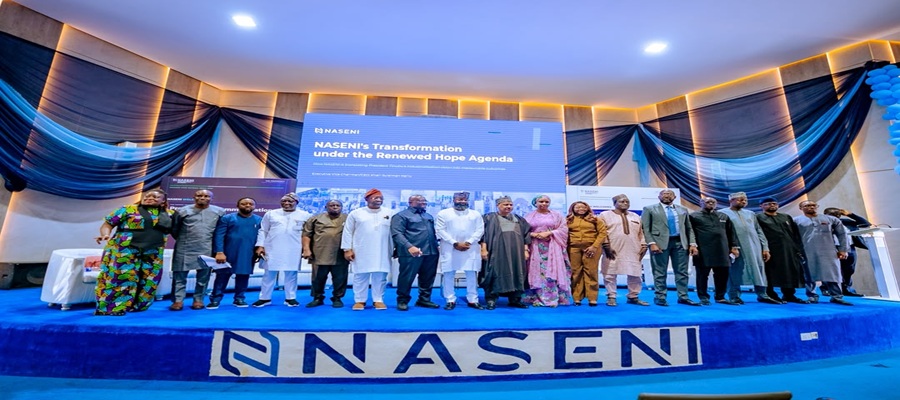
The Presidential Renewed Hope Media Tour has commended the National Agency for Science and Engineering Infrastructure (NASENI) for its progress in advancing indigenous technology development, describing the agency as a key driver of President Bola Tinubu’s Renewed Hope Agenda and Nigeria’s industrial transformation.

The commendation came during a visit by the presidential media delegation to NASENI’s headquarters in Abuja, where members inspected the agency’s technology and manufacturing facilities.
Speaking on behalf of the delegation, Mr. Bayo Onanuga, Special Adviser to the President on Communication, Information and Strategy, described the agency’s achievements as “impressive, impressive, impressive.”
He said NASENI’s progress demonstrated the capacity of Nigerian youths to excel when provided with the right leadership and support.
Onanuga also praised the leadership of the Executive Vice Chairman and Chief Executive Officer of NASENI, Khalil Suleiman Halilu, for repositioning the agency to support the Federal Government’s industrialisation objectives.
In his remarks, Halilu said sustainable industrial growth does not necessarily depend on producing goods entirely from local inputs but requires strategic investment in technology development, innovation and partnerships.
He explained that the agency is focusing on commercially viable innovations capable of creating jobs, reducing production time and supporting the Federal Government’s Nigeria First Policy.
According to him, NASENI is also strengthening technology transfer, commercialisation of research outputs, mentorship programmes for innovators and the Innovate Naija Challenge, which offers a ₦500 million prize fund to support promising Nigerian innovations.
The Minister of Information and National Orientation, Mohammed Idris, commended NASENI’s achievements and urged the media to give greater visibility to the Federal Government’s programmes and accomplishments across various sectors.
Also speaking, Hadiza Bala Usman stressed the need for stronger strategic communication and increased patronage of locally developed technologies and innovations.
Similarly, Sunday Dare advocated policies that would encourage Ministries, Departments and Agencies to prioritise NASENI products and other locally manufactured goods.
Other members of the delegation, including Tunde Rahman and Otega Ogra, also commended the agency’s strategic partnerships and locally developed technologies.
During the tour, the delegation inspected facilities dedicated to drone technology, helicopter assembly, reverse engineering, precision manufacturing, renewable energy, agricultural technology and recycling systems.
The visitors also witnessed the implementation of NASENI’s 3Cs framework—Creation, Collaboration and Commercialization—which the agency said is driving indigenous manufacturing, innovation and technology transfer.
At the end of the visit, stakeholders called for sustained nationwide campaigns to promote Nigerian-made products, strengthen local manufacturing, reduce dependence on imports and accelerate the country’s industrialisation agenda under President Tinubu.

ITUC-Africa Faults FG’s Plans to Remove Electricity Subsidy

SEC Begins Full e-Registration for Capital Market Services

NAICOM Revokes Nigeria Reinsurance’s Licence over Failure to Meet MCR

Many Nigerian Airlines May Collapse within 30 Days – Onyema

Ogbaga, Abuja Lawyer to Sue Telcos, DStv over Alleged Unfair Practices

NRC, Ponzi Scheme Collapses Resulting Loss of Billions of Naira

From Scarcity to Scale: What Africa Can Learn from India’s Agricultural Transformation

EFCC Busts NIS Visa Overstay Racket, Uncovers N700m in an Account

BON Establishes Six Ad Hoc Committees to Modernize Broadcasting

How EFCC Turned Recovered Loot Into School Supplies for Thousands of Nigerian Students




 E-Business3 days ago
Kaspersky Identifies Cyberespionage as a Growing Threat Across Africa, Others

 Broadcasting3 days ago
NBC Files Fresh Appeal against Judgment Barring it from Imposing Fines on Broadcast Stations

 News3 days ago
INTERPOL Report Shows AI Powers 55% of Cybercrimes in Africa Amid $484m Losses

 E-Business2 days ago
Kaspersky Reveals a New Malicious Framework Targeting Cryptocurrency Users with the Use of OkoSpyware

 E-Financial3 days ago
Nigerians Lost N25.85Bn to Digital Payment Fraud in 2025 –CBN

 News3 days ago
Nigeria Expands Deep-tech Skills Pipeline

 Telecom3 days ago
Why Strong Institutions Remain Africa’s True Growth Engine

 E-Business2 days ago
CMS T&M Launches TMO Rides to Enable a Faster & Cashless Transport Experience for CMS – Ajah Passengers