

News
Shell Pays Nigerian Govt, Agencies $6.397Bn

Over $6.397 billion was paid to the Nigerian government and its agencies in 2018 by Shell exploration and production companies in Nigeria comprising The Shell Petroleum Development Company of Nigeria Limited (SPDC) and Shell Nigeria Exploration and Production Company Limited (SNEPCo). The payment represents a 48 per cent increase over payments by the companies to Nigerian government in 2017 which was $4.322 billion.
The payments formed part of the four documents released on Tuesday by Ben Van Beurden, group chief executive officer of the Royal Dutch Shell, to signal the global oil giant’s renewed commitment to greater transparency.
The documents are: Shell Sustainability Report; Industry Associations Climate Review; Nigeria Briefing Notes; and Payments to Government Report.
“Shell must remain at the forefront of the drive for greater corporate transparency. We will continue to be more open about what we do and why we do it,” said van Beurden.
“We want to help people better understand Shell’s performance, values and principles. These reports outline our approach and activities in the crucial areas of sustainability and our relationships with industry associations and governments.”
In the breakdown of the 2018 payments, the Shell companies paid $3.776 billion to the Nigeria National Petroleum Corporation as production entitlement while $1.286 billion was paid in taxes to the Federal Inland Revenue Service. Another $1.253 went to the Department of Petroleum Resources for royalties and fees, while $81.5 million was remitted to the Niger Delta Development Commission.
Osagie Okunbor, managing director of SPDC and country chair, Shell Companies in Nigeria, described the reports as a further testament to Shell’s efforts to increase transparency around activities that are important to investors, governments and civil society. “We are irrevocably committed to transparency just as we are to business integrity part of our core values and central tenets of the Business Principles that govern the way we do business.”
The Shell Nigeria Briefing Notes detail the activities of the Shell Companies in Nigeria for 2018. These include production, environmental performance, social investment, economic contributions, gas initiatives, deepwater operations, security and Nigerian content development.
The Industry Associations Climate Review assesses for the first time Shell’s alignment with 19 key industry associations on climate-related policy. The report also details new governance principles to improve how Shell manages its memberships of industry associations on climate-related topics.
The 22nd edition of the Shell Sustainability Report outlines Shell’s approach to sustainability and covers its social, safety and environmental performance in 2018. It sets out how Shell is playing a role in the transition to a lower-carbon world and its contribution to society, which includes helping to achieve universal access to cleaner, affordable energy.
In addition, Shell published its 2018 Payments to Governments Report covering 34 countries where it has extractive activities.


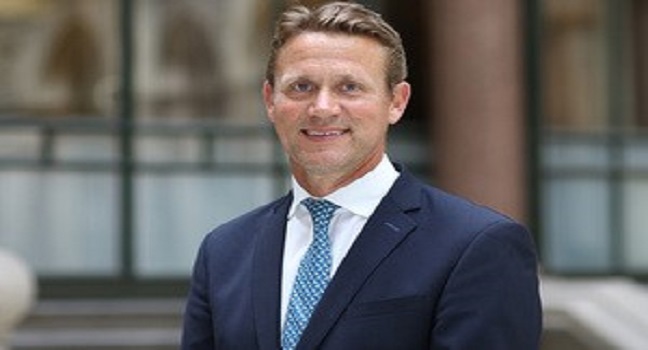
The UK Government has announced the appointment of Mr Peter Vowles as the next British High Commissioner to the Federal Republic of Nigeria.

Mr Vowles succeeds Dr Richard Montgomery CMG and is expected to take up his post in Abuja in September 2026. Dr Montgomery remains in post until that time.
Mr Vowles brings extensive diplomatic and development experience to the role, having served as His Majesty’s Ambassador to Zimbabwe from 2023 to 2026 and previously as Ambassador to Myanmar from 2021 to 2022.
He has held senior leadership positions across the FCDO and its predecessor department DFID, including as Transformation Director and Director for Asia, Caribbean and Overseas Territories.
Earlier in his career, Mr Vowles worked in international development across South Asia, Central Africa and East Africa, including postings in Bangladesh, India, the Democratic Republic of Congo and Kenya. He began his career in Zimbabwe, where he worked in education and development.
Peter Vowles said: “I am honoured to be appointed as British High Commissioner to Nigeria. Nigeria is a country of immense importance to the United Kingdom, and I look forward to working closely with Nigerian partners to strengthen our relationship across trade, development and security.”

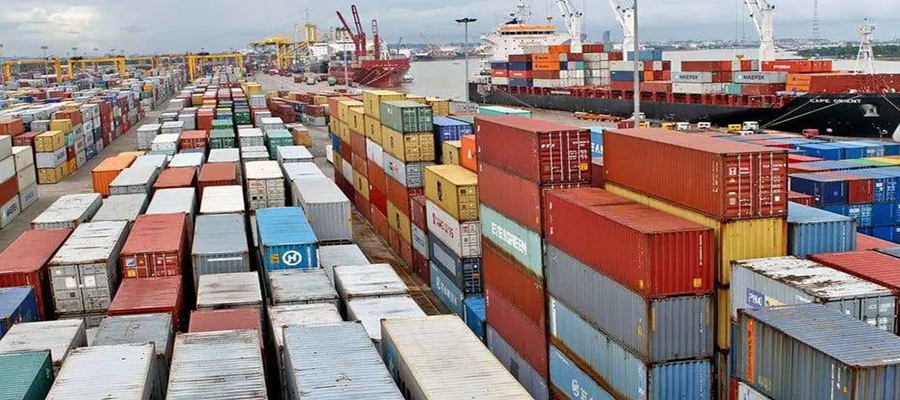
World Bank has ranked the Apapa and Tin Can Island Port complexes in Lagos among the world’s 20 most improved ports in its 2025 Container Port Performance Index (CPPI), released in June 2026.

The ranking places both ports in the “Top 20 Port Improvement Since 2020” category, reflecting significant gains in operational efficiency and vessel turnaround time.
The CPPI is a global benchmark used to assess the efficiency of container ports based on factors such as cargo handling speed, ship turnaround time and overall logistics performance.
According to the report, the improvement highlights ongoing reforms and modernization efforts within Nigeria’s maritime sector.
The Managing Director of the Nigerian Ports Authority (NPA), Mr Abubakar Dantsoho, attributed the recognition to ongoing policy reforms and infrastructure upgrades in the sector.
He said the development reflects the impact of economic policies of President Bola Tinubu and the support of the Minister of Marine and Blue Economy, Mr Adegboyega Oyetola.
“With the investor-friendly policies of President Bola Ahmed Tinubu providing the impetus for increased investment to drive our port infrastructure and equipment modernisation programme, coupled with the unflinching support of the Honourable Minister of Marine and Blue Economy, Adegboyega Oyetola, we have all it takes to further enhance trade facilitation, improve competitiveness and boost the national economy,” he said.
The NPA said the recognition is expected to strengthen investor confidence in Nigeria’s maritime sector and enhance the country’s position as a regional trade and logistics hub.
It noted that improvements in port operations are already contributing to increased efficiency in cargo movement and reduced delays at key terminals.
The authority also pointed to ongoing efforts to modernise port infrastructure and expand digital systems aimed at improving service delivery.
Earlier in February 2026, the NPA said the federal government had intensified efforts to position Nigeria as a leading maritime destination through port rehabilitation and modernization projects.
It also highlighted public-private partnership initiatives, including developments at the Lekki Deep Sea Port, as part of broader reforms aimed at improving efficiency and attracting investment.
The CPPI ranking is expected to further boost Nigeria’s maritime profile and encourage additional investment in the sector.
As digital payment adoption continues to grow across Nigeria and emerging markets, the next phase will depend not just on innovation, but on the strength, reliability, and trustworthiness of the infrastructure behind it.

While the ecosystem has made clear progress in recent years, trust remains a critical issue for users, businesses, and operators alike. Questions around resilience, security, interoperability and transaction reliability continue to shape how the market evolves and how confidently digital payments can scale.
These issues will be central to the deliberations at Digital Pay Expo 2026, where fintech leaders, payment operators, and other ecosystem stakeholders will gather under the theme, “Seamless Digital: Fostering Pan-African Market Expansion in the Era of AI.”
PalmPay’s participation reflects its continued commitment to building trusted and scalable payment infrastructure, while contributing to the broader industry efforts to strengthen systems, standards, and partnerships needed to support long-term ecosystem growth.
Speaking ahead of the event, Olorunfemi Hanson, Head of Marketing and Communications at PalmPay Nigeria, said: “As the financial services ecosystem continues to grow, trust and reliability become even more important.
“The industry’s next phase will be shaped not only by innovation, but by the strength of the infrastructure supporting it. Digital Pay Expo provides an important platform to address the resilience, interoperability, and trust issues that will shape the future of digital payments growth across Africa.”
The event, scheduled to be held from the 17th to the 18th of June, 2026, will feature Chika Nwosu, Managing Director of PalmPay Nigeria, alongside other distinguished guests, including the Director-General, Payment System Management Department (PSMD), Central Bank of Nigeria. The event will examine how the industry can balance innovation, regulation, and scalability while strengthening trust across the digital payments value chain.
For PalmPay, this event reinforces its role in supporting a more resilient, secure and scalable payments ecosystem for Nigeria and emerging markets more broadly.

IMF Warns of New Risks for Monetary Policy over $59Bn Crypto Inflows into Nigeria

AI-Powered Loan Recovery Pilot Rakes in N69m for VeendHQ

MTN Foundation Commits N32Bn in Projects across Nigeria

NCC Begins Review Telecom Termination Rates after 8 Years

Stakeholders Endorse Hybrid Model for Nigeria’s Digital Switch

CBN Extends PoS Geo-Fencing Enforcement Deadline to August 2026

NCC Drafts New Rules for Virtual Mobile Operators

TD Africa, HPE Drive Conversations on the Future of Intelligent Networking

London Strengthens Global Investment Ties with Africa @ First Ever London-Africa Business Summit

Easybuy Partners WAWUAfrica to Upskill 10 Million Youths and Women, Boosting Nigeria’s Economic and Financial Inclusion




 E-Business2 days ago
AI-Powered Cyber Threats Put Nigerian Banks on Alert

 E-Business3 days ago
CSOs Raise Alarm over Nigeria’s Data Protection Crisis

 General News3 days ago
₦5m up for Grabs as 10 Startups Clash at the Gathering on 100 Pitchathon Aba

 E-Financial3 days ago
CBN to Expand eNaira for Salaries, Pensions and Welfare Payments

 General News3 days ago
CBN Moves to Stop Banks From Using Customers’ Money for Fintech Subsidiaries

 E-Financial3 days ago
CBN to Bar HoldCos from Influencing Banks’ Lending Decisions

 Telecom3 days ago
NITDA Reveals Why AI Could Be Nigeria’s Biggest Wealth Creator, Not Oil

 E-Business2 days ago
Galaxy Backbone @ 20, Pledges Nationwide Connectivity, Data Sovereignty