

Broadcasting
Lai Mohammed Okayed Payment of N2.5Bn to Pinnacle for DSO Project- Witness

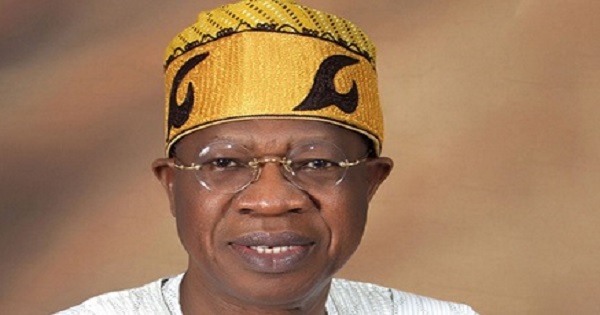
Mrs Alheri Saidu, a witness of the Independent Corrupt Practices and other related Offences Commission (ICPC), called in the trial of Ishaq Modibbo, director general, National Broadcasting Commission (NBC), and three others on Thursday, revealed that Lai Mohammed, information minister, gave approval for payment of N2.5bn to Pinnacle Communications Ltd.
Those being tried alongside the NBC Boss include, Sir Lucky Omoluwa, Chairman of Pinnacle Communications Ltd (PCL), and the Chief Operating Officer Dipo Onifade, as well as PCL.
The trio, including PCL, are facing trial over allegation of fraud in the digital switch over project of the Federal Government.
Testifying before Justice Folashade Ogunbanjo Giwa of the Federal High Court Abuja, Mrs Saidu, a retired legal adviser to NBC, told the court that the Minister of Information, Lai Mohammed, made the approval in accordance with the provisions of the 2012 White Paper on Implementation of the Digital Switch Over (DSO) project.
Saidu was led in evidence by prosecution counsel, Henry Emore.
The White Paper was admitted as exhibit 2 by the court.
According to the witness, a total of N10bn was approved for the DSO project by the Federal Government from which another company CCNL was also paid based on the Information Minister’s approval.
The prosecution witness (Saidu) further disclosed that when she was the Acting Director General of NBC, she did approve the payment to CCNL without a board.
Saidu also told the court that in 2014, another limited liability company set up by the NTA, ITS Limited, was paid N1.7bn by the NBC for the DSO as recommended by the 2012 White Paper.
But during cross-examination by A. V Etuwewe, counsel to the 4th defendant (PCL), the ICPC witness could not cite where the White Paper prohibited similar payment to PCL.
More so, Saidu denied a statement credited to her in the minutes of an emergency management meeting of NBC held on May 31, 2017, in respect of the request for payment by PCL.

The statement linked to Saidu was that she said “All over the world where the DSO was implemented, government paid for services rendered to it”.
Saidu said when she saw the statement, she did not formally write to disown that portion of the minutes credited to her.
On the reference to “level playing field” for the private signal distributor in the White Paper, Saidu said it could mean not putting the private signal distributor at a disadvantage, among other meanings.
Further more, Saidu said there was no legislative document covering implementation of the DSO as the White Paper was a policy guide referred to in implementing the project.
She read from an official document on the DSO which states that the DSO is “under strict supervision of the Minister of Information,” adding that there was no more superior approval than ministerial approval for the NBC concerning the DSO.
Saidu disclosed that the Abuja DSO was officially launched with equipment and facilities of PCL atop the Mpape Hill, Abuja, on December 22, 2016, by Vice President Yemi Osinbajo, who represented President Muhammad Buhari, adding that the Information Minister, herself and other stakeholders were present during the DSO launch.
In addition, she stated that PCL is a major stakeholder in the DSO Nigeria project.
Testifying earlier, Olawale Abiodun Osisanwo, (pw1) a deputy director of Finance at NBC told the court that he processed the payment of N2.5bn to Pinnacle Communications Limited after all the necessary documentation was attached and the audit department also passed it for payment.
Oshisanwo said although he raised some observations when the DG held discussion with him, however he admitted not putting such observations in writing.
Also, Mr Chukwuemeka Iwunna, an assistant director Human Resource Department, who acted as secretary to the NBC board, was called as witness number two by ICPC.
Iwunna disclosed in his testimony that an emergency management meeting was summoned by the DG to discuss request for payment from PCL and that the minutes he produced was what transpired during the meeting.


Spotify has announced a partnership with Afro Nation Portugal as the festival’s official sponsor and exclusive streaming partner for the 2026 edition, in a move aimed at bringing African music and festival experiences to a wider global audience.

The collaboration will provide fans with a dedicated Afro Nation destination on Spotify, featuring official festival playlists, participating artists and selected performance videos after the event.
The 2026 edition of Afro Nation Portugal is scheduled to hold from July 3 to July 5 in Portimão, Portugal.
Spotify said the partnership would enable fans to engage with the festival before, during and after the live event, regardless of their location.
The streaming platform noted that the initiative aligns with its continued investment in promoting African music and supporting its growing international audience.
Speaking on the partnership, Spotify’s Content Marketing Manager for Sub-Saharan Africa, Mr Rifumo Mdaka, described Afro Nation as a global showcase for African music and culture.
“Afro Nation is more than a festival; it is a global expression of African music, fan culture and creative influence.
“Our partnership is about helping that moment travel further through our first collaboration with Afro Nation of this nature.
“By bringing the festival to Spotify, we are giving fans a place to connect with the artists, performances and stories that define the festival long after the final set,” he said.
According to Spotify, the collaboration will also include exclusive festival content, artist discovery features, curated playlists and fan-focused storytelling.
The company said it would document the journey of a selected fan travelling to the festival as part of efforts to showcase the growing global appeal of African music.
Also speaking, Director of Global Partnerships at The Malachite Group and Afro Nation, Ms Clémence Blum, said the partnership represented a major step in expanding the festival’s global reach.
“Afro Nation has always been more than a festival. It is a platform built to celebrate African music, support artist breakthroughs and connect a global community through culture.
“Our partnership with Spotify reflects the shared role we both play in helping artists reach new audiences and giving fans deeper ways to engage with the music they love,” she said.
Spotify said selected live performances from the festival would be made available on the platform after the event, allowing fans around the world to relive the performances on demand.
The company added that the partnership reinforces its commitment to promoting African music, supporting artists and strengthening connections between creators and audiences across the globe.

Lebara Nigeria has announced the launch of Lebara Play, described as Africa’s first telecoms-owned micro-drama platform aimed at expanding opportunities for African storytellers and distributing local content to global audiences.

The company said the platform is designed to support creators by providing a new distribution channel for African narratives while making content accessible to both subscribers and non-subscribers worldwide.
Lebara Nigeria added that the platform will debut with an original production titled Imported Bahu, produced by Forever 7 and starring Osas Ighodaro.
The project is directed by Hamisha Daryani Ahuja, known for her work on Namaste Wahala, and is positioned as the first in a series of original content offerings.
According to the company, Lebara Play is built to serve both creators and audiences, with a focus on showcasing African stories to a global market and strengthening the continent’s growing digital entertainment ecosystem.
Speaking on the company’s vision at the launch, Teniola Stuffman, chief executive officer, Lebara Nigeria, said the organisation was focused on building a telecommunications ecosystem that combined innovation, connectivity, and customer-centric digital experiences.
Stuffman said, “This platform represents an important step in our vision of building a telecommunications brand that delivers more than connectivity. We are creating an ecosystem where technology, innovation, and entertainment come together to provide meaningful experiences for customers while unlocking new opportunities for creative talent and content development across Africa.”
Beyond entertainment, she said, industry stakeholders believed the initiative demonstrated how global telecommunications expertise could be adapted to local market realities.
“Drawing from decades of experience across multiple international markets, Lebara is expected to introduce additional innovative services aimed at enhancing convenience, engagement, and value for Nigerian consumers,” she said.
Stuffman added that the company’s strategy reflected growing recognition that today’s telecom customers demanded more than network access, pointing out that consumers increasingly seek brands that offer seamless digital experiences, personalised services, and access to content that enriches everyday life.
Stuffman stated that LebaraPlay also aligned with the company’s commitment to supporting Africa’s creative economy by creating new distribution channels for content creators, producers, and digital storytellers.
“Through a combination of original productions and strategic partnerships, the platform seeks to create opportunities for talent while delivering quality entertainment to audiences,” she said.
Hamisha Daryani, founder of Forever7 Entertainment, expressed excitement over the partnership with Lebara Nigeria and the premiere of her latest micro-drama series on the LebaraPlay platform.
She stated that Lebara’s customer-centric vision aligns closely with the values of Forever7 Entertainment, making the collaboration a natural fit for both organisations.
Daryani revealed that the new microdrama featured a star-studded cast drawn from both Bollywood and Nollywood, in a compelling romantic story designed specifically for mobile audiences.
According to her, the production is developed with mobile-first consumers in mind, delivering premium entertainment in short, engaging formats at an affordable cost.
“Microdrama, which typically consists of short episodes of about three minutes, is redefining how audiences consume entertainment. It offers a convenient, immersive, and affordable viewing experience for people who increasingly access content through their mobile devices,” she said.
She added that the platform was created to support seamless creative expression while providing new opportunities for content creators across the continent.
Daryani further explained that the microdrama format has already achieved significant success in Asia and the Americas and is now gaining traction across Africa.
She said the initiative would create opportunities for emerging creatives through knowledge sharing, skills development, content curation, and industry collaboration, with the Nigerian rollout of the featured series expected to commence in July.
Broadcasting
CANAL+ Partners Samsung to Pre-Load DStv Stream on New Samsung TVs In Nigeria, Other African Countries

Following an expanded partnership between CANAL+ and Samsung Electronics, the DStv Stream app will now be pre-installed on new Samsung Smart TVs sold in Nigeria and 17 other African countries.

The agreement covers English and Portuguese-speaking African markets, including Nigeria, Kenya, Angola, Tanzania, Uganda, Zambia, Zimbabwe and South Africa. It marks the first pre-installation rollout of a MultiChoice Group streaming application on Samsung Smart TVs.
The development comes after the completion of the combination between CANAL+ and MultiChoice Group. It also extends an existing relationship between both companies that already spans 40 markets across Europe, French-speaking Africa, and Asia.
Through the integration, Samsung customers can now access DStv Stream directly from the television home screen. The app provides access to premium sports and entertainment content, including coverage of the FIFA World Cup 2026, English Premier League football, domestic and international rugby, and local and international television programming.
With the introduction of this connected television which kicked off on June 1, televisions can now connect to the internet, allowing users to stream content directly without requiring a separate decoder or satellite dish. The pre-installation of the app removes the need for users to search for and download it themselves, reducing friction and improving content discoverability.
The rollout is one of the first major distribution initiatives following the integration of CANAL+ and MultiChoice. The combined group has identified streaming growth and enhanced digital distribution as key priorities across Africa, where connected television adoption continues to increase.
David Mignot, CEO of CANAL+ Africa and CEO of MultiChoice Group, affirmed, “We are delighted to extend our longstanding partnership with Samsung across new English and Portuguese-speaking African countries. It marks a significant milestone in the synergies created by the combination of CANAL+ and MultiChoice Group.
“Mignot added, “As viewing habits continue to evolve rapidly across the continent, strengthening the accessibility and discoverability of our content offer on connected devices is key. By expanding the availability of our applications on Samsung Smart TVs across key African markets, we are making it even easier for millions of MultiChoice Group’s subscribers to seamlessly access the content that define the uniqueness of the CANAL+ and MultiChoice Group experience.”
This extended partnership is expected to strengthen Samsung’s position as a key distribution partner for streaming services globally while providing CANAL+ and MultiChoice with a broader route to market as competition intensifies among international and regional streaming platforms across Africa.

Court Asks CBN, NIBSS to Seek Settlement in N98.5Bn Patent Suit

World Bank Approves Fresh $1.25Bn Loan for Nigeria

WhatsApp Usernames Spark Privacy Fears

Report Reveals More than Half of Users Encountered Fraud or Scams Online

Airtel Nigeria CEO Urges Adoption of Intelligent Technology Platforms to Accelerate National Growth

Mobile Internet Gender Gap Widest in Africa – GSMA

London Strengthens Global Investment Ties with Africa @ First Ever London-Africa Business Summit

FG Targets Alleged N3tn Capital Flight, Opens Airtime Credit Market to Nigerian Fintechs

Japan, UNESCO Boost Digital Learning in 15 CoEs with Donation of ICT Equipment

African Electric Vehicle Platform Raises $215m to Scale Electric Mobility in Nigeria, Others




 E-Financial3 days ago
Wema Bank Suspends Telegram Operations over Scams

 E-Financial3 days ago
NDIC Says 281m Depositors Protected against Bank Failure

 E-Financial3 days ago
NAICOM Moves to Deepen Penetration Through Licensing of a New Insurtech

 Telecom3 days ago
NCC Ranked Among Nigeria’s Top 3 Best-Performing Federal Agencies

 E-Business3 days ago
Kaspersky Reveals Malware Attacks on SMBs Disguised as AI Services Surged by Five Times in 2026

 General News3 days ago
EVC NCC, Aminu Maida, to Lead Speakers @ Business Journal Fintech & Financial Inclusion Roundtable 2026

 News3 days ago
FG Captures 32m Students DNEMIS ahead July 1 Rollout

 Telecom3 days ago
Womenovate, MTN Foundation Lead Charge for Inclusive Tech at Women in Technology and Engineering Summit