

Telecom
Expert Seeks Adoption of Blockchain Technology in Solving Critical National Challenges


Paul Ezeafulukwe, President of Stakeholders in Blockchain Technology Association of Nigeria SiBAN, an umbrella body of blockchain stakeholders in Nigeria has urged federal government to adopt blockchain technology in solving critical national challenges in the country.
Ezeafulukwe disclosed this at the just concluded 2019 Techpoint Inspired Conference, held in Lagos.
He stated that adoption of blockchain technology in the day to day running of our country is critical for good governance.
He also noted that blockchain will leapfrog Nigeria and Africa at large to a level where we will be at par with western countries in terms development.
Ezeafulukwe said that the use of blockchain technology is limitless and that its possibilities are endless, noting however that it could be used to solve corruption and electoral challenges facing our nation.
For him the technology could be deployed to solve identity issues which will in turn solve corruption issues plaguing our country, just as we’ve witnessed in the deployment of TSA and BVN.
According to him, “blockchain is the easiest thing we can use to solve the issue of corruption, for example, if we put blockchain in ownership of resources in this country, we will be able to determine the number of assets our government officials have.
“It can be a private permission blockchain which only allows government and key security agencies access to see the resources of these officials, when any of them is living above his or her means, all our security agencies need to do is to sit down and go through the database and begin to ask questions like how did you acquired assets of 5 billion when you were just a director at the federal ministry of education.
“This way our security agencies don’t need to start harassing people when they want to make an arrest because the technology has made it easy for them to know who to arrest.”
Speaking further, Ezeafulukwe stated that the technology will help us to decentralize the country, noting that we cannot scale as a country if we don’t decentralize.
He therefore called on government to emulate the president of Malta, who vowed to make sure that Malta becomes the capital of blockchain in the world.


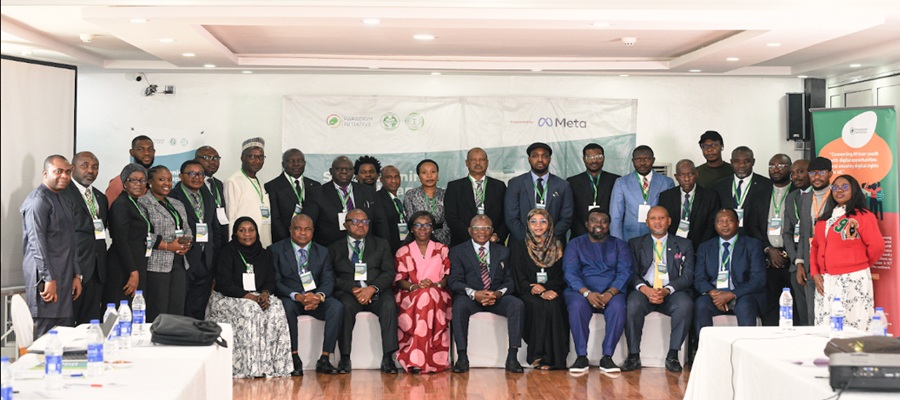
Paradigm Initiative (PIN), a pan-African digital rights and inclusion organisation, says it has engaged more than 1,300 stakeholders across 11 African countries through a series of forums, training sessions and policy dialogues aimed at strengthening digital rights, inclusion and online civic participation.

The organisation disclosed this in a statement, saying the engagements were carried out during the second quarter of the year through 26 programmes focused on election monitoring, judicial capacity building, digital literacy and policy development.
According to PIN, the initiative brought together policymakers, judges, lawyers, journalists, civil society organisations and community groups to promote a safer, more inclusive digital ecosystem across the continent.
The organisation said the programmes focused on safeguarding electoral integrity in Zambia, The Gambia and Ethiopia, while also strengthening the capacity of Nigeria’s judiciary on issues relating to Artificial Intelligence (AI), data privacy and digital evidence.
In partnership with Meta, PIN trained 35 judges in Lagos across two cohorts on privacy, data protection, AI and digital evidence.
It described the initiative as a significant step towards equipping Nigeria’s judicial officers to effectively handle legal disputes arising from an increasingly digital society.
The organisation also expanded its Digital Rights and Elections in Africa Meetings (DREAM) to Ethiopia, The Gambia and Zambia.
According to the statement, the programme equipped 110 civil society organisations, media professionals and election management bodies with skills to monitor digital rights violations and protect online civic spaces during election periods.
PIN further said its Digital Rights Academy (DRA) trained more than 100 lawyers, law students and digital rights advocates from Cameroon, the Republic of Congo, Ghana, Nigeria, Tanzania and Zimbabwe.
The academy focused on strengthening participants’ capacity in strategic litigation and promoting accountability for digital rights violations.
The organisation also hosted a Digital Policy Engagement Roundtable, bringing together 34 stakeholders, including organisations representing persons with disabilities, to discuss accessibility and inclusion in digital policy development.
It said Afrocities roundtables held in Nigeria and Tanzania attracted 80 participants who explored ways of improving informal workers’ access to digital social protection and financial services.
According to the statement, a ministerial roundtable in Zambia also aligned the country’s digital priorities with the World Summit on the Information Society (WSIS+20) review process.
PIN said it also implemented the Digital Rights and Inclusion Board Learning Experience (DRIBLE) Ambassadors Training in Cameroon, Nigeria and Senegal.
The programme reached 315 participants and strengthened their capacity to deliver digital rights education through experiential learning approaches.
The organisation said the training improved participants’ understanding of digital rights and increased interest in practical digital rights education across communities.
PIN also highlighted the successful hosting of the Digital Rights and Inclusion Forum 2026 (DRIF26) in Abidjan, Côte d’Ivoire.
The forum, themed “Building Inclusive and Resilient Digital Futures”, attracted 415 participants from more than 39 countries.
According to the organisation, the event brought together policymakers, civil society organisations, media professionals, academics, legal experts, technologists, human rights defenders and development partners to promote dialogue, partnerships and knowledge sharing on Africa’s digital future.
PIN said the engagements underscored the growing importance of collaborative efforts in advancing digital rights, promoting inclusion and strengthening digital governance across the continent

Federal Government has suspended the implementation and enforcement of newly introduced regulations affecting internet platforms, online intermediaries and other cross-cutting issues in the digital economy pending the development of a harmonised national policy framework.

Bosun Tijani
The Minister of Communications, Innovation and Digital Economy, Bosun Tijani, issued the directive following a strategic meeting with the leadership of the Nigerian Communications Commission, National Information Technology Development Agency and the Nigeria Data Protection Commission.
According to a statement issued on Tuesday, the three agencies have been directed to maintain the existing regulatory framework while efforts to harmonise policies are underway.
The statement said the implementation or enforcement of recently introduced regulations, guidelines, codes, directives and administrative requirements relating to internet platforms and other digital economy issues would be deferred where they are part of the ongoing review.
It, however, clarified that the directive does not affect the statutory responsibilities of the agencies.
According to the ministry, existing regulations that fall within the legal mandates of the respective agencies will remain in force, provided they are consistent with the ministry’s policy direction.
Tijani said the rapid convergence of telecommunications, digital platforms, artificial intelligence, online safety and data governance had created overlapping regulatory responsibilities, making closer collaboration among regulators imperative.
He said a harmonised regulatory framework would provide greater legal certainty for businesses, encourage investment, promote innovation, strengthen consumer confidence and enhance Nigeria’s competitiveness as Africa’s leading digital economy.
“As part of the harmonisation process, a joint technical coordination committee comprising representatives of the NCC, NITDA and NDPC has been established.
“The committee will coordinate stakeholder consultations and develop recommendations for a unified national policy and governance framework,” the statement said.
It added that the proposed framework would seek to clearly define the responsibilities of each regulator, reduce compliance uncertainty for businesses and improve regulatory coordination across the digital ecosystem.
The ministry stressed that the harmonisation exercise was aimed at improving collaboration among the agencies and was not intended to diminish their statutory powers.
The development comes less than 24 hours after President Bola Tinubu directed the Federal Competition and Consumer Protection Commission to investigate major technology companies and generative artificial intelligence platforms over allegations of anti-competitive practices and the exploitation of Nigerian media content.

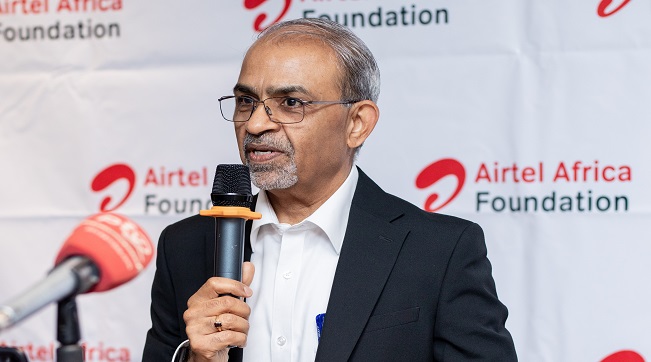
Airtel Africa, a telecommunications and mobile money services provider across 14 African countries, saved 9.1 million litres of diesel during its just ended 2025/2026 financial year, as part of efforts to drive responsible growth by minimising the environmental impact of its operations.

This was achieved by reducing reliance on diesel and increasing use of lower-carbon energy sources, including the conversion of 390 infrastructure sites to on-grid power during the year, thus improving efficiency and reducing emissions.
Airtel Africa CEO, Sunil Taldar highlighted this achievement during a media roundtable held in Lusaka, Zambia, where he presented the Group’s Sustainability Scorecard and progress towards building a more sustainable, inclusive and connected Africa.
Other initiatives to reduce Airtel Africa’s environmental impact during the year included promoting the circular economy, recycling 94% of total waste generated. These form part of Airtel Africa’s broader sustainability strategy, which seeks to create long-term value by balancing business growth with environmental stewardship, digital inclusion and socio-economic development.
Mr. Taldar emphasized that responsible growth remains central to Airtel Africa’s business strategy and is reflected in the company’s ability to extend services and opportunities to millions of people across the continent while advancing sustainability goals. Airtel Africa’s network now reaches 81.9% of the population across its markets, enabling greater access to connectivity, information, education and economic opportunities for individuals and communities.
The company recorded progress in its efforts to advance financial inclusion. Airtel Money now serves 54.1 million customers through a network of 2.4 million agents, making it one of Africa’s largest digital financial services ecosystems. Notably, 44.1% of Airtel Money customers are female, demonstrating the platform’s growing role in empowering women through access to secure, affordable and convenient financial services.
Beyond connectivity and financial inclusion, Airtel Africa, through its philanthropic arm, Airtel Africa Foundation continued to drive meaningful change across communities in the continent, investing US$6.2 million in priority programmes in four strategic areas namely Financial Inclusion, Education, Environmental Sustainability and Digital Inclusion.
Through its partnership with UNICEF, 3,296 schools have been connected to the free internet access, helping to bridge the digital divide and expand access to quality education reaching over 2 million learners and 38,868 teachers, while 64 zero-rated digital learning platforms enabled more than 11 million learners to access free digital educational content.
Also, during the year, more than 30,000 young people received digital skills training, while over 250 full undergraduate STEM scholarships were awarded through the Airtel Africa Tech Fellowship programme, helping to prepare the next generation of African innovators and technology leaders.

Court Declares ARCON’s N60Bn Fine against Facebook Nigeria Illegal

NIN Enrollment Hits over 136m as New ID Law Takes Effect

NRC, Ponzi Scheme Collapses Resulting Loss of Billions of Naira

Plateau PCC Collects Nigerians’ Data without Privacy Policy – FIJ

FG Suspends New Internet Regulations to Prevent Overlapping Rules

Mobile Internet Gender Gap Widest in Africa – GSMA

NASENI Moves to Digitize CCB’s 5m Assets Declaration and Operations

Nigeria Launches FreeTV Nationwide

CANAL+ Partners Samsung to Pre-Load DStv Stream on New Samsung TVs In Nigeria, Other African Countries

UK, Nigeria Launch £15m Growth Programme to Accelerate Economic Transformation




 E-Financial2 days ago
Tokenization, Blockchain Technology will Transform Financial Institutions – IMF

 General News2 days ago
NIS Deploys Advanced Surveillance Masts, other Critical Infrastructure to Boost Border Security

 Broadcasting2 days ago
Obi, NDC Presidential Candidate Faces N50Bn Defamation Claim over Alleged Podcast Remark

 E-Business2 days ago
Weebly Websites to Shut Down for Nigeria, 66 Other Countries from September

 E-Financial2 days ago
FG Denies N8 Trillion ‘Shadow Budget’, Says IMF Quoted out of Context

 General News1 day ago
IHS Nigeria, FCT-HSES Concludes Clean Cooking Energy Campaign “Project Breathe Clean Air” in Abuja

 Telecom2 days ago
No Plans for Fresh Tariff Hike – MTN

 News2 days ago
World Bank Sounds Alarm: Low Revenue, Not Debt, Is Nigeria’s Biggest Fiscal Threat