

News
SystemSpecs Demonstrates Commitment to Develop Youths Through Practical Education

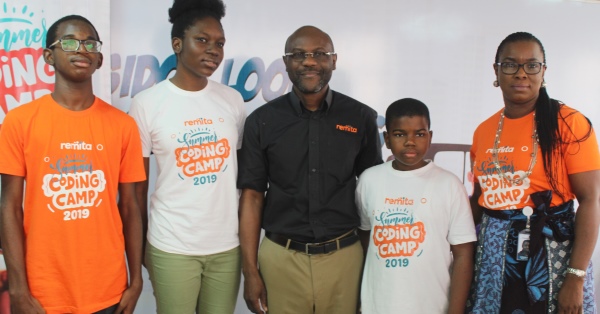
The leading software company in Nigeria, SystemSpecs has demonstrated its commitment to develop the nation’s technology ecosystem by investing resources in young talents through the facilitation of rigorous coding sessions for secondary school students drawn from over 18 different schools from nine states and FCT in Lagos and Abuja for two weeks.
The summer coding class, which was organized for selected students, was hosted in collaboration with Techquest Academy, a technology college charged with the training of people on coding, by using robots and other gadgets.
Tagged Remita Summer Coding Camp, the two-week summer camp was purposed to open the mind of the children to latent opportunities in the technology space and creatively expose them to the technological world while arousing their interest in exploring the world of innovations, creativities and developments.
According to John Obaro, the Managing Director and CEO of SystemSpecs, the summer coding was organised to engage the students and build their skills and create in them the desire to be creative and innovative while guiding them towards exploring the world of technology.
“We just saw this coding camp as part of the opportunity to work with the kids and show them what the future is and encourage them to embrace software development since everything around us these days is technology-enabled. So being able to give these young ones the opportunity to understand what it is and being ready to take over the future of technology,” he said.

Olumide Aderewale, Techquest Operations Manager and one of the facilitator at the summer camp, pledged the company’s commitment towards a continuous follow-up on the students after the summer camp.
“This is just an introduction to whet the appetite of the students and also to create a hunger for them to learn. With this training, they will able to think creatively, work collaboratively and even build simple solutions.
“After the two weeks intensive session, they will also grow with the support of follow-up from us and their parents who will support them by getting the necessary resources. On our part, we have a link posted online that the kids can continue to learn under our tutelage”, he said.
One of the parents who accompanied Aishat Lawal, one of the participating students, to the camp, Olajide Lawal told the media that he purposely brought her 12-year old daughter who is in JSS3 at the Federal Government College, Ibillo, Edo State, to the camp to learn how to write a line of code.
Lawal said that he had to register her ward when he learnt about the opportunities available to students who are digitally-inclined in this present digital age.
“I see a lot of opportunities that are lacking in my local government and brought Aishat here to build her capacity in addition to what she is being taught in Federal Government College”, Lawal said.
Lawal who brought her daughter from Ifelodun Local Government to Lekki, venue of the coding camp said he was satisfied with the high level of facilitators who administer the coding classes.
“Aishat told me that they were taught how to build animation, games, 3D printing and many other things. I know that after the two weeks, she would have learnt a lot of things”, Lawal explained.
Speaking with the media during the summer camp, 13 years old and ss1 student of International School, University of Lagos, Diekoloreoluwa Ajayi shared the impact of the summer camp.
“I have learnt a lot. I have learnt how to build blocks from Scratch. There is a programing language called Scratch. You don’t have to start building from Scratch. With the programing language called Scratch, you don’t have to write code, you just have to bring out the blocks. So I have learnt how to put blocks together.
“I have learnt how to make games with the programming language. I have learnt how to put words together to make sense. I have learnt how to make a questionnaire; like my character can interact with you. It can also ask you questions and give you specific instruction,” he explained.


The Chartered Institute of Bankers (CIBN) and the Association of Corporate Communication and Marketing Professionals in Banks (ACAMB) have enjoined banks to further deepen and prioritize financial inclusion, women’s empowerment and sustained growth through strategic mandates and frameworks, aimed at closing the financial gap and empowering more small, and medium enterprise (MSME) owners.

Both organisations made this call during a courtesy visit to the newly invested 24th President and Chairman of Council of the Chartered Institute of Bankers of Nigeria (CIBN), Dr. Dele Alabi, Ph.D, FCIB, as part of plans to congratulate him on his investiture as well as seek a stronger alliance between both bodies.
The visit followed Alabi’s investiture where he unveiled his “IMPACT” Vision, themed “Consolidating Our Local Impact, Enhancing Our Global Relevance.”
The vision rests on six pillars: Inclusion across geographic, gender, and generational lines; Membership growth and quality; Professionalism and ethics; Accountability; Competencies and skills development; Technology, automation, and innovation. Other areas of shared interest, include women empowerment, financial inclusion and literacy, as well as MSME clinics, all of which are top on his agenda.
Alabi explained that under him, the institute will be prioritising financial inclusion and women empowerment, because of its realisation that women are often the primary financial managers and caregivers in families. Access to savings, micro-credit, and insurance acts as a safety net during crisis and allows them to significantly improve living conditions.
He added that CIBN would be happy to drive joint knowledge sharing and exchange sessions with CBN and ACAMB across various platforms. “Educating the public through public awareness programmes, with ACAMB as the rallying point, is central to what we do,” he noted.
ACAMB President, Jide Sipe, who led the delegation, spoke in unison with the CIBN president, as he noted that, closing the inbalances in financial access help economies grow faster, reduces inequality, and encourages greater civic participation by all.


Lagos State has become the first sub-national government in Nigeria to establish a comprehensive Greenhouse Gas Registry, a move aimed at strengthening climate governance, improving emissions accountability and accelerating the state’s transition to a low-carbon economy.

The Lagos State Greenhouse Gas Registry (LGHGR) was unveiled at the Central Business District, Alausa, Ikeja, at a ceremony attended by Prof. Akin Abayomi, commissioner for Health, members of the State Executive Council, representatives of the Federal Ministry of Environment, development partners, TPHG Technologies, the diplomatic and business communities, academics, civil society organisations and the media.
Describing the initiative as a landmark achievement in the state’s environmental sustainability drive, Dr. Babatunde Ajayi, general manager of the Lagos State Environmental Protection Agency (LASEPA), said the Registry marks a defining moment in Lagos’ climate action journey and reflects Governor Babajide Sanwo-Olu’s commitment to building a resilient, climate-smart and environmentally sustainable economy.
According to Ajayi, the digital platform will enable the state to accurately measure, monitor, report and verify greenhouse gas emissions across key sectors, providing credible data to guide environmental policies and climate interventions.
He said the Registry would strengthen evidence-based decision-making, improve transparency and accountability, support national and international climate reporting obligations, unlock carbon market opportunities and boost investor confidence in Lagos’ environmental initiatives.
Ajayi also commended TPHG Technologies for providing the technical expertise that made the pioneering project possible.
Delivering the keynote address, Prof. Abayomi described the Registry as a major milestone that positions Lagos at the forefront of climate governance and emissions accountability in both Nigeria and Africa.
He noted that climate change has evolved into a significant public health and governance challenge, stressing that access to reliable emissions data would enable the state to formulate evidence-based policies, attract climate financing, strengthen resilience and accelerate its transition to a low-carbon economy.
Providing insights into the technical framework of the project, Dr. Mofoluso Fagbeja, lead consultant and chief executive officer, TPHG Technologies, explained that the Registry was developed from the greenhouse gas inventory jointly undertaken by LASEPA and TPHG Technologies in 2022, using 2019 as the baseline year for emissions assessment.
He said the platform is designed to close critical emissions data gaps, particularly within the industrial sector, while supporting effective climate policy implementation, emissions management and sustainable development.
Fagbeja also disclosed that the greenhouse gas inventory estimated that poor air quality contributes to about 35,000 premature deaths annually in Lagos, underscoring the urgent need for stronger emissions control measures and cleaner environmental practices.
In a goodwill message, Balarabe Abbas Lawal, minister of Environment, represented by Mrs. Adenaike Olunimpe Oludunni, federal controller of Environment in Lagos, commended Lagos State for pioneering the initiative, describing it as a significant contribution to Nigeria’s climate commitments.
He said the Registry aligns with the country’s Nationally Determined Contributions (NDCs) under the Paris Agreement and supports the Federal Government’s Energy Transition Plan, while reaffirming the ministry’s commitment to deeper collaboration with Lagos State on climate governance and environmental sustainability.

A recently released Henley Passport Index 2026, showed that Nigerian citizens can travel to at least 20 destinations outside the African continent where entry is allowed either visa-free, with a visa on arrival (VOA) at no extra cost, or via an e-visa.

This expanded access opens doors for Nigerian travellers to experience countries in the Caribbean, Asia, and beyond with greater ease.
Below is a comprehensive guide to countries outside Africa which Nigerian passport holders can visit without a traditional visa.
Visa-Free Countries outside Africa for Nigerian Passport Holders:
Barbados
Cambodia – Visa on arrival
Comoros Islands – Visa on arrival
Cook Islands
Dominica
Fiji
Haiti
Iran – Visa on arrival
Kiribati
Lebanon
Maldives – Visa on arrival
Micronesia
Montserrat
Niue – Visa on arrival
Palau Islands – Visa on arrival
Samoa – Visa on arrival
St. Kitts and Nevis
Timor-Leste – Visa on arrival
Tuvalu
Vanuatuul

Fact-Check: Elon Musk’s “Tesla Pi Phone” is Internet Rumor

Dangote Plans to Donate One-Third of Wealth to Charity as Legacy

NDPC Directs DCPMIs to Register with Agency or Face Legal Consequences

Malpass, Ex World Bank Chief Raises Alarm over Nigeria’s Secretive Debt Structures

How and Why Apps Deplete Data – ALTON

NRC, Ponzi Scheme Collapses Resulting Loss of Billions of Naira

EFCC Busts NIS Visa Overstay Racket, Uncovers N700m in an Account

Tokenization, Blockchain Technology will Transform Financial Institutions – IMF

From Scarcity to Scale: What Africa Can Learn from India’s Agricultural Transformation

BON Establishes Six Ad Hoc Committees to Modernize Broadcasting




 News2 days ago
See Verified 20 Countries Nigerian Passport Holders Can Travel Visa-Free

 E-Business2 days ago
Report Says Cybercriminals Deploy Malware to Hijack Crypto Wallets, Monitor Browsers Telegram

 Telecom2 days ago
NCC, REA Partner to Cut Telecom Costs with Renewable Energy

 Telecom2 days ago
Subscribers, Telcos Warn FCCPC over Airtime Lending Enforcement

 E-Business2 days ago
NPC Opens 131 Births, Deaths Registration Centres in Anambra

 General News2 days ago
AfDB, Nigeria Urge African Control of Mineral Resources

 General News2 days ago
Lagos Chamber Opposes 21 Percent Pension Contribution, Warns of Job Losses

 Telecom2 days ago
Nigeria Pushes for United African Front Ahead of Global Telecoms Elections