

News
MSD Africa Supports World Immunization Week

MSD Africa has announced its support of World Immunization Week, an annual global initiative launched by the World Health Organization (WHO) and partners on April 20th to promote immunization for people of all ages through advocacy, education and communication.
WHO’s Africa Regional office (AFRO) has launched AFRO Immunization Week 2013 on 23 April to highlight the importance of protecting people in the region who are at significant risk of vaccine-preventable diseases.
The theme of this year’s World Immunization Week is ”Protect your world – get vaccinated.”
Vaccines have had a profound impact on public health. They help to prevent more than 30 common, yet potentially fatal, infectious diseases and to avert long-term disability and an estimated two to three million deaths worldwide each year.
However, the benefits of immunization need to extend beyond children, to reach adolescents and adults, and provide protection against life-threatening diseases such as influenza, meningitis and cervical cancer.

“Vaccines have not yet reached all those in the world who need them,” said Professor Dr Lynette Denny, Head of Department of Obstetrics and Gynaecology, Groote Schuur Hospital/University of Cape Town.
“World Immunization Week aims to reinforce the message that timely vaccination prevents disease and to mobilize action to improve vaccination coverage for the world’s at-risk individuals of all age groups.
This is particularly important with regard to cervical cancer, a disease that disproportionately afflicts women in developing countries, where 76 to 86 percent of all cases occur.”
Although there have been great successes with vaccination in Africa, many challenges remain. An estimated 22.4 million infants worldwide have not received the recommended three doses of diphtheria-tetanus-pertussis vaccine, with the majority of these infants coming from 10 countries, including Chad, Democratic Republic of the Congo, Ethiopia, Nigeria and South Africa. Further, more than 1.5 million children under the age of five – most of them in low-income countries – die from diseases that could be prevented by currently available vaccines.
“At MSD we are pleased to support World Immunization Week, which provides an important opportunity to raise awareness about the positive public health impact of vaccination,” said Soren Bo Christiansen, president, MSD, Eastern Europe, Middle East and Africa region.
“MSD is proud of its ongoing commitment to preventing these diseases worldwide. More than ever, we recognize that the value of vaccination has moved beyond the reduction of infant mortality, and is becoming an integral component of the provision of healthcare services, from infancy to old age, across the globe. It is our goal to press forward with innovative solutions to making vaccines available, limit potentially preventable deaths and improve quality of life. In Africa, MSD is pursuing a systematic and thoughtful approach to improve access to vaccines through four key pillars, innovation, partnerships, pricing and support with implementation.”



Accelerating artificial intelligence (AI) adoption could increase Africa’s GDP by up to 4% over the next decade, according to the International Monetary Fund (IMF).

In a report released on Tuesday, titled Africa Can Grow Faster With AI—If It Moves Now, economists from the IMF’s Africa Department say current levels of AI adoption and utilisation are expected to contribute just 0.2% to the region’s GDP over the next 10 years.
However, the report says stronger adoption, supported by the right infrastructure and policies, could raise the economic impact to about 4% by extending AI beyond today’s digitally connected firms.
Martin Schindler and other IMF economists say: “AI adoption in sub-Saharan Africa currently lags well behind every other region. If richer economies race ahead while African firms and governments lag, the productivity gap between the region and the rest of the world will only widen.”
Early signs of AI adoption are emerging across Africa, with countries including Zimbabwe, Kenya, Egypt and Nigeria developing AI strategies.
Telecommunications operators, including Vodacom, Econet, Africell and MTN, are also integrating AI into their operations and networks.
Other examples include chatbots supporting teaching and learning in Nigeria and the South African Revenue Service’s use of data analytics for targeted tax audits.
However, the IMF says AI adoption must extend beyond these early use cases to deliver meaningful economic benefits.
“For the region, AI’s main promise is not about replacing office workers, but boosting productivity across the economy—helping informal firms manage inventory, enabling farmers to increase yields, and supporting mid-sized firms to transition to formality and export readiness,” the report reads.
The IMF is urging governments to prioritise investment in reliable electricity, affordable broadband, data infrastructure and digital skills to support wider AI adoption.
Many African countries, including Zimbabwe, Kenya, Ghana, Nigeria and Cameroon, continue to face electricity shortages, while broadband services remain costly and coverage is uneven.
The Fund believes stronger investment in power, connectivity, regional data infrastructure and digital skills would help unlock AI’s economic potential.

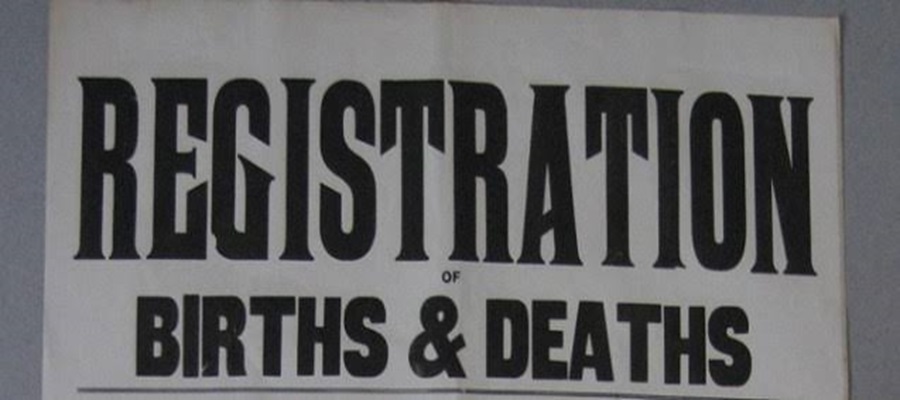
National Population Commission (NPC) has commenced the nationwide digital registration of births and deaths under the Electronic Civil Registration and Vital Statistics (E-CRVS) system to strengthen legal identity management and improve demographic data.

Speaking at a press briefing in Lokoja on Tuesday, Mr Afolabi Yori, federal commissioner representing Kogi, said the initiative became operational nationwide on July 1, through the VitalReg platform.
Yori described the development as a landmark in Nigeria’s civil registration system, noting that it would modernise birth and death registration through a technology-driven platform that meets international standards.
He said the digital platform would improve service delivery, strengthen data integrity and ensure that every birth and death occurring in Nigeria was accurately documented and securely stored.
According to him, civil registration is more than an administrative process, as it provides reliable statistics that support public policy formulation, resource allocation and national development planning.
“Nigeria records an estimated five million births annually, yet millions of births and deaths remain unregistered.
“Birth registration coverage currently stands at about 57 per cent nationwide, while death registration remains below 20 per cent,” he said.
The commissioner said that the commission had established 4,011 functional registration centres across the country’s 774 local government areas and was working to expand the number to about 8,000.
He added that the commission was strengthening collaboration with stakeholders to improve the capacity of registration personnel and ensure prompt documentation of vital events through the VitalReg platform.
Yori said the platform would provide faster registration services, 24-hour online access, digital certificate issuance where applicable, and reduce paperwork, waiting time and unnecessary travel.
He disclosed that the platform was being operated under a Public-Private Partnership with Barnks-forte Technologies Ltd. as the commission’s technical partner to ensure system availability, cybersecurity and continuous technological improvement.
He called on parents, healthcare institutions, traditional and religious leaders, civil society organisations, development partners and the media to support the initiative by encouraging the prompt registration of births and deaths.
Earlier, Samuel Omonakpeme, director in Kogi, NPC State, described the commencement of the digital registration system as another milestone in efforts to strengthen Nigeria’s Civil Registration and Vital Statistics system.
Omonakpeme stated that the initiative aligns with the Federal Government’s digital transformation agenda and the Sustainable Development Goals, particularly Goal 16.9, which seeks to provide legal identity for all.
He appreciated the Federal Government, the leadership of the commission, UNICEF and other development partners for supporting the implementation of the initiative.
The state director also urged parents, guardians, health institutions, community leaders, religious organisations and the media to mobilise public support for the timely registration of all births and deaths.
The News Agency of Nigeria (NAN) reported that ICT personnel of the commission, led by Ehimoni Kolawole, conducted a live demonstration of the digital birth registration process using the VitalReg platform.
The demonstration showed that the registration process captures the biodata of both parents, while at least one parent must possess a valid National Identification Number (NIN) to complete the registration of a newborn.

Yola Electricity Distribution Company (YEDC) has alerted its customers to a fraudulent message circulating on social media, falsely claiming that electricity consumers can receive an additional 20 per cent bonus units when recharging their prepaid meters through unofficial channels.

In a statement issued by the company’s management on Monday, YEDC described the claim as false and urged customers to disregard the misleading information, stressing that it did not originate from the company.
According to the statement, YEDC does not offer bonus electricity units through individuals, agents, personal bank accounts, phone numbers, or social media contacts.
The company advised customers to purchase electricity tokens only through approved cashless payment platforms, including the YEDC Pay App, OPay, Interswitch, and other authorised vending channels, or to visit the nearest YEDC office for assistance.
YEDC also cautioned customers against sharing their meter details or personal information, or making payments to unauthorised persons claiming to represent the company.
The company further urged customers to rely exclusively on information disseminated through its official communication channels to avoid falling victim to fraud.
The management thanked customers for their continued cooperation and reaffirmed its commitment to serving them.

NDIC Begins Payment to Depositors of 46 Failed Microfinance Banks

Telcos Seek Clear Regulatory Framework on Airtime Credit Services

FG Says Rumours, Fear, Can Crash Banks

MTN Warns Customers against Fake Promo

EU Debunks Fake Compensation Scheme Targeting West African Bank Customers

NRC, Ponzi Scheme Collapses Resulting Loss of Billions of Naira

NASENI Moves to Digitize CCB’s 5m Assets Declaration and Operations

Lebara Nigeria Launches Lebara Play, Africa’s First Telecom-Owned Micro-Drama Platform

Tokenization, Blockchain Technology will Transform Financial Institutions – IMF

EFCC Busts NIS Visa Overstay Racket, Uncovers N700m in an Account




 News2 days ago
YEDC Warns Customers, Says 20 Percent Electricity Bonus is Scam

 News2 days ago
PFIPC Probe: Dollar, Pounds Accounts of Fake Agency Inactive – CBN

 Broadcasting2 days ago
NBC, INEC, Plan Joint Broadcast Monitoring Framework ahead of 2027 Elections

 News2 days ago
STEM Africa Fest to Nurture Nigeria’s Future Innovators

 E-Financial2 days ago
No Going Back on July 31 Deadline for Insurance Firms’ Recapitalisation – NAICOM

 E-Business2 days ago
Jumia Nigeria Expands Flexible Payment Options with Klump Partnership

 E-Business2 days ago
Lagos Unveils N10m Single-digit Loan Scheme for MSMEs

 E-Financial2 days ago
Court Affirms FCCPC’s Power to Regulate Digital Lending